Martin Austermuhle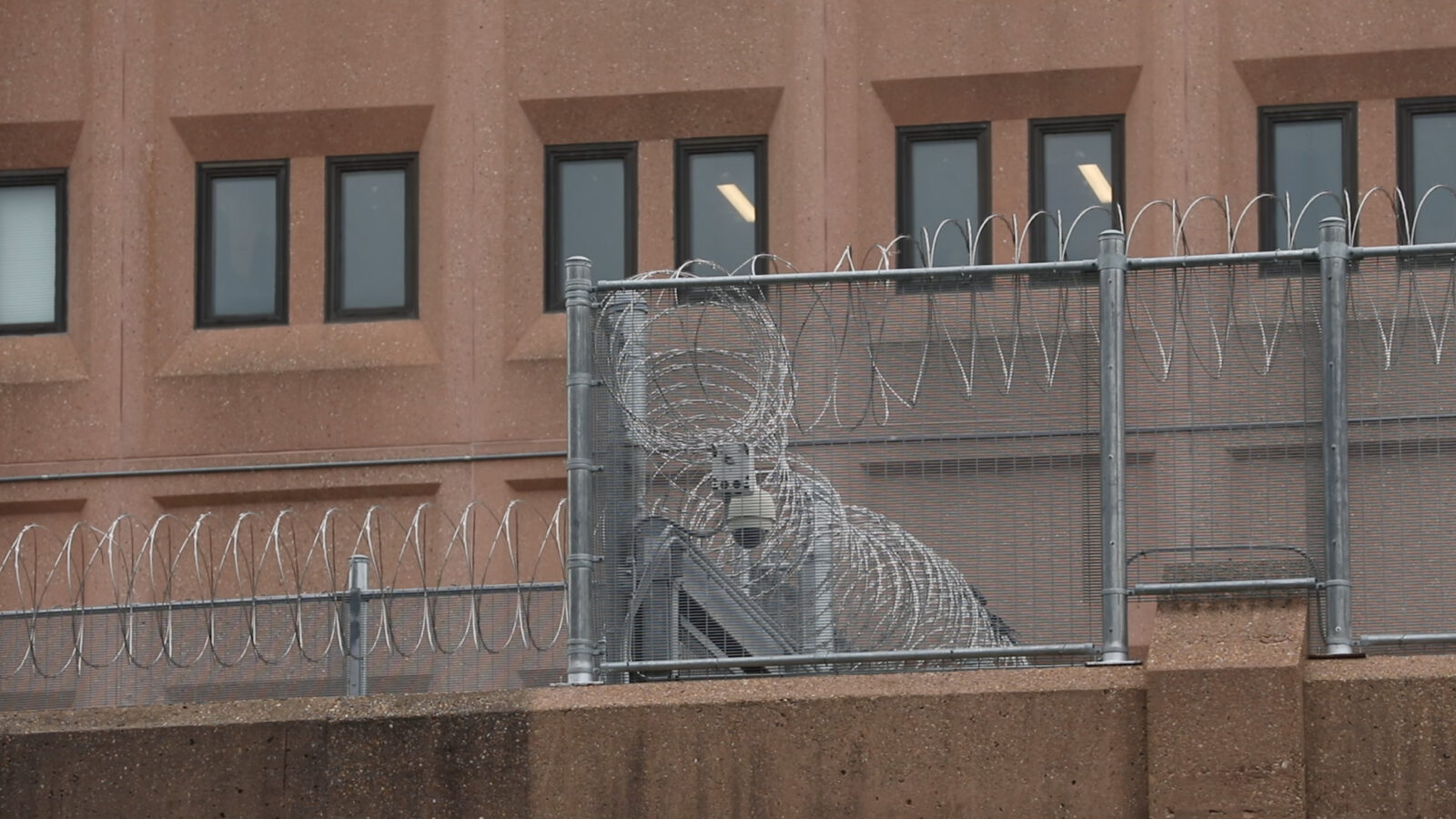
Over the last year, the 1,400 people held at the D.C. Jail have weathered a 23-hour daily lockdown and complaints about conditions ranging from access to education to where transgender inmates are housed. When the men and women who live in the aging facility on the east end of Capitol Hill wanted to raise concerns, they’d have to rely on friends, family, and a network of lawyers and advocates.
But later this month they’ll have a new outlet — their own elected representative.
On June 15, D.C. will conduct an unprecedented election for a seat on a Ward 7 Advisory Neighborhood Commission, the bodies of elected volunteers across the city who weigh in on everything from public safety to liquor license applications. But this particular seat is distinct: it has never been filled, and all five candidates fighting for it — and a majority of the voters they are courting — are incarcerated at the jail.
“It’ll give a voice to the voiceless over at the D.C. Jail,” says Anthony Petty, 46, a D.C. resident who was released from prison last year after serving almost three decades behind bars. He now advocates for those in prison and those coming out of it.
The seat — formally known as single-member district 7F07 — was first created during the last round of redistricting in 2011, drawn to encompass a largely institutional plot of land that housed the D.C. Jail, the now-demolished D.C. General family homeless shelter, and the Harriet Tubman Women’s Shelter. The seat was never filled, largely due to the transient nature of the residents who could have run for it and the significant logistical challenges involved in actually running for office — especially for those political hopefuls who remained behind bars.
That changed last year, when a group of commissioners in neighboring Ward 6 and Neighbors for Justice, a new group created to do outreach to residents at the jail, highlighted the empty seat and pushed the D.C. Department of Corrections to let inmates know they would be eligible to run for it. Joel Caston, who has been held at the jail for four years as part of a federal sentence that’s now exceeded a quarter-century, did just that, winning the seat as a write-in candidate before he was disqualified due to a technical error involving his voter registration.
In March, the council responded with a bill requiring that the D.C. Board of Elections resume elections to fill empty ANC seats (they had been discontinued due to the pandemic), clearing the way for the June 15 election for the 7F07 seat. But an additional hurdle remained: getting candidates on the ballot. Given the jail’s extensive lockdown, which was imposed to prevent the spread of COVID-19 (and will lift on June 11), corrections officials had to both inform residents of the open seat and then help them circulate petitions to get the required 25 signatures to appear on the ballot.
“This really required the support of the Department of Corrections to enable this to go forward, because when you are on lockdown, you can’t go talk to people about your candidacy and ask people to sign your form directly,” says Julie Johnson, a founder of Neighbors for Justice. “Getting these candidates is a success. Getting someone elected will be further success.”
Caston, 44, is running again, alongside Aaron Brown, 25; Keith Littlepage-El, 59; Gary Proctor, 43; and Kim Thompson, 63. DCist/WAMU was unable to reach the candidates. (Update: After this story was published, the Department of Corrections recorded a video introducing the five candidates. Watch it here.)
The election comes as D.C. has pushed forward on re-enfranchising residents who are in jail or prison. Last year, the D.C. Council passed a bill allowing people incarcerated for felonies to vote — and sent thousands of voter registration forms to inmates at federal facilities across the country. (The change allowed Caston himself to vote.) In her recent budget proposal, Mayor Muriel Bowser has proposed increasing funding for the elections board so it can increase outreach to federal prisons, where thousands of D.C. residents convicted of felonies are incarcerated.
Tyrell Holcomb, the chairman of ANC 7F, says that filling the seat is long overdue, and he believes the new representative will bring an important perspective to the commission that isn’t otherwise easy to get.
“There are some documented challenges that have occurred over the last two years at the D.C. Jail, and it’s really difficult, I think, for the commission or commissioners who are focused on other aspects of community matters to focus in on something that is outside of their particular scope,” he says. “I think it is the due diligence of our government to make sure that all of those individuals are represented.”
Still, the election will only be the first step of laying the groundwork for that representation. Holcomb and others say there are logistical questions that will have to be answered, including how the jail will facilitate the new commissioner participating in monthly meetings, especially if more ANCs start returning to in-person meetings.
“The diligence of our government needs to be on full display as it relates to the ability for them to participate in meetings,” says Holcomb.
Petty adds another concern: whether the new representative will be able to move around the jail freely enough to actually talk to their new constituents. “That’s the most important part: they’ve got to be able to go and speak with constituents in the jail,” he says, which is actually two distinct blocks: the Central Detention Facility and the Correctional Treatment Facility. Residents housed in one block normally can’t travel freely to the other.
On top of that, the district is starting to gain residents in new buildings that are going up as part of a sweeping redevelopment of the area where D.C. General once stood. Those constituents could largely be out of reach for a jail-based ANC commissioner, and could eventually shift who holds the seat from someone living in the jail to someone outside of it. (The single polling place for the June 15 election will be at a new residential building outside the jail, but election workers will go into the jail to allow voting there.)
Still, advocates and neighbors say they are excited to see an election being held for a seat that’s been vacant for almost a decade.
“This is about giving voice and visibility to a very specific population of D.C. residents who have not traditionally had voice and visibility,” says Johnson. “They may be in residence at the D.C. Jail, but they are still D.C. residents who are supposed to have ANC representation. So they deserve that.”
“I definitely believe it is a step to something better,” says Petty.