Jacob Fenston
The smokestacks of Morgantown Generating Station rise above the Potomac River, about 40 miles south of D.C. It’s among the last coal-fired power plants in the region, and has a long history of pollution. Now, energy company GenOn Holdings says the plant will shut down within a year. Environmentalists and others cheered the decision, but also questioned the company’s commitment to cleaning up the site.
“This plant in particular has been discharging a lot of toxic metals like mercury and selenium and arsenic to the Potomac River for a long time,” says Potomac Riverkeeper Dean Naujoks. “Addressing the contamination that’s been there for decades is going to take a long time and cost lots and lots of money.”
Potomac Riverkeeper documented several environmental violations, including improper storage of toxic coal ash. A state inspector confirmed three violations at the site.
“These plants are always placed in underserved areas, underserved communities and forgotten about,” says Dyotha Sweat, president of the Charles County NAACP. “We also want to make sure that the employees that are there are actually taken care of.”
“There’s a lot of unanswered questions,” Sweat says. “Yay and wonderful that you’re closing, but what is the plan to ensure that you close properly?”
GenOn did not respond to a request for comment, but in a press statement cited economic forces and environmental regulations as the reasons for closing the facility. GenOn is also shuttering two other coal-fired power plants in Pennsylvania and Ohio.
“The decision to initiate the retirement of these coal units is driven by unfavorable economic conditions, higher costs including those associated with environmental compliance, an inability to compete with other generation types,” the statement reads.
The plant was already slated for closure. In December, GenOn announced it would shutter the Morgantown facility in 2027. Now the company is speeding up the timeline, and also closing two other coal-fired power plants in Pennsylvania and Ohio.
Last year, GenOn retired two coal plants in Prince George’s County and Montgomery County. Two other coal plants in Anne Arundel County are slated to close in 2025.
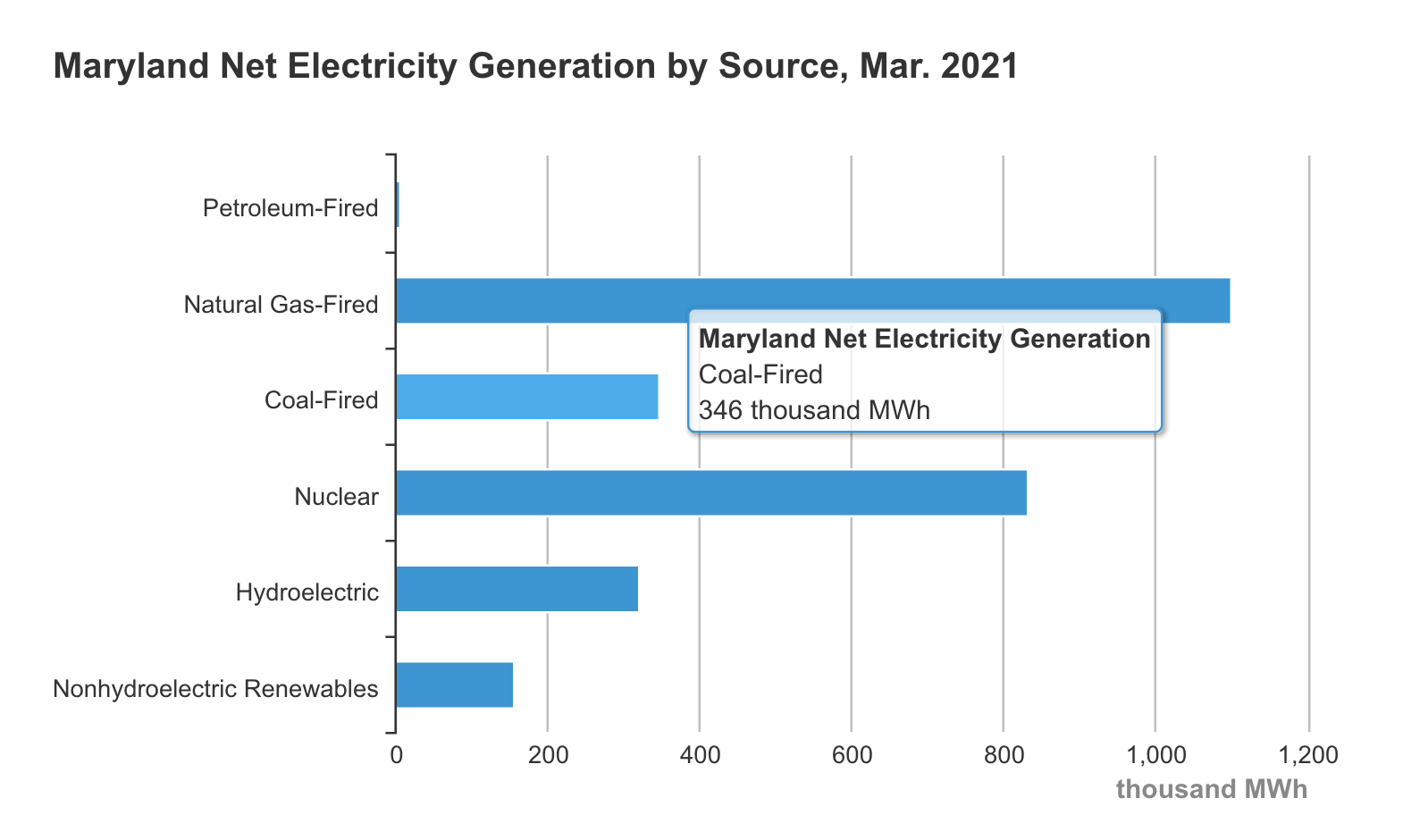
Nationally, coal has been rapidly losing ground to cheaper, cleaner natural gas and renewables such as wind and solar. In Maryland, about 11% of power generated comes from renewables, while 38% comes from the Calvert Cliffs nuclear power station. Under state law, by 2030, 50% of electricity purchased in the state must come from renewables.