Jacob Fenston
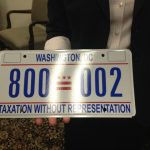
D.C. drivers will soon get the option to show off their love of wild animals with a new “protect local wildlife” specialty license plate, pending a final vote by the D.C. Council.
“People like to have something that they’re interested in reflected on their vehicle,” said Ward 3 Councilmember Mary Cheh, who introduced the new specialty plates as an amendment to next year’s budget. The council passed the the budget legislation on a preliminary vote this week.
Cheh said the idea behind the new plates is twofold: to raise money for organizations that aid local wild animals; and to raise awareness about our non-human neighbors.
The money raised by the plates will go into a fund that organizations can access through a competitive grant application. While any organization could apply, City Wildlife is currently the only wildlife rehabilitation organization in the District. It receives about $200,000 a year in city funding to care for D.C.’s sick and injured wildlife. Last year, the organization took in 1,715 ailing wild animals, including 156 water fowl, 48 raptors, and 81 possums.
When reached by phone for comment on the new plates, City Wildlife’s executive director, Jim Monsma, had just a moment to talk before he needed to go back to tending to animals.
“The van just pulled up — animal control van — I’m going to get a crap-load of animals any second,” Monsma said.
But, he had time to add that he was thrilled about the new “protect local wildlife” plates.
“People don’t realize, but this is an extremely rich city for wildlife,” said Monsma. “We have the rivers and lots of parks, but we have to be careful to preserve it, and I think this is definitely a step in the right direction.”
Cheh agreed that the District’s wildlife is under-appreciated.
“In my own yard, I’ve had a fox give birth, my neighbor had a deer give birth, and we have possums and raccoons and hawks and owls, not to mention your everyday squirrel,” Cheh said.
Like other specialty plates in D.C., the new ones have a one-time $25 application fee, plus a yearly fee of $20. There is no design as of yet, and the Department of Motor Vehicles is responsible drawing up the plates.
The legislation tasks the mayor with issuing “one or more” wildlife plates. Cheh said there could be multiple designs. “If you’re an owl person, you pick the owl. If you’re a squirrel person, you pick the squirrel,” she said. “I think there’s a great opportunity here to have some creativity, and that would mean that more people might want to get these plates.”
Monsma suggested one possibility for the design: It could feature the wood thrush, a small, brown, speckled bird with a flute-like song that migrates through the region each spring. It’s been the official bird of the District of Columbia since 1967, but its population has been declining in recent years.
While some states offer dozens of specialty tags (Virginia has more than 250), D.C. has only a handful. The District does already offer one environmentally-themed plate, supporting the cleanup of the Anacostia River. Those plates were rolled out in 2010, and feature the silhouette of kayakers and a great blue heron. An earlier version of the Anacostia plates featured Canada geese in place of the heron. The geese were replaced, likely because, due to overpopulation, they have become a scourge on the river, destroying wetlands and contaminating the water with poop.
Virginia has nine wildlife conservation plates, showing off animals from turkeys to red salamanders, while Maryland offers “protect the Chesapeake” plates, funding environmental education and watershed restoration.