Jacob Fenston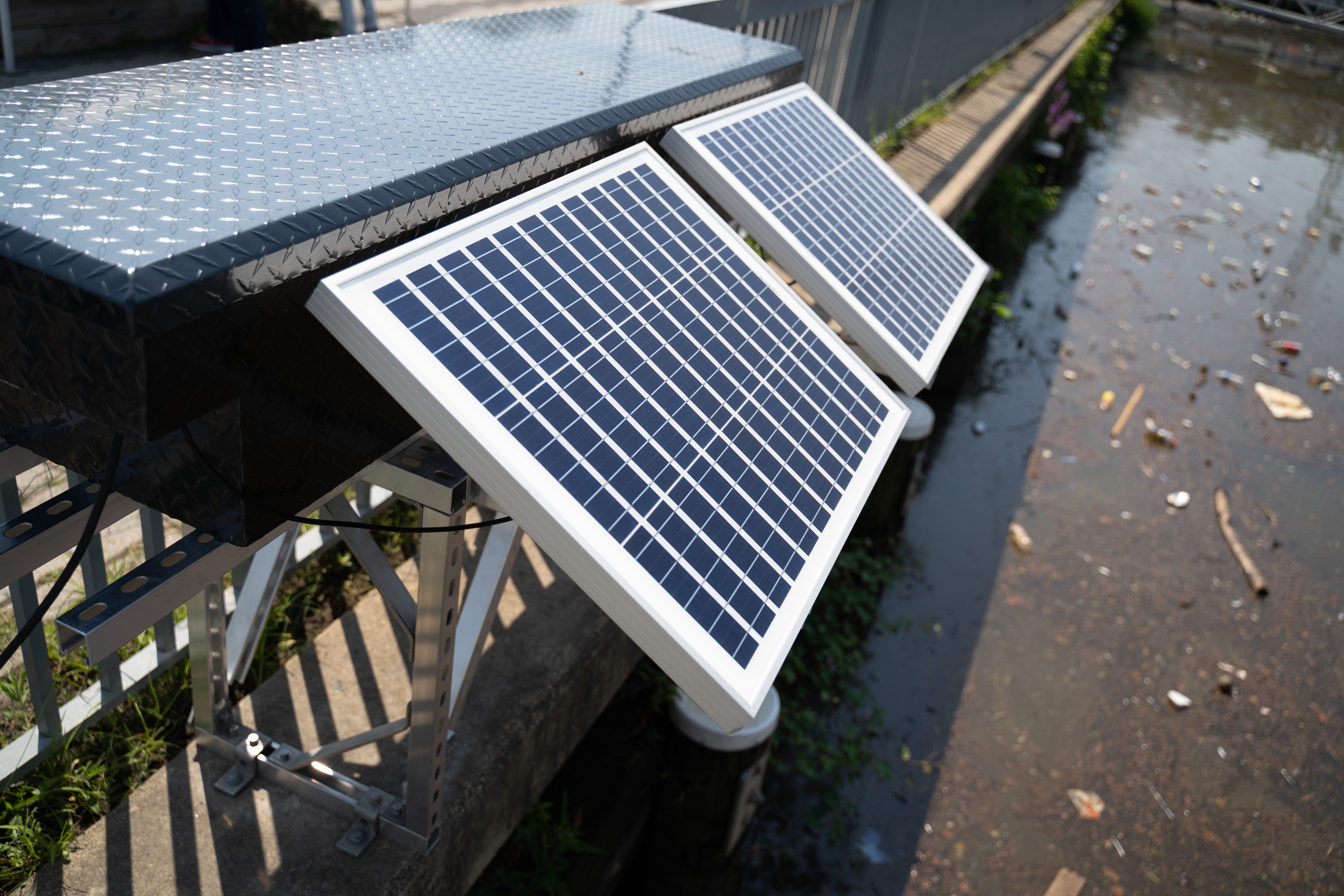
The Anacostia River has been too polluted to swim in for decades — a swim ban has been in effect since the 1970s. But recent cleanup progress has led officials to start talking about revisiting the ban, with the goal of allowing swimming in the not-too-distant future.
Now, a new “super gage” on the river may help shed light on when, exactly, it’s safe to dive in. The U.S. Geological Survey is beginning installation of the gage this week at the fishing pier in Bladensburg Waterfront Park. (The federal agency uses its own spelling of the word “gauge,” dating back to the 1890s.)
USGS operates thousands of water gages across the U.S., taking the pulse of our nation’s waterways every few minutes and uploading the data to an online dashboard. But traditional USGS gages don’t shed much light on whether the water is clean enough for humans to safely swim in. The gages are not capable of measuring bacteria levels, the key indicator used to determine whether a waterway is swimmable. Rather, the gages typically collect data on things like water temperature and clarity, as well as how high the water is and quickly it’s moving. There are currently ten such gages in operation on the Anacostia and its tributaries, along with several on Rock Creek and the Potomac.
The “super gage” being installed will include new technology that can measure bacteria levels quickly, automatically uploading the results via satellite or cell network.
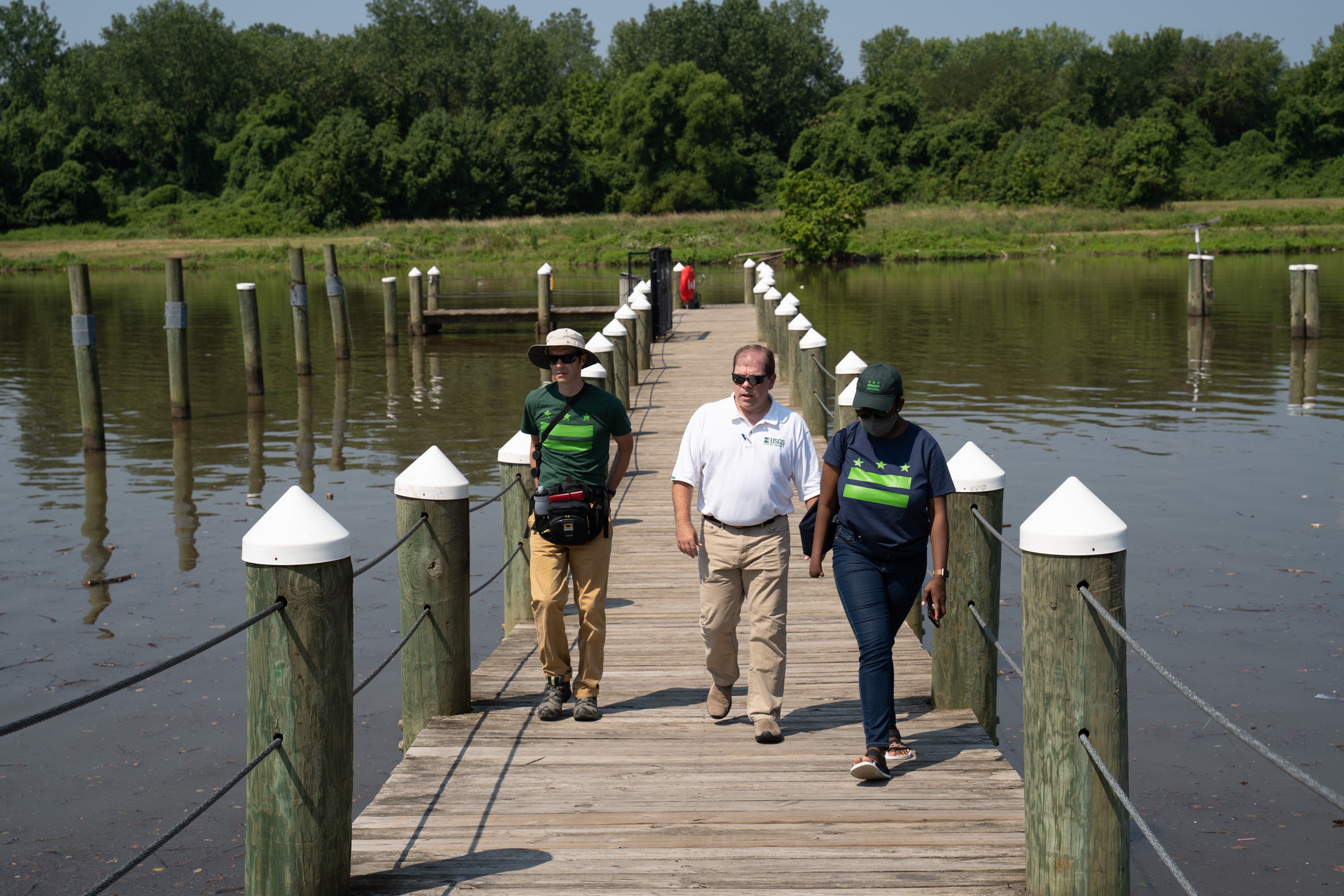
“Collecting samples and analyzing for bacteria is generally labor intensive — you have to have a person, they come, they get the sample,” says USGS hydrologist Jonathan Dillow. A person then has to culture the samples in a lab, allowing the bacteria to reproduce for 24 hours before getting an accurate count.
The new device, called a Fluidion ALERT System, eliminates the need for manually collecting and testing water samples, and can deliver results within 1-to-12 hours, according to the company, with accuracy as high as traditional lab-based methods. Manufactured by a French company, it has been deployed at a number of sites in the the U.K. to track the source of bacterial pollution, including at swimming beaches.
USGS has invested in one other Fluidion device already, in the Delaware River basin, but it has not yet been deployed. A handful of others will soon be installed in other watersheds across the country.
“This is a new technology that’s not hugely tested,” says Ed Dunne with the Water Quality Division of the D.C. Department of Energy and Environment, which is working with USGS on the project. Depending on the results, and future funding, Dunne says he could envision installing more bacteria monitors throughout the Anacostia watershed. “Having this study as a pilot, or a real life trial, will help inform how we make the next step,” he says.
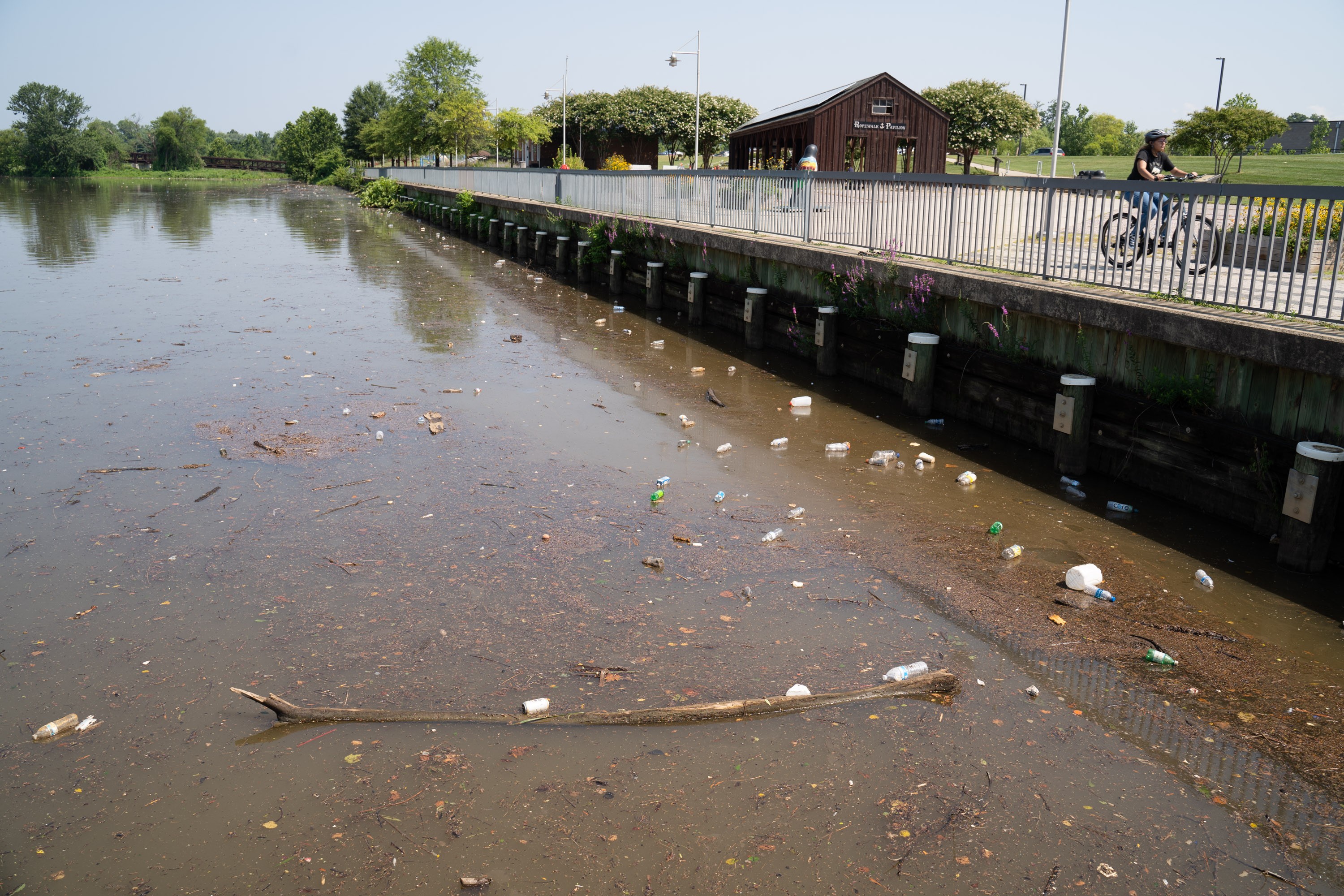
Currently, bacteria levels are monitored on the Anacostia, Potomac, and Rock Creek on a once-a-week basis. It’s no easy feat, relying on more than 100 volunteers taking water samples at more than 30 locations throughout the three watersheds. The program, launched in 2019, provides a clearer picture of how clean the District’s waters are. But for swimming or other recreation, the testing has limited usefulness because it takes 24 hours after testing to get results, and because testing is only done once a week. Bacteria levels can change drastically day to day, especially following a rainstorm, which flushes sewage and bacteria into the waterways. The project is a collaboration between Anacostia Riverkeeper, Potomac Riverkeeper, Rock Creek Conservancy and DOEE.
In addition to deploying the new bacteria testing device, USGS scientists are also combing through old data try to create a computer model capable of predicting bacteria levels.
“We have been monitoring water quality in the rivers for many, many years, and so there’s a whole range of parameters,” Dunne says. The idea is to look for relationships among the data, correlations between bacteria levels and the other water quality parameters, like temperature and clarity, that can be continuously measured.
It won’t be precise enough to predict exact bacteria levels. It will be more like a risk assessment, Dillow says. An algorithm might be able to tell you, for example, “you have a 90% probability that bacteria levels at point X will be low enough that you could actually swim that day,” Dillow explains. Dillow says that data crunching should be done within the next two years.
Anacostia Riverkeeper is working on a similar project, using artificial intelligence to predict bacteria levels.
Dunne hopes the project will provide evidence that there are “windows of opportunity” when it’s safe to swim in the Anacostia River. “Probably not a whole lot of opportunity,” Dunne says. “But if you dig into the detail and look at different locations, there may be opportunity for concentrations of bacteria to be safe for swimming.”
In 2018, DOEE loosened its swim ban. The ban now allows an exception for “swimming events for limited amounts of time if monitoring data demonstrates that the water quality does not pose a threat to human health.” The change was made in anticipation of improved water quality, after the completion of a massive new sewer tunnel to prevent sewage overflows into the river. The DC Water project has successfully kept billions of gallons of sewage out of the Anacostia River since 2018, but bacteria levels still remain high in many areas.