Colleen Grablick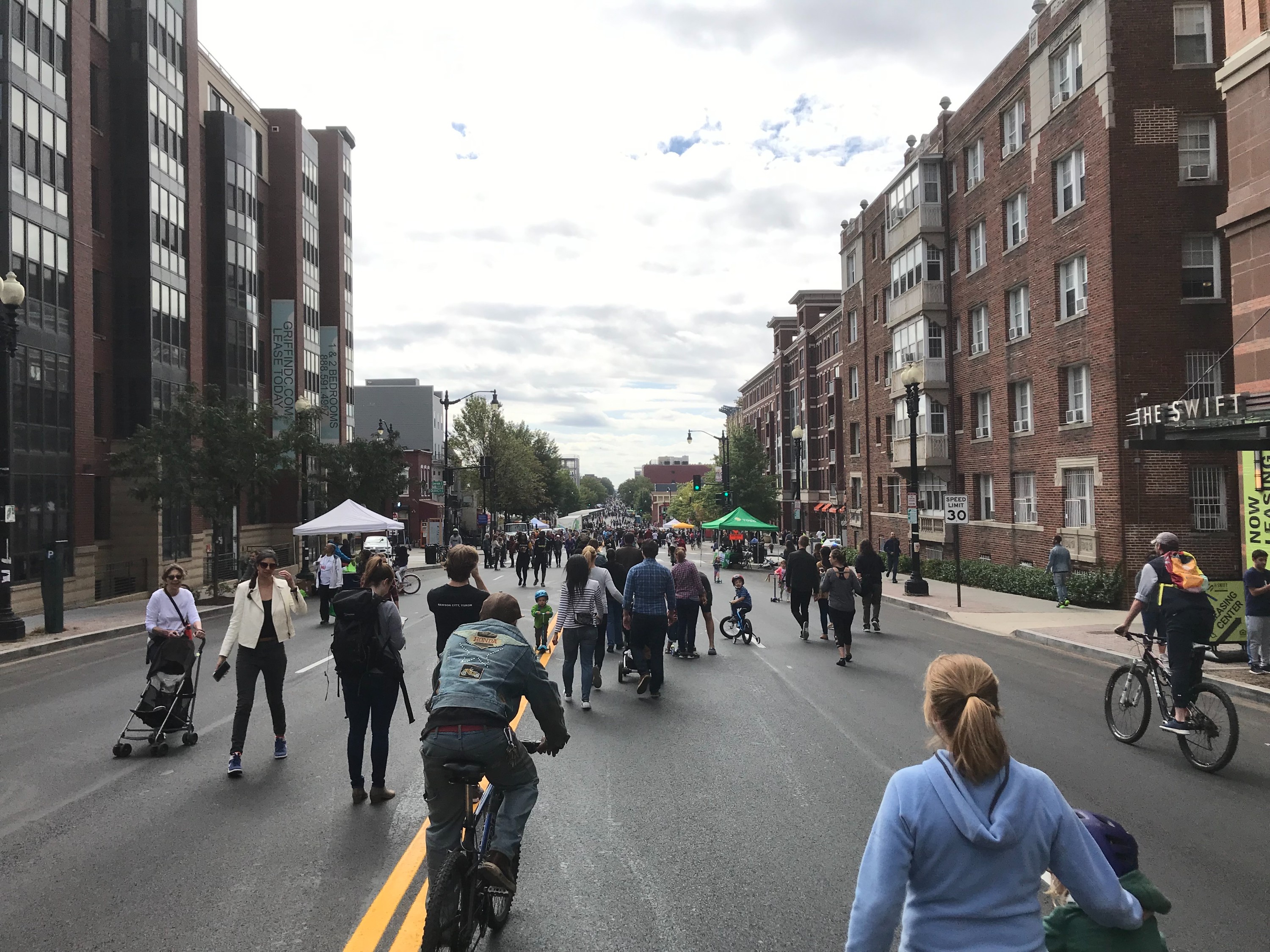
D.C. will host its second Open Streets event this October, closing a portion of Georgia Avenue to vehicles for a day and encouraging businesses and residents to envision new uses for roadways.
The city hosted its first Open Streets event in the fall of 2019, but lost a year in 2020 during the pandemic. Now, the car-free program will expand past the Georgia Avenue event on Oct. 2, with a series of Open Streets days — dubbed Streets for People — occurring in each ward over 2021-2022. Dates for the subsequent events in each ward have not yet been announced.
“We know now more than ever the value and health benefits of creating more space for residents to be active and enjoy our communities outside of their cars,” D.C. Department of Transportation acting director Everett Lott said in a statement Thursday. “The Georgia Avenue Open Streets event — and the others we are planning for across all eight wards — offer a glimpse of how District Streets can possibly look when we depend less on cars and more on sustainable, active transportation.”
The Georgia Ave. Open Streets day will close a portion of the roadway between Barry Place NW and Missouri Ave. to traffic between 10 a.m. and 3 p.m., and will feature events like bike and scooter demonstrations and fitness classes. DDOT and District Bridges, the nonprofit that oversees several Main Streets organizations in the city, will solicit feedback from the public in preparation for Oct. 2, according to a press release from D.C. Mayor Muriel Bowser.
D.C.’s Open Streets program, a concept originally born in Bogotá, Colombia, started as a part of Bowser’s Vision Zero initiative, which aims to eliminate traffic fatalities by 2024. Now, the District’s second Open Streets Day comes more than a year into a pandemic that’s drastically reshaped the city’s outdoor spaces and the way residents use them.
The National Park Service is currently asking for public comment on whether an upper portion of Beach Drive in Rock Creek Park should remain closed to traffic (as it has been since spring 2020). And last month, DDOT announced that the city’s pilot streatery program will stick around until February. Bowser also introduced legislation in January that would make the streatery program permanent.