 Dominique Maria Bonessi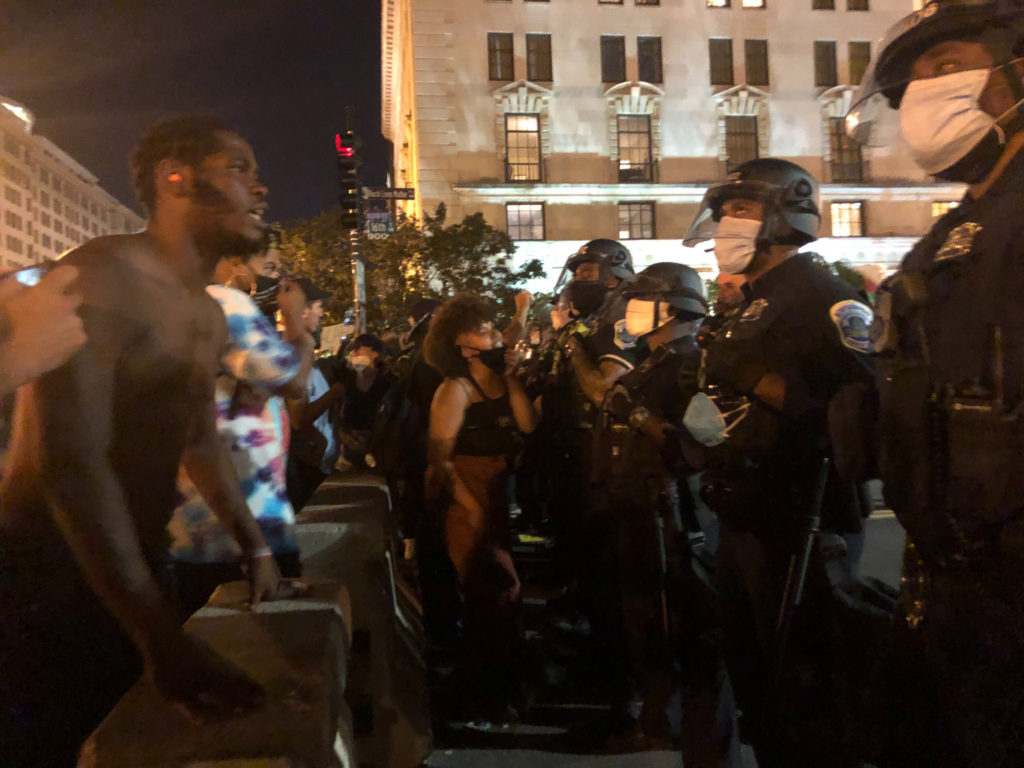
The D.C. chapter of the American Civil Liberties Union filed a lawsuit Thursday on behalf of two photojournalists, alleging that Metropolitan Police Department officers used chemical irritants and stun grenades against them and protesters during last summer’s demonstrations in Black Lives Matter Plaza, in violation of D.C. law.
Photojournalists Oyoma Asinor and Bryan Dozier allege that they were subjected to a number of acts of physical aggression by police while covering protests against police brutality across two nights last August. The complaint, filed in district court, names D.C. and eight anonymous officers as defendants.
Asinor and Dozier are seeking damages in an amount to be determined by a jury. A spokesperson for MPD didn’t immediately respond to DCist/WAMU’s request for comment.
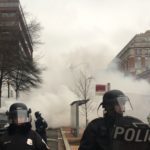
The lawsuit alleges that on August 29 police deployed chemical irritants into the crowd of dozens people without warning or provocation around 11 p.m. The complaint says the street filled with “clouds of smoke that lingered in the air” near BLM Plaza as Dozier and protesters began to run east on H Street toward Vermont Avenue NW to escape the fumes.
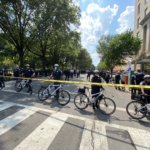
The next night, Asinor returned to BLM Plaza to document another night of protests. Asinor alleges that officers shot rubber bullets and sprayed chemical irritants at a crowd that contained protesters who had thrown water bottles at police. Asinor also alleges that he was running from the irritants when officers on bikes stopped him, struck him in the chest, forced him to the ground, and handcuffed him.
This was just one month after D.C. Mayor Muriel Bowser signed temporary and emergency legislation banning MPD from using irritants to “disperse a First Amendment assembly.”
“Asinor informed officer that he was a member of the press multiple times, repeatedly telling her that he was carrying a camera for journalistic purposes; however, she did not allow him to leave,” the complaint says. “Another officer later told Asinor he was being arrested for ‘felony rioting.'”
Asinor was detained overnight by police, and released the next day without any charges brought against him, according to the complaint. However, his camera equipment and phone were not returned to him until earlier this month — almost a year later. The ACLU alleges that the department had “no lawful basis” to keep Asinor’s property for a year.
The clashes with police occurred the weekend after thousands of protesters rallied on the National Mall for the March on Washington, 57 years to the day after the original march, when Martin Luther King Jr. delivered his “I Have A Dream” speech from the steps of the Lincoln Memorial.
During the weekend, demonstrators said they witnessed some of the most aggressive policing since protests began in May, following the murder of George Floyd at the hands of a Minneapolis police officer.
After the clashes, Mayor Bowser and Police Chief Peter Newsham blamed outside agitators for violence at the protests and defended MPD officers’ actions.
“Police officers are human beings too,” Newsham said at a press conference at the time. “When you throw bricks and rocks and bottles and urine, and you set fires, there is going to a police reaction. So folks who want to suggest or paint the picture that this was somehow peaceful, and the police indiscriminately used munitions against them, they’re not being honest.”
Other police conduct during protests last summer has also been called into question by the ACLU. In March, the ACLU released an 18-page report on the MPD’s treatment of protesters on Swann Street, alleging that police kettled demonstrators without evidence that they had been violent, and subsequently mistreated the nearly 200 individuals that were arrested on that night in June 2020. A local independent journalist and documentarian Kian Kelley-Chung also filed a lawsuit in February after police seized his camera equipment last August and he spent the night in a holding cell before being released without charges.
Asinor and Dozier allege that after last summer’s events they have both endured psychological distress such as anxiety attacks, feeling jittery around loud noises, and, for Asinor, a constant fear he’s being followed by police. In a press release from the ACLU, Asinor says that D.C. police turned the streets into a “war zone” last summer.
“The fact that MPD attacked, arrested me, and then held my camera for nearly a year for no reason sends a chilling message to everyone of what is at risk when they attend these demonstrations,” Asinor said in a statement.
ACLU Attorney Megan Yan said in a statement that it was a flagrant use of tactics that were explicitly banned in the District.
“It’s especially ironic that MPD responded to these demonstrations with the kind of violence that the protesters were protesting,” Yan said in ACLU’s statement.