 Jordan Pascale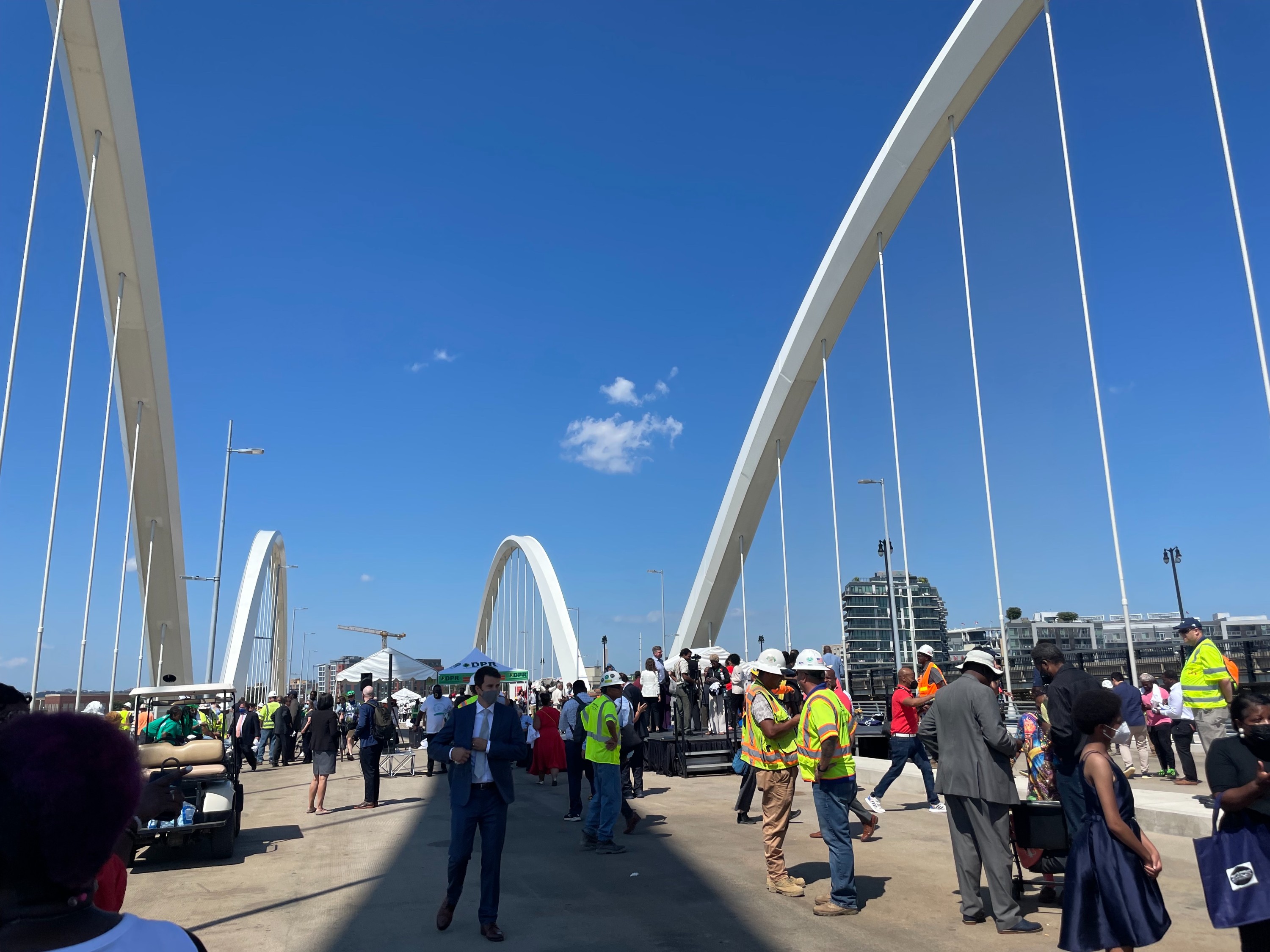
The biggest infrastructure project in the D.C. Department of Transportation’s history is almost ready for drivers, cyclists, and walkers to use.
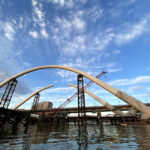
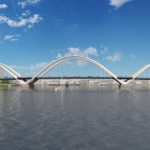
But first, officials had to cut the ribbon on the new Frederick Douglass Memorial Bridge as the sun gleamed off of the six soaring white arches on Tuesday. The fanfare included marching bands, a stirring rendition of “Lift Every Voice and Sing,” and speeches from descendants of the famed abolitionist and one-time D.C. resident.
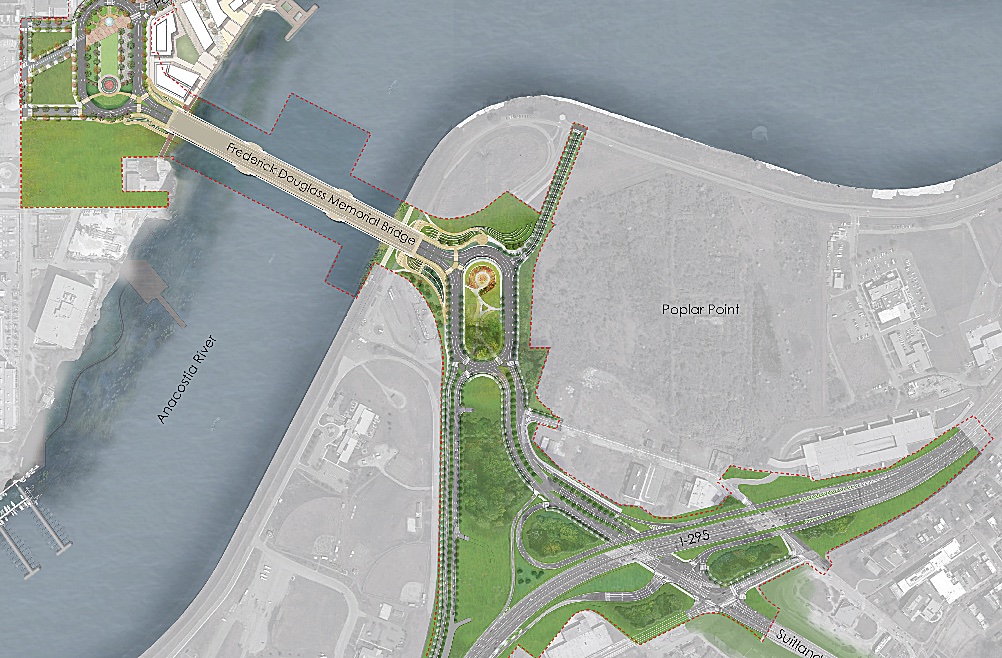
The $440 million bridge spans the Anacostia River from Nationals Park in Navy Yard to Anacostia and points beyond through a connection to I-295. It replaces a nearly 70-year-old bridge that is in poor condition.
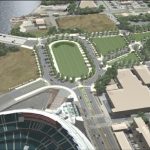
Vehicles and pedestrians will be able to use some of the new driving lanes and wide pedestrian paths sometime Friday night or Saturday morning. The southbound lanes and pedestrian walkway will open Friday, followed by the northbound lanes the next day. All lanes of the bridge should be open by Sunday. And the entire project, including two traffic ovals on each side of the bridge, and a new interchange, should be done by March. In all, it will cost upwards of $1 billion.
The project will be ongoing through next year as teams start the demolition of the old South Capitol Street Bridge. The northbound side pedestrian walkway won’t be open until after bridge demolition is over.
Elected officials say the new bridge is a symbol of connection and an honor to one of the District’s most revered residents: abolitionist Frederick Douglass.
“The new Frederick Douglass Memorial Bridge is a fitting tribute to an iconic Washingtonian, a forefather of Black excellence who we continue to emulate and who helped build Washington, D.C. into the city we are today,” said Mayor Muriel Bowser at Tuesday’s ribbon-cutting. “This project was never just about getting people from Point A to Point B, it was about building a more connected D.C. — connecting Ward 8 and Ward 6, connecting residents to jobs and prosperity, and connecting our entire community to the future of multi-modal transportation.”
Bowser highlighted the work it took to get the project “unstuck,” thanking congressional leaders Del. Eleanor Holmes Norton and Majority Leader Steny Hoyer for helping to secure the federal funding over ten years that paid for a majority of the project. She also thanked the workers who built the bridge, highlighting the jobs it created for D.C. residents and female and minority-owned businesses.
Norton called the bridge transformative for the city. “It is the connection to everywhere,” she said.
Bowser said the arches will be an “iconic representation of our city.” Councilmember Charles Allen (D-Ward 6) agreed, saying great cities have great bridges.
“When you look at other cities, you know them by their bridges. And no disrespect to that piece of concrete over there,” he said, referring to the old span, “but this is an iconic bridge.”
“This will be a bridge national audiences will see on TV constantly… and what I’m excited about is that it will not just be the picture, but they will say, here is the Frederick Douglass Memorial Bridge, they will use his name,” added Allen.
The project broke ground in 2018 and the bridge was set to open in October, but was finished ahead of schedule.
Ken Morris, Douglass’s great, great, great-grandson, said his ancestor would be proud of this bridge.
“Frederick Douglass was a punctual man and he appreciated the quality that quality and others, so I think he would heartily commend the engineers and workers for their industry, and share his own great satisfaction that the bridge that bears his name was finished ahead of time,” Morris said.
“He also appreciated the virtues and benefits of physical exercise and was often found walking the grounds of his home and neighborhood of Cedar Hill, just beyond us on the southeast side of the river,” he added. “So I think that he would voice a hearty approval of the bridge’s unique accommodation for pedestrians and cyclists, and it’s designed providing opportunities for reflection and contemplation along the way.”
The bridge includes 18-foot-wide wide pedestrian paths and several overlooks. It will also have three travel lanes on each side, and the second phase includes a reconstruction of the Suitland Parkway/Interstate 295 interchange. It serves nearly 70,000 vehicles, pedestrians, and cyclists daily.
Councilmember Trayon White (D-Ward 8) said the bridge is an investment in the community, but it can’t stop there.
“When we build these bridges, we must also remember that we also got to build the people up in Washington D.C.,” he said. “As the city thrives, the people of Washington D.C. must thrive as well.”
On Labor Day, the District held a community celebration and 5K run across the bridge, with about 4,000 people participating.