Martin Austermuhle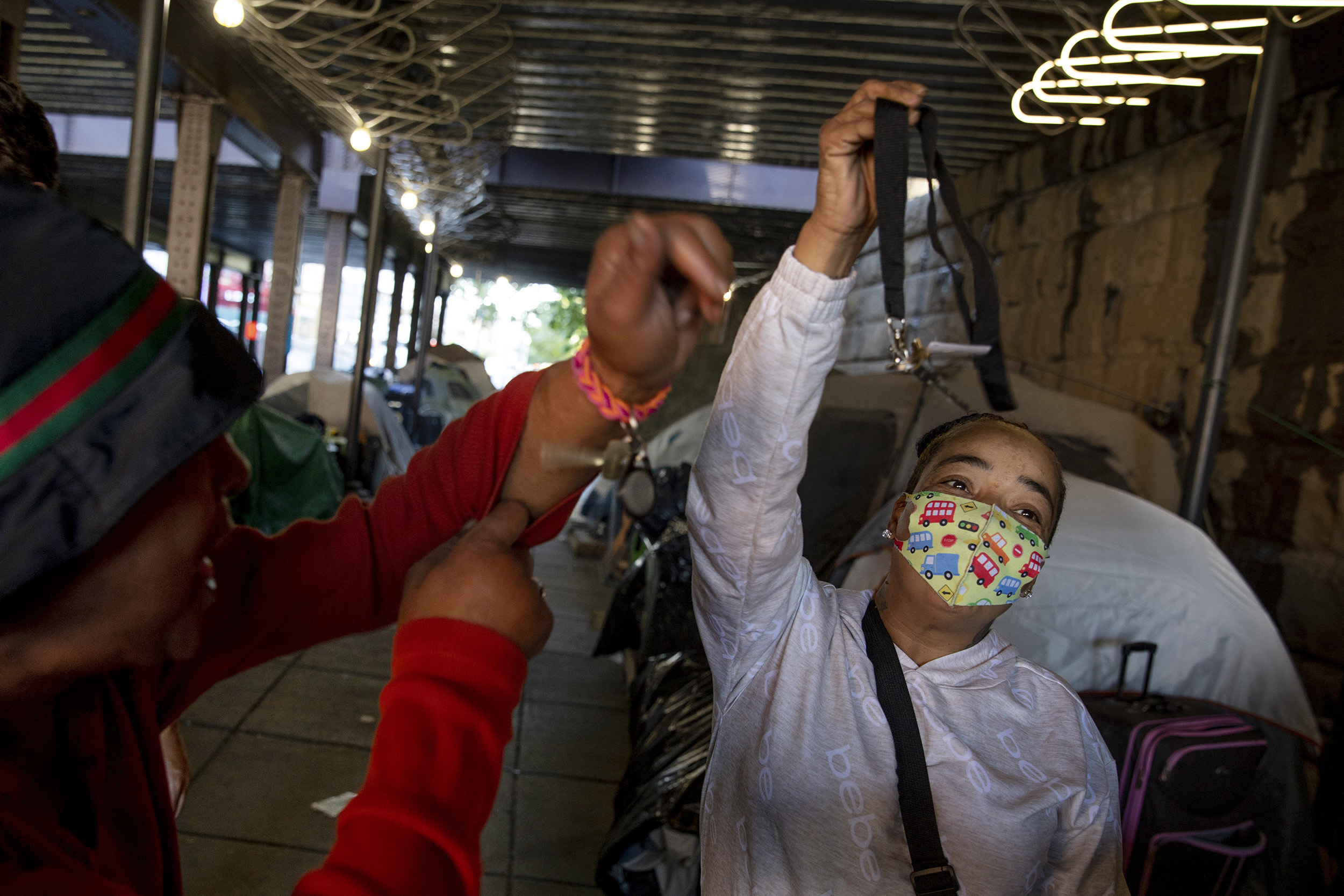
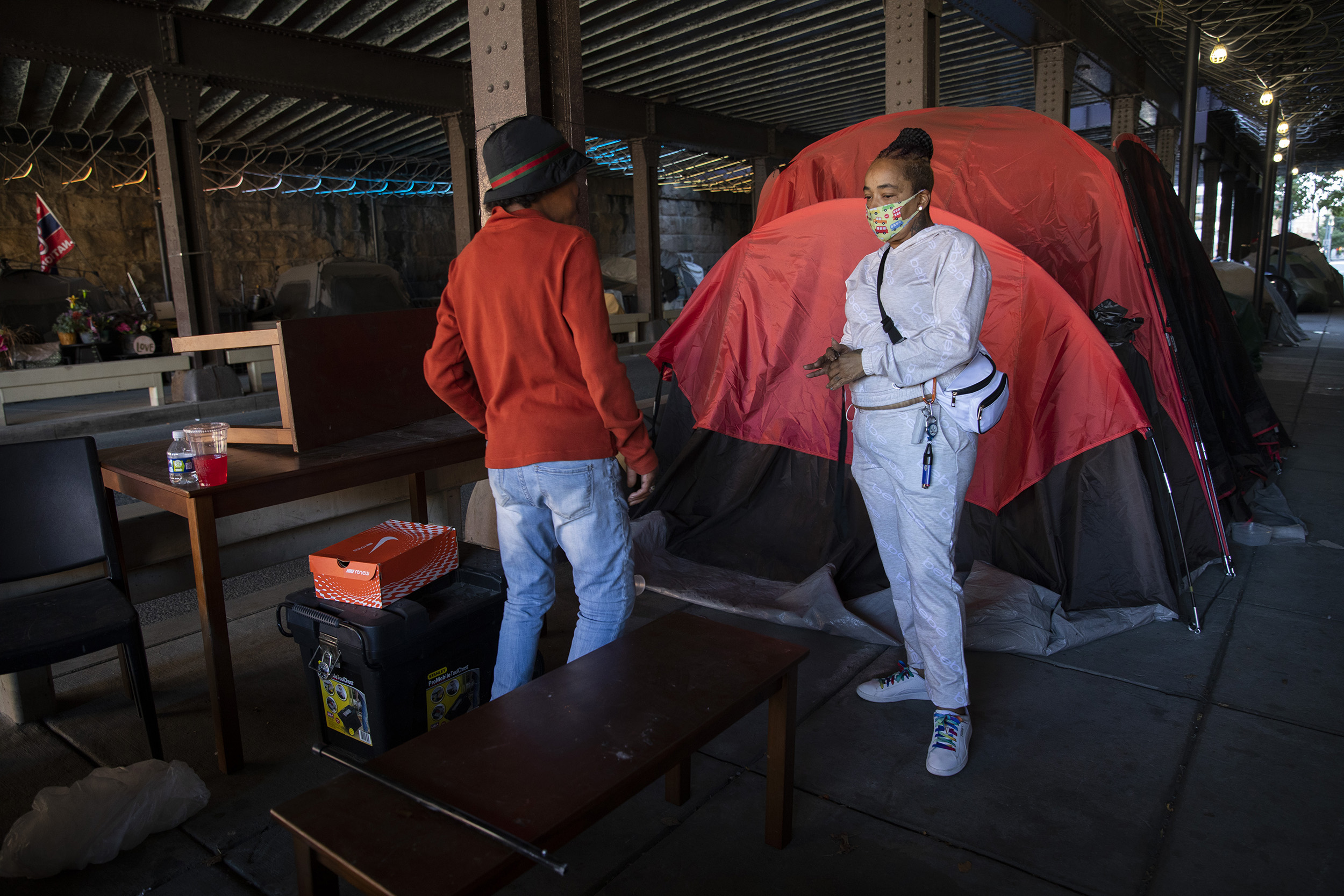
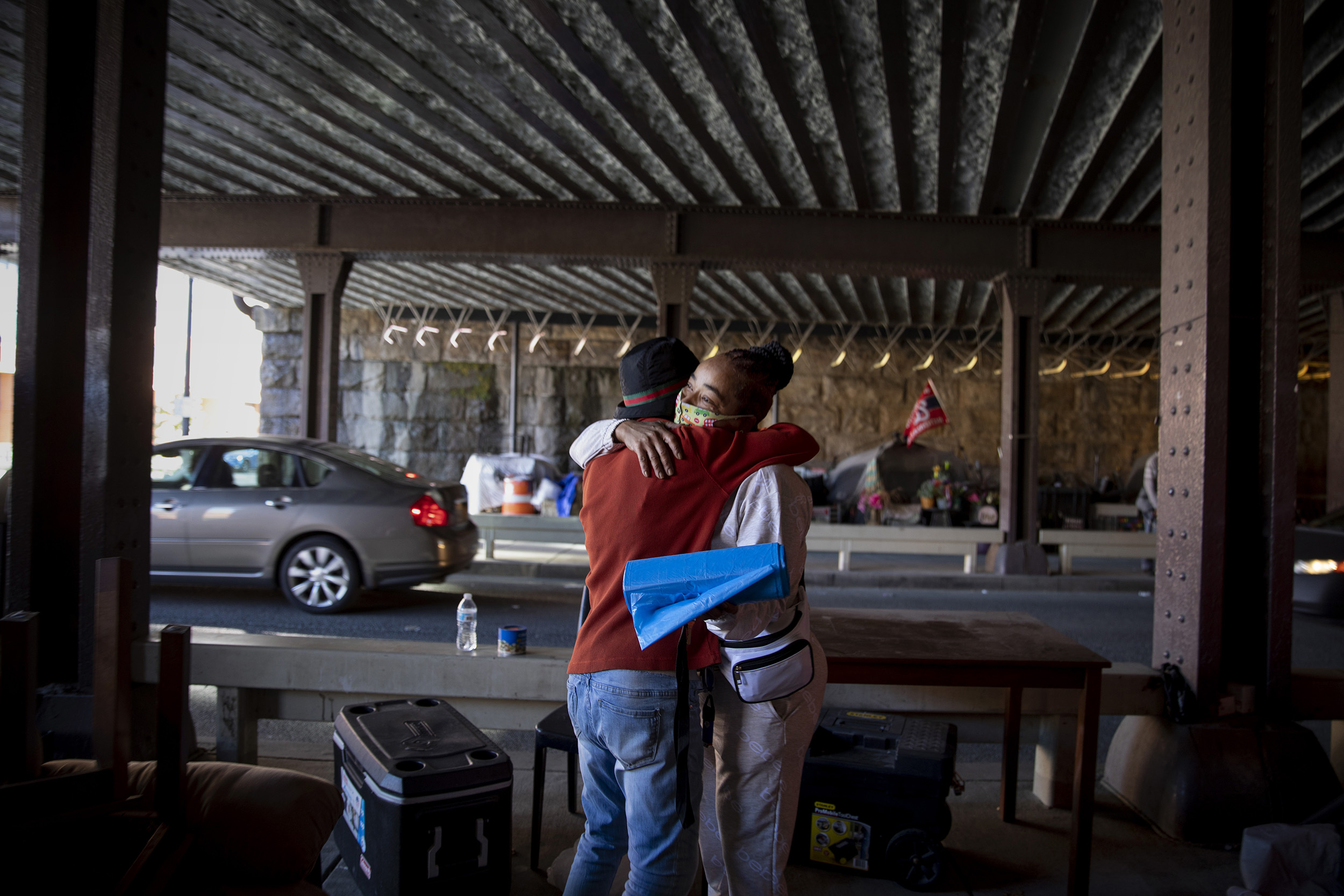
In her two years living on the sidewalk along the L Street underpass in NoMa, Gwen Morgan had one strict rule. “You had to take off your shoes in my tent,” she says. “That was my safe haven, so I honored it just like I honored my own place.”
Morgan, 48, says she took pride in the red three-bedroom tent; furnishing it just like she would an apartment offered her comfort and stability in a life that had often lacked those very things.
“It wasn’t bad. I had luxury in my tent. My own everything, my TV, everything set up like I was in my own apartment,” she says. “People get it twisted when we’re living in tents — everybody is not the same living in tents. If you know how you live when you’re living in your own apartment, then you live how you live in the tent, and that’s exactly what I did.”
But no longer does her tent have to serve as a stand-in for a real apartment.
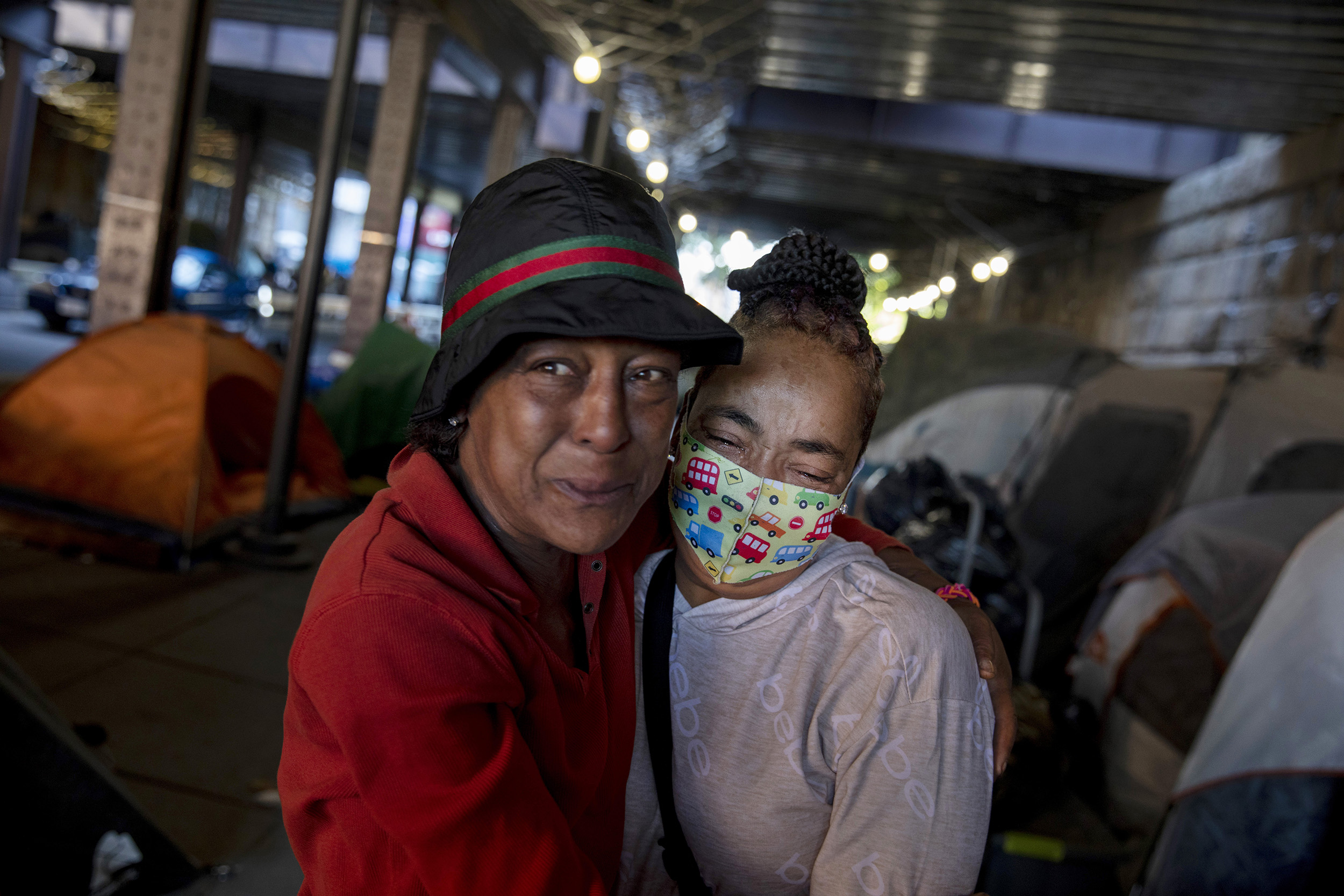
On a recent Friday afternoon Morgan celebrated with friends on L Street, hoisting up a set of keys while holding back tears. As part of a new push by D.C. to close down the growing number of encampments across the city, Morgan was given a fast-track into housing — her own apartment in Southeast.
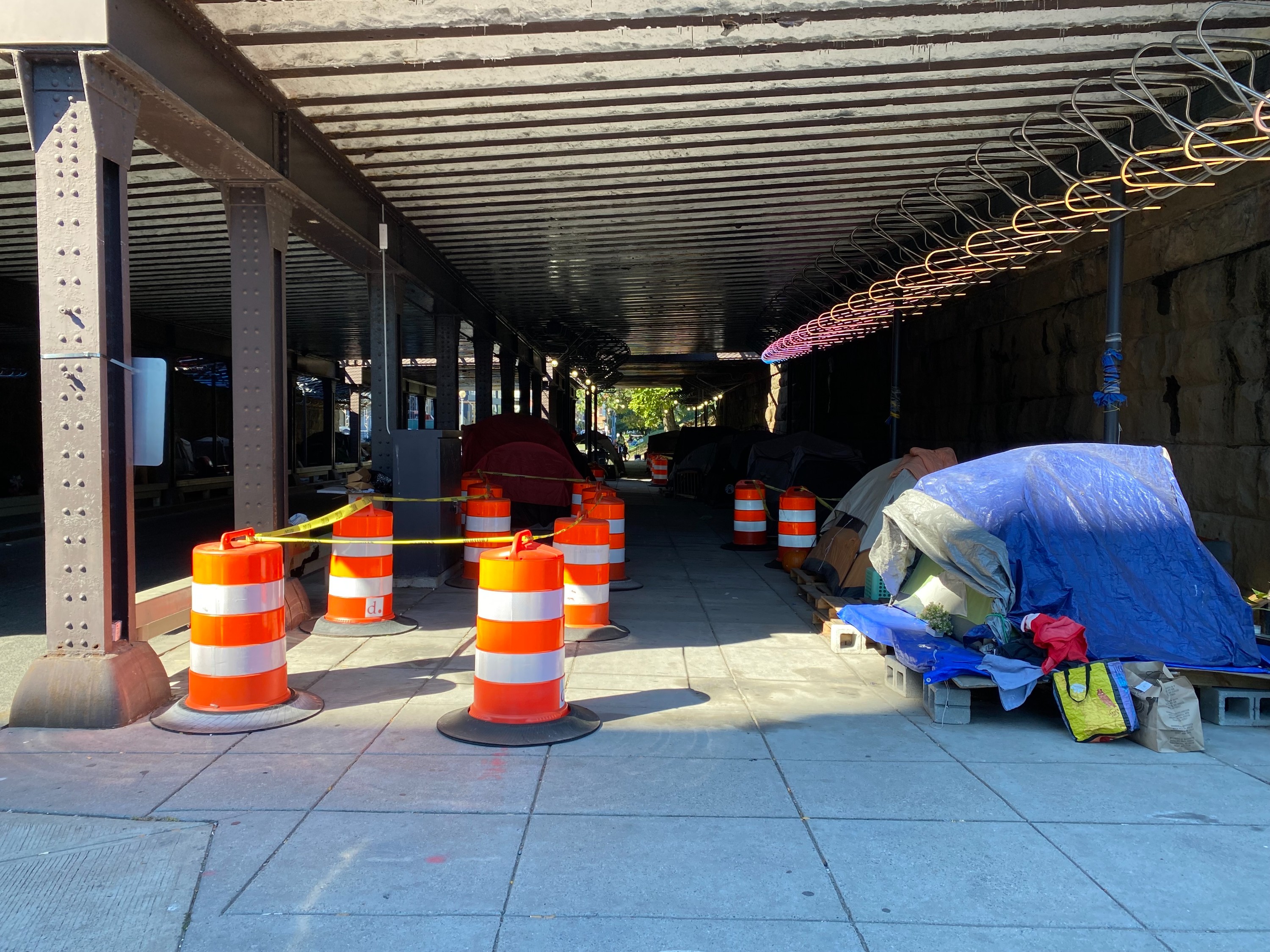
And much the same goes for the community of people experiencing homelessness who have called the L and M street underpasses home in recent years; a growing number of the residents have moved in recent weeks, leaving the once crowded sidewalks marked only by large orange barrels and yellow tape.
“Everybody down here is leaving,” says Morgan. “Everyone got places.”
A growing city, and growing encampments
The NoMa encampments — which grew to encompass the K, L, and M streets underpasses — were by no means D.C.’s first, but for years they stood as a symbol of the city’s unequal growth.
Sandwiched between the seemingly never-ending construction in NoMa to the west and a fast-gentrifying residential community to the east (not to mention a new REI), the encampments were partly born of necessity — they were refuges for people displaced by high housing costs or misfortune, and alternatives to a crowded shelter system many people experiencing homelessness said they did not trust.
But they were also a stubborn challenge for D.C. officials. Over the last five years the city has swung between periodic evictions and more regular cleanups that didn’t displace tents. In 2019, the director of the NoMa Business Improvement District published an open letter expressing frustration with the encampments and urging the city to take action. The letter drew controversy, but also a reaction — in January 2020 the city permanently cleared the encampment on K Street, citing dangers to pedestrians who couldn’t use the narrow sidewalks.
As the pandemic hit, the challenge became greater citywide. Data from an annual census showed that chronic homelessness had jumped 20% since last year, and D.C. has recently counted more than 300 tents spread across 119 encampments. In August, city officials quietly unveiled a pilot program to close three encampments, first by intensively working to get the residents housed and later by clearing the sites and preventing anyone from returning.
The move has sparked conflicting reactions among homeless advocates and some residents, some 600 of which have signed an open letter to D.C. leaders outlining their worries.
While they say they are encouraged that D.C. is moving people into housing, they question how the three encampments were chosen — and say some of the choices were motivated by optics. They also say they are concerned that people in the encampments will effectively be jumping a long line for housing — including people waiting in shelters. Finally, they oppose plans by the city to prohibit anyone from coming back to the encampments that are closed.
“We really don’t believe there should be camping-free zones because the concern there is it really criminalizes poverty and homelessness,” says Christy Respress, director of Pathways to Housing, a homeless services group that has been working to house people living in the NoMa encampments. “Policies that criminalize homelessness really can make it more difficult for those folks to eventually move into housing as they’re moved from space to space to space. So that’s not really the solution. The solution is ending homelessness, not limiting where people can stay.”
But Wayne Turnage, D.C.’s deputy mayor for health and human services, says removing encampments along busy streets is necessary, and the pilot program in NoMa — and at a site in Foggy Bottom and another in Truxton Circle — could serve as a model to be rolled out across the city.
“When you look at this busy thoroughfare, when you look at how people are living so close together as others walk by doing the business of the city, it’s a good thing to be able to remove folks from the environment, put them in a home, and allow them to live the kind of life we think they should live,” he says. “We don’t want anybody living on the street.”
Councilmember Charles Allen (D-Ward 6), who represents the portion of NoMa where the encampments are located, is largely supportive of the city’s pilot program — though he does share Respress’s concerns over future bans on tents.
“I’ve been briefed on the pilot program and I’ve emphasized that it’s important the city do its best to meet residents needs by offering housing that allows them to still get to work, to doctor’s appointments, and live their lives,” he says in a statement. “But living in an encampment is not safe and it is not healthy. I do not support any criminal penalties for encampments — involving the criminal justice system won’t solve the problem, is unnecessary, and only makes it harder for our homeless neighbors to succeed.”

A place to call home
Morgan was born and raised in D.C., and admits she’s had a rough life. Her mother went to prison when Morgan was 12; upon her return 13 years later, Morgan already had her first child. She says she largely lived on her own from 1993 to 2016. After one of her sons was killed, Morgan lost her footing — and her housing. She eventually made her way down to L Street, where she found her estranged father. He died last month.
Morgan says she built a community on L Street, and recently celebrated her birthday with a cookout. “All of us came as one, a family,” she says. Morgan says she often felt disapproval from passersby, and knew that the encroaching construction in NoMa would eventually lead to the encampment’s dispersal.
“They building this new building and I’m pretty sure everyone was complaining about us being under here,” she says, pointing to a construction site less than a block away. “But, work with us like we’re gonna work with y’all. It’s not our fault that we ended up on the street. Everybody doesn’t have what y’all have. We have to make a way, we have to make a living.”
When Morgan was approached by Pathways to Housing, she says she jumped at the chance to move into an apartment. But she knows not everyone will do the same, a point Respress echoes.
“I myself have met with 10 people to show them apartments virtually, and they were so thrilled. But it’s a mixed group. A large majority of the people are just just flabbergasted and thrilled to be offered a permanent place to live,” she says. “Then there’s a smaller group of people who understandably really struggle to trust [us]. The government and general people have been promised a lot of things and so they might be hesitant and not quite ready to say yes, they might not trust the process.”
D.C. officials say 12 people at L and M streets have been housed so far, with more to come ahead of Monday’s closure of the NoMa encampments. The housing options vary depending on need; city officials say people with more intense needs will qualify for longer-term supportive housing, while those who can operate more independently will likely get a year-long lease and help transitioning into other housing thereafter. And the push for housing among people experiencing chronic homelessness is only expected to accelerate in the coming months, largely due to new revenue from a tax increase on wealthy residents approved by the D.C. Council over the summer.
A week into living in her apartment, Morgan is adapting to her new home. She’s had her grandkids over to visit, but she also lost her keys.
“I’ve been through a lot, but patience is virtue, and that’s what I have,” she says. “And everything turned out the way I expected it to turn out.”