Martin Austermuhle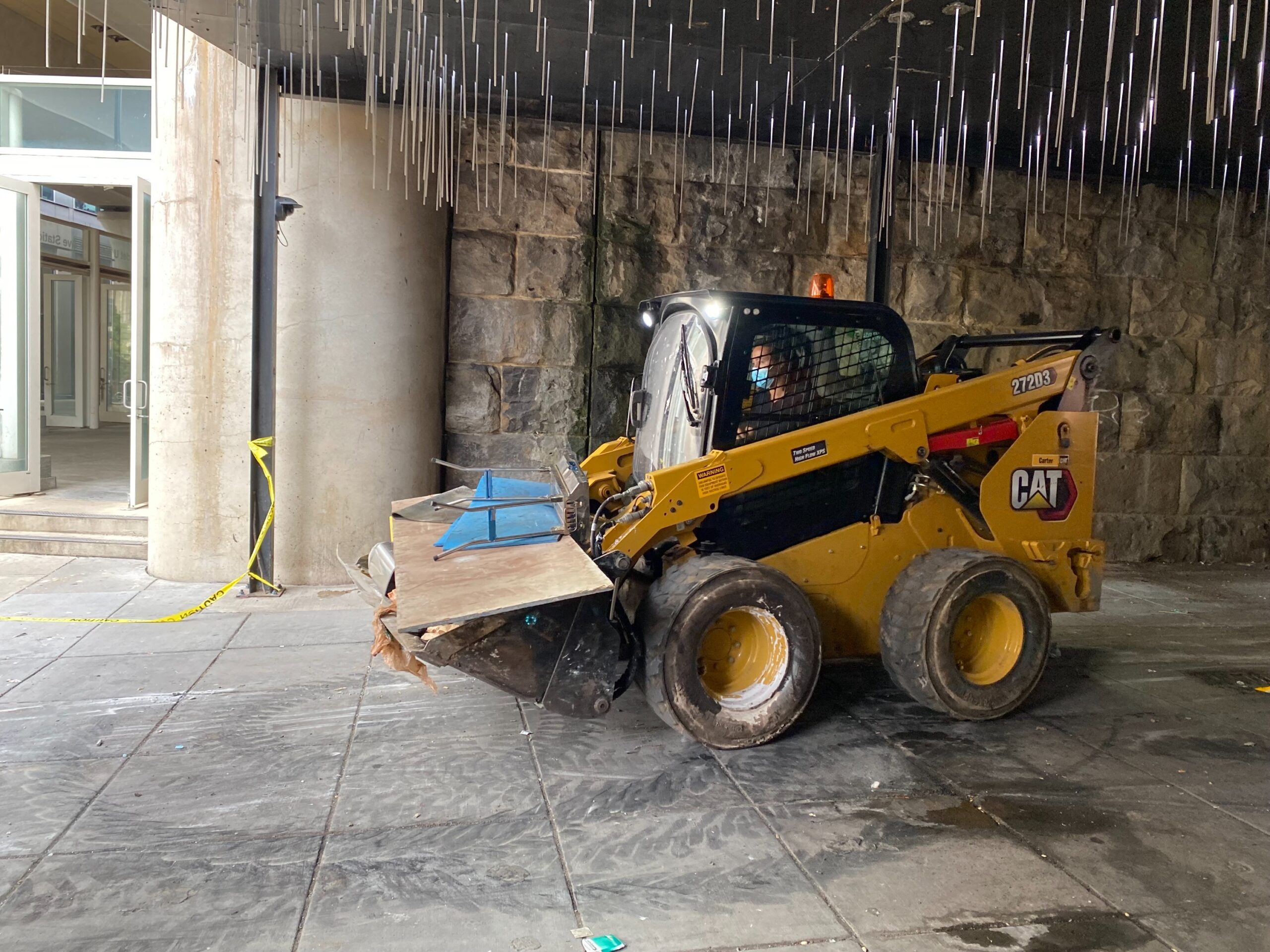
Several D.C. lawmakers are calling for changes to how the city conducts its clearing of homeless encampments, and some say the clearings should be paused altogether in the wake of an incident earlier this week where an unhoused man in a tent was hit by a small bulldozer during an encampment clearing in NoMa.
The growing expressions of concern and criticism come just as D.C. has started implementing a new pilot program to clear four homeless encampments — two in NoMa, one in Truxton Circle, and one in Foggy Bottom — by first offering their residents access to housing and services and then clearing the sites and prohibiting anyone from returning.
D.C. officials have defended the approach as both humane and necessary, citing the ongoing pandemic and growth in the number of people experiencing chronic homelessness.
The longstanding NoMa encampments — one at the underpass on M Street NE, another on L Street — were first on D.C.’s list, and after a few weeks of working with residents there to offer them housing, city crews got to work Monday on clearing them out. City officials said more than two-dozen residents had already been moved into housing, but some who remained said they hadn’t yet been approached by the city or were still waiting for final approvals to move and were reluctant to leave their tents until those came through. (They were offered hotel rooms in the interim, but were also allowed to stay in the encampment.)
The clearing operation was suspended in the early afternoon after a city worker using a small bulldozer on L Street lifted a tent with a resident still in it. He was taken to a local hospital as a precaution, but was uninjured.
Councilmember Brianne Nadeau (D-Ward 1), who chairs the council’s human services committee, was first to respond, saying the clearings should stop altogether. “When I’ve seen encampment clearings in person, I’ve witnessed a lot of trauma, and there is no room for mistakes,” she tweeted. “If the resident had not been able to communicate their presence, they could have died. We are literally talking about life and death when working with encampments.”
Councilmember Janeese Lewis George (D-Ward 4) followed up with her own call that the clearings be “immediately paused,” and Councilmember Robert White (D-At Large) echoed that demand, adding that “the goal should be to do this right, not just to do it fast.”
Responding to questions from DCist/WAMU, Charles Allen (D-Ward 6), whose ward includes both the NoMa and Truxton Circle encampments, called this week’s incident “unacceptable” and called for new “policies and safeguards” to be put in place should the clearings continue, as well as improvements in the system to ensure encampment residents can be housed quickly.
Councilmember Brooke Pinto (D-Ward 2), whose ward includes the Foggy Bottom encampment that’s part of the city’s pilot program, similarly decried the use of heavy machinery at the NoMa clearing and said she had been assured by city officials that multiple checks of tents would be conducted before they are moved. But she also expressed overall support for the pilot program, and the ultimate goal of prohibiting camping on sites after they are cleared.
“I am enthusiastic that the pilot adopts a comprehensive approach to case management, physical and mental healthcare, and follow up to get people the assistance they need,” she said in a statement to DCist/WAMU. “Once people are moved into housing, I believe it’s appropriate not to allow future camping on the site.”
But that prohibition on camping has drawn opposition from a number of homeless advocacy groups and coalitions, including The Way Home Campaign, Jews United for Justice, the Washington Legal Clinic for the Homeless, and the Greater Washington Community Foundation. Allen has similarly said he opposes the establishment of any no-tent zones, and also criticized the use of concrete jersey barriers to block off a large part of the cleared sidewalk on the north side of the M Street underpass in NoMa.
“I don’t support long-term barriers creating very limited passage,” he said. “That’s just a different version of the same public space challenge.”
In a letter to Deputy Mayor for Health and Human Services Wayne Turnage on Thursday, Councilmember Elissa Silverman (I-At Large) joined some of her colleagues in calling for a pause on future clearings, while proposing a public roundtable including a “thorough discussion of the merits and implications of a ‘no-tent zone’ approach.” She also asked for a broader strategy for all encampments across D.C., including those located on federal land.
Speaking on WAMU’s “The Politics Hour” on Friday, Turnage said the pilot program and associated clearings will continue. “We have no plans to pause the encampment pilot,” he said. “We will go back to NoMa next week and we will reconnect with those individuals and execute the Housing-First model for them.”
He also said that of the 45 people city officials counted as living in the NoMa encampments, 34 are either already in their own apartments, in a hotel awaiting placement, or still living in their tents waiting for housing arrangements to come through. Eleven people did not engage with city officials, said Turnage, or turned down offers of housing. Homeless advocates have said they worry about people who opt not to participate in the city’s program but are cleared out of encampments.
The same approach will be applied to the next encampment — a park at New Jersey Avenue and O Street NW that the city wants to close for renovations — on Nov. 4.
In the face of criticism from lawmakers and activists, Turnage defended the overall thrust of the pilot program.
“There was a recognition… that the number of tented encampments were growing across the city and the persons living in those encampments were at extreme risk not only from potentially contacting COVID but also the elements associated with living outside,” he said. “We decided to take a modification of the Housing First model to see what would happen if we deployed that strategy.”