Colleen Grablick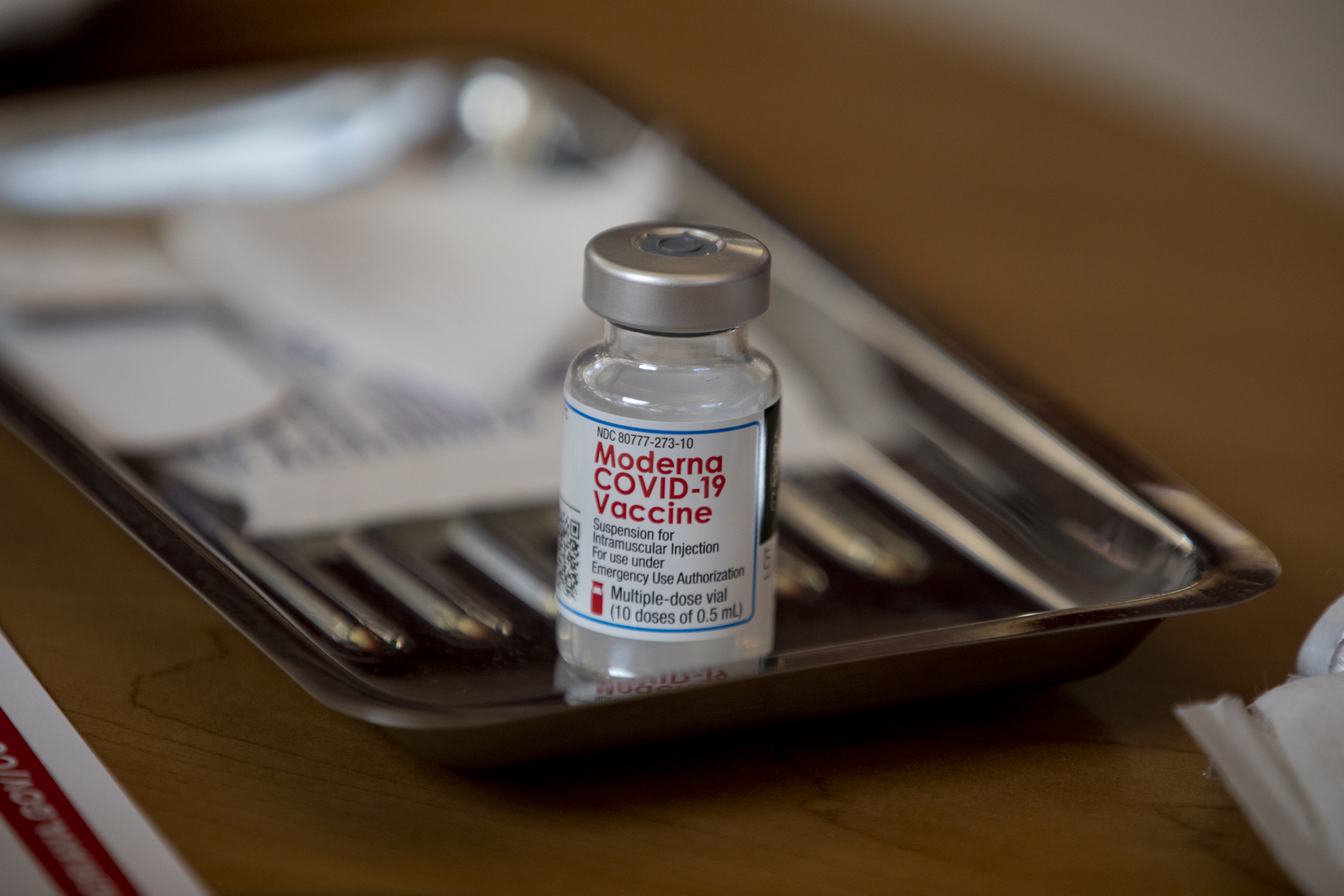
A D.C. Council bill that would require a COVID-19 vaccination for all eligible students by Dec. 15 is drawing opposition from District officials and health and education advocates.
Concerns over the legislation, introduced earlier this month by At-Large Councilmember Christina Henderson, ranged from its timeline, to its implementation, to equitable vaccine access during a public hearing on Wednesday.
Deputy Mayor for Education Paul Kihn testified on behalf of the executive branch, opposing the bill as it’s currently written. He argued it would cause a “rushed rollout, create more confusion and pressure on schools, and lead to mixed enforcement at best.” The city has already implemented a vaccine mandate for students 12 and up participating in school sports.
The bill would require eligible students in public, public charter, independent, private, and parochial schools to be fully vaccinated by Dec. 15 — meaning they’d need to start their inoculation series by at least Nov. 24. That’s a tight timeline for students ages 5-11, who have yet to become eligible for a COVID-19 vaccine. Less than 24 hours before the council’s public hearing, a panel of Federal Food and Drug Administration advisors ruled that the benefits of inoculating children ages 5-11 with Pfizer’s vaccine outweighed the risks, likely setting up a full FDA and Centers for Disease Control authorization in the coming weeks. (The bill would also streamline the reporting process by requiring health providers to electronically submit vaccination records to health officials.)
If enacted, D.C. would be one of the first jurisdictions in the U.S. to require a coronavirus vaccine for children; California Gov. Gavin Newsom announced a vaccine requirement for all children ages 12 and up last month, but it likely won’t take effect until next year. Councilmembers Charles Allen (Ward 6), Brianne Nadeau (Ward 1), Mary Cheh (Ward 3), Elissa Silverman (At-Large), and Janeese Lewis George (Ward 4) have cosponsored the bill, which needs seven votes to pass.
But at Wednesday’s hearing, the bill received wide-ranging criticism, and its passage as written remains an open question.
Kihn and other witnesses who testified from Children’s National and the Children’s Law Center on Wednesday — while broadly supportive of vaccinations — worried the timeline was too rushed to begin enforcing the mandate in just a few weeks.
“We know that many parents are not prepared to make the decision on COVID-19 vaccination for their child and need time and information to better understand the risks and benefits associated with the decision,” said Claire Boogaard, a pediatrician and medical director of the COVID-19 program at Children’s National Hospital.
Sharra Greer, testifying on behalf of the Children’s Law Center, argued that pushing through the mandate in a matter of weeks would mean that students who don’t meet the deadline will end up missing school. Instead, the law center recommended delaying enforcement of the mandate until next school year.
“The purpose of the proposed COVID vaccine mandate for students is to help stop community spread and ‘decrease exposures, the need for quarantine, and provision of remote learning, while increasing the efficient and effective operation of schools and child care centers,’” Greer said, quoting directly from the text of the bill. “It is counterproductive to that goal for the mandate itself to cause educational disruptions.”
D.C. Council Chairman Phil Mendelson didn’t see the point of delaying enforcement for another year, asking “why would we require a vaccine for this pandemic next year, when the pandemic is now?” He did entertain the notion of pushing back the deadline, although he did not say to when.
As Kihn pointed out in his testimony, enforcement would disproportionately impact students in wards 7 and 8, where throughout the pandemic vaccine uptake has lagged behind wealthier and whiter wards. To date, 21% of children ages 12-17 in Ward 8 have been fully vaccinated, compared to 73% in Ward 2. Nearly 45% of 12-15-year-olds city-wide are fully vaccinated, and 43% of 16-17-year-olds.
“We are particularly concerned that children in [wards 7 and 8] would be affected by a mandate that includes exclusion from school as an enforcement mechanism,” Kihn said. “We cannot afford to have more students out of the classroom — falling further behind.”
Mendelson pressed Kihn for a clear plan from the city on how they planned to boost those rates, if they do not support a mandate with an enforcement clause.
“I feel like the government isn’t doing enough to expand access to overcome these low vaccination rates in the lower income wards,” Mendelson told Kihn on Wednesday.
Nikki D’Angelo, a Ward 5 resident, testified on behalf of Democrats for Education Reform DC in support of vaccine mandates generally, but questioned the city’s preparedness for the 5-11 age rollout; she asked what the city has learned since its last big rollout to the older children, and who has responsibility for making sure kids are vaccinated : schools, health providers, or the health department.
When asked about the council’s bill during an unrelated press conference on Wednesday, Mayor Muriel Bowser said she would likely not support an immediate mandate for kids, but admitted she did not know the exact dates included in the council’s legislation. Even Dr. Anthony Fauci, speaking on NPR this morning, seemingly favors a “wait and see” approach when it comes to mandating the vaccine in kids.
Still, some parents and education advocates spoke out in support of the requirement and the bill’s proposed deadline.
“Nothing is going to change until all students are fully vaccinated,” said Heather Schoell, the president of the Eastern High School Parent Teacher Organization. “The hectic days, the call-outs, the heightened angst, nothing will change. We need the required student immunization list to include COVID. It’s really that simple. It’s only an issue if you make it one.”
In order to meet the deadline of Dec. 15, the Council would need to vote on the bill at some point in the next five weeks, although Mendelson seemed to signal that pushing back the deadline in the proposed legislation could be on the table.
As introduced, the legislation needs seven votes to pass, but in order to implement the mandate on an expedited timeline, an emergency bill may need to be introduced. Unlike regular legislation, an emergency bill needs nine votes. While it still needs a mayoral signature, it doesn’t require Congressional review like permanent D.C. legislation, and it only lasts 90 days. The council often uses emergency legislation to pass laws quickly, giving them time to introduce permanent measures later.
This story has been corrected to reflect that the legislation is a regular, not emergency bill.