Martin Austermuhle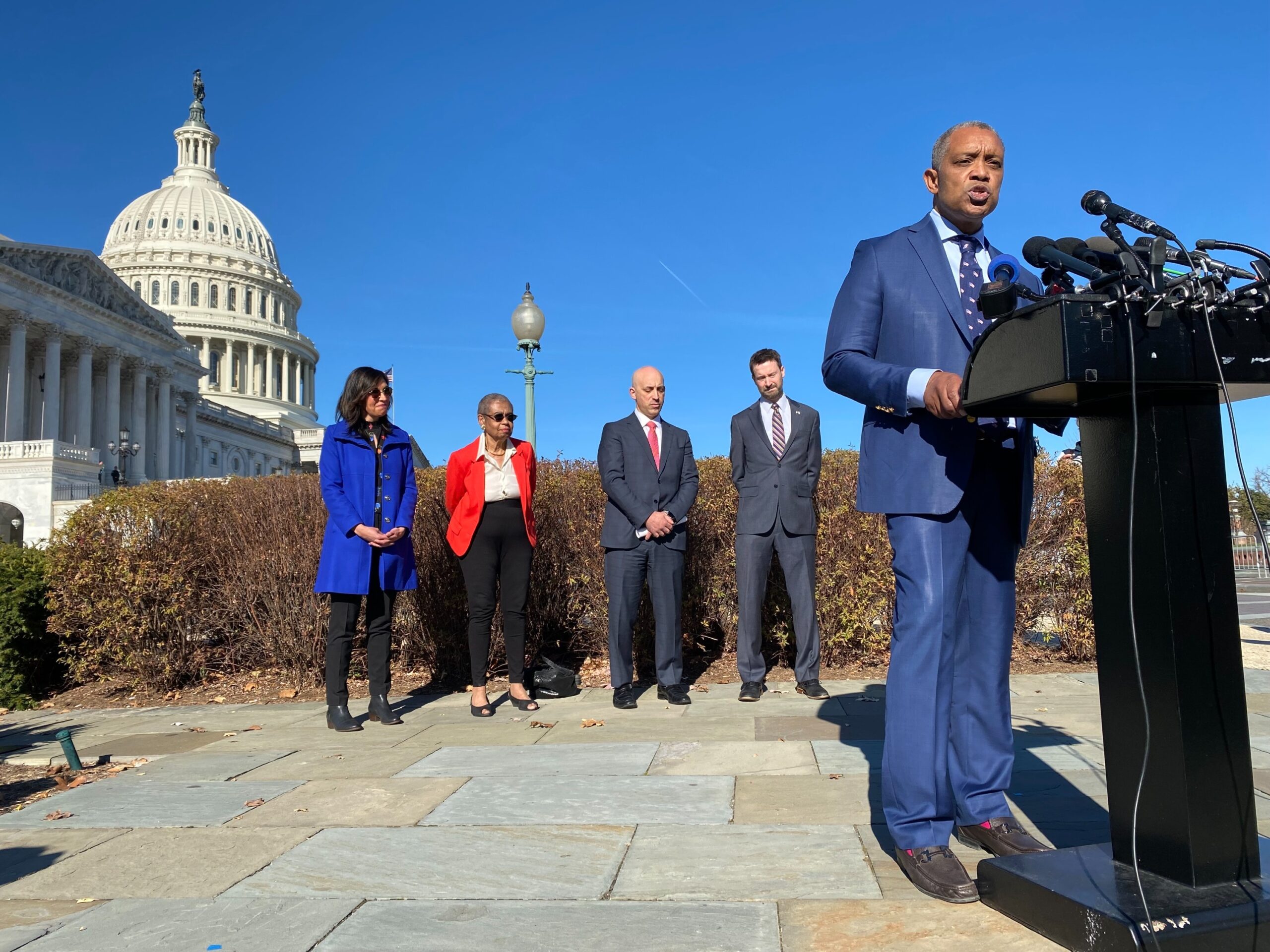
D.C. Attorney General Karl Racine on Tuesday sued the Proud Boys and Oath Keepers, two right-wing extremist groups whose members are accused of taking an active role in the Jan. 6 storming of the U.S. Capitol.
Speaking outside the Capitol, Racine said he was seeking to have the groups and more than 30 individual members pay for the damages and costs incurred by D.C. in responding to the insurrection, and that if he bankrupted them in the process, “then that’s a good day.”
“By seeking justice through this civil lawsuit, we will hit the organizers, planners, and participants in their wallets and purses in order to deter their ability to strike again,” he said.
The lawsuit, which Racine said was the first of its kind to be filed by a state government, relies on both local and federal laws, including a federal statute passed in 1871 known as the Ku Klux Klan Act, which broadly prohibits political intimidation against former enslaved people. Rep. Bennie Thompson (D-Mississippi), who now chairs the Select Committee investigating the Jan. 6 attack, similarly cited the law in a lawsuit against former president Donald Trump earlier this year, as did victims of the 2017 Unite the Right rally that left one dead and more injured in Charlottesville in a lawsuit seeking damages against organizers. Last month jurors awarded the victims $25 million in damages.
Racine said his hope was to receive a similar payout for D.C. and the police officers and emergency personnel who responded to the Capitol, including Michael Fanone, an officer who was tased and beaten by a pro-Trump mob after he was dragged out of a tunnel on the western side of the Capitol, and three officers who later died by suicide.
“The defendants’ unlawful actions caused the District to deploy unprecedented resources to repel and defeat an attack on our country’s Capitol. During the height of the attack, approximately 850 members of the Metropolitan Police Department were at the Capitol and the immediate area surrounding it. Scores of officers required emergency medical treatment and continue to receive physical and medical treatment today,” said Racine. “These costs, including the unavailability of officers who were not able to immediately return to their jobs of protecting D.C. residents, are substantial. We will, through this lawsuit, seek to impose severe financial penalties on the organizations and individuals responsible.”
In January, D.C. Police Chief Robert Contee III told members of Congress the insurrection had cost the city an estimated $8.8 million — a preliminary figure that does not factor in the cost of injuries to officers and other fees.
Both the Proud Boys and Oath Keepers have become a focus of federal prosecutors’ investigation into the Jan. 6 insurrection, and almost all of the 31 members that Racine personally named have been charged for crimes related to that day — some are being held at the D.C. Jail. The only person named who hasn’t been charged, Proud Boys leader Enrique Tarrio, is serving a five-month sentence at the jail for burning a D.C. church’s Black Lives Matter banner last year and later entering the city with two high-capacity magazines.
Earlier this year the church sued the Proud Boys and Tarrio, and in April a D.C. judge entered a default judgement against the group. Tarrio later took to defending himself in the case. Last month, the attorney for the Oath Keepers dropped the group, citing delayed payments and lack of communication. (Neither group has a current attorney of record listed.)
But speaking outside the Capitol, both Racine and D.C. Del. Eleanor Holmes Norton said the purpose of the lawsuit goes beyond financial restitution — even though using the threat of those penalties is a valuable tool.
“Yes, we’re using the Ku Klux Klan Act and other laws to bring as much financial pain — hit them in the pocket — as possible,” said Racine.
“We have no idea if these people have any assets. But this lawsuits will have a deterrent effect. They’re going to have to spend money defending it,” added Norton. “So if we don’t get a penny in restitution, this lawsuit’s deterrent effect will say, ‘Be prepared to defend yourself because we’re coming after you.'”