Jacob Fenston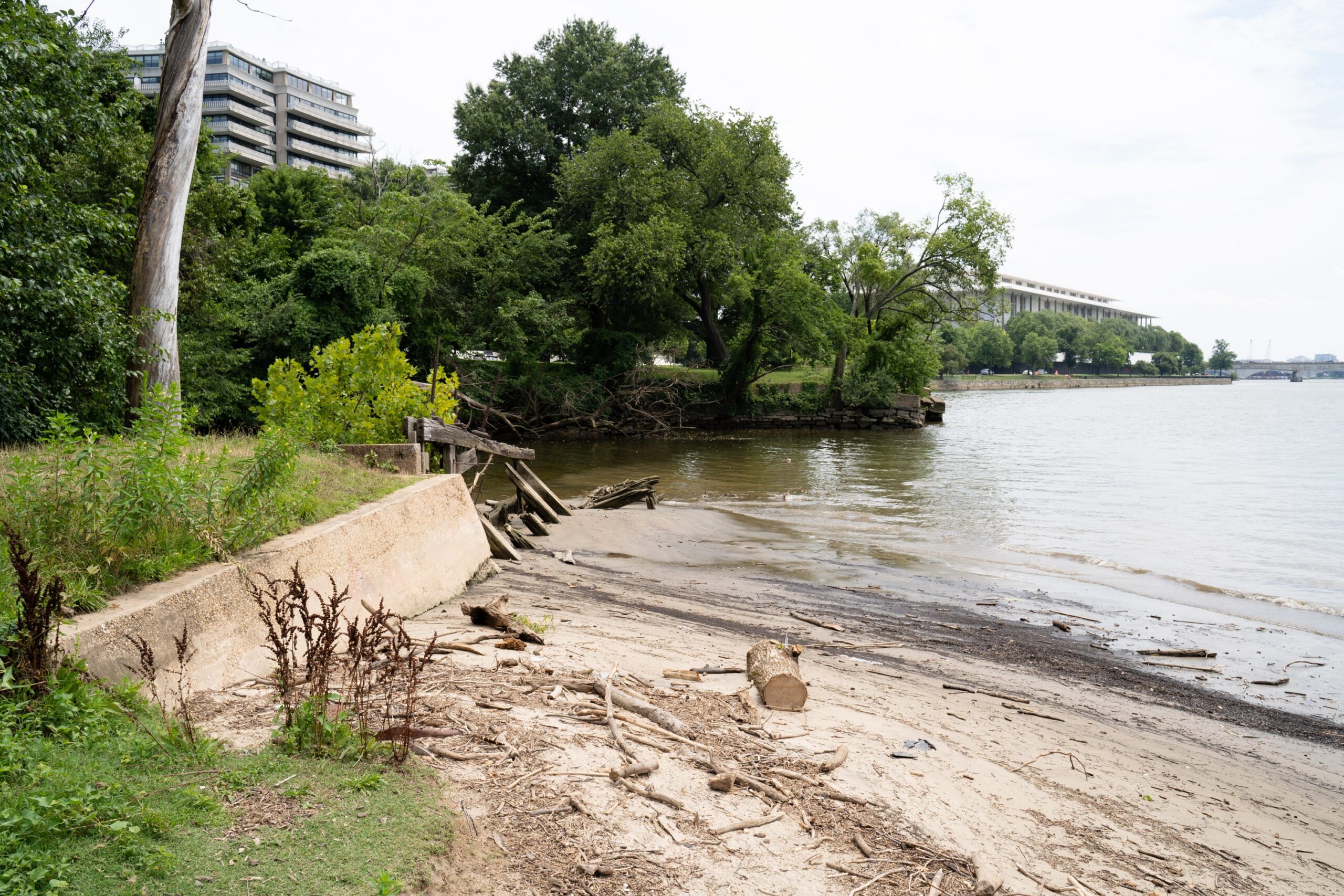
A dip in Rock Creek? A dive into the Anacostia River? A plunge into the Potomac?
All of these activities are currently illegal under D.C. law. But three years of water quality data — some of the most comprehensive ever collected in the city — show certain locations on the District’s rivers are clean enough to swim in nearly all the time, suggesting possible places where swimming beaches or docks could be located if and when city officials loosen the longstanding swim ban.
“We just need to avoid some of the hot spots, but then encourage people to take back the river and start using this river again,” says Potomac Riverkeeper Dean Naujoks. “We want to see more people using it, enjoying it in the future.”
In 2019, a coalition of local environmental groups launched a volunteer-driven effort to test water quality at dozens of locations in the city each week during the warm months. The data is posted in real time on the website and app, Swim Guide. A new report from the environmental groups analyzes the first three years of data from the project.
According to the report, five locations passed water quality standards for bacteria more than 80% of the time. Washington Channel (where the Wharf is located) passed 98% of time; the Tidal Basin passed 97%; Buzzard Point (on the Anacostia) passed 85%; Kingman Island (on the Anacostia) passed 83%; and Thompson Boat Center (on the Potomac) passed 82%.
The cleanest locations were generally in areas with high water flow, so bacteria is quickly diluted, and in areas distant from outfalls were sewage overflows during storms.

Christine Burns, project coordinator with Anacostia Riverkeeper, says the data show some exciting potential for swimming, even if it is still currently banned.
“I think that this is at least identified some areas where you could really reasonably start talking about creating the infrastructure for that,” she says.
There may be an opportunity to take a legal swim in the Anacostia someday soon. A few years ago the District amended the swim ban to allow permitted swimming events in the Anacostia at times when the bacteria counts are low enough. But that proved impractical, says Burns, because it relied on average bacteria levels rather than real-time testing — one big storm could make the average spike. Recently, D.C. revised the rule, allowing use of single-sample bacteria levels for permitted swim events.
“We’re really looking forward to hosting some sort of opportunity to jump in,” says Burns. “We wanted to squeeze it in in the fall didn’t quite happen before it got too cold. So, looking for a spring spring opportunity to jump in somewhere.”
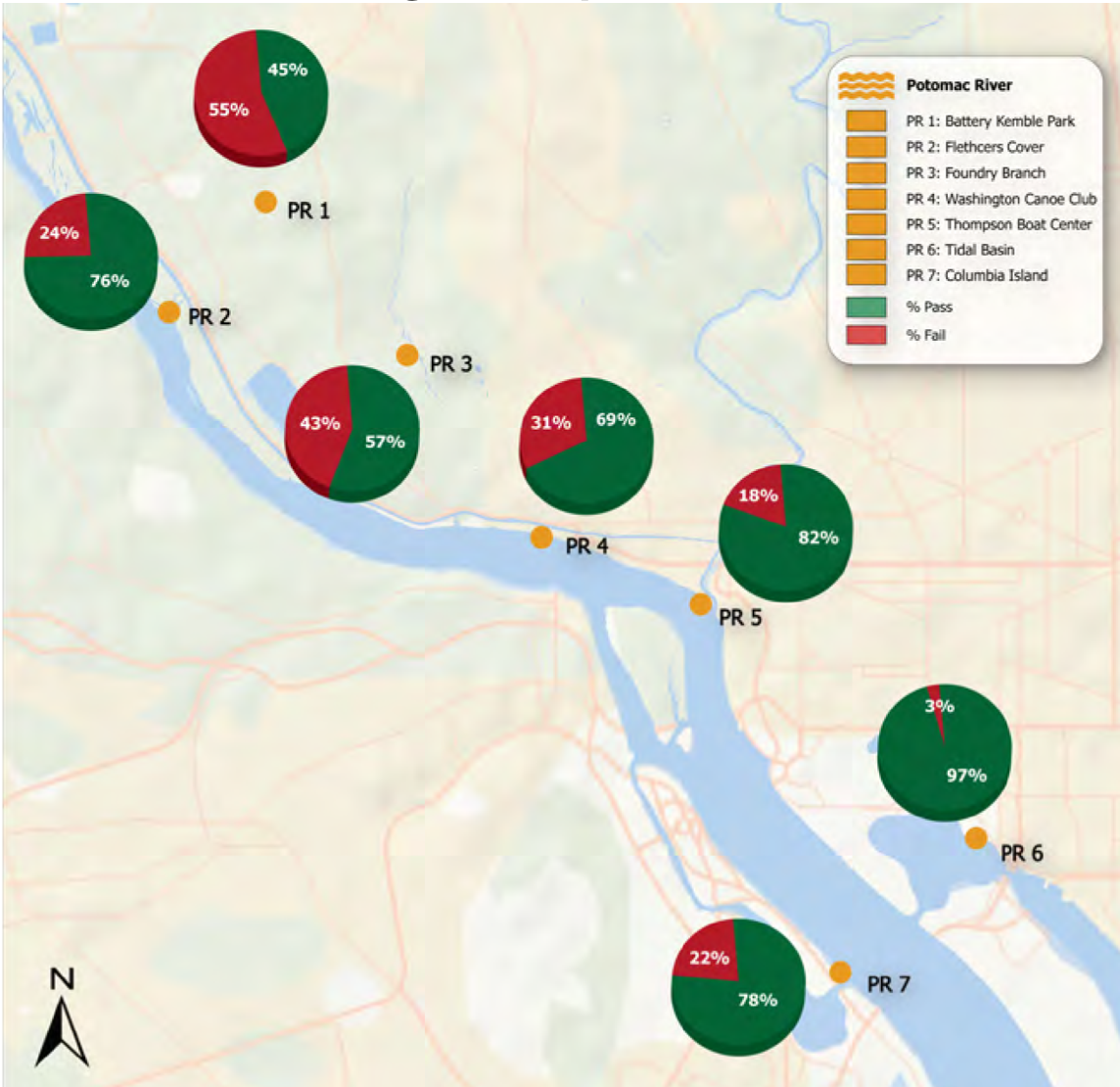
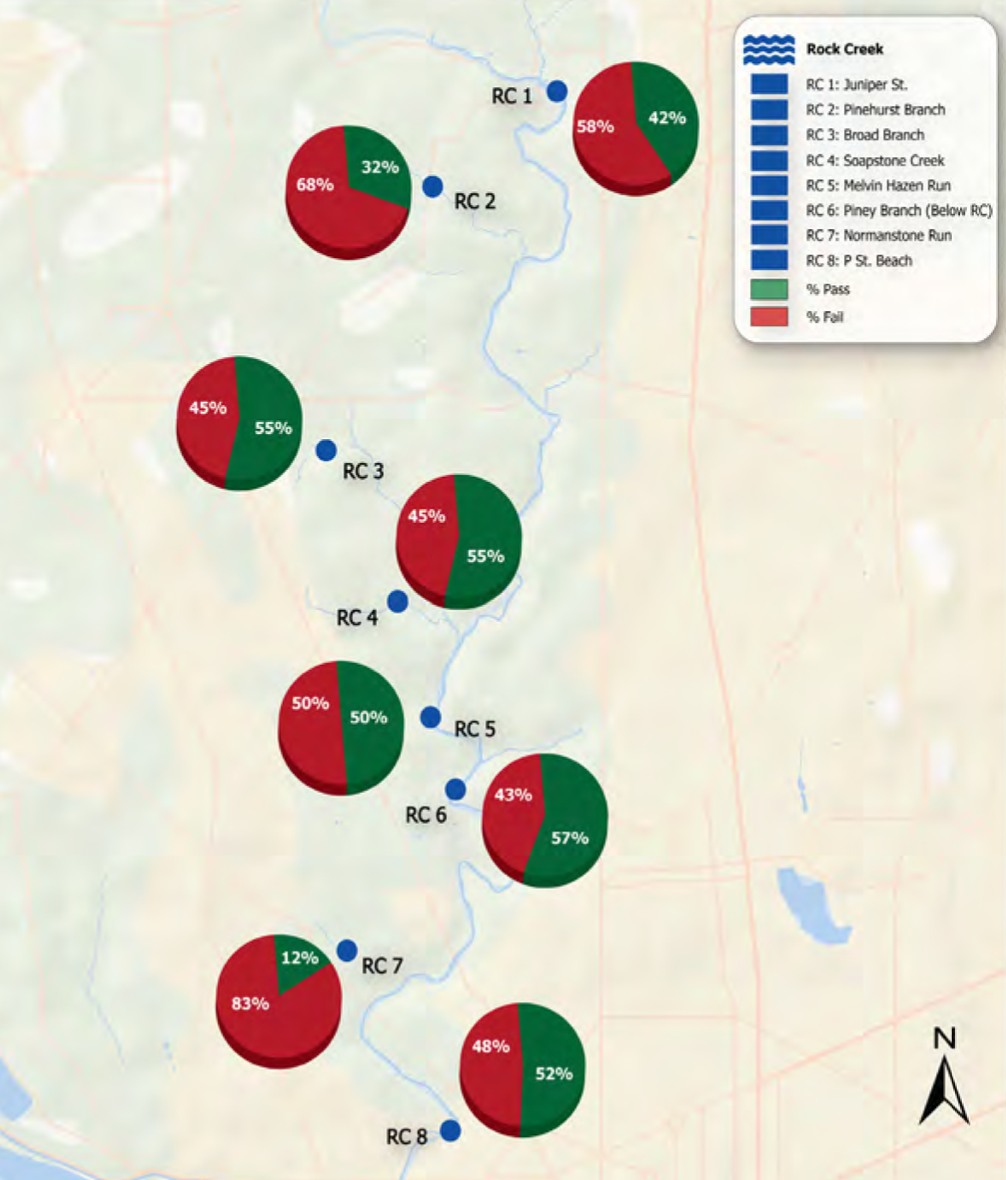
Rock Creek, the smallest of the three waterways, showed consistently dangerous levels of bacteria. When looking at bacteria levels averaged over time, six out of eight Rock Creek sites had a 0% passing rate.
The report also confirms that water quality is the worst in the days immediately after a rainstorm. Average site passing rates dropped 39% when sampled within three days after a storm of .5 inches or more rain. Hence, it’s a good idea to avoid contact with the rivers for 48 to 72 hours after a storm.
Some sites on Rock Creek and other tributaries showed high levels of bacteria even during dry weather, which according to the report, may indicate “outdated infrastructure, leaking sewer pipes, or un-investigated point-source pollution.”
Jeanne Braha, executive director of Rock Creek Conservancy, says this calls for further investigation. “We really need to understand where this bacteria is coming from, particularly the dry-weather bacteria that we’re seeing.”
In Rock Creek, she says, some of the bacteria may be coming from houses or businesses where sanitary sewer pipes are accidentally hooked up to storm drain pipes that dump directly into the creek. Pet waste is another possible source.
How improvements happen
In recent years, D.C. water quality has been improving, thanks in large part to a massive sewer project by DC Water. The utility is installing enormous new sewer pipes under the city to capture overflowing sewage before it spills into the rivers. Before the project, sewers overflowed into the Anacostia 75 to 80 times a year, dumping on average 2 billion gallons of combined stormwater and sewage. Work on the project on the Anacostia will wrap up next year — and is predicted to prevent 98% of overflows — while a new Potomac sewer tunnel will be finished in 2030.
However, on Rock Creek, the solution is less clear, and less imminent.
“On the Anacostia and the Potomac, it’s a much more linear solution,” says Braha. “There are these combined sewer overflows that are creating impairments, and you just make the pipes bigger.”
On Rock Creek, the bacteria is coming from numerous sources, including old, leaking sewer pipes that run throughout Rock Creek Park.
While the water in Rock Creek is a long ways from safe, the larger Potomac and Anacostia are improving. District officials have said they want to lift or relax the swim ban when it’s safe to do so. The District Department of Energy and Environment funded the water monitoring program to get a better idea of when and where it’s clean enough to swim.
Decades ago, D.C. residents swam in all three waterways, flocking to beaches at the Tidal Basin and across the river in Arlington.
“The public should have a right to do that,” Naujoks says.
And, he notes, people are already doing it, but there’s limited access. “Just because you don’t have a kayak or a boat, you should still be able to use and enjoy the Potomac River via swimming,” Naujoks says.