Martin Austermuhle
Update, 1/13: D.C. Public Schools will mandate weekly COVID-19 testing for preschool students. Rapid test kits will be provided weekly to students in preschool and kindergarten starting Friday.
Chancellor Lewis Ferebee said the testing requirement only applies to students in pre-K3 and pre-K4 because they are not yet eligible for a coronavirus vaccine. Families must upload the results online before the start of each week.
Ferebee also said the school system will provide rapid tests to students who are identified as close contacts of a person who tests positive for COVID-19 starting Jan. 18.
Original:
D.C. will begin distributing rapid COVID-19 tests to pre-K and kindergarten children at public and charter schools every Friday while cases remain high, though it remains to be decided whether those students will be required to return a negative test every Monday in order to attend classes. Mayor Muriel Bowser has not specified a timeline or a case threshold for providing the tests.
Speaking Monday morning, Bowser said the decision reflected the reality that most kids in the city’s pre-K program are not old enough to be vaccinated, and even some entering kindergarten may not be either. There are roughly 13,000 kids in pre-K programs in D.C. Public Schools and charter schools.
“Our pre-K kids are unvaccinated. We are targeting them with weekly tests,” she said.
Dr. Christina Grant, the state superintendent of education, said the decision to offer rapid tests grew from concerns raised by some schools and parents that saliva-based testing options were too complicated for young children.
School staff will also be provided with rapid test kits.
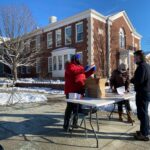
Last week DCPS coordinated a massive rapid-testing campaign of more than 49,000 students and staff ahead of a return to in-person classes on Thursday. (A snow day closed schools on Friday.) Bowser said DCPS will extend its “test to return” program of testing all students and staff after the scheduled February winter break and April spring break.
She also said that DCPS would continue with symptomatic testing and pursue the target of randomly testing 20% of asymptomatic students, with the ability to scale up to 30% “when case rates are high.” Most charter schools run their own testing regimes, some of which are more stringent and require weekly testing of all students and staff.
Bowser and Grant also said they would soon launch a “Test to Stay” policy for D.C. schools, under which unvaccinated students who are close contacts of someone who tests positive for COVID-19 can remain in school as long as they regularly take rapid tests that come back negative. The model, which has been tested in Montgomery County and promoted by the Centers for Disease Control and Prevention, is seen as a means to help parents manage COVID exposures in schools and the usual quarantines and missed school days that would follow.
Despite these new initiatives, Grant urged parents to get all eligible children vaccinated. According to D.C. data, just under 20% of kids aged 5 to 11 have gotten either a single dose or both doses of the COVID-19 vaccine. Among kids aged 12-15 it’s 68%, and 65% for kids aged 16 and 17.
“I want to be crystal clear that it is critically important for families and students who have access to the vaccine to take the vaccine. That is the critical way to ensure children can remain in schools,” said Grant.
Bowser also announced an expansion of the popular distribution of rapid testing kits, saying that six senior wellness centers would start giving out the at-home tests to people aged 65 and above. The remaining distribution sites for D.C. residents can be found here.