Martin Austermuhle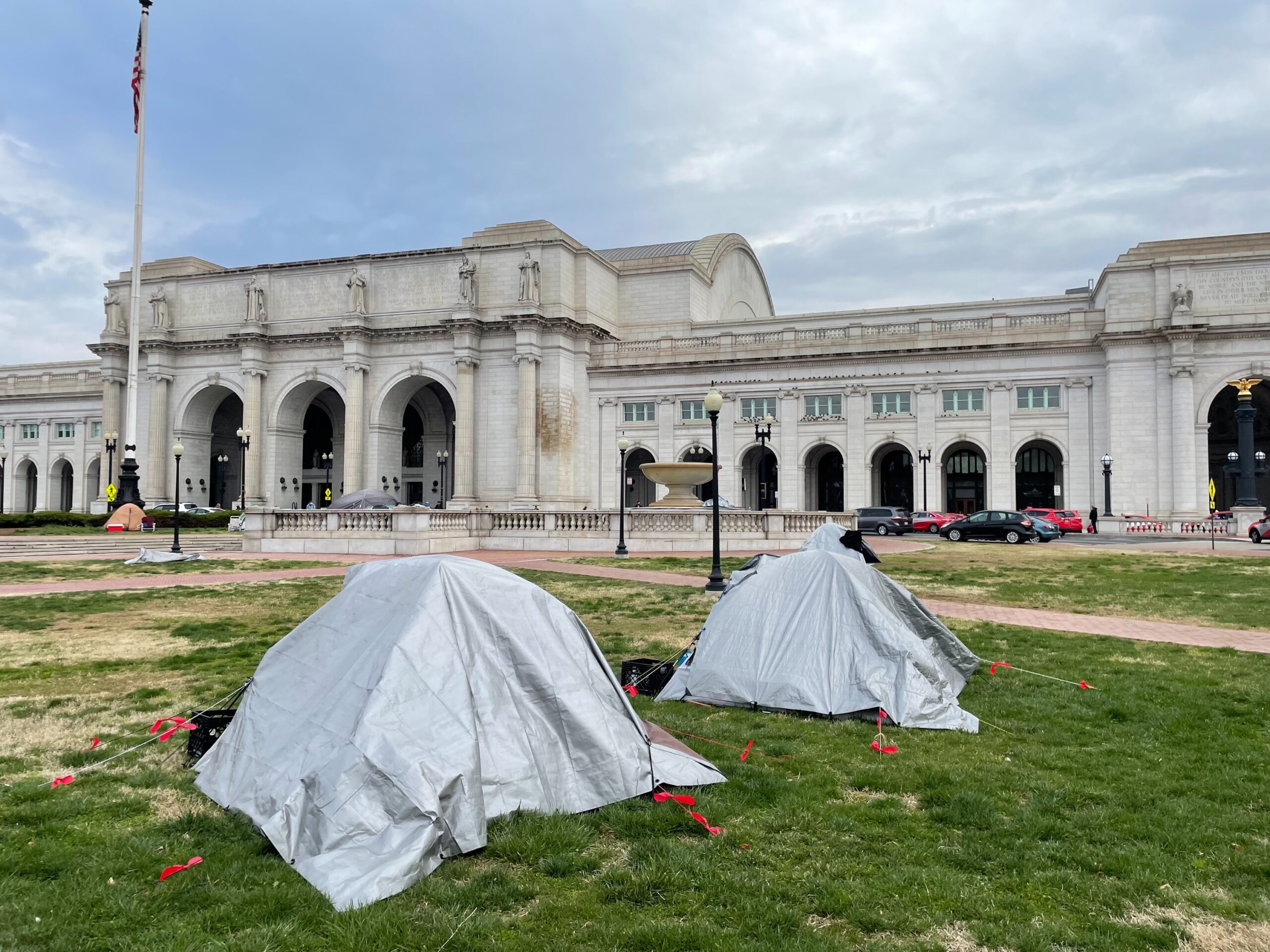
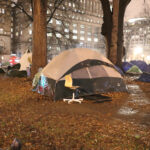
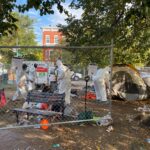
The National Park Service says it plans to clear two homeless encampments located on federal land in D.C. in May, one in Columbus Circle outside Union Station and the other at the intersection of New York Avenue and I Street NW.
The agency’s plans were made clear in a March 24 letter from Jeffrey P. Reinbold, the superintendent of the National Mall and Memorial Parks, to D.C. Deputy Mayor for Health and Human Services Wayne Turnage. Reinbold asked Turnage for assistance in finding housing for people there ahead of the formal closure of the encampments.
“The NPS will close the encampments in early May to address threats to public health and safety in those areas. The United States Park Police reports numerous instances of criminal activity and violence in these parks and closing these encampments will allow the NPS to ensure the safety of the general public and those living in the encampments,” said NPS spokesman Mike Litterst in an email.
Litterst added that NPS “has made a formal request to [D.C.] to provide housing for the current occupants at the site.”
That request builds on an existing pilot program D.C. has been running since the fall at five encampments on city land where it worked to get residents into housing before closing the encampments and prohibiting anyone from coming back. After criticism of its tactics at the first three encampments — two in NoMa, and one in Truxton Circle — D.C. has since changed its practices, no longer setting deadlines for closing encampments and instead working with residents on a rolling basis to get them into housing or a hotel while housing is found.
Speaking to the D.C. Council earlier this week, Turnage said the pilot program was showing successes. Of 139 people recorded by outreach workers as living at the five sites, Turnage said 109 engaged with workers, with 74 ending up in housing and 17 in hotels awaiting final housing arrangements. Thirty people did not engage with outreach workers.
The request from NPS is also evidence of increasing coordination between the agency and D.C. when it comes to closing encampments on federal land. When NPS closed an encampment on Massachusetts Avenue NE last October, some D.C. lawmakers and advocates for the homeless said there was little evident coordination between the federal agency and the city. Last year, NPS also closed two encampments at Burke Park and nearby Gompers Park in Northwest.
Critics say closures merely break up communities and scatter people experiencing homelessness, many of whom opt for encampments because they do not feel safe in shelters. Some advocates said last year that people evicted from the encampment on Massachusetts Avenue simply moved to Columbus Circle. In his letter to Turnage, Reinbold alluded to the reality that people could move from one encampment to another.
“NPS is concerned that closing these areas without providing housing assistance will exacerbate conditions in nearby areas,” he wrote.
NPS says it gives residents of encampments advance notice of impending closures, and is “committed to taking a social services-first approach” when they have to happen. Litterst also said the agency has the “responsibility to consider the overall health and safety of all park users and neighbors.” But Reinbold said that regardless of the progress in getting people housed, NPS would move to close the encampments in May.
While not one of the city’s larger or more crowded sites, the encampment at Columbus Circle is one of the most visible to members of Congress and their staff working at the U.S. Capitol nearby. Some Republicans and conservative activists have cited the encampment in criticisms of Mayor Muriel Bowser’s leadership in D.C. and President Joe Biden’s presidency.
Speaking to the council, Turnage said he would work closely with NPS to connect the people in the two encampments to housing.
“If you’ve been to Columbus Circle or New York Avenue, those are clearly problem sites. I don’t think anybody who has any compassion can walk by the New York Avenue site and feel comfortable with what they see. Nor can they feel comfortable with what they see as Columbus Circle,” he said. “The mayor wants us to be part of the solution, and so we’re going to try and bring as many resources to bear on those sites to help folks who face displacement so they don’t have to end up moving from one encampment to another. This will be a challenge, because some of the residents may not have the paperwork to move into housing.”
Last year, the D.C. Council raised taxes on wealthy households to help pay for more housing for people experiencing homelessness but advocates say more needs to be done to get housing vouchers to people who need them — and faster. They also say that steps need to be taken quickly to prevent people from losing temporary housing and also address overdue rent payments linked to the pandemic.