Ally Schweitzer
On a Thursday morning in May 2011, a group of homeowners sat in a hearing room at the Montgomery County Planning Board in Silver Spring, Maryland, waiting their turn to testify against the construction of a new housing development.
The topic up for discussion that day was a high-end townhouse community that a developer wanted to build near bustling downtown Silver Spring. The company, EYA, had applied for a zoning change so it could build 76 townhomes on the former site of a private school less than a mile from the Silver Spring Metro station. The developer’s lawyer was in the hearing room. The homeowners had brought a lawyer, too.
For the next two hours, 34 community members read from prepared testimony outlining their opinions of the proposed townhouses. Most agreed they were a bad idea.
“There is a lot of pressure on our neighborhood to become more dense,” said a leader with the Seven Oaks Evanswood Citizens Association. “We want to stop this trend now.”
“We invested in a single-family home neighborhood,” testified a homeowner. “If we wanted townhouses to be a part of that equation, we would have purchased elsewhere.”
Several residents talked about how friendly the neighborhood is, full of people who mow each other’s lawns, shovel each other’s driveways, and exchange vegetables from their gardens. Adding townhouses to the mix would disturb their tight-knit community, they said.
“It’s a quiet, close, and special neighborhood, and there aren’t many like these left in Silver Spring,” another neighbor testified.
A handful of people told the board they liked the proposed development — it would provide 10 homes priced for lower-income residents, in addition to more housing near transit and walkable options for seniors looking to downsize, they said. But supporters were outnumbered. When the hearing ended, Planning Board Chair Françoise Carrier turned her attention toward the naysayers.
“I understand that there’s a lot of emotion behind this, and a lot of folks that think that townhouses will be damaging to your neighborhood,” Carrier said. “I think you will decide — if this goes forward, five years from now — you’ll decide it’s OK.”
Homeowners in the hearing room began to protest. “Please let me speak, folks!” Carrier shouted from the dais.
“Existing homeowners have essentially veto power over proposals to build new housing,” says Brookings Institution fellow Jenny Schuetz.
Fights like this play out every day in cities and suburbs across the country. But in the D.C. region, where local governments are struggling to address a severe housing shortage that is driving up prices, elected officials are under growing pressure to push back against civically engaged homeowners who mobilize against new housing construction.
Montgomery County, an affluent D.C. suburb that has experienced transformative growth and demographic change in the last 30 years, exemplifies how hard that can be.
“We have this system where local governments are the gatekeepers for new housing production,” says Jenny Schuetz, a senior fellow at the Brookings Institution who examines the national housing shortage in her book Fixer-Upper: How to Repair America’s Broken Housing Systems. “Local governments, in turn, have outsourced a lot of their authority to existing residents, so existing homeowners in particular have essentially veto power over proposals to build new housing.”
Right now, homeowners are challenging hundreds of apartments and townhomes that developers have applied to build in Montgomery County, including more than 180 homes for lower-income residents. The citizen activists, most of whom have hired lawyers, contend that the new housing will clog traffic, harm the environment, block views, create construction noise, or have other negative effects on their quality of life. At least one dispute has been elevated to court.
Homeowners are simultaneously fighting a proposed long-term plan for the county that would encourage more housing near jobs and transit. Resistance to the plan, called Thrive Montgomery 2050, is loud and persistent. County council members — most of whom are either up for re-election or running for other elected offices this year — have responded by holding additional hearings and delaying a vote on the plan by several months.
Montgomery County Council President Gabe Albornoz did not respond to interview requests for this story.
Officials must consider the locality’s overall housing needs, not only the wishes of existing homeowners who have the time and resources to attend weekday hearings and hire lawyers, says George Leventhal, a former Democratic county council member who clashed frequently with neighborhood associations when he held office from 2002 to 2018.
For elected officials in the county, “I think it’s a natural tendency to believe that the people you see and hear are representative of the people you represent. But by definition, they’re not,” Leventhal says. “Overwhelmingly, most people don’t pay attention to what’s happening in local government day-to-day, and don’t show up to state their views.”
Fifty years ago, Montgomery County was a majority-white bedroom community of single-family homes. Today it’s one of the most diverse counties in the nation, with a population exceeding 1 million and tall buildings stretching to the sky above Bethesda, Rockville, and Silver Spring. But the county’s growth belies serious shortcomings in the housing market that took root during the Great Recession.
The homeownership rate dropped four percentage points in Montgomery County between 2009 and 2018, and net growth in homeownership occurred only among households that earn at least $150,000 per year, according to county data. Home construction slowed to a crawl during the recession and it has yet to fully recover. The supply shortage has grown so severe across the D.C. area that, in 2019, the Metropolitan Washington Council of Governments issued a sweeping call for local leaders to aggressively ramp up housing production. The association advised governments to approve a total of 320,000 homes by 2030, with a focus on affordably priced housing near jobs and transit.
“Housing affordability is inextricably linked to economic development opportunity, our transit system, and taking care of the people that make up the workforce of tomorrow,” said Prince George’s County Council Member Derrick Davis, then-vice chair of the MWCOG board.
Montgomery County lawmakers embraced the goal, resolving in 2019 to build a total of 41,000 new homes by 2030, roughly 10,000 more than what was planned. More than two years later, the county has made little progress.
“We’re just not building enough housing,” says Casey Anderson, the current chair of Montgomery County’s Planning Board. “It’s having increasingly acute effects on affordability, which in turn has a major impact on equity, because poor, middle-income, and even upper-middle-income people are struggling to find places they can afford.”
Officials say there are multiple reasons for lagging home construction, including the pandemic, sky-high land values, costly labor and materials, onerous regulations, and inflexible zoning. But homeowners who protest development are part of the problem, says Françoise Carrier, who entered private law practice after she stepped down from the planning board in 2014.
“Their main effect is delay, and delay has several impacts,” Carrier says. “It leads to higher costs for real estate. It can even kill a project. The numbers aren’t going to work if the developer is looking at an additional six months of delay, so they’ll walk away.”
That doesn’t mean residents should be shut out of the development process, Carrier says. On the contrary, resident engagement can be an important check against development that’s not in the public interest.
“The public needs to have a chance to have their voices heard,” the attorney says. “Developers and decision-makers also need to know that they’re operating in the public eye. That scrutiny makes them follow the rules and not cut corners.”
But the engagement process also provides an opportunity for privileged individuals to pressure officials to delay, shrink, or stop housing construction that could benefit others, says former council member George Leventhal.
“The problem has always been, whose voices are heard? Who is empowered to speak up? And whose interests are being protected?” Leventhal says.
Neighborhood Defenders
The townhouses pitched for Silver Spring in 2011 wouldn’t have put a real dent in the county’s affordability crisis. After all, most of the townhouses were expensive: From the start, EYA said they would cost in the $600,000s or higher, not much more than what many homes in the area were worth at the time. But the dispute exemplified how much power a small group of residents can wield over housing development.
Homeowners with the Seven Oaks Evanswood Citizens Association continued to resist the townhouses for another two years after the initial planning board meeting, stretching across at least a dozen public hearings and two lawsuits. Ultimately, they lost, and townhomes in the development — called Chelsea Heights — went on the market in 2015. But neighbors had made another lasting impact: They persuaded the county to whittle down the size from 76 houses to 63, leaving just eight of 10 proposed affordable units. The delays also increased the cost of each house by at least $50,000, an EYA executive said at the time.
Leslie Hansley was one of the first people to buy into Chelsea Heights. The retiree and her late husband sold their previous home around the corner and moved into one of the new townhouses on Springvale Road in 2015.
“My husband loved brand new homes,” Hansley says, sitting at her dining room table. “When we retired, I said, ‘I think we need to move to a place where we can manage more, where we don’t have so much maintenance.’ We said this would be the perfect place — if it would be built.”
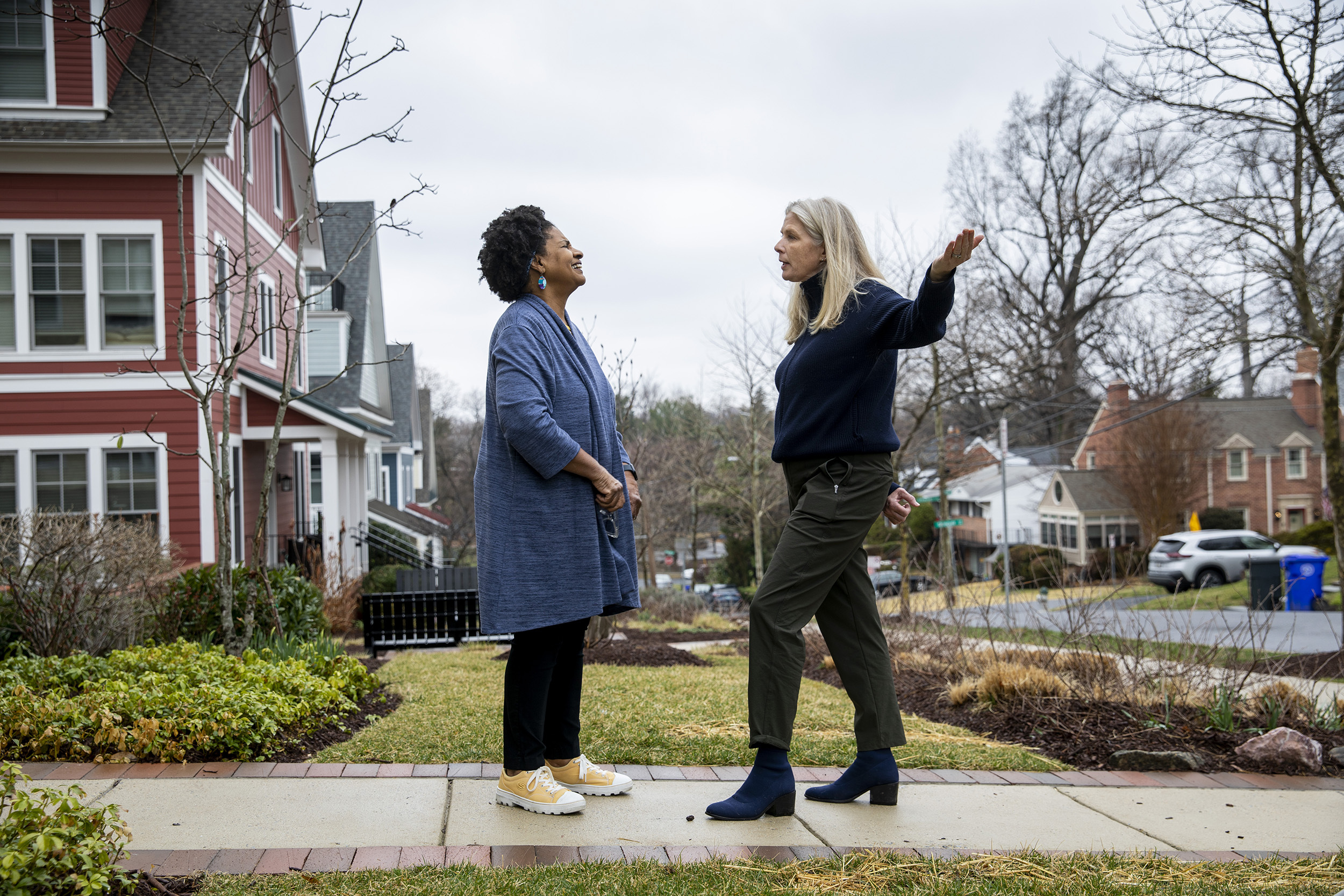
EYA Executive Chairman Bob Youngentob and Chief Acquisitions Officer Aakash Thakkar, who were closely involved with the Chelsea Heights development, did not return WAMU/DCist’s requests for comment. Neither did several opponents of the project, including former SOECA President Jean Cavanaugh, though one critic — Silver Spring resident Vicki Warren — says she fought the project because she was concerned about how it would affect a nearby historic home.
Taken in isolation, delays to any one housing project aren’t a catastrophe, advocates say. But over the course of multiple years and dozens of proposals, anti-housing activism can have a chilling effect on overall housing development, says AJ Jackson, a former EYA executive who is now executive vice president of social impact investing for JBG Smith.
“If you’re a business person, you are trying to minimize risk, and trying to evaluate, ‘Where am I going to invest time and money that’s actually going to be productive?’ And if I see that the last, say, seven projects in this jurisdiction had four, five, seven, 10-year approval processes and a lot of litigation, you’re not going to go there unless you can generate enough return to justify that risk,” Jackson says.
Critics often call homeowners who fight new housing “NIMBYs,” short for “not in my backyard.” But in testimony and written communication with officials, critics of Chelsea Heights took the view that they were defending their entire communities — not just their own backyards — from excessive development. They viewed themselves as neighborhood defenders, a term embraced by Katherine Levine Einstein, assistant director of policy at Boston University’s Center for Antiracist Research.
“No one would self-identify as a NIMBY,” says Einstein, who co-authored a book about neighborhood defense politics in Massachusetts. “The word ‘not in my backyard’ connotes a degree of selfishness, concerns about your own property values, and defending your own narrowly construed interests. But that’s not really how [homeowner activists] present themselves or conceive of themselves… Time and time again, they invoke these broader neighborhood concerns and community-level interests.”
Opponents of Chelsea Heights cited a variety of reasons for not wanting the development: They testified that the townhomes would worsen traffic, destroy trees, pollute waterways, disturb wildlife, imperil a historic landmark, endanger children who ride their bicycles in the streets, and line the pockets of developers whose only interest in the neighborhood was profit. Many regarded the private school that previously occupied the land as a comparatively minor nuisance, even though it sent emissions-spewing school buses and cars through local streets five days a week.
Neighborhood defenders in Silver Spring found a supporter in Marc Elrich, then an at-large council member who now serves as county executive and is running for re-election. In an October 2011 council discussion about Chelsea Heights, Elrich rejected the idea that the county needed to prioritize future residents’ housing needs.
“It’s all good and well to talk about everybody who’s coming here. The only problem is, we’re elected by people who actually live here,” Elrich said. “This idea that somehow, the most important thing for us to do is change the way things are to accommodate something in the future, seems a bit out of place.”
Homeowners in the room applauded.
A spokesperson for Elrich says the executive "has always been willing to be an intermediary between the community and developers on many projects. His goal is always the same – to ensure that all development follows the processes aligned in the County’s Master Plan and that community voices and involvement are not shut out."
‘A force for the status quo’
Also in the council hearing room that day in 2011 was David Brown, a veteran land use attorney hired by SOECA to fight Chelsea Heights. An expert on the county’s zoning regulations, Brown has spent more than 20 years representing Montgomery County homeowners and neighborhood groups in their efforts to stop development.
Brown calls himself a “force for the status quo.”
“There are a lot of zoning lawyers who specialize in assisting companies and individuals that want to develop properties,” Brown says. “I practice law on the other side.”
Brown says his first big win in Montgomery County was in the early 2000s, when he represented a group of Bethesda homeowners who wanted to block the county from selling off a nearby wooded lot to a homebuilder. His clients won, and that lot is preserved today as Maiden Lane Urban Park.
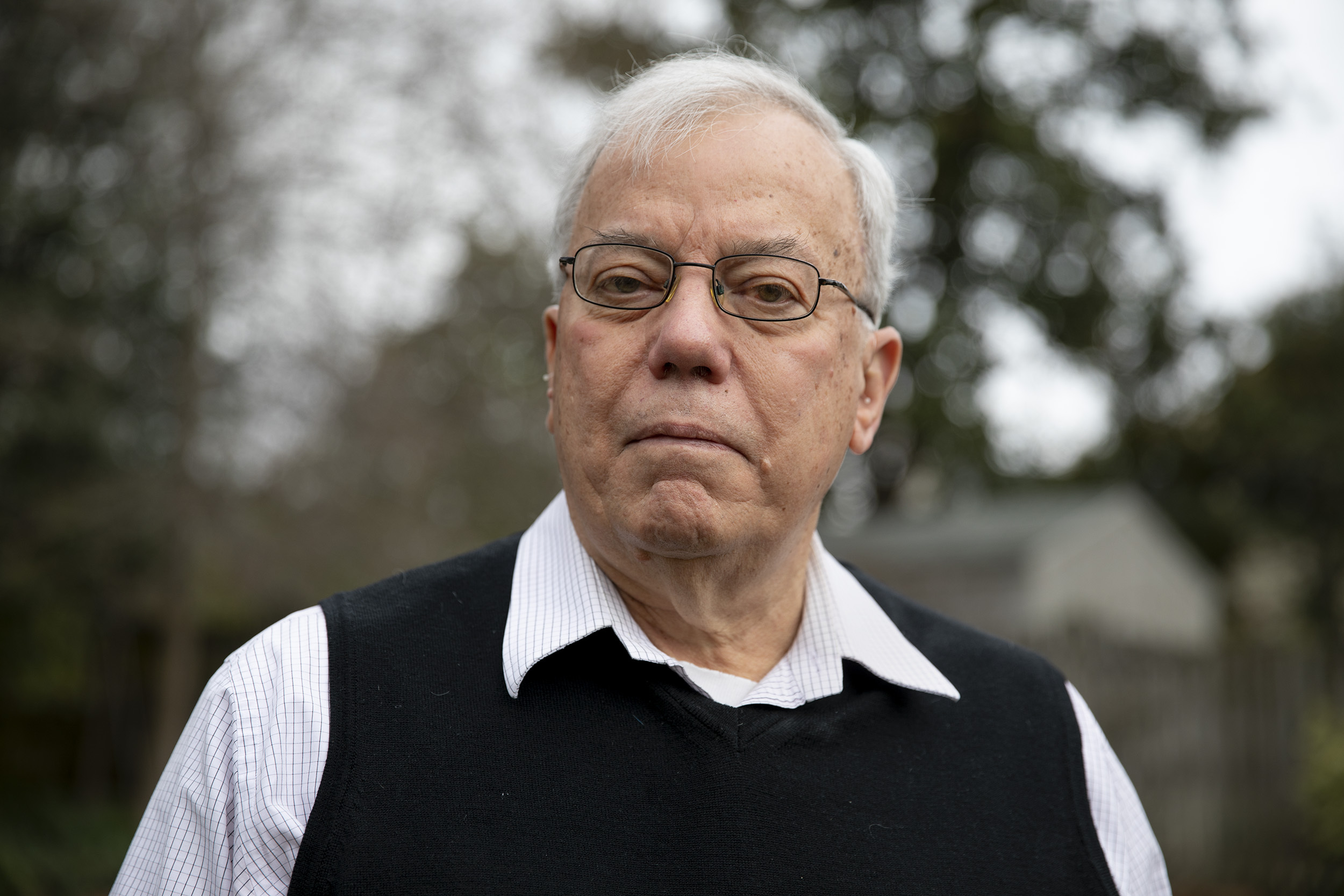
The lawyer says he’s had more failures than successes since then. But the cases keep coming. Homeowners need someone like him on their side because builders have a natural advantage over residents in the development process, he says. Development firms work closely with the Montgomery County Planning Department to refine their proposals before residents get a chance to weigh in, he says. By the time a planning board hearing takes place, planning staff have already spent a great deal of time vetting the developer’s proposal.
“Most of the time, citizens are trailing behind the process, even if they are super alert to what’s going on in their neighborhood — which often is not the case, because citizens in Montgomery County have important jobs to go to,” Brown says.
Planning staff are heavily involved in vetting development proposals to ensure they meet strict regulatory requirements before they come to the board, according to Planning Board Chair Casey Anderson.
Brown — who also serves on Alexandria's planning commission — has made a lasting mark on housing development in Montgomery County. One of his most enduring successes came in 2014, after he was retained by a downtown Silver Spring condominium association to fight plans to replace a one-story storage facility with a seven-story, 187-unit apartment building at 8001 Newell Street. The project would have brought 163 market-rate and 24 affordable apartments to the neighborhood. After three hearings in 2012 and 2013, the planning board granted initial approval to the development despite objections from condo owners at nearby 8045 Newell Street, who told officials that the building would deprive their homes of fresh air and sunlight.
“I chose a unit facing west that was in direct line with the prevailing eastward winds, which would provide fresh air into the only four windows I have in my unit,” one condo owner testified before the Planning Board in 2012. “I am very concerned that with the development of this seven-story apartment building… the source of fresh air into my condo will essentially be shut off.”
Brown appealed the board’s approval to the Montgomery County Circuit Court in 2013, saying the planning board had misinterpreted the street’s height limit when it granted initial approval to the seven-story building. That argument, unlike others made by residents, proved effective. The judge overturned the board’s approval in 2014, and the developer called off its plans to acquire 8001 Newell. Today, that block remains effectively off-limits to tall buildings.
Paula Tucker, president of the 8045 Newell condo association, joined the appeal that killed the redevelopment of 8001 Newell. She says she doesn’t oppose new housing next door — just tall buildings that block sunlight.
“We were not against housing. We were against seven floors,” Tucker says. “I mean, why stop at seven [stories]? Why not make it 10? Why not 15? It was too tall. That was the issue.”
Fights over the height and density of proposed apartment buildings are increasingly common as the D.C. region moves away from suburban sprawl and begins to embrace redevelopment of existing neighborhoods, also called infill development, says Hilary Chapman with the Metropolitan Washington Council of Governments. To date, most suburban jurisdictions have grown outward. In Montgomery County, where planners say only 15% of remaining land is developable, new housing must be built in places where people already live.
Naturally, that creates conflict. “It’s incredibly difficult to do infill development without disrupting someone or something,” Chapman says.
Most housing proposals Montgomery County homeowners are protesting right now are pitched for neighborhoods that have been developed for decades, some quite intensively. Located just over the D.C. line, the Village of Friendship Heights — represented by David Brown — is locked in battle with the planning board over 5500 Wisconsin, a proposed 18-story tower that would bring up to 380 apartments — including 57 affordable units — to the busy corridor. The building would be immediately surrounded by two 15-story buildings, with a 21-story tower a short walk away. But some residents say the structure would be too tall.
The structure will “protrude like a sore thumb above the roofline of neighboring buildings,” Friendship Heights Village Mayor Melanie Rose White wrote to the planning board last November. In an op-ed published by Bethesda Beat last year, another neighbor said the apartments would “block views of the sky.”
The dispute is remarkably similar to another squabble that took place in the neighborhood just a few decades ago. In 1988, residents of the nearby Town of Somerset voted 486-110 to de-annex 18 acres of land where a developer had begun to build a high-end condominium complex called Somerset House. The new condo owners would have contributed $500,000 in property tax revenue to the town each year, but the money didn’t matter: Residents feared that condo owners would have different values than existing residents and outvote them on town matters.
Today, some of the most vocal opponents to 5500 Wisconsin live at Somerset House.
The proposed 18-story building will create a “canyon” effect and “eliminate the views of many Somerset House II residents,” wrote the president of the Somerset House II Condominium Association, in an October letter to the planning board. Even though Somerset House itself occupies three buildings that are 18, 20, and 21 stories tall, the board president wrote, the planned development ignores the “topographical realities” of the area: Somerset House sits on land with a lower elevation than 5500 Wisconsin.
Hilary Chapman has seen many of these disputes play out, both as housing manager for the Metropolitan Washington Council of Governments and in her previous career as an affordable housing developer. She says many fights come down to one thing: a fear of change.
“Change is hard,” Chapman says. “I think that’s what it really gets down to. It’s just the human condition. When there are things that are changing in neighborhoods, it’s experienced at a neighborhood level. And it’s hard to imagine that the apartment building going up in your neighborhood [isn’t] something that’s just making your day harder.”
A Maryland developer who asked WAMU/DCist to withhold his name because his company is currently engaged in a legal dispute with homeowners says that neighborhood defenders are a “major concern” for housing developers who want to build in Montgomery County, particularly in affluent downcounty neighborhoods like Friendship Heights.
“The wealthiest areas with the most lawyers per capita — those tend to be the places” where development faces the greatest challenges, the developer says. But it’s difficult to know how many potential homes the county has lost due to resistance from homeowners.
“You never see the projects that get made impossible as a result of community opposition,” the developer says. “They just never come forward.”
Suburban housing politics, past and present
Anyone who runs for public office in Montgomery County knows how passionate voters can be about development, says Doug Duncan, a former elected official who served three terms as Montgomery County Executive from 1994 to 2006.
“If you look at Montgomery County and the history of it, certainly since the ‘50s or the ‘60s, this whole growth vs. no growth issue has been a predominant feature of the Democratic party in the county,” says Duncan, whose tenure coincided with a massive redevelopment of downtown Silver Spring, as well as a development boondoggle in Clarksburg that deepened skepticism of land use planning in the county.
“I remember going campaigning in downtown Bethesda, and I had a bunch of no-growthers following me, screaming at me about how I was corrupt and had ruined the county by allowing development,” Duncan says.
Montgomery County Planning Director Gwen Wright has seen her share of development battles, too. In 2016, when her office was working on a highly contentious development plan for the Westbard neighborhood in Bethesda, she and her staff heard from many residents who didn’t want the area to change at all. The county ended up paring down the plan.
“I still remember one community leader who said, ‘Well, it may look like Dogpatch,’” — a reference to the fictional Appalachian town from the Li’l Abner comic strip — “but it’s still our Dogpatch, and we don’t want it changed.’”
“It’s hard to come up with a response to that, I guess,” Wright says.
Housing politics in Montgomery County reflect its history as a racially segregated suburb. In nearby Washington, D.C., progressive activists often protest housing development they believe could displace low-income Black residents from the heavily gentrified — and once majority Black — city. In Montgomery County, white, affluent homeowners have long dominated development politics, and their activism targets a broad range of housing. Hearing records from the last 15 years show that neighborhood defenders have protested all kinds of residential development: luxury townhouses, low-income apartments, tiny homes — even affordable housing for seniors.
Royce Hanson, a research professor at George Washington University, had a front row seat to the resistance when he chaired the county’s planning board from 1972 to 1981, then again from 2006 to 2010.
"I had a bunch of no-growthers following me, screaming at me about how I was corrupt and had ruined the county by allowing development," says former Montgomery County Executive Doug Duncan.
“Miniature republics” of politically liberal residents who take conservative views on development have long been a potent force in Montgomery County, says Hanson, who documents the jurisdiction’s evolution in the book Suburb: Planning Politics and the Public Interest. As population growth heated up following World War II, so did battles over housing, Hanson says.
“What contributed to it was [residents’] perception that additional development, or development that was different from the communities that they established, affected their home values negatively,” Hanson says. “Or if it didn’t reduce their home values — and clearly it didn’t, because values kept rising — it affected what they regarded as their quality of life.”
Historically, however, residents have had legitimate reasons to distrust the development industry, Hanson says. In the early 1960s, a slate of candidates supported by real estate developers was elected to the county council, and they quickly embarked on a “rezoning binge,” the professor writes in his book. The pro-growth council approved a slew of development applications that brought “massive apartment and office towers that loomed above” single-family homes in Silver Spring, Friendship Heights, and Bethesda. Most of those council members lost their reelection bids in 1966, Hanson writes in his book, but that didn’t stop the lame duck council from holding “midnight sessions” in which assistant county attorneys “wheeled shopping carts filled with rezoning applications into the council chamber” for a vote, Hanson writes.
That decadent era was followed immediately by a period of reform, in which the county adopted new requirements on housing construction, including a mandate that large residential projects include at least 12.5% affordable housing. Developers — and many residents — resented the new rule.
“Developers denounced its effects on marketability and profits. Neighborhood activists decried the impact of the added density on their communities and schools. They feared possible effects on their home values of different housing styles and lower priced homes and their imagined occupants,” Hanson writes.

Opposition to affordable housing added another element to the growth wars, and the issue is pervasive to this day.
“People oppose any kind of housing, but it’s a thousand times worse if it’s affordable,” says Hilary Chapman with MWCOG.
Neighborhood defenders in Montgomery County have demonstrated over the years that they’re willing to take legal action in order to stop affordable housing from being built near them. In one notable case from 2010, homeowners in Rockville filed two appeals in court to block the planning commission’s approval of a mixed-income building near the city’s town center. Residents said the apartments, called Beall’s Grant II, would attract crime and concentrate poverty, and that children who moved into the 109-unit building would overcrowd local schools.
Critics of Beall’s Grant II said in public testimony that they had no problem with affordable housing in general — just this particular housing project. As evidence, one homeowner submitted that she and her neighbors chose to live in Rockville, despite the fact that poor and working class residents lived nearby.
“Clearly, had we been of the NIMBY mentality, we wouldn’t have bought here in the first place,” the homeowner testified.
Residents lost their first appeal of Beall’s Grant II in 2009, but won their second in 2010. The developer, Montgomery Housing Partnership, never built the apartments.
Another affordable housing developer had better luck in Rockville two years later. In 2012, the nonprofit Victory Housing began construction on a mixed-income senior living community in downtown Rockville following a lengthy battle with neighbors. Fourteen homeowners testified against the development in a 2009 hearing before the city’s planning commission. They raised concerns about trees, parking, traffic, noise, and neighborhood character. Some speculated that the new building would cause a nearby strip of historic single-family homes to lose value and become derelict.
“Instead of enhancing Rockville’s civic beauty, there’s a significant risk that they will become poorly maintained eyesores,” homeowners read from coordinated testimony.
When the city approved plans for Victory Court anyway, neighbors took the matter to the Maryland Court of Special Appeals, and lost. The project was built, most of its units were reportedly leased before the facility opened, and the nearby historic homes did not fall into disrepair.
But most new affordable housing in the county isn’t concentrated into large, subsidized buildings that cater exclusively to low-income residents. For the last 20 years, the majority of price-controlled housing has been built alongside or within much more expensive development by for-profit companies, in accordance with the affordable housing law that stirred controversy in 1973.
That nearly 50-year-old statute — the Moderately Priced Dwelling Unit law — has built around 16,400 homes for low- to moderate-income households to date, according to the county. Residents are eligible to rent an MPDU if they earn no more than $58,500 to $63,000 for a one-person household, though they still must be able to afford the rent. In 2020, Montgomery County added 363 affordable housing units; three quarters of them were MPDUs included in market-rate buildings.
That’s one reason why anti-development activism — even when it targets luxury housing — can affect affordable housing, too, says Jane Lyons with the Coalition for Smarter Growth, a think tank that supports denser development in Montgomery County. Another reason is that apartments, townhouses, and duplexes — even when they’re new — tend to be less expensive than single-family homes, she adds. But that idea can be a tough sell.
“A lot of the policies that we’re pushing for can feel counterintuitive, like how new housing can help with affordability, especially if that new housing is still out of reach for a lot of people,” Lyons says.
Advocates like Lyons face an uphill messaging battle, says Jenny Schuetz with the Brookings Institution. It’s difficult to convince people that more housing in existing neighborhoods can have broad benefits, like reducing the number of car commuters and cooling down bidding wars over existing homes, she says.
“We haven’t defined the issues that will pull together all the people who benefit from more housing,” Schuetz says.
At the same time, many neighborhood defenders have begun to adopt the language of social justice activism in their efforts to block new housing, says Planning Board Chair Casey Anderson. Today, many homeowners protesting the ideas in Thrive Montgomery 2050, the long-term plan that calls for more housing options close to transit, say they oppose the plan because it could worsen inequality.
“Adding [housing] density does not equate to affordability. I mean, look at Bethesda. It’s towers and towers of apartments, like a mini-Manhattan. And it’s not affordable,” said Kimblyn Persaud, a civic activist who has been leading opposition to the Thrive plan, in an interview with WAMU/DCist last fall.
Citizen opposition to housing used to be characterized by affluent homeowners raising concerns about traffic, Anderson says. Affluent homeowners still dominate the conversation, but their rhetoric has taken a leftward turn.
“What we’ve seen is the ascendance of a somewhat different set of arguments — that new development will raise prices for housing everywhere. And the arguments are framed in terms of the danger of displacement and gentrification,” Anderson says.
But some say housing politics in Montgomery County are at an inflection point.
Young people frustrated by high housing costs are starting to get more politically involved, advocates say. On the Council, the resolution to build an additional 10,000 homes over the next decade was approved unanimously. Housing has also become a campaign issue in Montgomery County; two Council members running to unseat County Executive Marc Elrich have criticized his record on housing.
Another Elrich critic is real estate agent Liz Brent, who lives a short walk from Chelsea Heights. Brent — who helped launch an anti-Elrich website and co-authored a similarly critical op-ed in the Washington Post — sold Leslie Hansley's former home in 2015. An early supporter of the development, Brent says the fight strained relationships with her neighbors, who assumed she favored them because she wanted to play a role in selling them. (Brent says her company has sold five Chelsea Heights homes to date.)
“There were days when I was trashed [on the neighborhood listserv],” Brent says. “I’m not surprised there was some community outrage. But three years? Lawsuits? Pitting neighbor against neighbor? That surprised me.”
Newcomers to the neighborhood have a different perspective, Brent says.
“On average, I think they don’t really understand what all the fuss was about,” the real estate agent says. “They also, having participated in this housing market, understand how difficult it is to find housing.”
The Coalition for Smarter Growth has ramped up its efforts to organize housing supporters in the county, founding the spinoff group Montgomery For All to advocate for Thrive Montgomery 2050 and other housing initiatives. The group now has nearly 140 dues-paying members, says advocate Jane Lyons.
“We want to be focused on building that base and reaching out to people who maybe haven’t heard about these issues before, but still care about their effects,” Lyons says. “A lot of people care about housing affordability, but maybe haven’t thought about how land use and other policy decisions drive affordability.”
Changes are also taking place inside the mind of David Brown, the land use attorney who calls himself a “force for the status quo.” Now in his late 70s and nearing retirement, Brown recently read The Color of Law: A Forgotten History of How Our Government Segregated America, by Richard Rothstein. He says the book opened his eyes to how localities have used zoning and other land use rules to concentrate poverty and maintain racial homogeneity in neighborhoods.
“I’ve grown a little more skeptical of what I’ve been defending in recent years as I’ve become aware of some of the background,” Brown says. “I’ve come to something of a life-changing understanding.”
That hasn’t stopped the attorney from taking on cases. This fall, he’s due at a hearing in the matter of 5500 Wisconsin in Friendship Heights. He’s also helping a group of homeowners who have organized to stop senior housing pitched for their neighborhood in Potomac. And while he’s generally supportive of the idea that the county needs to build more homes, he says that doesn’t give officials free rein to reimagine suburban communities.
“I have some sympathy for what they’re trying to accomplish,” he says. “But I think they need to also respect the quality of life that residents have enjoyed for decades in many areas of the county.”