Héctor Alejandro Arzate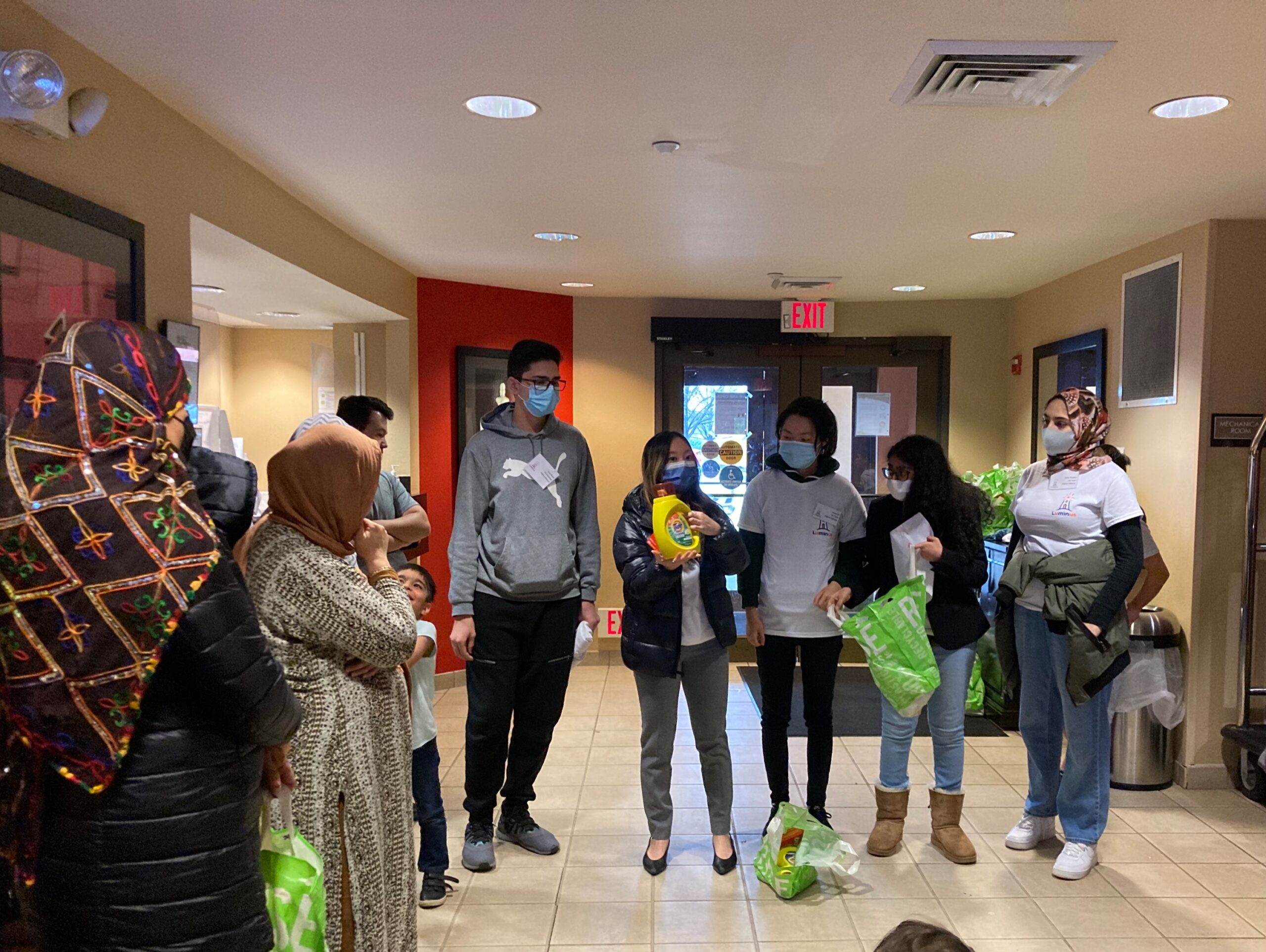
As the only person in his immediate family born in the United States, Ezat Sharifi feels a sense of obligation to help immigrants. That’s why he recently joined a small group of students in Howard County — all first generation U.S. Citizens or immigrants themselves — in raising more than $1,200 for Afghan refugees living in their community.
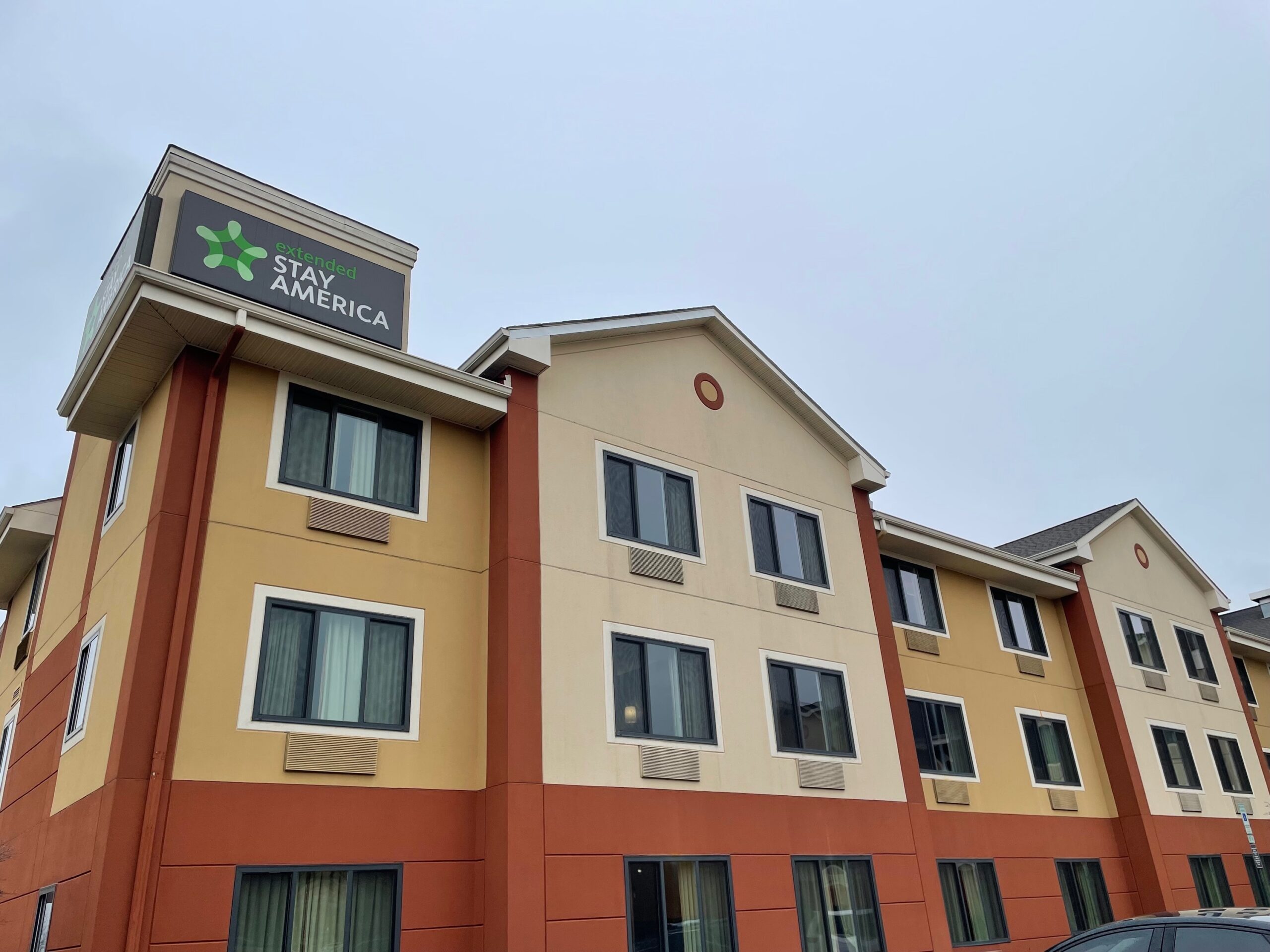
The students say they hope the money will contribute to the cost of household needs, including groceries and laundry, for Afghan families living at an Extended Stay America Hotel in Jessup, not far from where they go to school.
“My parents and my siblings emigrated from Afghanistan a long time ago,” said Sharifi, a junior at Howard High School. “I know how they have struggled to come here.” Sharifi speaks Pashto, the official language of Afghanistan, and says that he’s been translating for some of the refugee families who have a need.
The fundraising project began with Lamia Ayaz, one of Sharifi’s classmates. When she heard that the multiple Afghan families living at the hotel were struggling to afford basic necessities, she wanted to do something about it, she says. Both of her parents emigrated from Pakistan before she was born in Maryland.
“I think a lot of us who are coming from that similar background understand what it’s like to have a family who has moved from violence and had to undergo the difficulties of moving to a brand new place out of nowhere,” said Ayaz, a sophomore at Howard High School.
What began as Ayaz’s call for coins to offset the cost of onsite laundry machines has since grown into a countywide effort from students and families at multiple schools. The fundraiser was a success and they expanded their donation to include gift cards for all kinds of supplies.
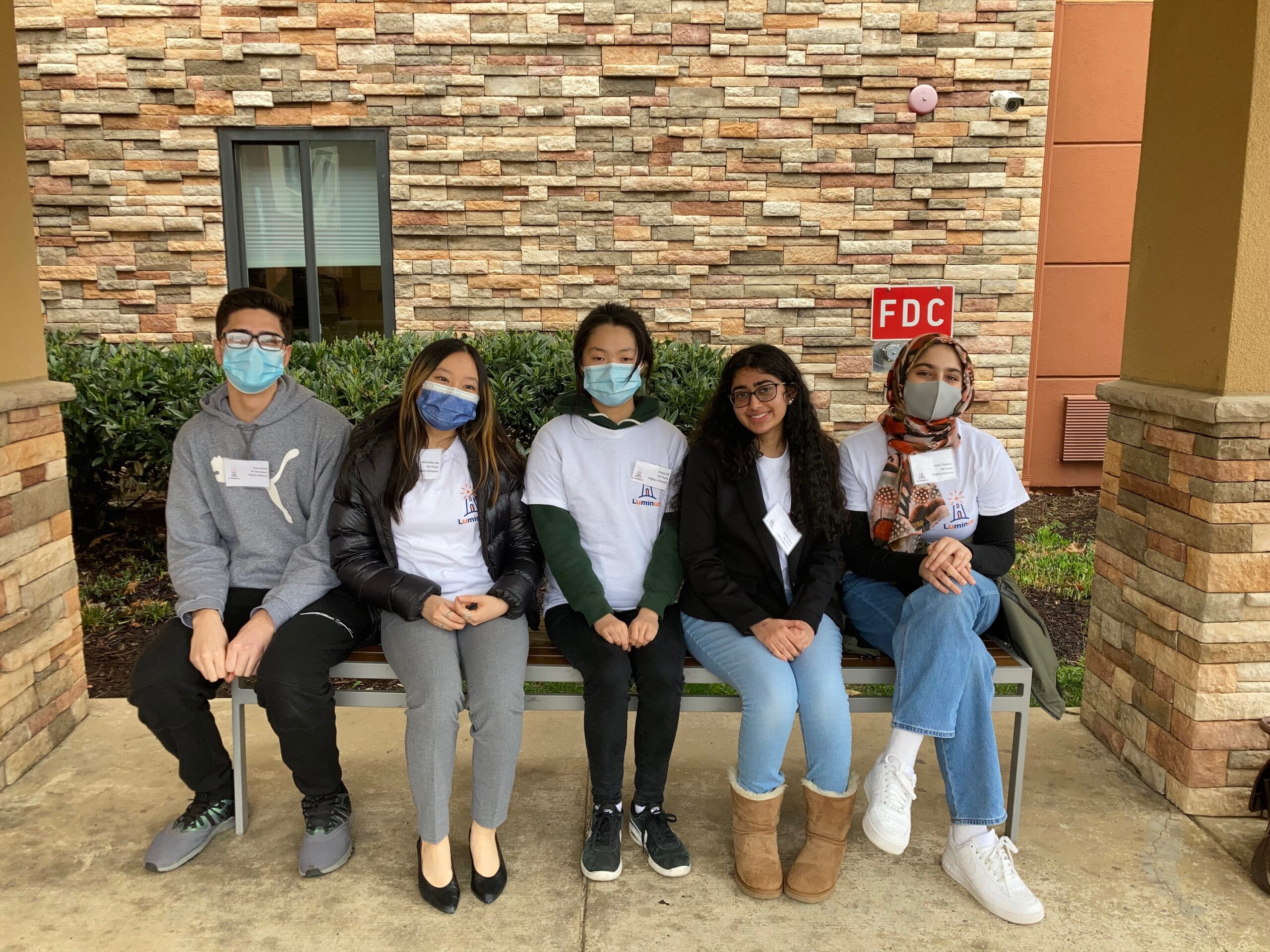
“It felt like just something we could do because no one else is doing it,” said Aelia Thakkar, a junior at River Hill High School whose parents emigrated from India. “They need to do their laundry and it didn’t feel like a grand gesture. It just felt like the next step forward.”
Shakera Rahimi is the Afghan Alliance Coordinator for the Luminus Network for New Americans – a social services organization that helped coordinate the fundraiser – and is in regular contact with more than 200 people who recently arrived in the U.S. While families are receiving housing, food stamps, and cash assistance for non-food items, she says it’s not always enough, and reflects the larger challenge in helping families get settled.
“Resettlement agencies are now overwhelmed and it’s not easy for them to be in contact with each client for every need,” said Rahimi, who immigrated from Afghanistan with her husband and three children in 2014.
Mohammad Alimi, 39, is living at the Extended Stay Hotel right now. Alimi left Afghanistan last November with his wife, three daughters, and two sons.
Alimi says his family had no choice but to flee Afghanistan after the Taliban took over. He says he wanted to protect them and ensure each of his children — including his daughters — had a right to an education. They are now enrolled at an elementary school nearby.
“We come here in the United States because of my children,” said Alimi. “The Afghanistan situation was combat and there was no school study for these children.”
After more than two months at a military base in New Jersey, the family was bussed to Maryland, where Alimi says he was happy to go. He has two sisters who have been living in the state for nine years.
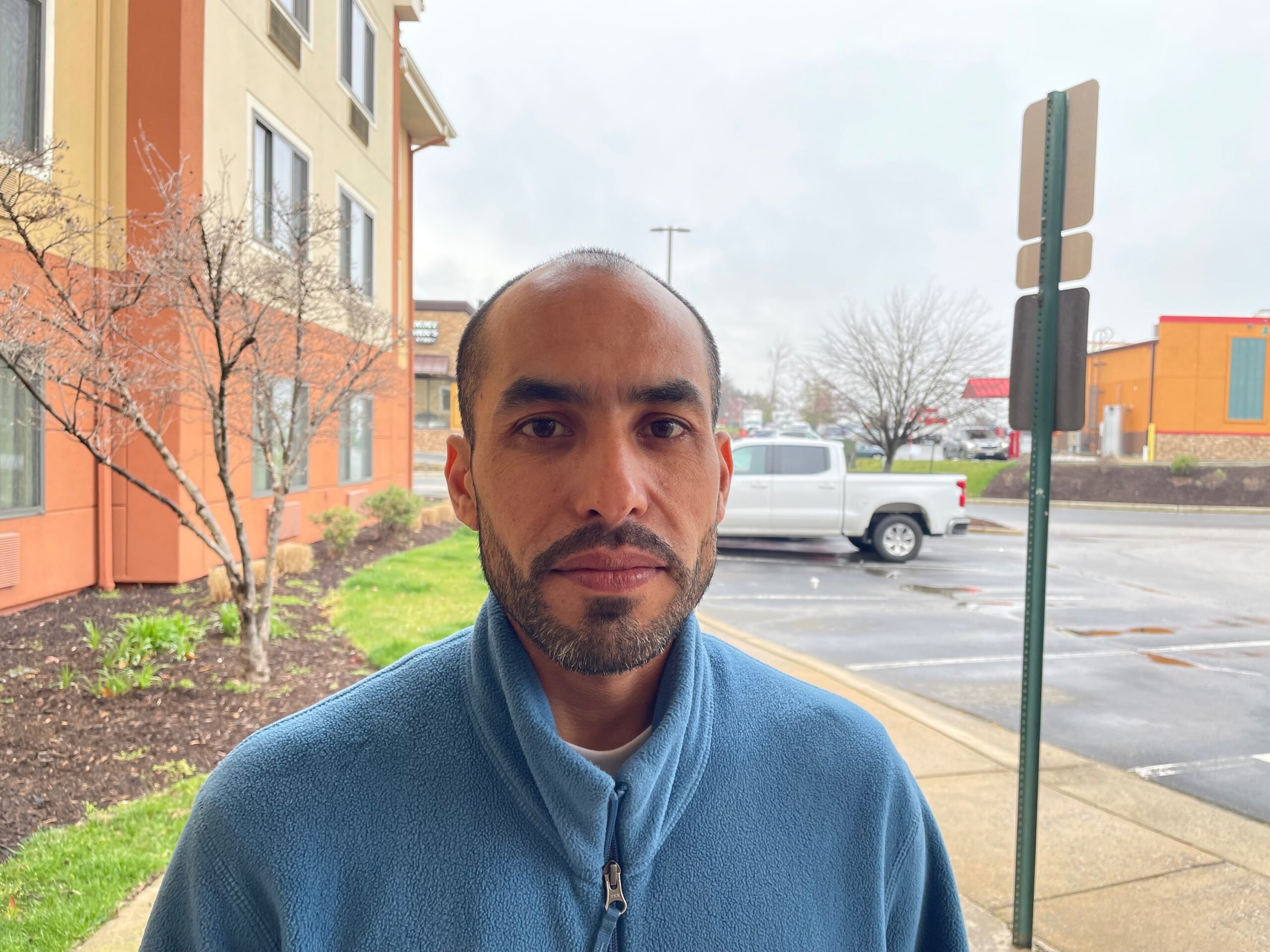
But challenges remain. Alimi says he hasn’t heard from any U.S. officials or case workers from the International Rescue Committee — a resettlement agency tasked with working with Afghan refugees — since the bus dropped them off two months ago. Despite more than 19 years of experience working in telecommunications, he also hasn’t found a job. Those factors combined, he says, have made it harder for them to find long-term housing.
“So it’s not easy because we are searching for the house to go [to],” said Alimi. “My own house. It’s difficult now to [rent] in Maryland.”
Still, he says he is thankful for all the support his family has received from the local community, adding that the money from the fundraiser will make it easier for them to get adjusted to life in Maryland.
“It is good for us here,” said Alimi. “We are especially [thankful for] U.S. people that are helping the Afghan people here, so we are happy.”
Michelle Lee, a senior at Reservoir High School, says that many of the families she’s met are saddled with the same challenges as Alimi. As a student volunteer for Luminus, Lee has worked closely with some of the recently arrived Afghans in Maryland.
“A lot of the areas that have been [temporarily] housing refugees weren’t prepared for the quantity that was coming in,” said Lee. “So it’s been really difficult to try to get them into permanent housing.”
According to Alimi, there’s at least 16 families currently living at the Extended Stay Hotel who are still waiting to find long-term housing. The International Rescue Committee (IRC), which is federally funded, has been covering the costs to house people there. The organization says it’s been a challenging and lengthy process for the more than 70,000 Afghans that have thus far been evacuated to the U.S. since the country’s government fell to the Taliban.
That’s due in part to policy changes that predated the Biden Administration and the turn of the tide in Afghanistan. When the Trump administration dropped its 2020 resettlement goal to service just 15,000 people across the country, the IRC had to cut its staff, according to spokesperson Stanford Prescott. He says in a statement to DCist/WAMU that this move limited the U.S. resettlement infrastructure in the months leading up to the evacuations from Afghanistan, and that the IRC had to quickly double its staff in Maryland to help arriving Afghans.
Prescott also cites a national housing shortage and COVID-19 as barriers to finding permanent housing and access to health care services, among others.
“This kind of mobilization is not flawless, and it is not without its difficulties. We acknowledge those challenges and are moving swiftly amid an operation this big to resettle Afghans as quickly as possible,” Prescott said in the statement.
Despite the need for quick action under limited resources, the International Rescue Committee says that more than 1,000 humanitarian parolees (defined by the USCIS as any person who might be ineligible for admission into the U.S. but is temporarily allowed for humanitarian reasons) have been resettled in Maryland since August. Meanwhile, nearly 200 refugees have been resettled since October. They’ve also launched a partnership with the University of Maryland to provide housing for Afghans, along with a separate donation-based “Welcome to Maryland Fund” to provide more financial assistance.
“The IRC in Maryland and resettlement agencies around the country have been asked to resettle people at a speed, number and complexity like never before. We are proud to serve these new arrivals, and confident that as the operation unfolds, our new Afghan neighbors will settle in safely, securely and with hope for their future,” Prescott said when asked about long-term housing goals.
For Freya Lin, the need to fill in the gaps for Afghan families is what motivated her to get involved.
“I just wish these new incoming immigrants like Afghan refugees can have a similar experience to me,” said Lin, a senior at Centennial High School.
Lin immigrated from China four years ago but says the embrace of her new community as well as services like English-learning classes made her feel welcomed. She says she wants to pay it forward for families trying to build a new life in the U.S.
Mohammad Formuli, 25, has been living at the Extended Stay Hotel for almost four months. Before that, he says he was a tower guard at the U.S. embassy in Kabul, and that he spent hours helping the U.S. military with translation services during the airport evacuations last fall. Eventually, he too left the country on a C-17 military airplane.
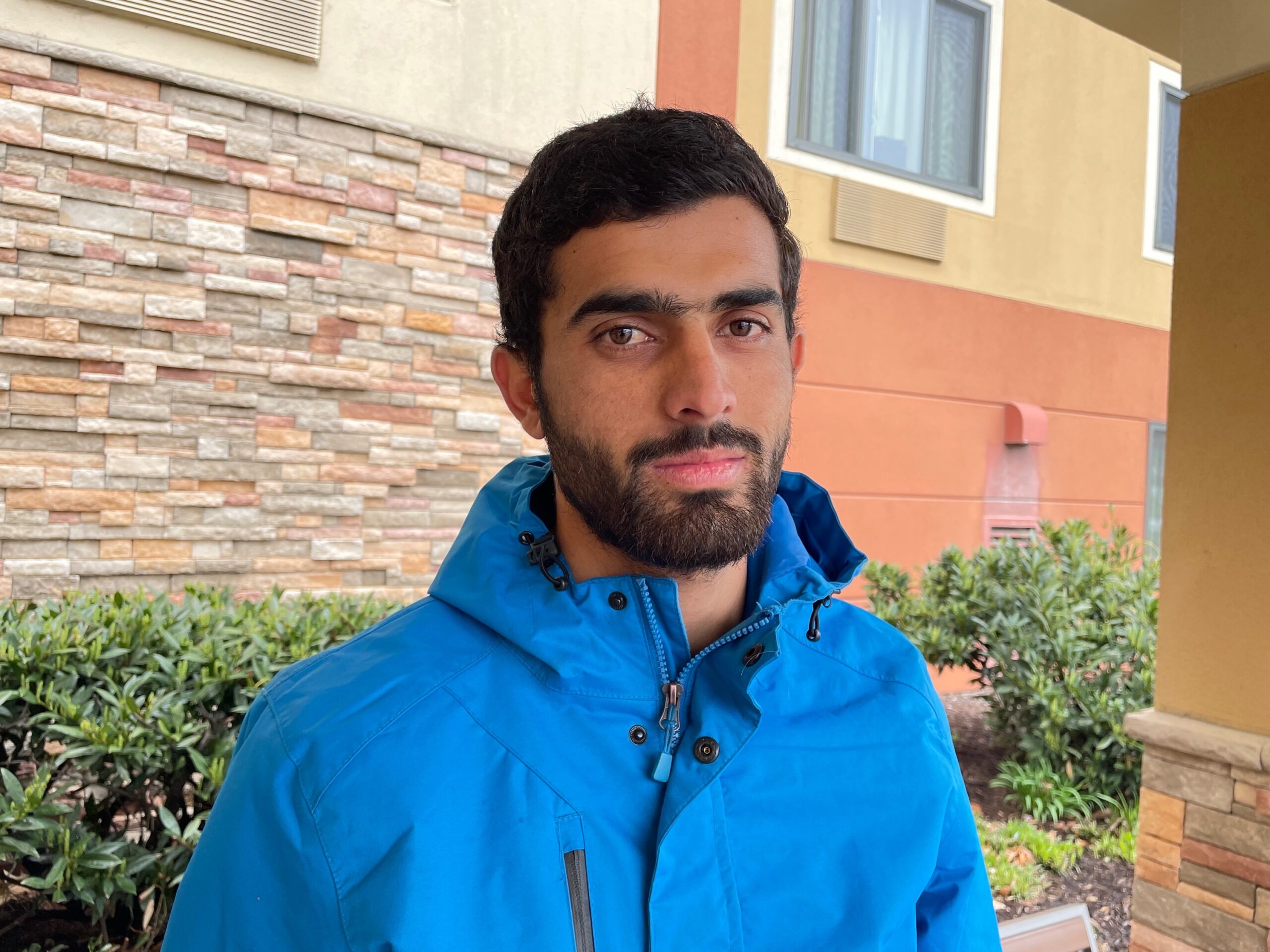
He says he’s grateful to the students and families of Howard County for all the financial assistance that he’s received. He also wanted to personally thank President Joe Biden and the U.S. military for evacuating him and other Afghans.
“They actually care about the refugees,” said Formuli. “They do whatever they can and indeed we appreciate them.”
Formuli has found work processing vegetables — broccoli, carrots, and cucumbers — at a plant near the hotel. While this has helped him start planting new roots, he says can’t help but feel like his life is still in transit. Formuli bounced from Qatar to Germany then Dallas and Fort Bliss before finally rendezvousing with his brother, sister-in-law, and their two children at the hotel. Nevertheless, he’s happy to call Maryland his new home.
“I’m really happy and I would like to stay here for good,” said Formuli. “I can’t wait to start my normal life.”