Amanda Michelle Gomez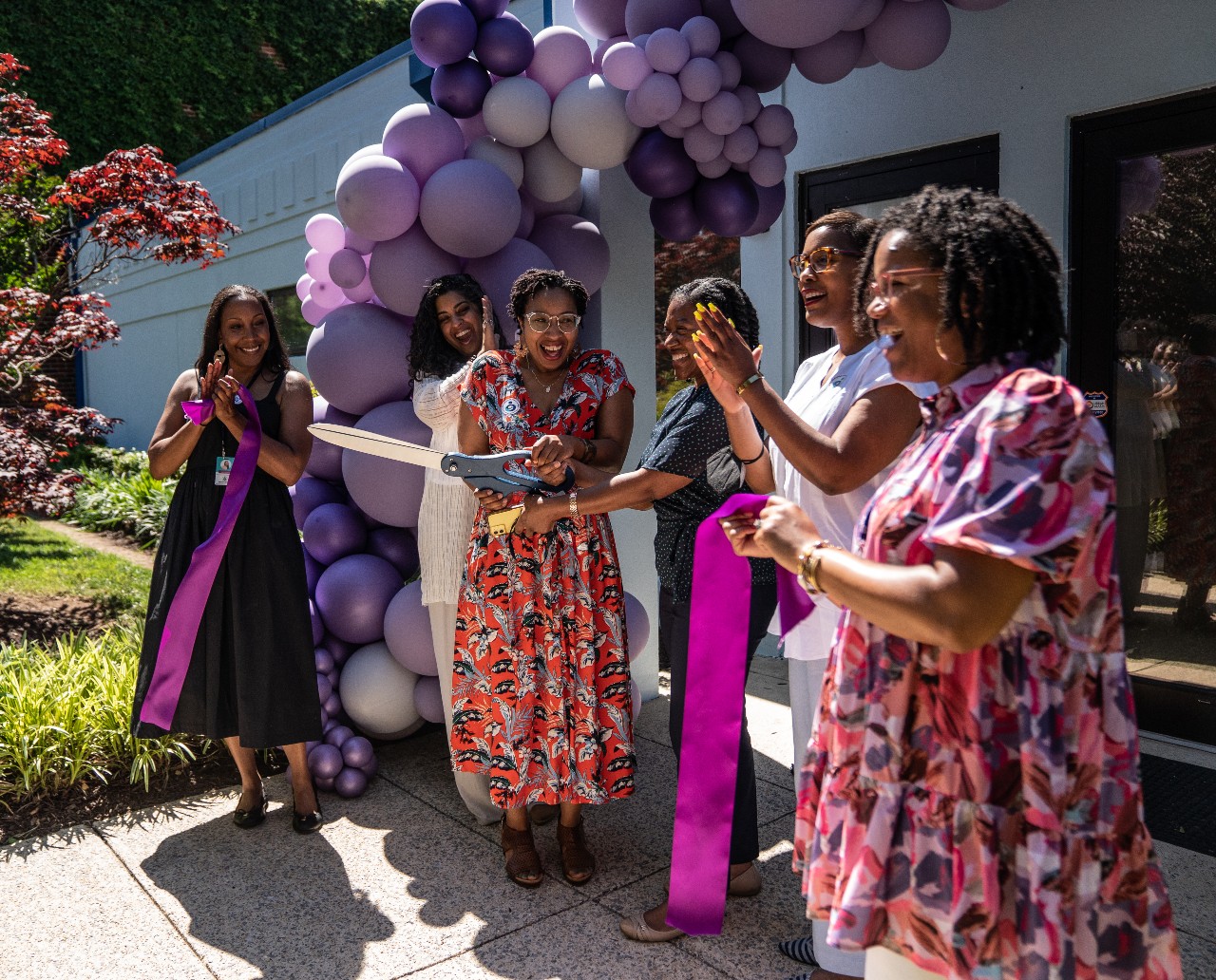
Mamatoto Village has long supported Black families so they can have positive birth experiences — and the perinatal care provider and advocacy organization is now expanding to meet the ever growing need for their services.
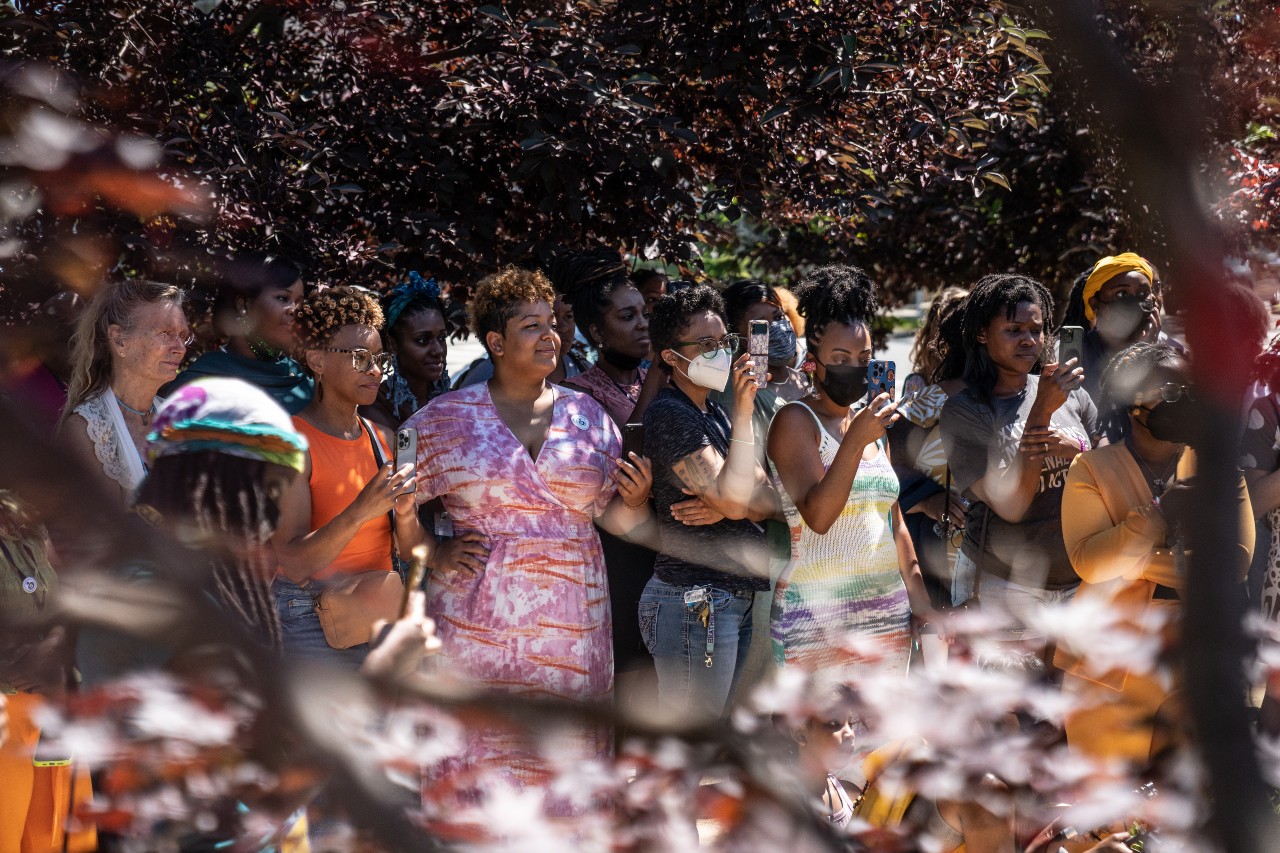
On Monday, Mamatoto Village welcomed a jubilant crowd of community members to see their new location, a periwinkle blue building located in the heart of Ward 7. The provider that’s been serving the community for nearly a decade moved a mile away, from a 2,000 square feet row house to a 5,400 square feet space located at 4315 Sheriff Road NE. Doubling in size means Mamatoto Village can grow both their patient population and service offerings, which includes adding midwifery care as well as a milk depot and dispensary.
“It was really important that when we were looking for a space that we stayed east of the [Anacostia] River because that is where we’re anchored, that’s where we’ve built deep roots with the families,” says co-founder and executive director, Aza Nedhari. “We are the community that we serve,” she adds.
Mamatoto Village is one of the few providers in the area offering pregnancy and postpartum services, and tailors care to the Black experience. Community members have had to spend additional time traveling in comparison to other Wards if they don’t deliver at home — there has not been a birth center east of the river since 2017, when D.C. regulators suspended the obstetrics unit at United Medical Center following an investigation into the deaths of women and babies at the public hospital.
The need for comprehensive, quality care here is great. D.C.’s infant and maternal mortality rates are higher than national averages. Black Washingtonians face even higher rates of death, particularly those living in underserved communities. According to a recent report commissioned by the city’s Maternal Mortality Review Committee, which Nedhari co-chairs, women living in Wards 7 and 8 made up 70% of pregnancy-associated deaths between 2014 and 2018. Meanwhile, residents of Wards 2 and 3 did not experience any pregnancy-associated deaths during that same time period.
“We’re not the prescription,” Nedhari says, “but we are one prescription for addressing that problem.”
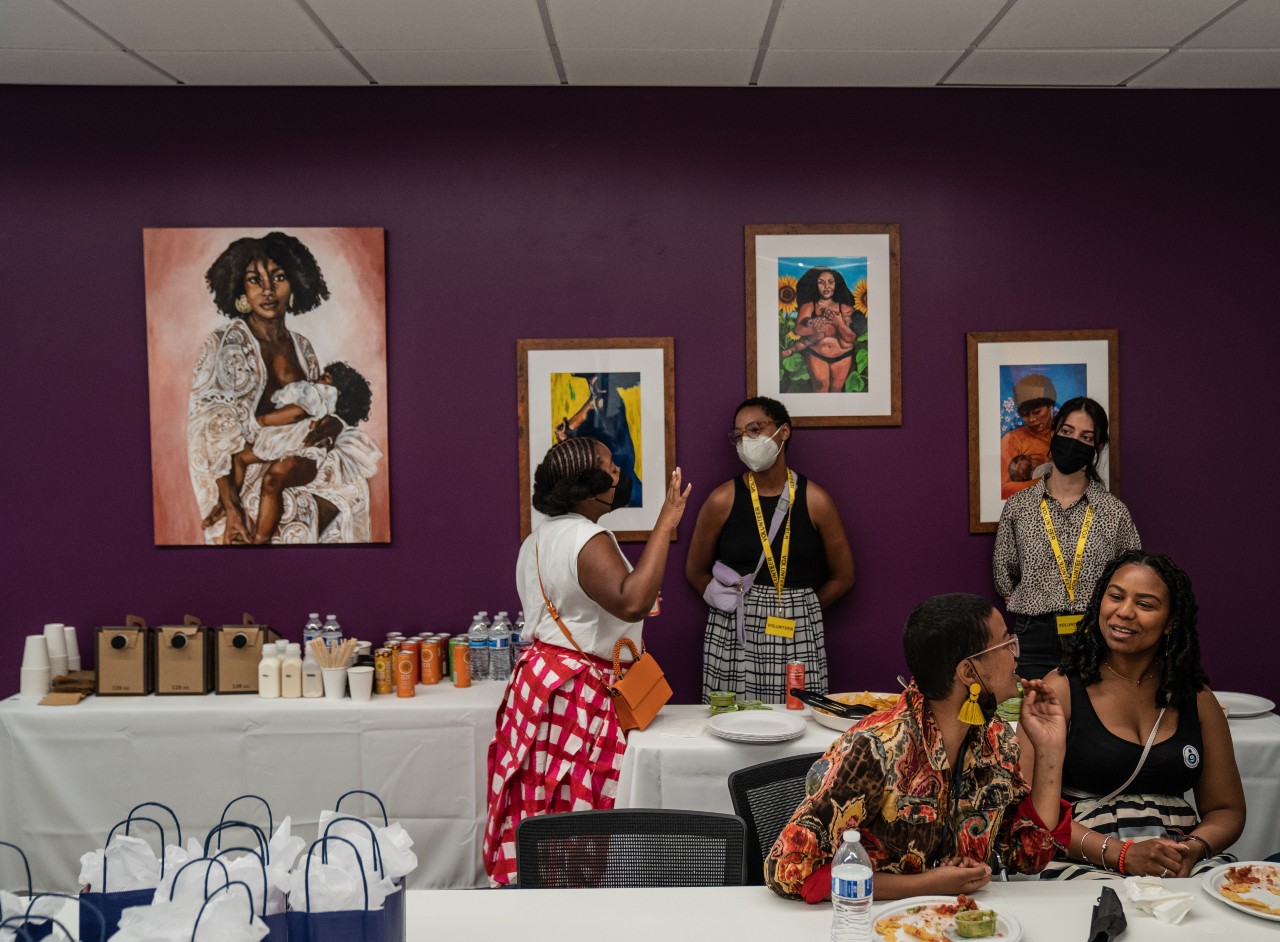
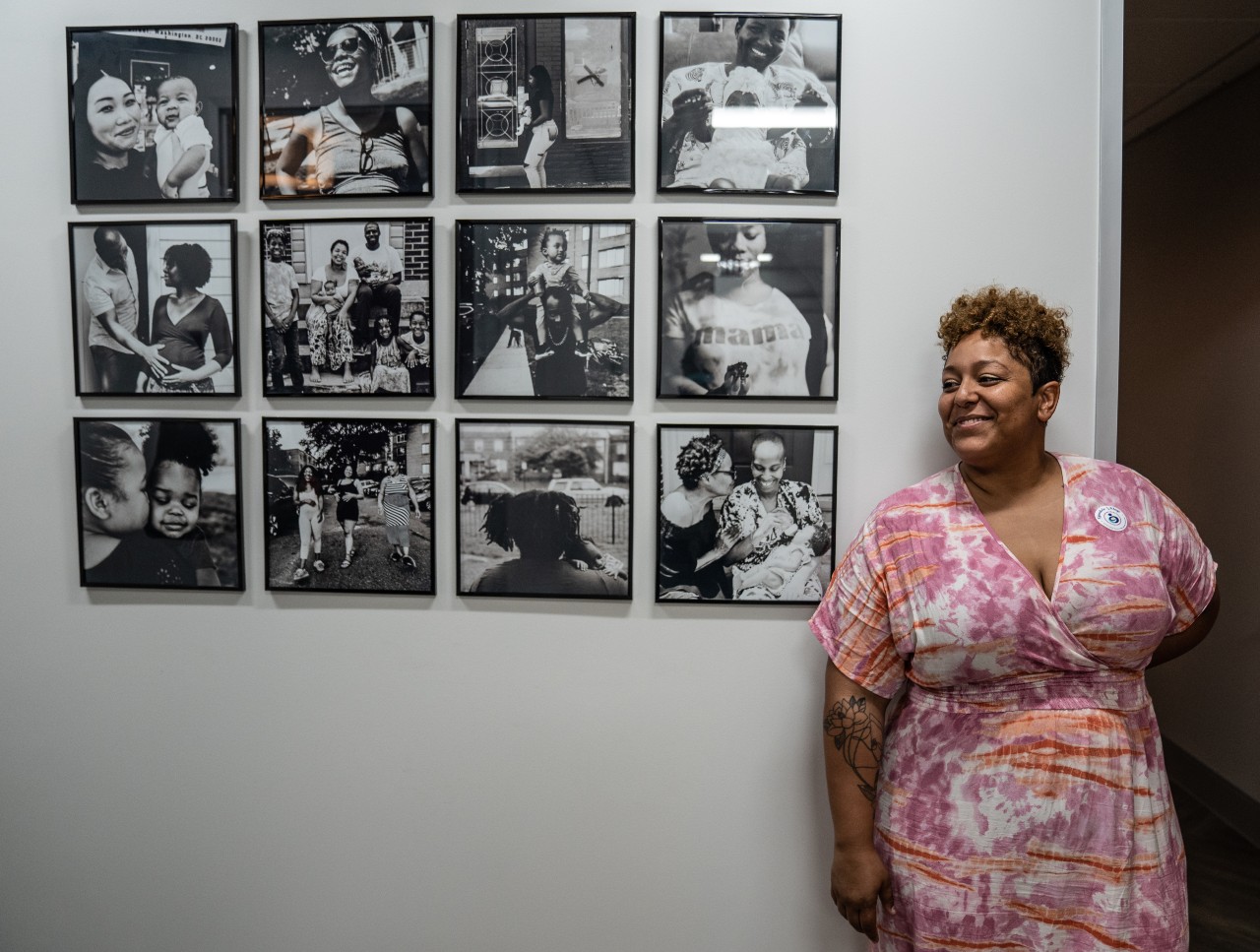
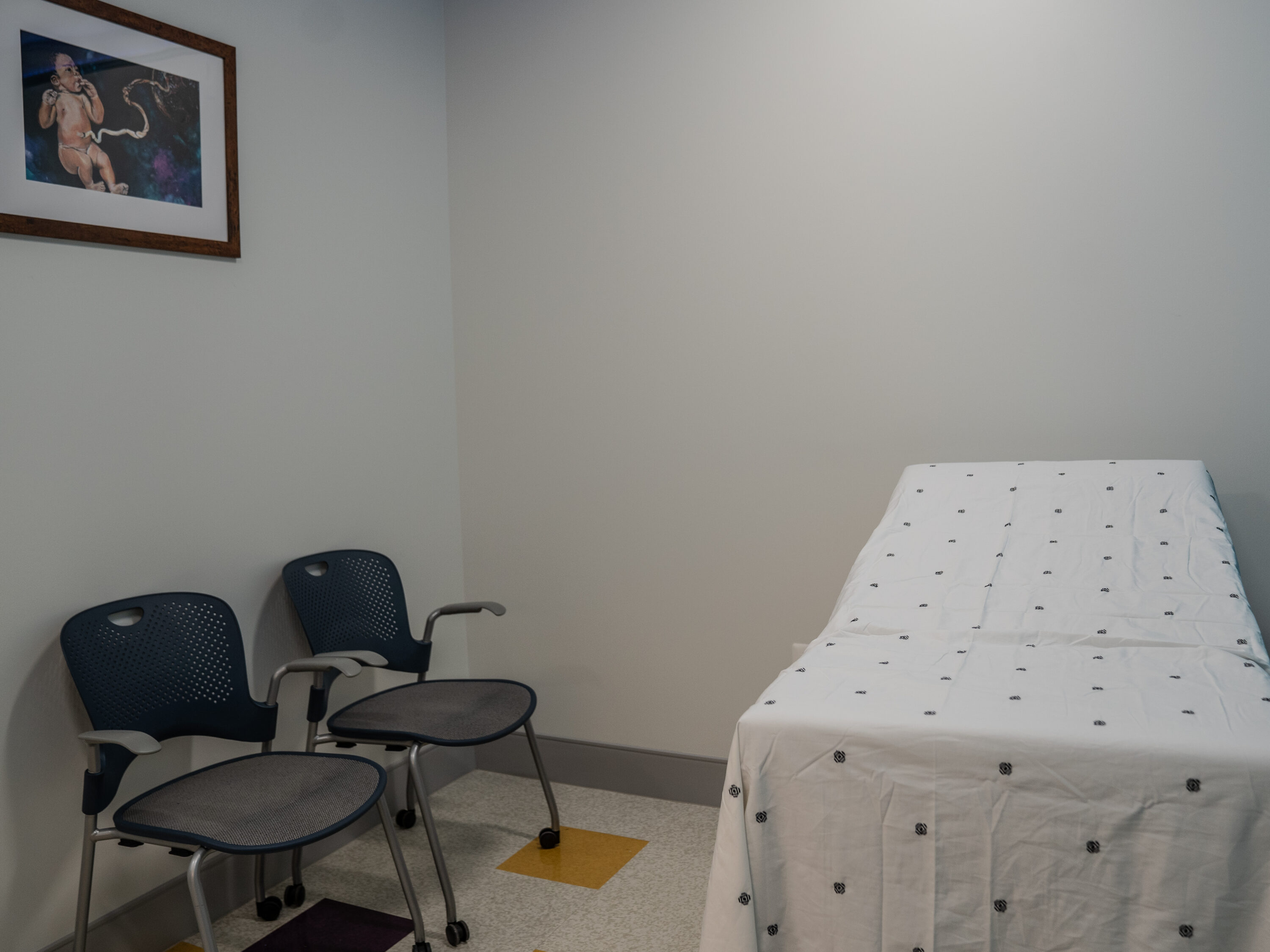
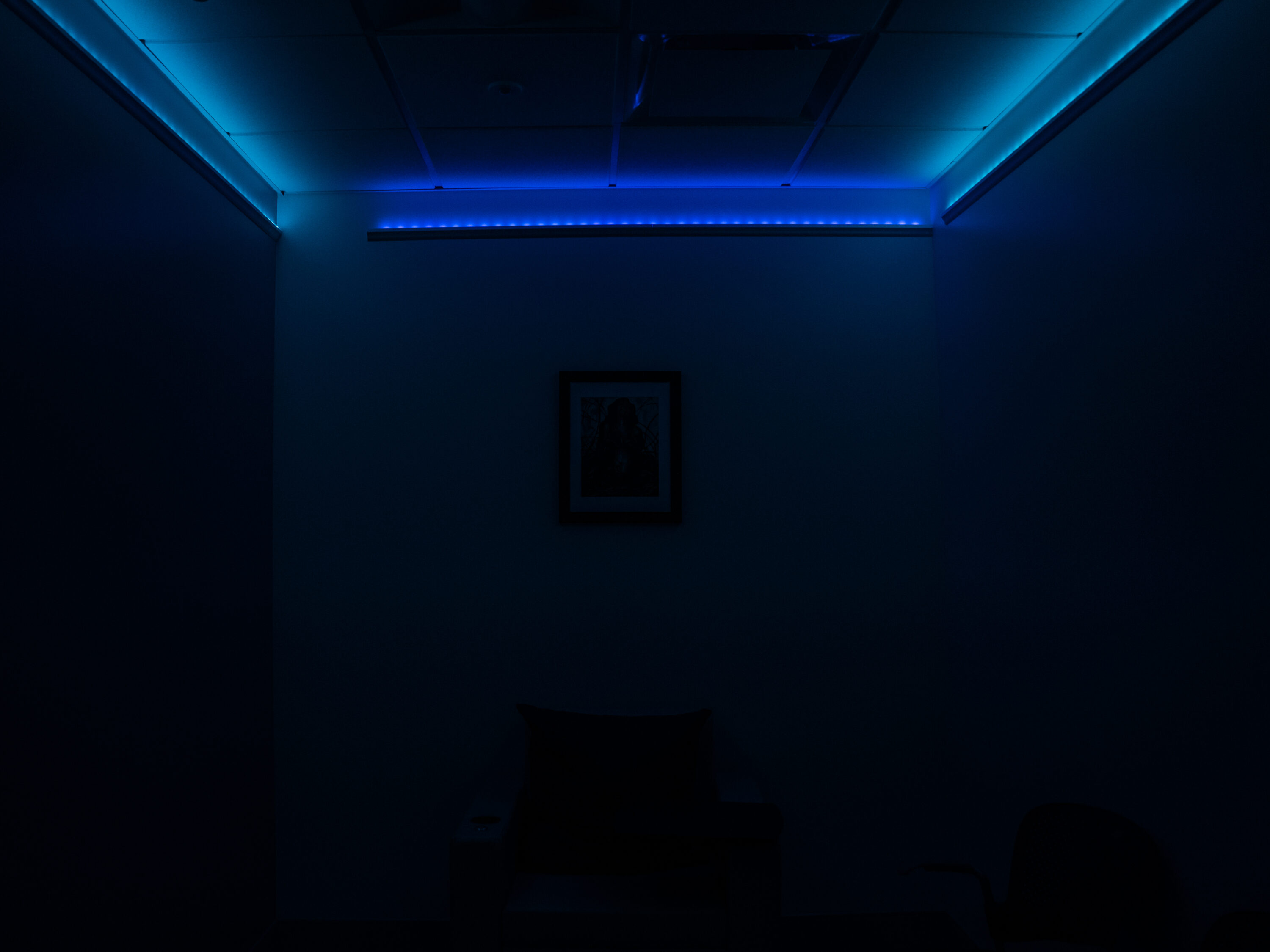
Nedhari spoke from one of the exam rooms, an intimate setting with a bright blue accent wall and lights that can dim to anyone’s preference. Every clinical room is designed to make visitors feel comfortable. For example, some offer books and toys in case a pregnant person comes in with their toddler. Mamatoto Village also optimizes every room: the kitchen will host nutrition courses for parents to learn how to prepare healthy meals, and the multipurpose room will be used for various activities like yoga or “mamas mingle” classes.
“It was really important for this space to feel like a home when you walk in. So the placement of everything is very intentional,” says Nedhari. “We hope that throughout the years that this space will do justice in being a safe haven and respite for the women and families in this community.”
Nedhari says the location used to be a construction building owned by a Black woman. Black people are behind the creation of the new location, she emphasizes, from the Black-owned real estate company called Rosewood Strategies that offered assistance in the acquisition process, to Black creators like Lauren Turner who provided the artwork that’s on display throughout the building.
“Our missions align. Supporting Black maternal health is really my mission,” says Turner, who traveled from Baltimore with her family to attend the grand opening.
The event drummed up memories of her own birth experiences. When Turner delivered one of her children at home, Maryland still had a ban on midwives helping people give birth in non-hospital settings unless they were a licensed nurse (the state legalized the practice in 2015). The emphasis Mamatoto Village places on fostering autonomy during labor is in part why Turner opted to collaborate. She even considered taking one of the provider’s birth work training sessions. Mamatoto Village also aims to expand the perinatal workforce, offering various training and practical job experience.
“Supporting each other is really important,” Turner adds. “This is going to be amazing. I can’t wait to catch up in like a year.”
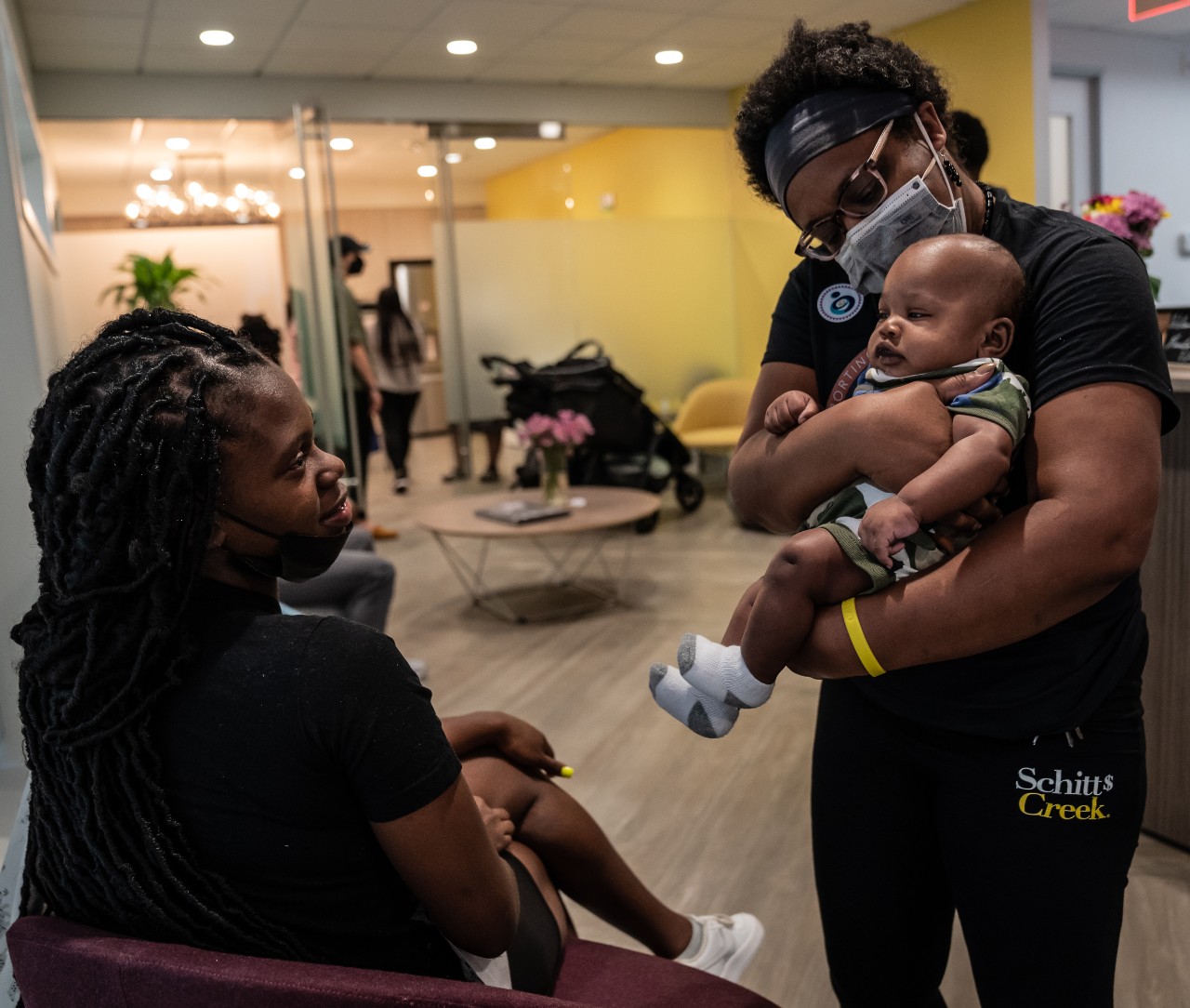
The 40-person staff at Mamatoto Village is also Black and local. Ronnet Gross, who lives five minutes away from the new location, decided to join the team in 2019 after repeatedly seeing the provider at community events. Gross had been a nanny for more than 20 years, a time in which she also became a labor and postpartum doula. She’s applied those skills to her job as a perinatal care specialist at Mamatoto Village. Now, she cares for newborns at all hours of the day so new parents can rest.
“In this nation, we do not support postpartum,” says Gross, “And so while we can’t do all of it, we can help.”
Aubrei Jackson is among the many people supported by Mamatoto Village. Her baby is two months old now, but she continues to receive assistance, recalling two days recently when staff stayed overnight to care for her newborn so she could get some sleep. Her ob-gyn referred her to the provider after she lost her baby’s father three months into the pregnancy. Mamatoto Village then provided her doula services and therapy, Jackson told DCist at the grand opening. She is most impressed by how non-judgmental and welcoming the staff is.
“They’ve helped me a lot through a lot of trials and tribulations,” Jackson says. “They were a good support in my case because of what I went through – what I’m going through, actually still now. They actually gave me the love.”
Nedhari sees Mamatoto Village expanding even more because the need is so great. She’s interested in purchasing more property, so that one day they can open a maternity home. She envisions community members being able to stop by for respite or just to say hi.
“What’s left is own the block,” says Nedhari. “My biggest hope and aspiration is that we will have this block of a village [where] people walk the block and they’re like ‘That’s Mamatoto. I know that’s a space for me.’”
Margaret Barthel contributed to this report.