Margaret Barthel
 Tyrone Turner
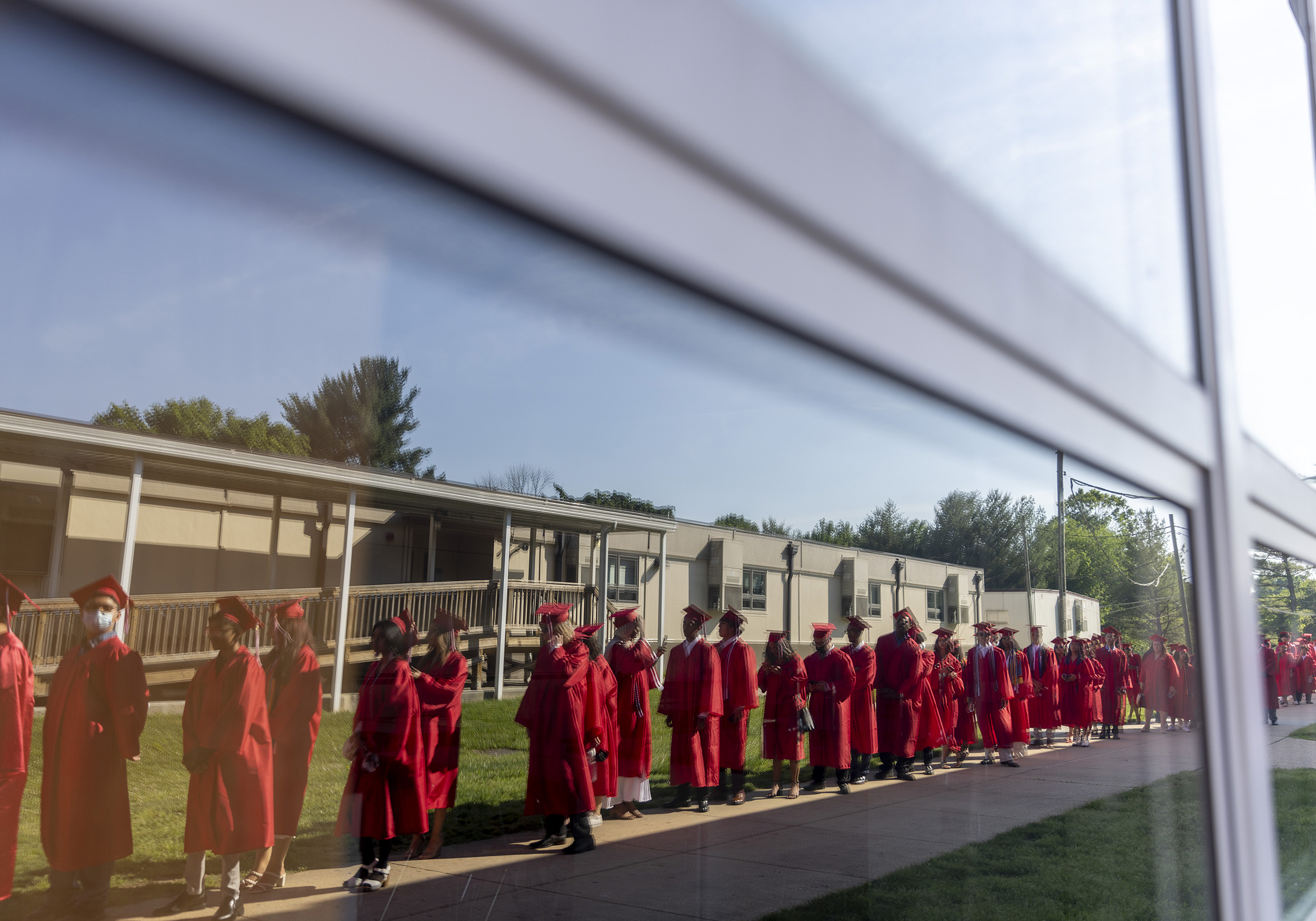
It’s 8:45 a.m., and the school cafeteria at Annandale High School in Fairfax County is filled with students in bright red caps and gowns. They’re in rows, lined up in alphabetical order (just A-L are in the cafeteria; students with M-Z names are all in the gym) — and they’re about to walk out onto the football field to graduate.
The room is a funny mix of buzzing anticipation, selfies, and bleary teenage eyes. A teacher tells them they’ve got minutes before the processional — an announcement met only with slightly sleepy cheers.
“You made it! You’re graduating! Let’s hear it!” she yells into a microphone. “Get hype! What is this? Come on!”
“I think we should have about five to ten minutes,” says Maxwell Lanham, one of the seniors. “I hope we do, because my legs are starting to hurt, so I kind of wanna get out of here.”
But the significance of the moment isn’t lost on him, either.

“I know it’s probably my last day of seeing 85 to 90% of these people. So it’s a little sad,” he says. “But we made it through high school, so it’s a great feeling.”
Lanham and his classmates faced more challenges during their high school career than most. As sophomores, they were suddenly sent home as the pandemic arrived in the D.C. region. Many of them attended their entire junior year from a series of Zoom screens.
Last August, they returned to Annandale fully in-person for their final year. On that first day of school, they gathered together as a class on the same football field they were about to march onto in caps and gowns.
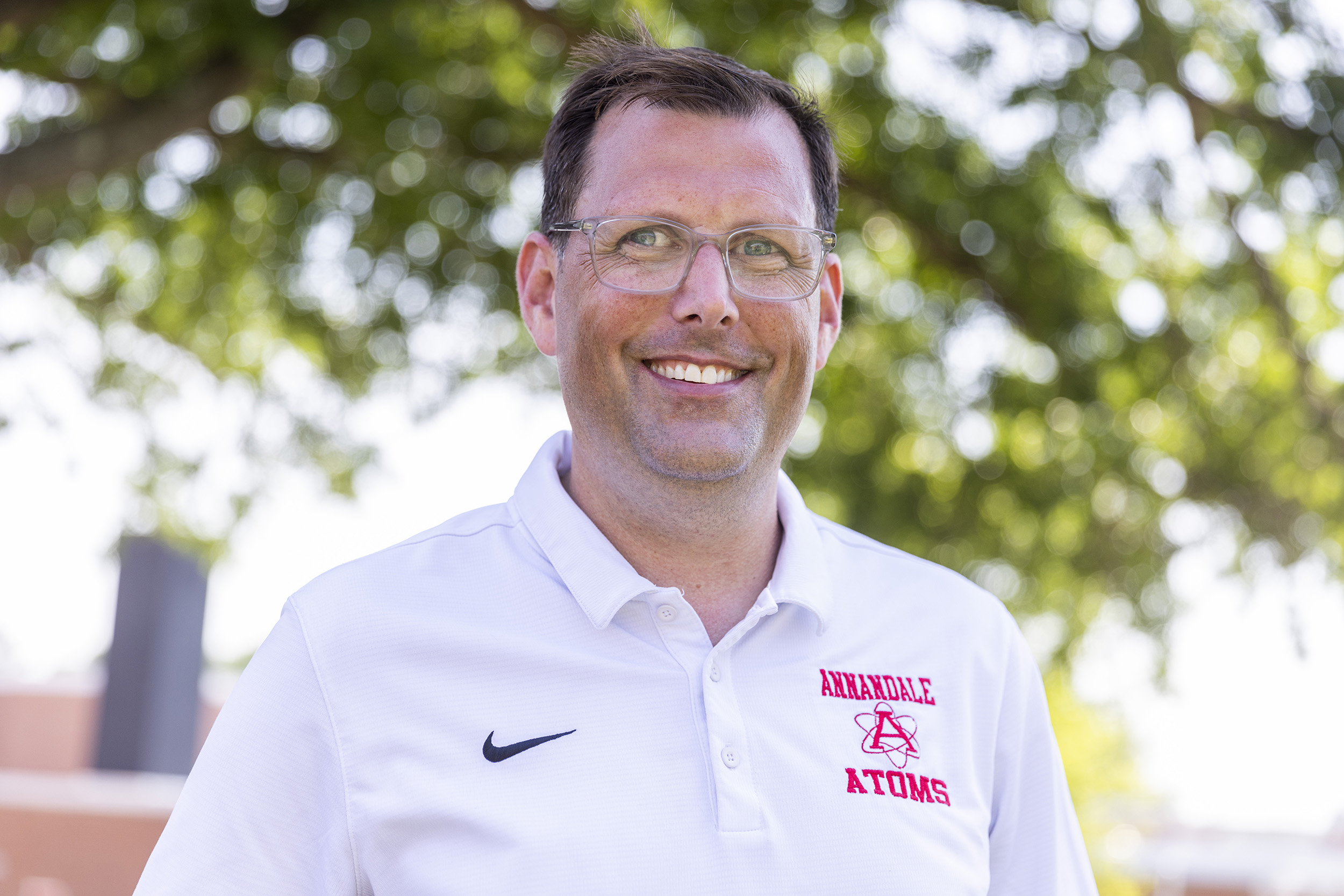
There was excitement mixed with worry as the school community faced the challenge of re-engaging students socially amid the ongoing public health crisis. Over and above getting them back on track academically, teachers, and Principal Shawn DeRose said they wanted to focus on ensuring students could feel at home and welcome at Annandale. They knew that would be a tall order, given what their students had experienced outside of their Zoom screens. Much of the student body at Annandale is from the communities of color and immigrant communities who bore the brunt of the pandemic’s effects in Northern Virginia.
“I think we came into the school year being very direct in saying this is probably going to be our most challenging year, given the fact that our students haven’t been in school full time in almost two years,” says DeRose.
Since August, the school community has surmounted those challenges — and others, too, as the pandemic receded, surged, receded, and then surged again.
“It has just been surprise after surprise after surprise,” DeRose says. “We’re going through a pandemic while recovering from a pandemic.”
School became a much more political place, too, with debates overmasking and school equity programs taking a front seat in local and statepolitics. At the same time, the seniors at Annandale went through the stress of college application season — 75% of them are off to college in the fall, and others plan to join the military, according to DeRose — and the inevitable busyness of their final year in high school.
“It went by faster than I thought, that’s for sure, but also slower than I thought,” said senior class president Lauryn Mills. “I’m more than anything excited to go to college.”
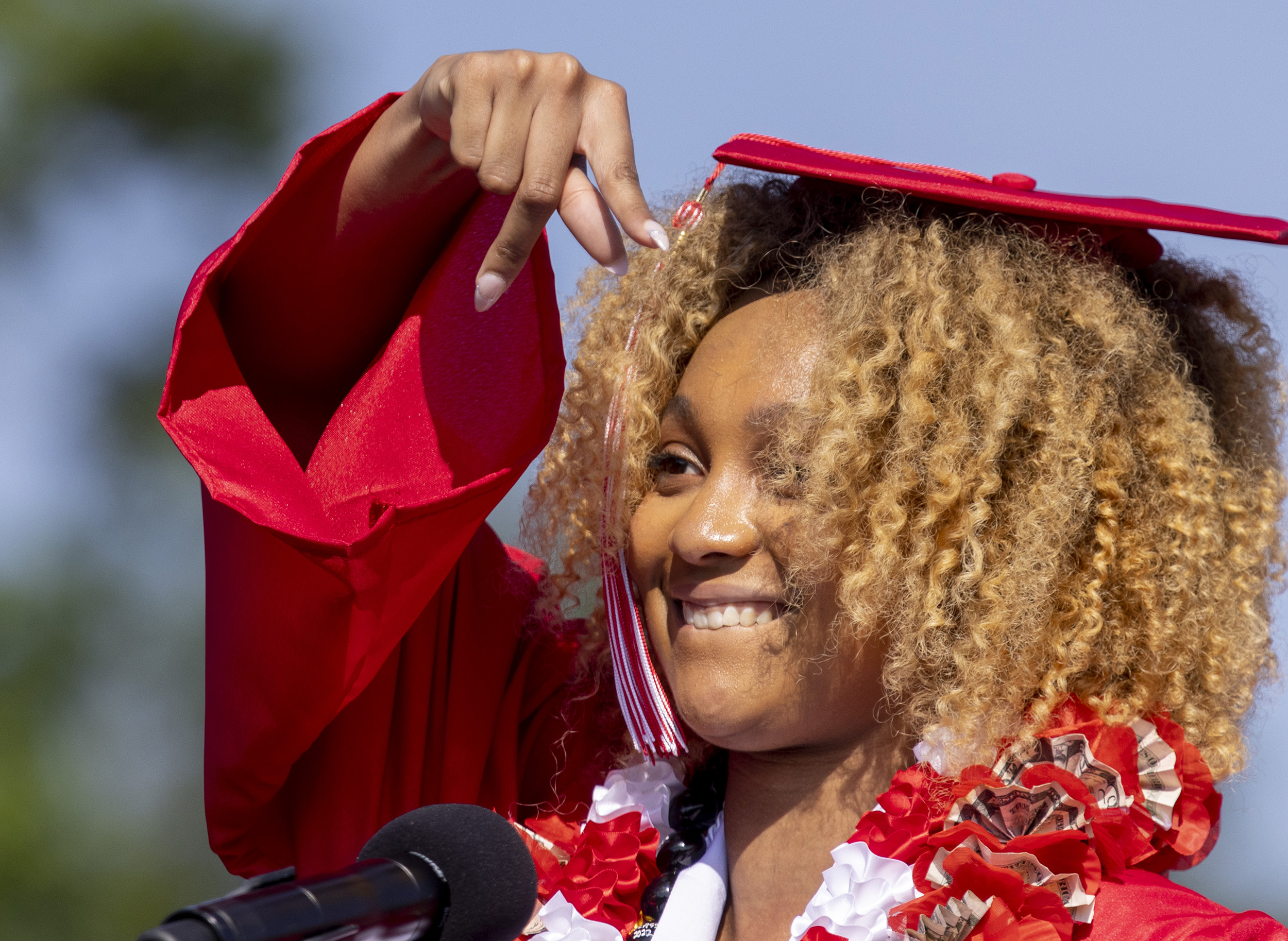
Mills is bound for Brown University, where she plans to study neuroscience. Lanham is off to James Madison University, where he hopes to keep playing basketball.
For Lanham, the hardest part wasn’t reconnecting with the Annandale community — particularly the basketball team — but reacclimating to the everyday mechanics of going to school in person, “just getting adjusted to the workload again,” he says. “I mean, last year and the year before we were online for awhile,” which meant less homework and testing.
There was difficulty, but also joy in helping students transition back.
“During the virtual school year, even if we met in person, we couldn’t really recognize each other,” says Soo-Jin Lee, an English teacher at Annandale who is standing in a small patch of shade by the bleachers, waiting for the seniors to march out. “This year, it’s great, because I can recognize students and they recognize me and it’s a beautiful day.”
Lee says she had to get creative in her classroom to get students to really engage with each other, often having them play socially-distanced games.
“I felt that the students were really hungry for face-to-face, human connection. And so I was really excited,” she says, reflecting on the year. “I was nervous because of COVID, of course. And I think they were nervous as well. But we made it work.”
They did make it work — and now they’re here.
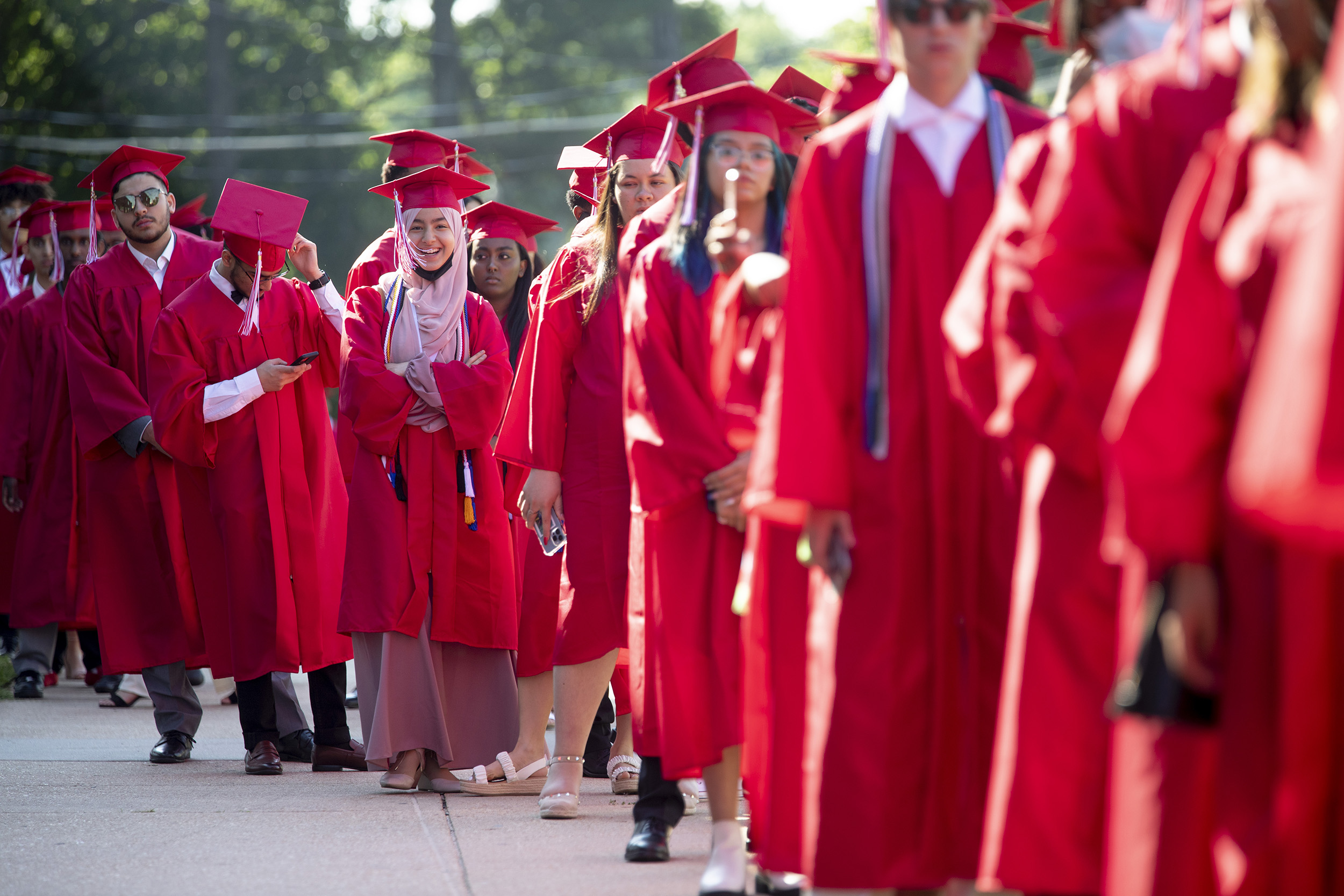
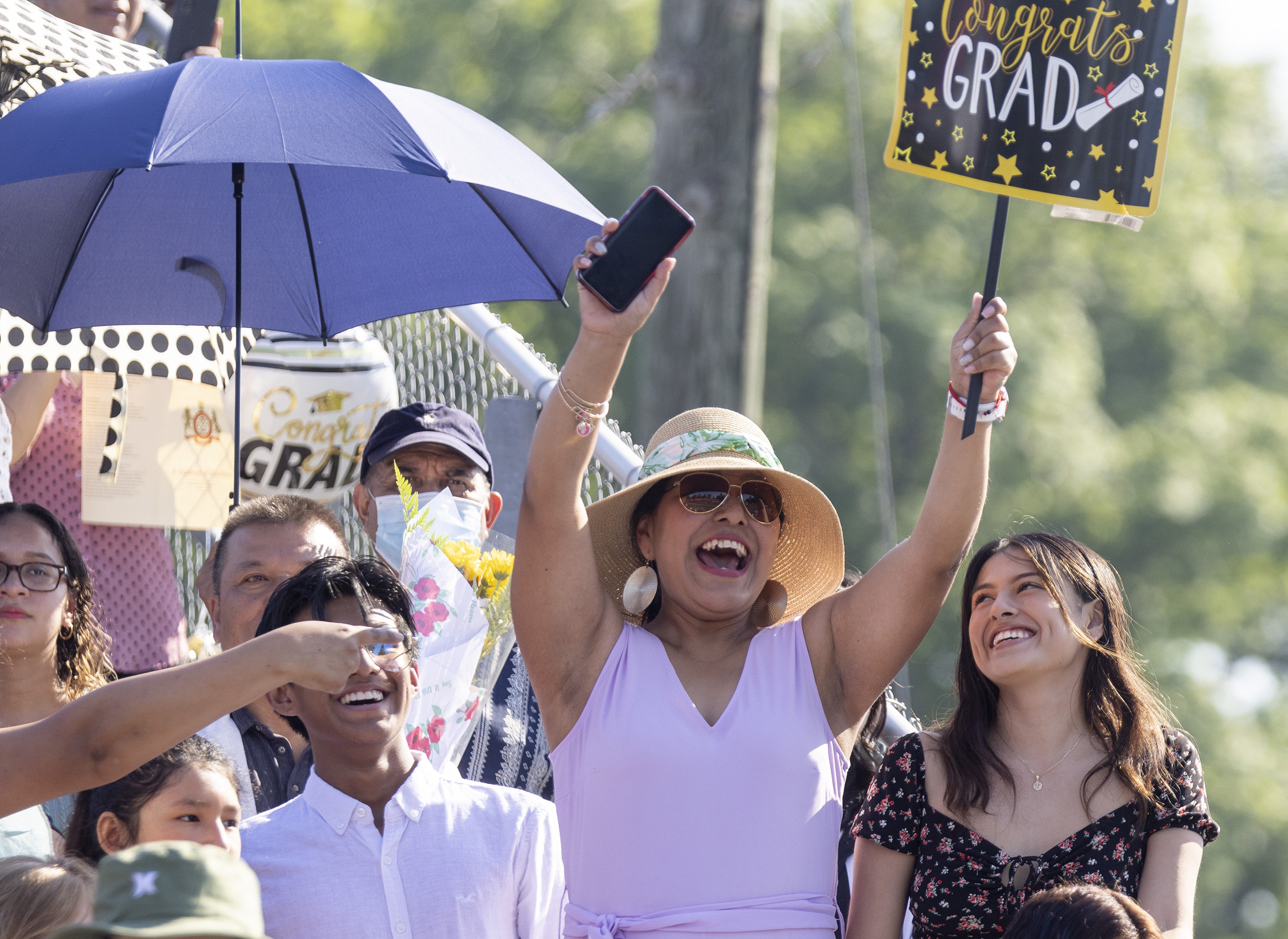
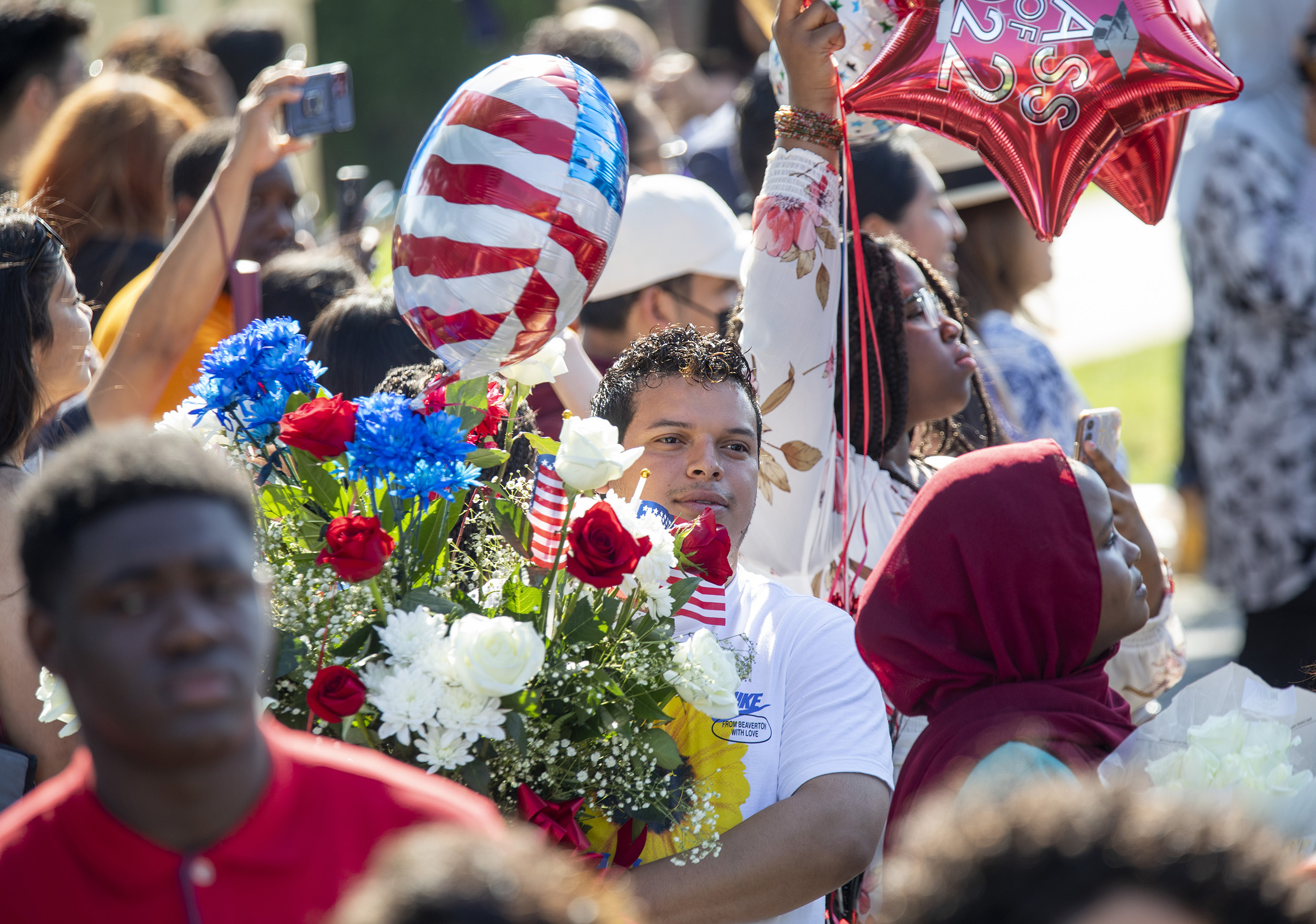
Lines of seniors stream out of the building and make their way to folding chairs on the football field, filing past bleachers filled with cheering family members, whose enthusiasm isn’t dimmed by the sweltering weather (almost 90 degrees and extremely humid). The school band makes it through Pomp and Circumstance over and over and over, until every one of the more than 500 seniors have made it to their seats.
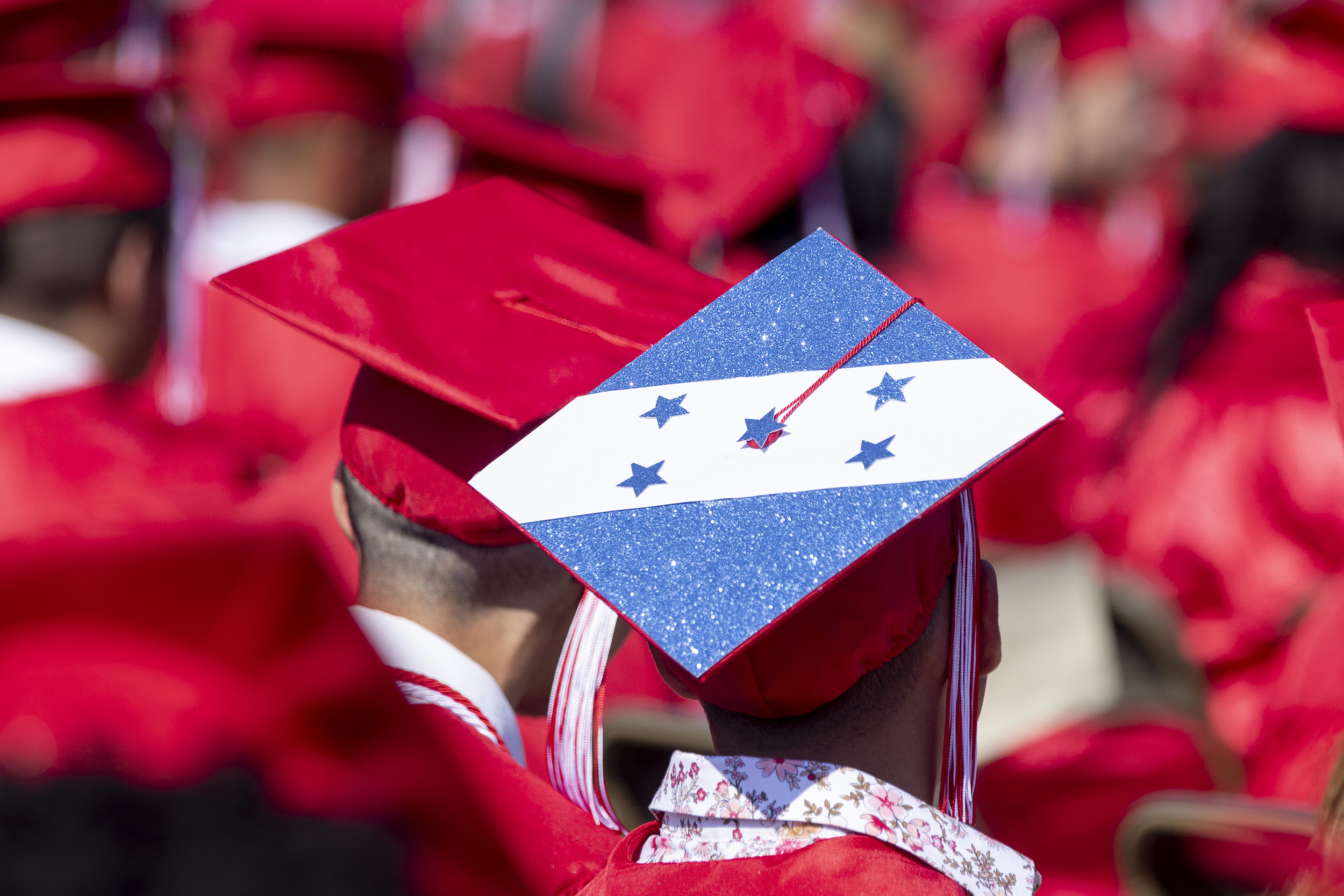
If you had to pick out one central message of the Annandale graduation — beyond simply, “we made it” — it would be “diversity is our strength.”
“The hallmark, the heart and the foundation of Annandale is its ability to bring together over 60 languages spoken, a plethora of nationalities, ethnicities, genders, sexual orientations, socioeconomic status – and inevitably, perspectives,” Mills said in her address to her fellow graduates. “Annandale prides itself in its diversity to the point where it’s almost a cliché, but its unique perspective of its students is what makes it so apparent when differences need to be made.”
That diversity, Mills says, prompted her and other students to take up social justice causes during their time at Annandale. She founded a nonprofit that supports girls, collecting donations of toiletries, makeup and sanitary products for a local homeless shelter and to support an aid organization in Haiti.
Annandale High School is one of the most diverse high schools in Fairfax County. 80% of the graduating class speaks a language other than English at home. About 40% were or still are English language learners. 67% of the senior class is eligible for free and reduced price lunch. Most of them come from immigrant communities and communities of color.
Mills called on her fellow graduates to carry the experience of going to school with students from a wide variety of backgrounds with them.
“As we move forward, we are likely to find ourselves in spaces that are not as welcoming,” she acknowledged. “But it is important that whichever room we walk into, we demand the same inclusivity that has welcomed us here at Annandale.”
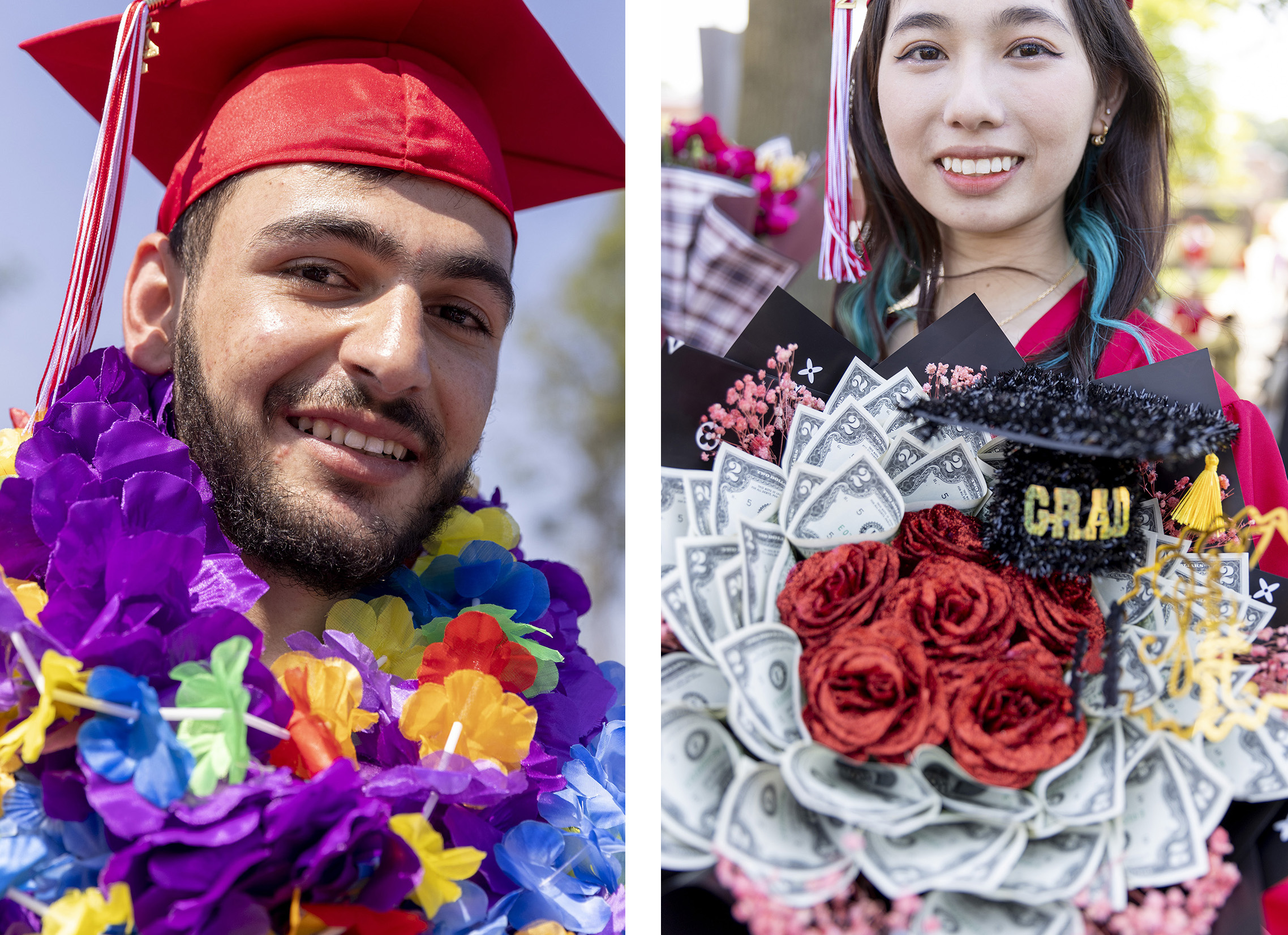
Assistant Principal Sarah Eqab, who delivered the keynote speech at the request of the senior class, continued Mills’ theme.
“The fact that I, a first generation Arab-American Muslim woman with a difficult last name to pronounce, was asked by this class to represent them, speaks to these students’ values and reflects on how they want to be remembered,” she said.
“My story isn’t different from any of your own stories — stories about humble beginnings, heartbreak, and families who sacrificed so that you and I could have a better life and a brighter future,” Eqab told the senior class. “And those are the stories that we hold here at Annandale.”
Eqab referenced two graduating students, both first generation immigrants who started school in Fairfax County without knowing English, to illustrate her point: a senior who came from Guatemala in 2018 and spent months in Arizona separated from her family before finally being reunited in Northern Virginia; and another senior who arrived from Bangladesh in eighth grade and graduated from Annandale with an international baccalaureate degree, the highest academic honor the school bestows.
This celebration of inclusion and equity is a counterpoint to claims from a few conservative community groups — and Governor Glenn Youngkin — who have suggested that teaching about systemic racism and equity is divisive.
Mills’ mom, Kishana Highgate, disagrees with those claims.
“History, whether it’s good or bad, it’s still history,” she says while sitting in the bleachers to watch her only child graduate from high school. “It still exists and it shouldn’t be erased for any reason.”
Some teachers have felt pressure to steer classroom discussion away from difficult topics — but Lee, the English teacher, says she’s found her students can handle tough conversations.
“They’re very open and mature,” she says. “Even if there are differences of opinion, it’s about respect. So, you know, I try to create that safe space.”
National news also seeped into the graduation. Flags flew at half-mast, a reminder of the mass shooting at a Texas elementary school two weeks ago.
“This was a challenging week,” said Principal DeRose. “I will tell you, it was the students and just the timing of our end of the year award ceremonies that got me through this week.”
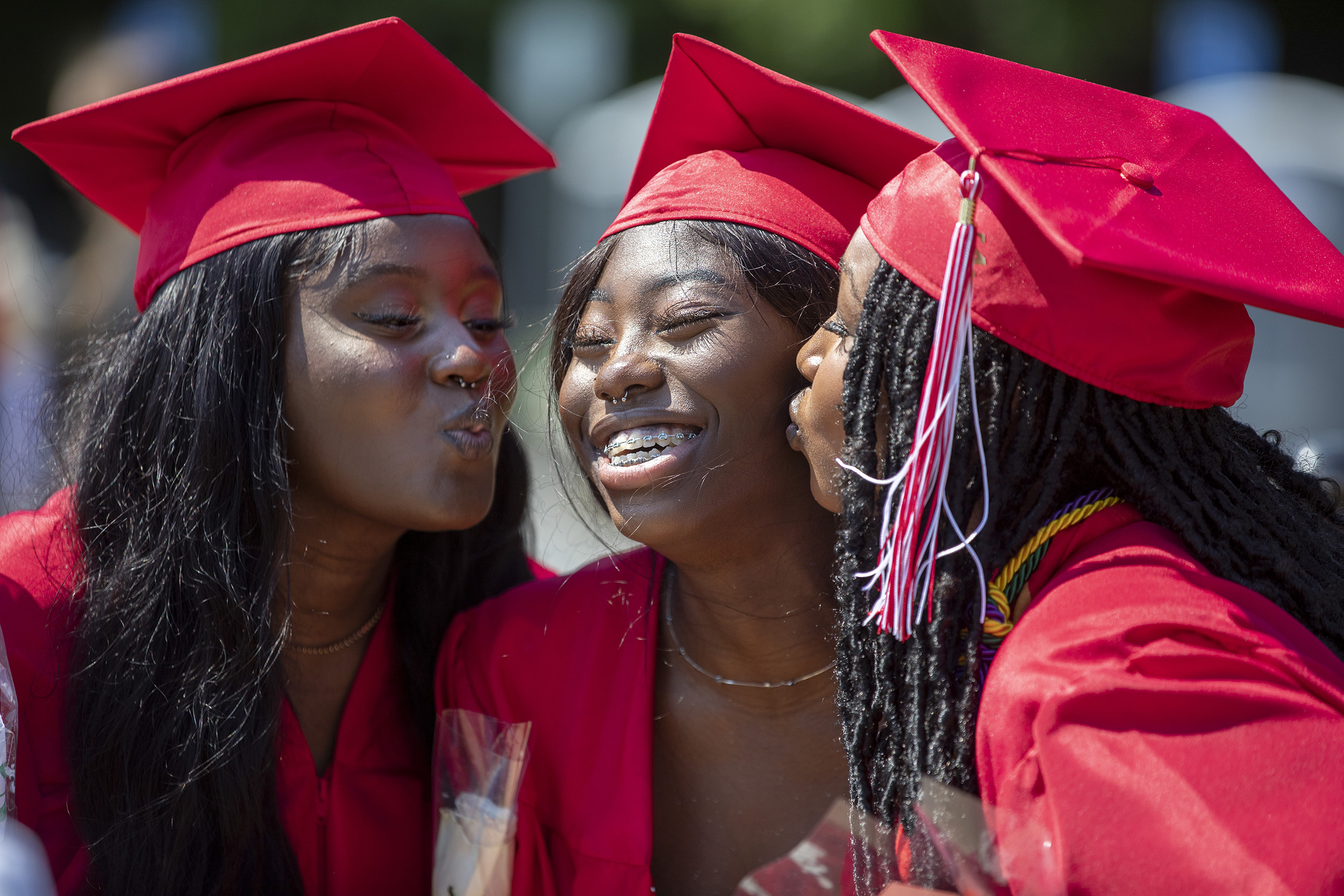
Tragedy, political controversy, and pandemic aside – the overwhelming emotion of the day was pride.
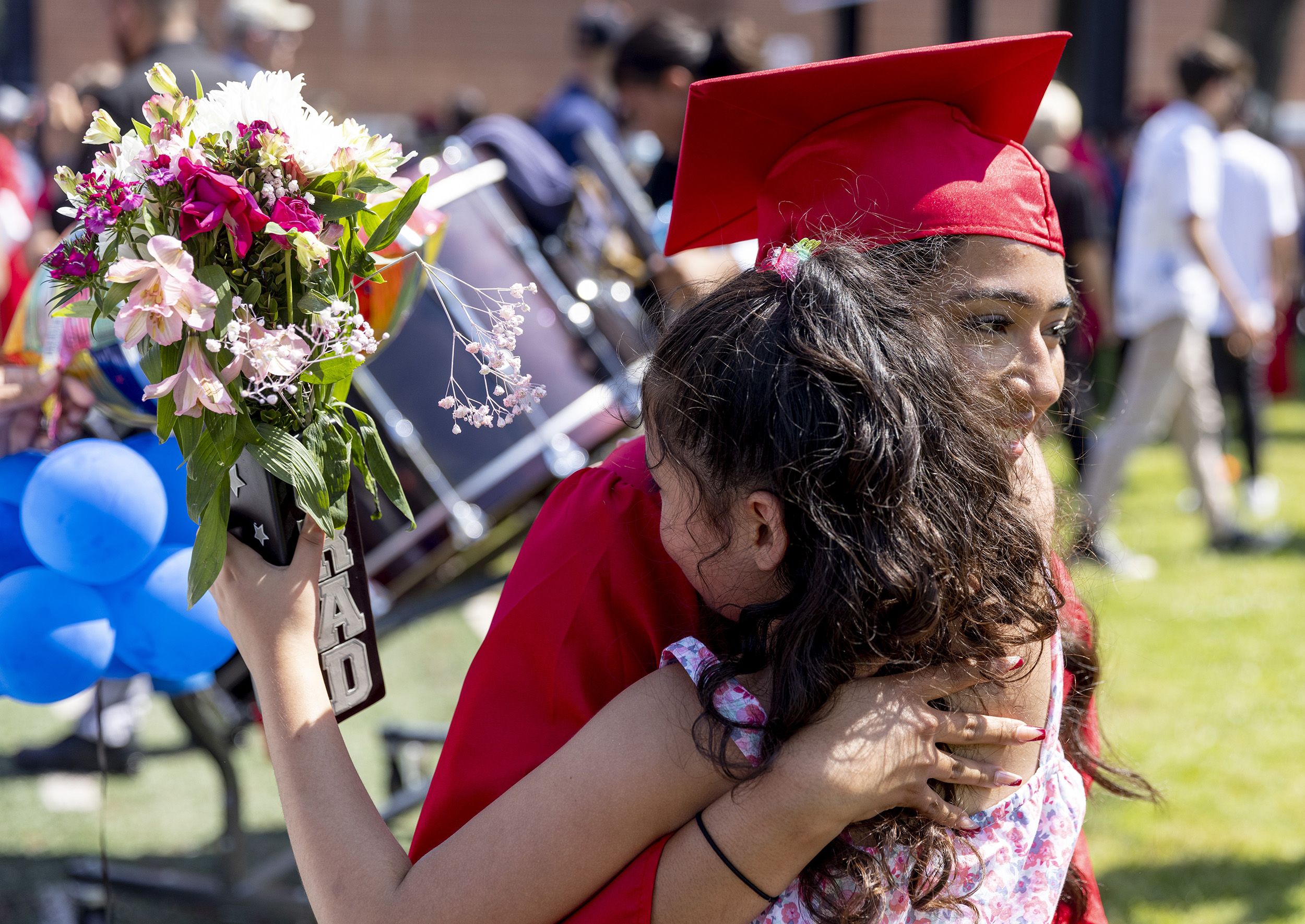
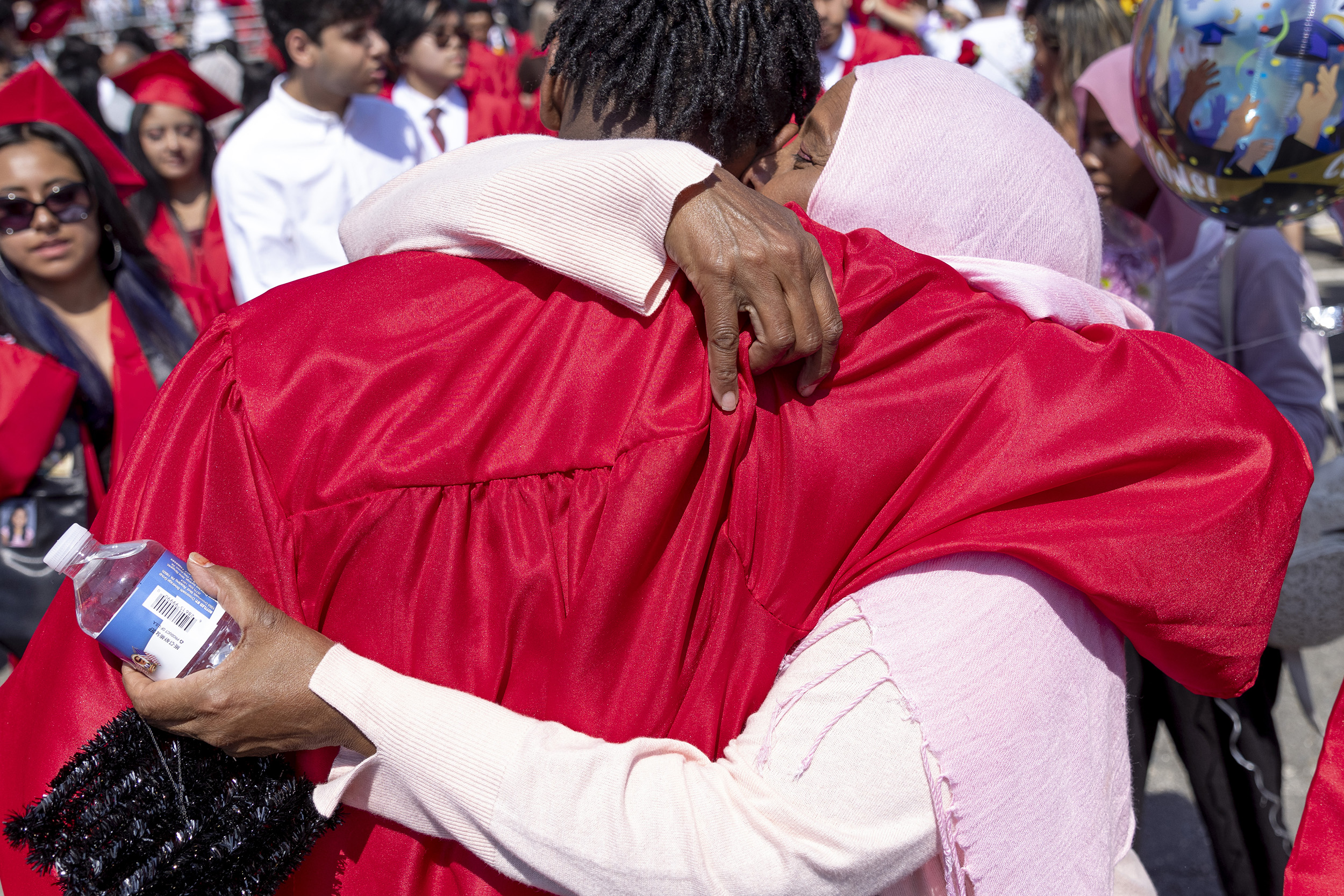
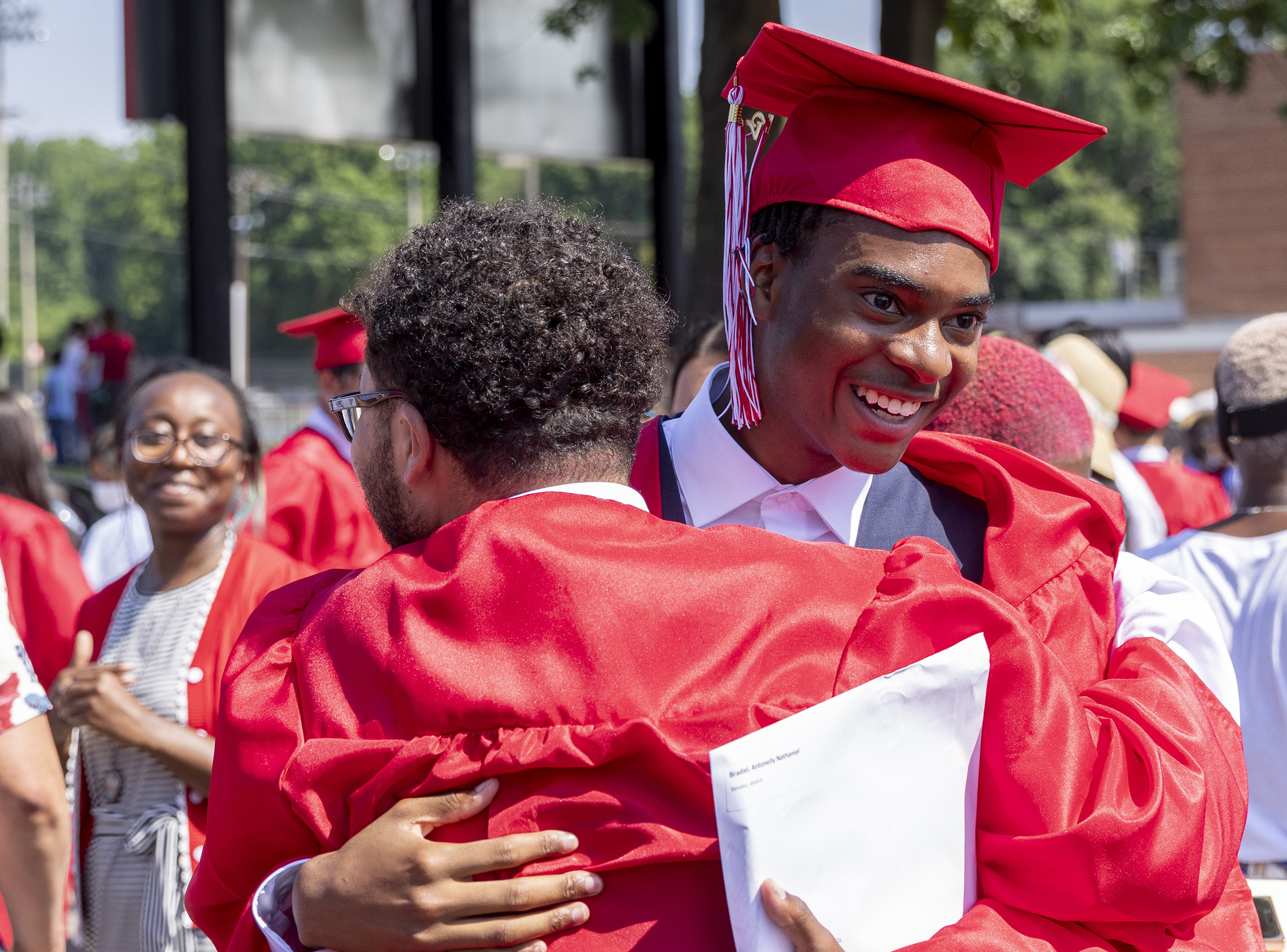
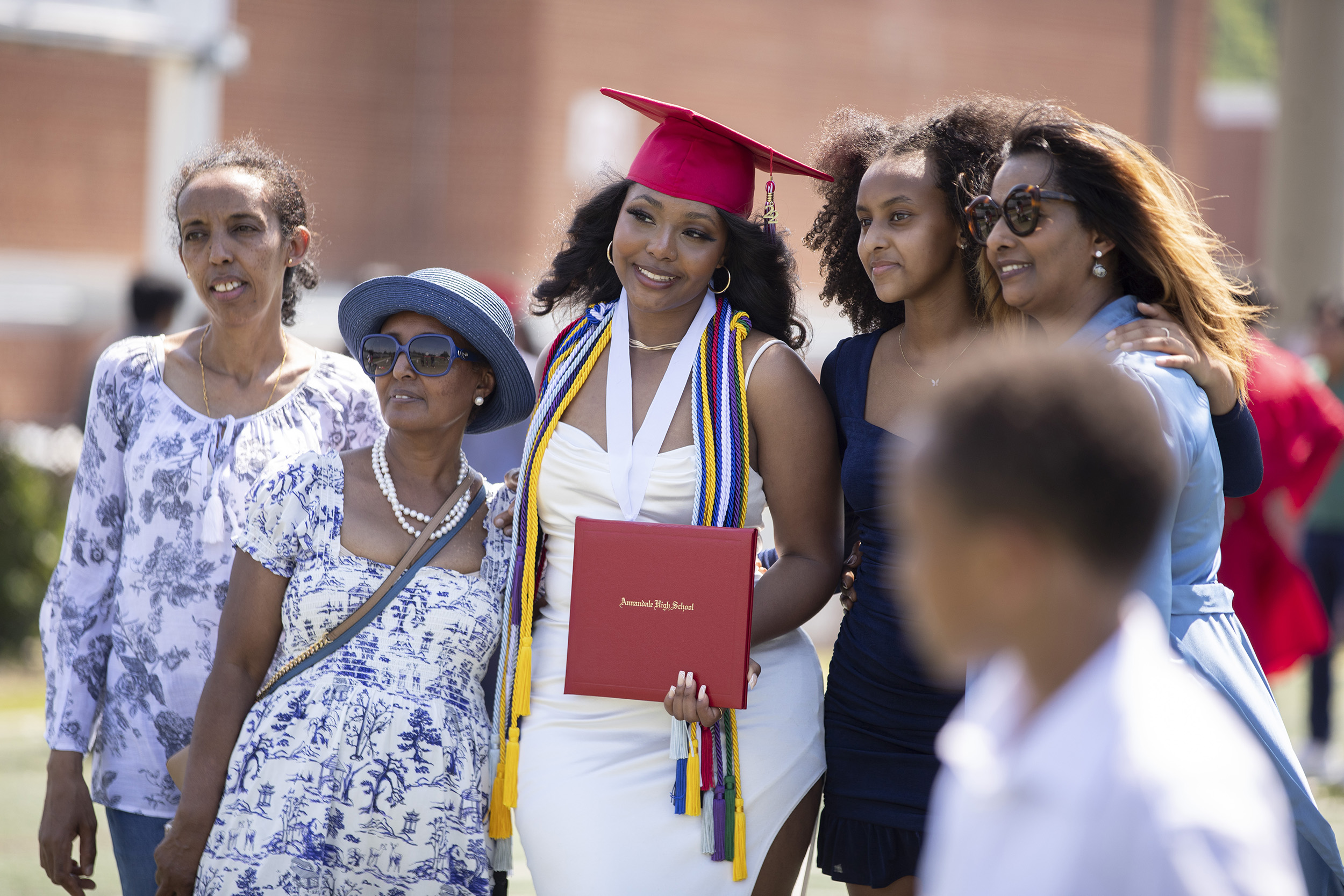
“The word of the day has just been extremely ‘proud,’ thinking about all that our students have been through over the course of their high school career,” DeRose says.
Eqab quoted her Jordanian grandmother’s message to her on graduation day, first in Arabic and followed by the English translation.
“Whether you are off to Nova or to GMU or off to work or off to Yale … You know where you come from, and you make us lift our heads in pride,” Eqab said from the podium.
The students walk across the stage to cheers from their families and their classmates. Everyone snaps pictures. People drum their feet in the bleachers, building a thundering roar as DeRose says the magic words: they’re graduates. They did it.
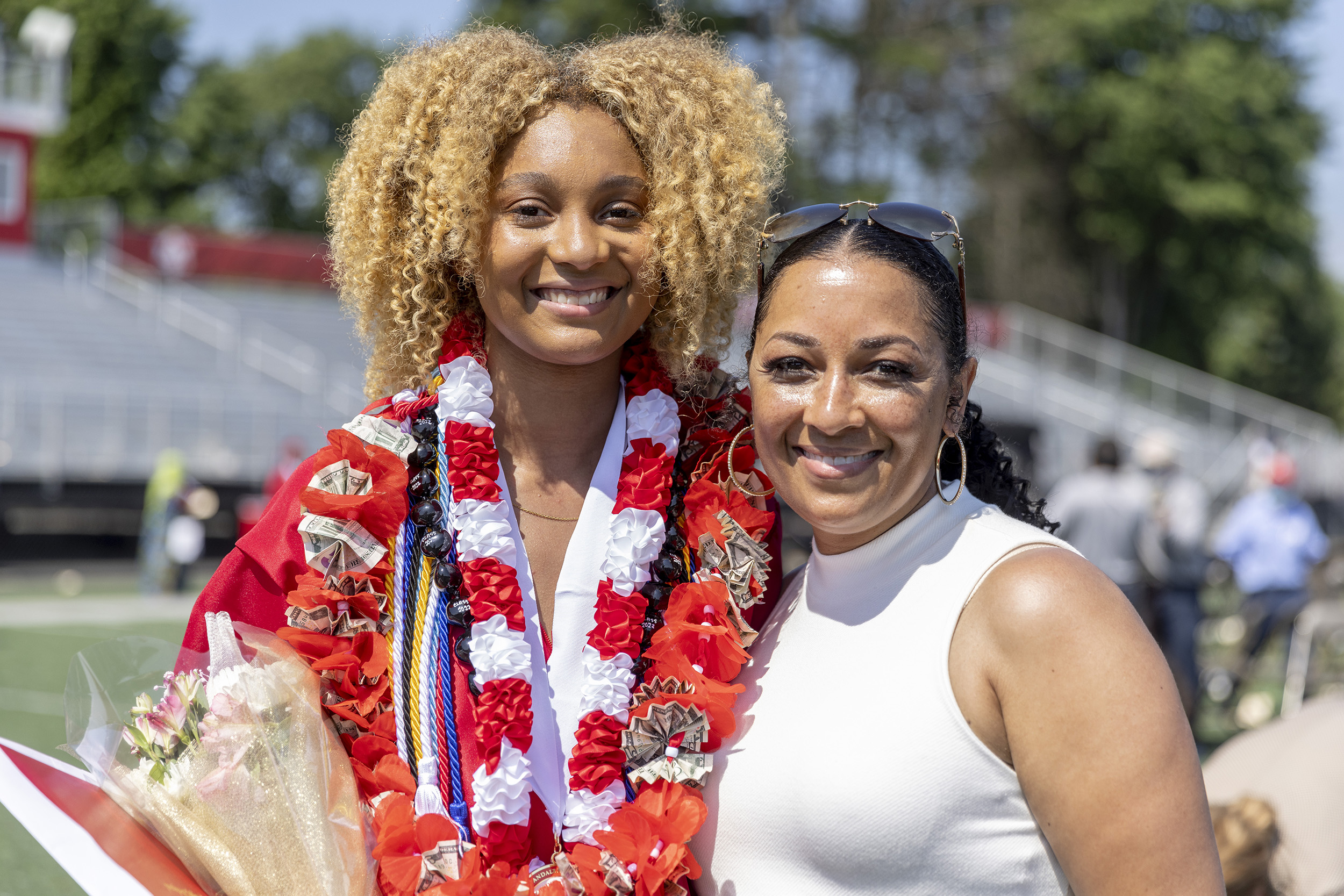
Afterwards on the football field, with stray programs blowing and staff already starting to stack folding chairs, graduate Shada Ibrahim can’t stop smiling.
“I’m still screaming in my head,” she says. “I’m so happy right now. It’s a great feeling.