 Jenny Gathright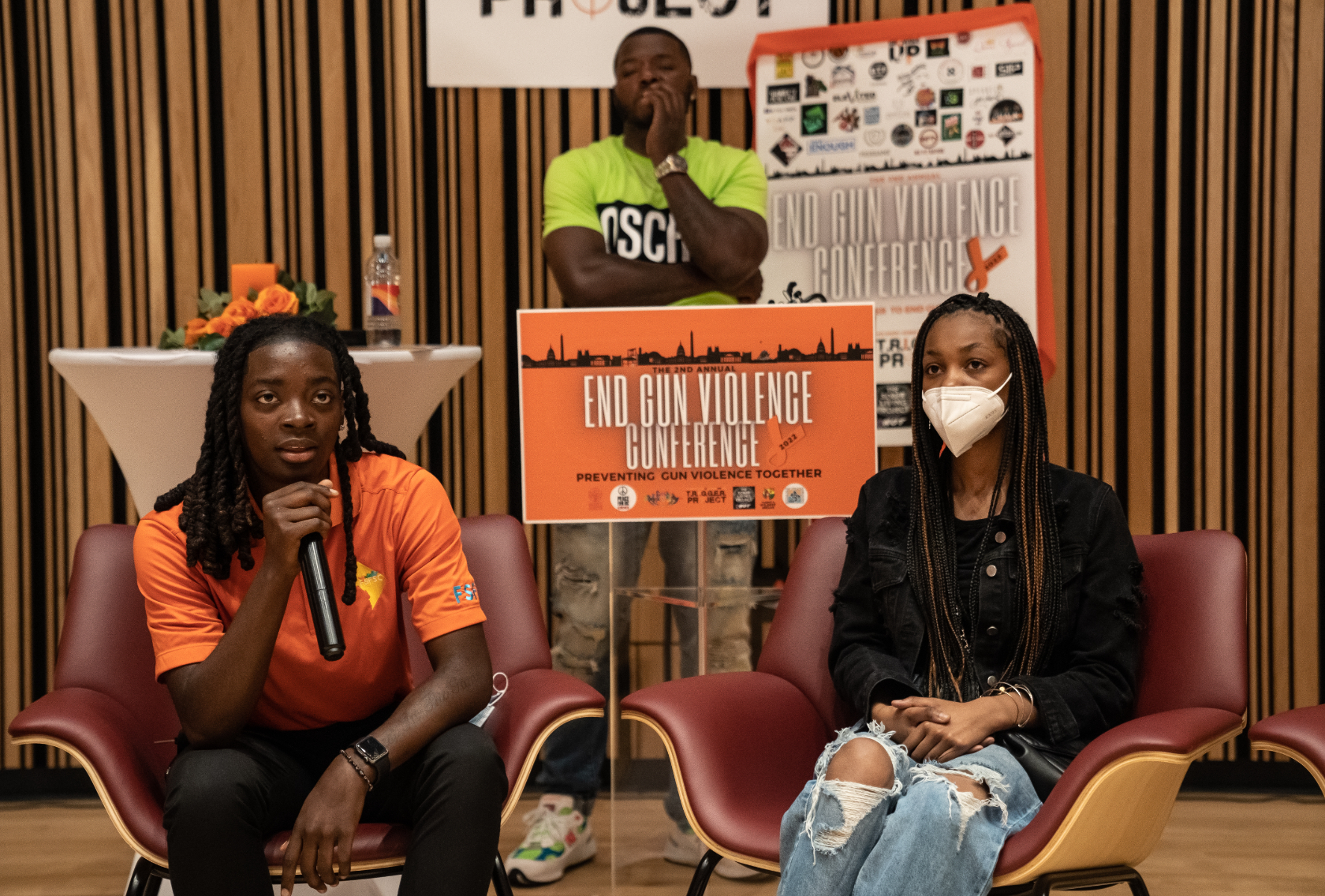
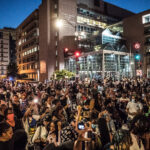
Before last month’s Moechella gathering at 14th and U Street Northwest, 32-year-old Marcellus Queen had a feeling something bad might happen.
“My friends asked me, ‘Oh, you want to go down to Moechella?’ I said, ‘I’m not going down. It’s too [many] groups of people out there,’” Queen told DCist/WAMU. “You know everybody gonna have a gun on them, because everybody’s scared of everybody else.”
The event did end in tragedy: 15-year old Chase Poole was shot and killed and three others were injured after an incident in the crowd turned violent. It’s the latest evidence of a tense summer in the District, as short fuses and the prevalence of guns continue to drive an ongoing increase in gun violence.
At the same time, District residents are eager to get involved in solutions. Queen was one of dozens of residents who attended a series of events in late June focused on planning for violence prevention. The events were purposefully timed to coincide with the start of summer, which historically brings a rise in shootings — and included a second annual citywide conference focused on ending gun violence, as well as a community planning meeting in Ward 4. The events brought together government officials, violence interrupters, activists, and concerned residents of all ages, from a range of D.C. neighborhoods.
And they came on the heels of a weekend where nearly two dozen people were shot and two teenagers – 18-year-old Kendall Myers and 15-year-old Blú Bryant — were killed, less than two weeks after the shooting at Moechella. According to MPD, 109 people have been murdered in the District so far this year, a 14% increase from this time last year. Like cities across the country, D.C. has seen an uptick in homicides since the start of the pandemic — but in the District, the trend started even earlier, as homicides in the city have increased every year since 2017.
At both events, there was optimism about new tools the city has deployed to prevent and address gun violence. At the same time, residents expressed despair about the ceaseless trauma reverberating through the city’s communities, and the city’s failure to address its root causes.
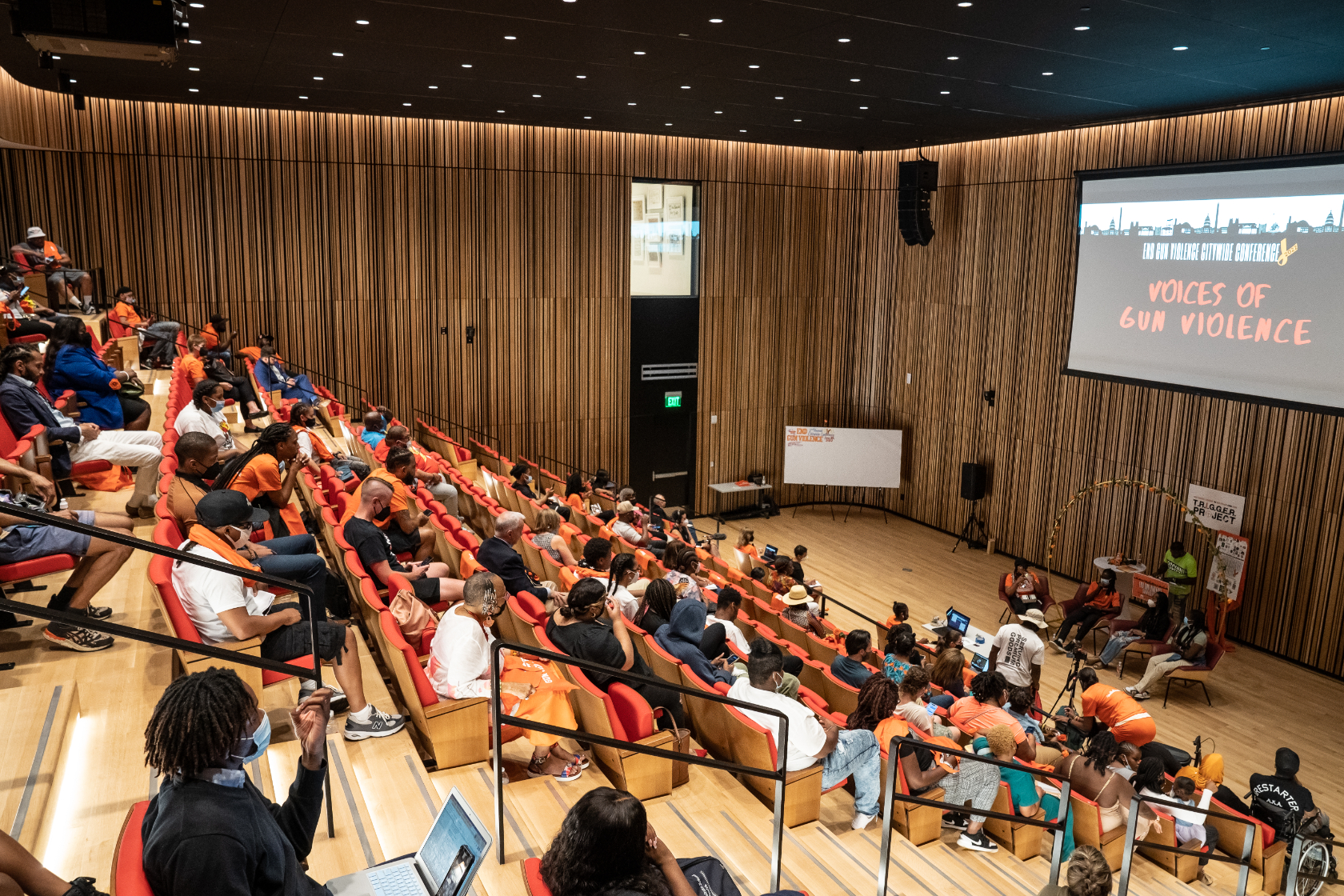
The conference at MLK Library, hosted by the T.R.I.G.G.E.R Project in collaboration with dozens of other community-based organizations and government initiatives, was focused on how to bring residents from across the city and its nearby suburbs together to envision what it would take to end gun violence completely. “This day is about preserving Black life, keeping our heart beats beating,” said Tia Bell, CEO of the T.R.I.G.G.E.R Project, in her opening remarks.
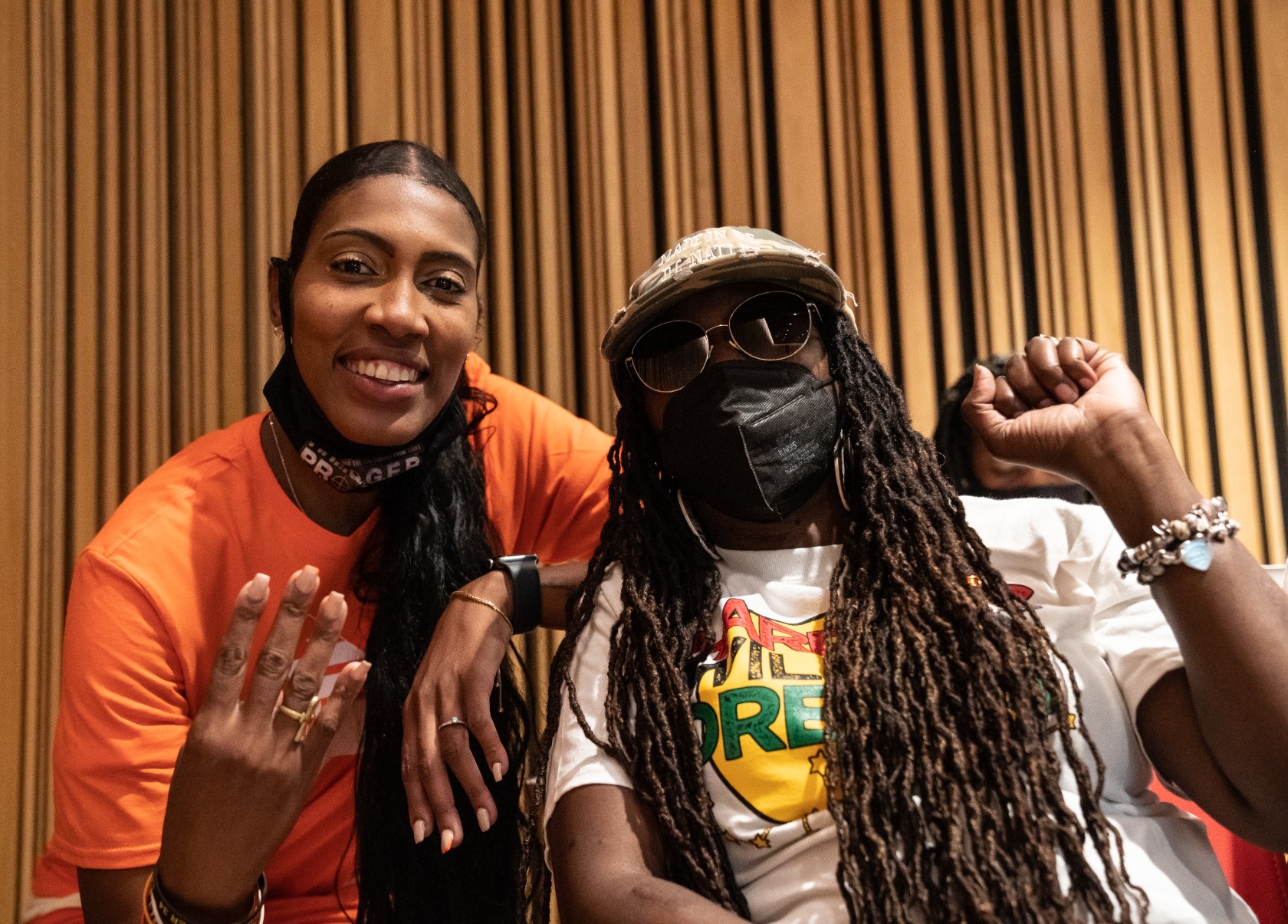
The day was solutions-oriented: It included, for example, breakout sessions where people gathered according to the regions of the city and suburbs where they live and work and talked through strategies for gun violence prevention specific to those areas.
But it was also a space of mourning for all that people had lost. Several residents who had survived shootings told their stories. And when Bell opened the conference by asking people to call out the names of loved ones they had lost to gun violence, the auditorium at Martin Luther King Jr. library filled with sound, as many people in the audience spoke multiple names of people who had been killed.
QueenAfi Gaston, 47, who lost her 19-year-old daughter to gun violence in 2016, said she saw the event as an opportunity to come together to address intergenerational drama.
“We saw a lot of trauma, and a lot of us are still battling with PTSD, unresolved stuff that we still refuse to work on,” she said, referring to her generation of Washingtonians, who came of age during an era when homicides were nearly double their current average. Now, she says, “we’re bringing our families together to say, ‘We must end gun violence. This is a problem.”
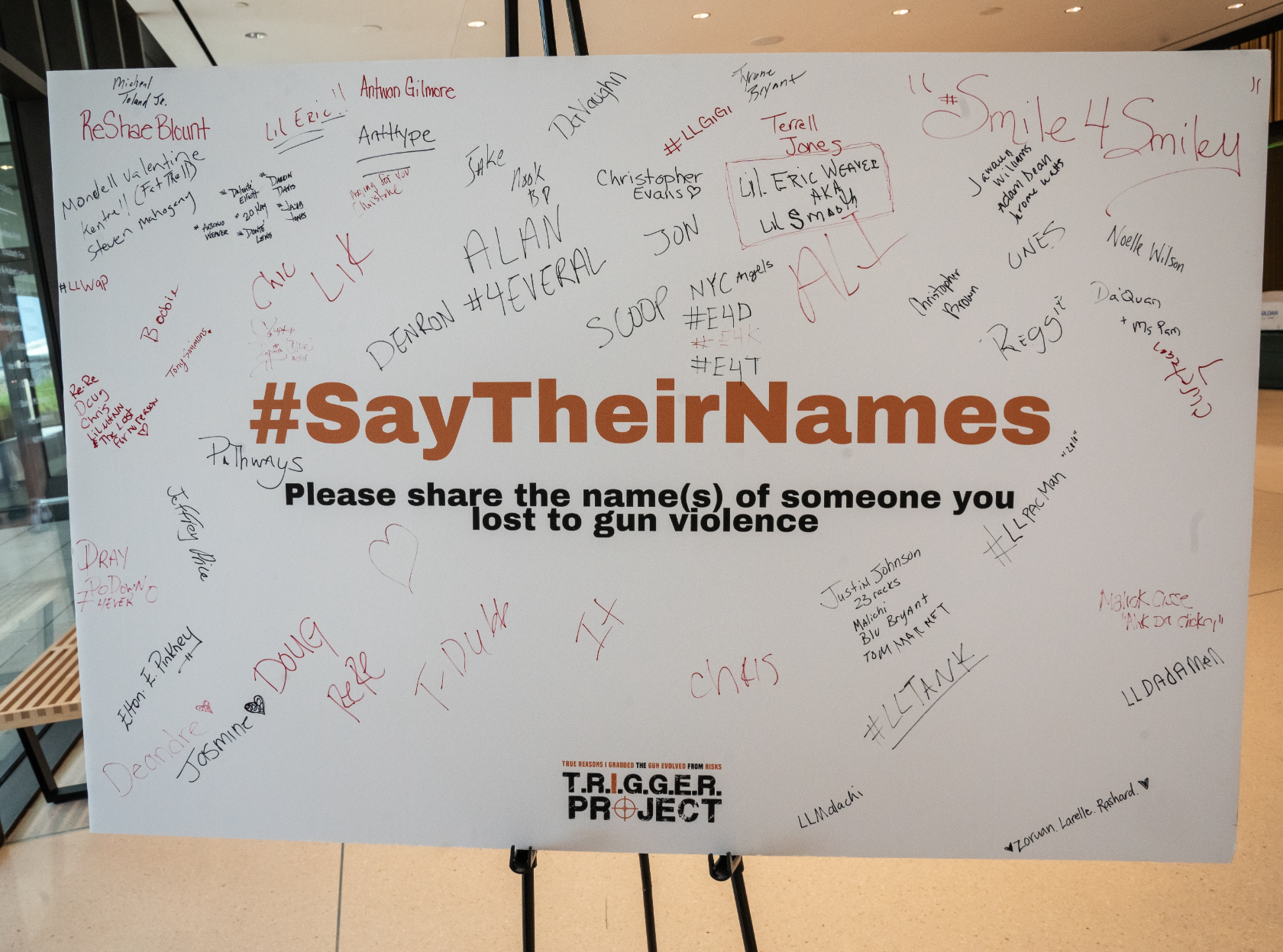
Queen, 32, said he thought the event was “wonderful,” in part because it allowed people like him, who have direct experience with the dynamics that drive violence in the District, to connect with others who care about preventing gun violence.
Queen, who survived a shooting himself several years ago, is now a participant in the Pathways Program, which connects formerly incarcerated people and people once involved in violence with training and subsidized employment. He thinks now is the “best time ever” to reach people at risk of being involved in violence – because he believes a lot of shootings in the District right now don’t have to do with large-scale or lucrative drug operations. Instead, he says, “they’re just out here running wild and being crazy for dumb stuff.”
Queen’s assessment of the drivers of violence is backed up by recent research, which found that a large percentage of shootings in the District over the past two years were driven by interpersonal conflicts among a relatively small group of people.
Many of the attendees of the T.R.I.G.G.E.R Project conference were part of the city’s growing violence intervention workforce, and are employed by city-funded contracts to reach out to those at risk of being a victim or perpetrator of violence, and help them change their lives.
It’s a field that has received more attention and resources from the District in recent years. D.C. Mayor Muriel Bowser recently announced a new life coaching program for 200 residents considered high-risk. In addition, the Office of the Attorney General’s Cure the Streets violence interruption program and the Office of Neighborhood Safety and Engagement’s violence interruption program are in the process of expanding to new sites, adding dozens of violence intervention workers across multiple D.C. neighborhoods. And a newly-launched and privately-funded Peace Academy is working to bring this expanding group of violence intervention workers together to share best practices and strengthen their skills.
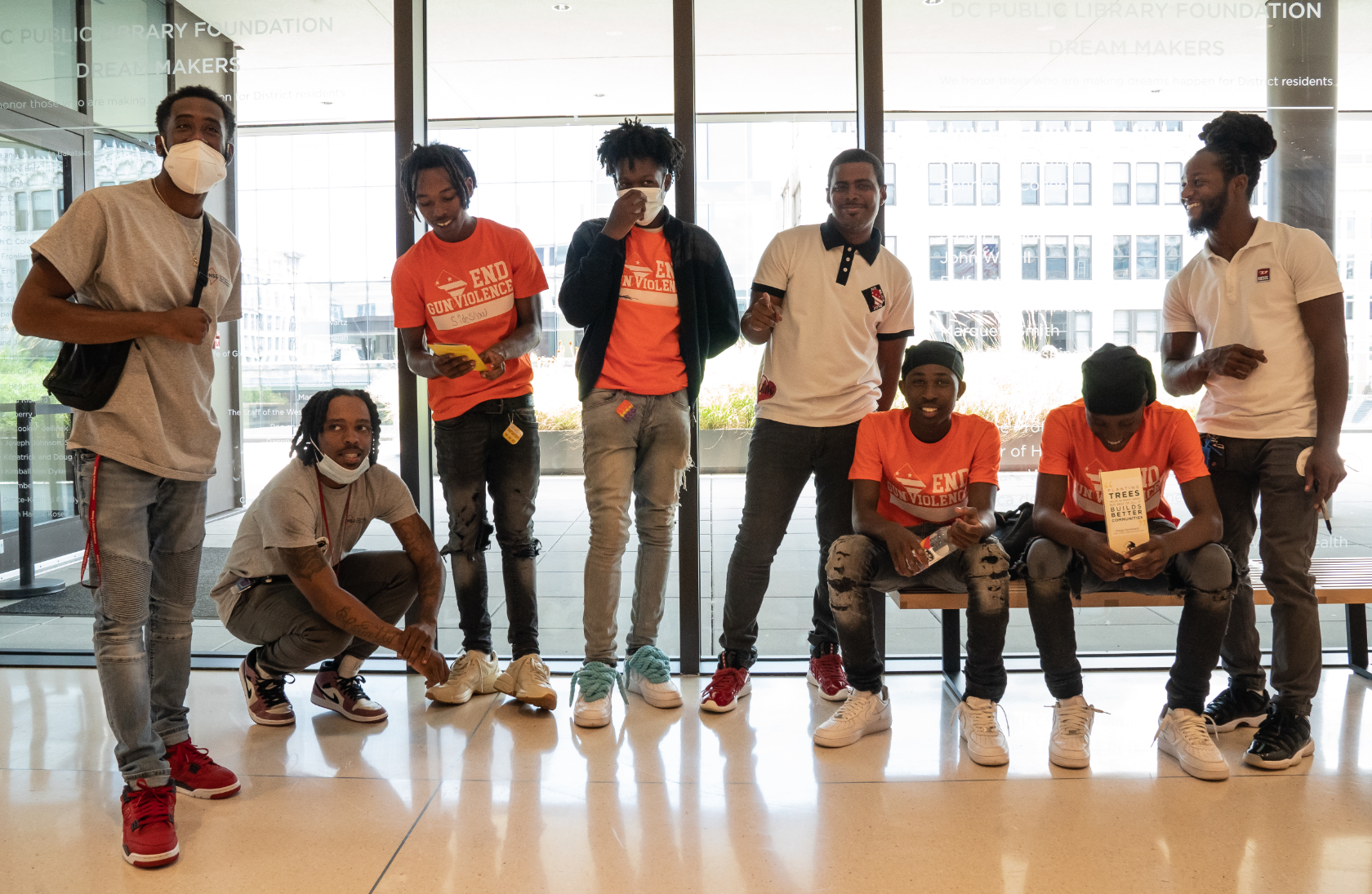
In Petworth on Wednesday, at a public safety planning meeting convened by Ward 4 Councilmember Janeese Lewis George, officials expressed hope that these expanded violence intervention resources would start showing results. The Cure The Streets expansion will add violence interrupters to Brightwood Park, Petworth, and neighboring Columbia Heights, where gun violence in Ward 1 and Ward 4 has been concentrated.
Blocks from the public safety meeting at MacFarland Middle School, and shortly before it began, a shooter reportedly fired one hundred rounds outside the Petworth metro. No one was injured. At the meeting, Lewis George told concerned residents that the violence outside the metro appeared to be related to an ongoing conflict between a group in the neighborhood and another group in Columbia Heights – exactly the kind of crew-related violence that Cure The Streets’ model is designed to address.
But some residents and experts have questioned whether all of these initiatives are adequately coordinated. “There’s a lot of capital being placed in anti-violence,” Rahim Jenkins, the CEO and Director of the National Center for Juvenile Justice Reform, told DCist/WAMU at the T.R.I.G.G.E.R Project conference. “But I think that the services need to be centralized in one place, where there can be a sharing of the intel and the services, where everybody can know what each other’s doing in the community.”
On top of concerns about coordination, community members expressed even more concern that as the city focuses on shorter-term solutions like violence intervention initiatives and policing, it’s neglecting the long-term drivers of violence and inequality, particularly in D.C.’s Black neighborhoods.
The psychologist Dr. Charlayne Hayling-Williams, the founder of Community Wellness Ventures, emphasized in her speech at the T.R.I.G.G.E.R Project conference that it’s not enough to focus on a young person only after they’ve decided to pick up a gun. Instead, she says, the city needs to focus on the racist systems that routinely deprive Black D.C. residents of an adequate quality of life from birth.
Hayling-Williams, who provides mental health services for Medicaid and Medicare recipients in the District, including survivors of gun violence, said the average shooter in D.C. is “the same person who was born into conditions that no human being should live in, trained in schools that no person can really learn well in, treated poorly in hospital systems, and sent messages throughout a lifetime that life doesn’t really matter for people who look like them or who are from communities like theirs.”
“What we’re talking about is a system that communicates not only subliminally, but actually, in fact, in ways that we can quantify every day, what and who is important and who isn’t important,” she added.
20-year-old Ardinay Blocker, a Southeast D.C. resident, spoke on a panel of gun violence survivors about the trauma she has experienced in her life.
“I’ve been to so many funerals,” Blocker told the audience. The death of her godfather was one that hit the hardest, she said. For her little brother, it was the loss of his best friend, Davon McNeal, the 11-year-old who was killed at a July 4 barbecue in 2020. After he heard the news, Blocker says, he didn’t come out of his room for our days. “We grow up in it,” said Blocker.
Blocker said she felt city leadership wasn’t doing nearly enough to address the trauma in her community. She spoke about the need for trauma-informed care and mental health support to help people navigate grief. And she said the city was failing to commit real resources to young people in need of them.
“It’s no way in the world that you should have [19.5] billion dollars or so in the budget and kids are making $6.25 an hour as a summer job,” Blocker told DCist/WAMU after her panel, referring to the wages for 14 and 15 year olds in the city’s summer jobs program. “That’s not fair. That don’t motivate them. That means you’re playing in their face.”
At the Ward 4 meeting, an educator at MacFarland Middle School stood up to share that her students were in crisis and the city wasn’t doing nearly enough to help them. The campus has one social worker with a caseload too large to manage, she said, and there were no Spanish-speaking mental health professionals.
After the meeting, Lewis George said she was glad residents wanted to discuss the root causes of violence in addition to the role of police in addressing public safety concerns.
“Sometimes, when you are on the Nextdoors and the listservs, it seems like everybody’s response is, ‘We want more officers.’ What we heard tonight is people say – we want to see officers out of their cars in community with us, but we also want you all to pay attention to what’s happening in the schools and what’s happening at the lower ages that bring people to this point,” said Lewis George.
For the Ward 4 Councilmember, convening the panel at MacFarland Middle School — which included a wide array of government representatives, including Metropolitan Police Department’s Fourth District Commander, Attorney General Karl Racine, Office of Neighborhood Safety and Engagement chief of staff Marcus Ellis, and a representative from the Department of Behavioral Health — was a way of showing that D.C. officials are capable of collaborating.
Lewis George says she feels that residents have internalized a narrative that the D.C. Council and Mayor Muriel Bowser are against each other, or that the D.C. Council is against the police department. While political disagreements exist, Lewis George says, D.C. leaders are still working together every day on public safety issues.
“There’s just so much divisiveness in the city around public safety that happens on the various mediums, and that’s really scary to community members, because in their mind, we all don’t get along, we all blame each other, we all point fingers, and we all aren’t in conversation,” said Lewis George. In her eyes, that adds to the trauma the community is experiencing.
“What I wanted to show tonight is that when we get to a crime scene and do the work, we’re all together. We’re all committed to the same cause and making sure our community is safe.”