Amanda Michelle Gomez
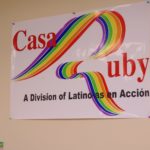
Casa Ruby is a household name for providing services to the local LGBTQ+ community. A new report from the Washington Post alleges the decade-old nonprofit based in D.C. has failed to pay staff, their landlord, and some vendors before quietly closing this year and leaving vulnerable people without housing or other lifesaving care.
Casa Ruby has not formally announced the closure. The nonprofit makes no reference to it on its social media, or on its website. Someone momentarily shared the Post story on the nonprofit’s Instagram stories. As of Monday afternoon, their website says “Casa Ruby is open.” No one answers the phone number listed on the website, and their mailbox is full.
Casa Ruby was one of the few organizations offering housing to queer people in the District. D.C. is not opening a city-funded shelter for LGBTQ adults until August, and only several nonprofits like the Latin American Youth Center and SMYAL offer transitional housing to queer young people.
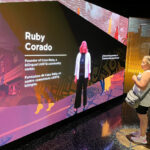
Multiple Casa Ruby employees tell the Post that they have not been paid for several weeks, while the nonprofit’s landlord and some of its vendors, such as their security company, also say they are owed money. However, the nonprofit has received at least hundreds of thousands of dollars in grants and donations. Casa Ruby founder Ruby Corado is reportedly in sole control of the nonprofit’s bank accounts, and former staff and local officials seem to not have been able to reach her.
Tania Cordova, who managed programming for LGBTQ asylum seekers, told the Post that some clients and staff have relapsed since the nonprofit shuttered. Cordova and others who lived in the nonprofit’s transitional housing were forced to quickly relocate after suddenly being evicted in the spring. “And mostly, we have all been addicted to alcohol or drugs, and we had overcome all these problems,” Cordova said. “But now, all this depression and everything that we are facing at Casa Ruby has triggered our anxiety. The impact is not just financial. It’s emotional, mental and physical.”
At a press conference Monday morning, Mayor Muriel Bowser said she was sad to learn of what happened at Casa Ruby. “A lot of people here know Ruby and know the organization and especially knew the organization when it was doing work that nobody else was doing,” she said. “But I also know when we give hundreds of thousands of millions of dollars and if vendors aren’t getting paid, employees aren’t getting paid, we got a problem. … So I’m sad about it because that was an organization that has done good work. We have to figure out what happened and fix it.”
The nonprofit made headlines after the city’s Department of Human Services decided against renewing a large, sustaining grant for them last year. “Grant renewal decisions are based on ensuring accountability and continuity of quality services and the safety of our residents. We value the community organizations who deliver these services and honor the contributions of Casa Ruby,” said Director Laura Zeilinger in a statement to DCist/WAMU at the time.
Corado accused the D.C. government of effectively retaliating against her by denying the grant because “I didn’t kiss their ass.” She also said her nonprofit would have to halt its low-barrier shelter for queer people experiencing homelessness as a result. She later raised over $130,000 to keep the 50-bed shelter and 24-hour drop-off space open for clients, as well as to keep 30 people employed, most of whom are transgender or homeless themselves, according to the fundraising page. She also raised another $108,585 after having disputes with the landlord of the shelter.
But the Post investigation complicates Corado’s claims. A person who worked at the shelter during that time, Denzel Mackall, said he was still laid off without notice. Meanwhile, the landlord of the Georgia Avenue space, Menkiti Group, told the Post that Casa Ruby owes more than a million dollars in unpaid rent, as well as utilities and late fees. The nonprofit had disputes with landlords of other spaces it uses for transitional housing and other services too.
The founder stepped down as executive director shortly after the government contract was terminated. “I’m not leaving the girls … I’m just not going to be the main target anymore,” Corado said during a Facebook live video where she announced her resignation. She had been quite successful in her tenure, earning a six-figure salary by the time she exited her post. She earned credibility in some communities according to the Washington Post, leading Nellie’s Sports Bar to hire her as their director of community engagement following calls to boycott the establishment. According to the associate general counsel in the executive office of the mayor, Cristina Sacco, Corado maintained control of the nonprofit’s finances. DHS did not immediately respond to further requests for comment.
Former Casa Ruby employees have not been in contact with Corado nor has the local government, according to the Post. “Ruby Corado is out of the country and we have not had contact with her,” reportedly said DHS deputy administrator Tania Mortensen in March 2021. Corado reportedly attended events in El Salvador in March of this year.
Several people who read the Post report said they were not surprised. “We have told folks about her for years,” tweeted Preston Mitchum, director of advocacy and government affairs with the Trevor Project. “It’s frustrating because I’ve been hearing these mismanagement rumors about Casa Ruby for years (way before the pandemic even), but it was still allowed to get to this crisis point and leave so many vulnerable,” tweeted Tracy Hadden Loh, a fellow with the Brookings Institution.
This story has been update to reflect a change in the description of the amount of salary Ruby Corado received.