 Jordan Pascale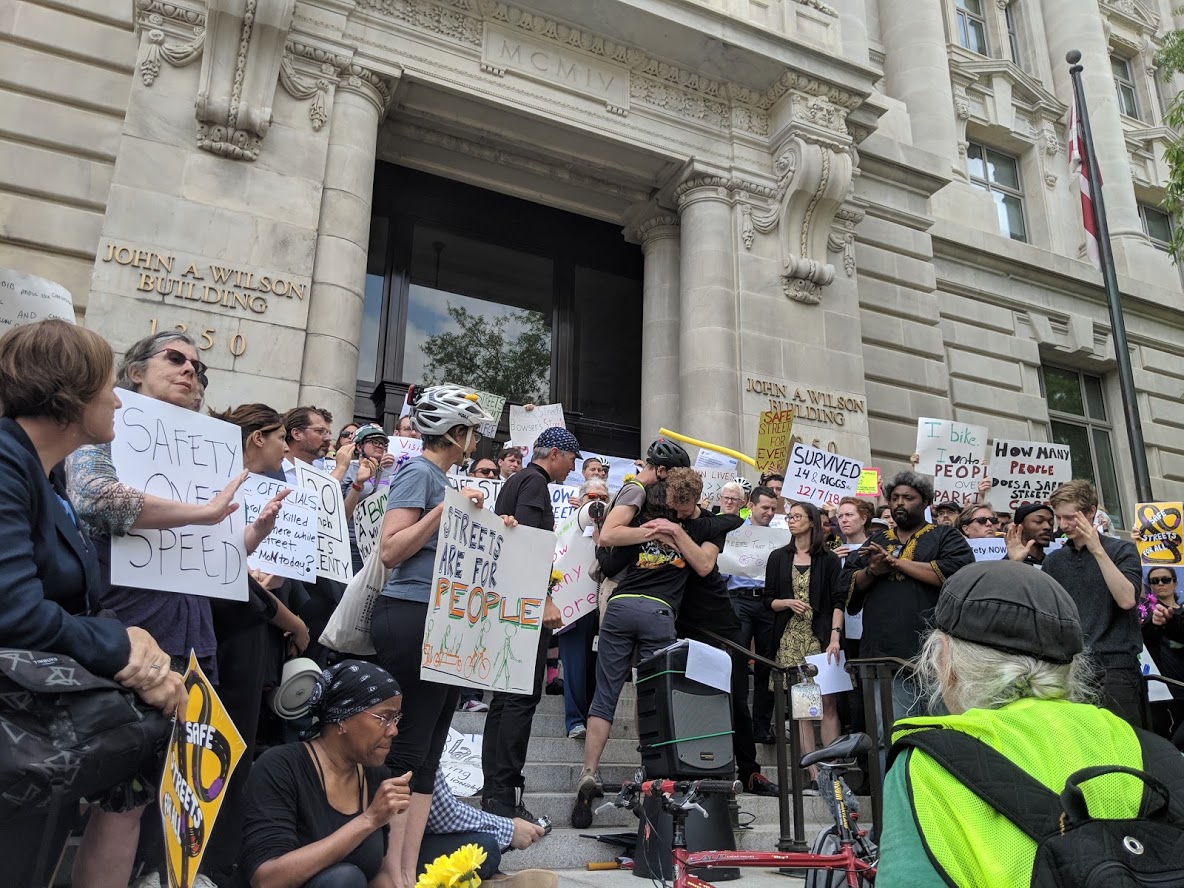
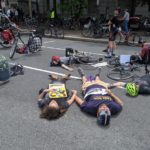
By April 2019, eight people had been killed in traffic-related incidents that year. Mad as hell, safe streets organizers blocked the streets in front of the D.C. government’s Wilson Building, staging a “die-in” to protest the Bowser administration’s failure to curb traffic deaths despite a Vision Zero goal to eliminate them by 2024.
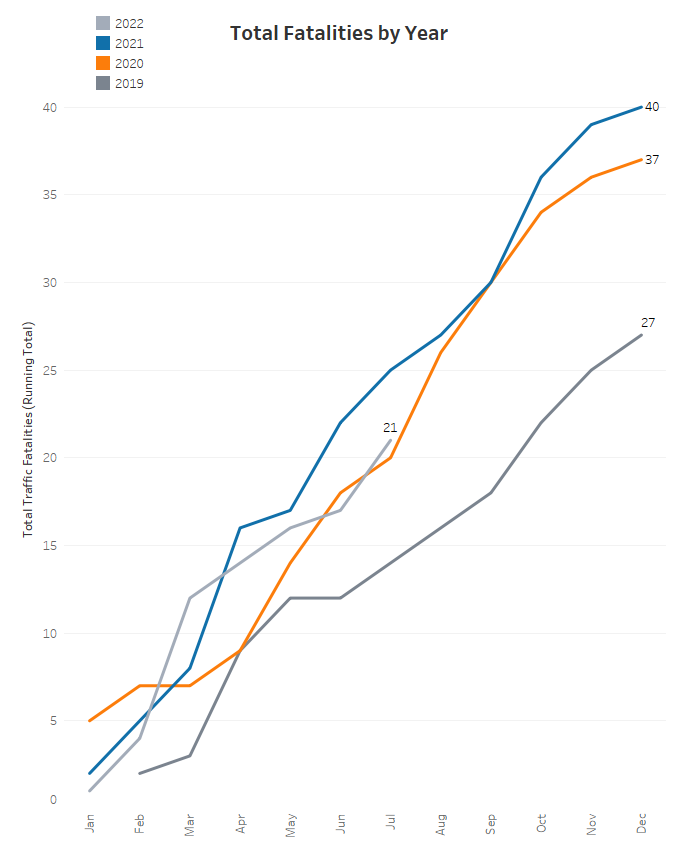
Bowser adopted the goal in 2015, but last year saw a 13-year-high in traffic deaths. The District had only year since that had fewer deaths. Today, organizers are back again facing the same problems and asking for similar fixes.
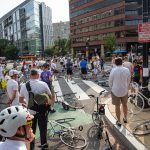
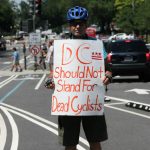
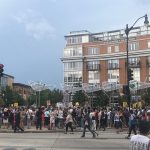
Advocates are meeting at 1350 Pennsylvania Ave. N.W. on Wednesday at 5:30 p.m. to protest the 22 deaths this year, including three cyclists and a pedestrian killed this month. Attendees are encouraged to wear white.
“This rally – this protest – needs to happen again because we’re not seeing the changes to our streets and to our vehicles that will protect road users like bicyclists and pedestrians of all ages,” says organizer Rachel Maisler, who helped put together the 2019 event. She notes that she was able to use the same marketing and press release materials because so little has changed since then.
But this time, they intend to make the event more visceral. It’s titled, “BLOOD ON BOWSER’S HANDS: EVERYONE DESERVES TO TRAVEL IN DC ON STREETS THAT DON’T KILL.”
Organizers are demanding:
- A new and innovative approach to enforcement and holding bad drivers accountable.
- Implementation of the 2020 Vision Zero Bill, which still remains partially unfunded.
- Completion of the Protected Bike Lane and Trail Network in the District.
- Passing two safer streets bills, the first of which would create more speed bumps, stop signs, and other infrastructure in school zones. The second bill would mandate raised crosswalks, effectively converting them to speed tables designed to slow traffic.
- Policies that reduce driving, including a congestion pricing policy that would charge drivers a toll for driving in the downtown area.
- Legislation that mandates all trucks and trailers that operate in the District have guard rails to stop people from rolling underneath the vehicle.
There will also be a moment of silence for the victims: Michael Hawkins Randall, who was traveling by bicycle, and pedestrian Charles Jackson who were both killed by a driver in a vehicle on July 2; Michael Gordon who was killed by a driver in a vehicle while riding his bike on July 15; and Shawn O’Donnell, who was killed by a driver while bike commuting on July 20.
Maisler also notes that while deaths are usually highlighted, there are thousands of crashes a year that maim or change the lifestyle of many victims that don’t get the attention it deserves.
“We don’t really have a great pulse on the number of people who were hit by drivers and injured – major injuries, minor injuries, life-changing injuries,” Maisler said, mentioning the recent crash where a 7-year-old was taken to the hospital. “Last fall there was a whole spate of preschoolers and kindergarteners that were getting hit by drivers and that’s just unacceptable. It’s unacceptable at any age. You’ve got some of the most vulnerable populations for the lack of action.”
The Bowser administration has made some strides in recent years, including more protected bike lanes, hiring a Vision Zero coordinator, speeding up the time it takes to get a new speed bump or stop sign put in, and lowering speed limits, but those actions so far have not reduced the number of deaths on D.C.’s streets.
WAMU/DCist asked the mayor’s office for comment, but have not yet received one.