 Jenny Gathright
January 6 defendants being held at the D.C. Jail say that if conditions at the facility don’t improve, they’d rather be transferred to Guantanamo Bay, where they think they’d at least get better meals, medical care, and exercise.
About 30 defendants accused of crimes related to the deadly insurrection at the U.S. Capitol recently penned a letter, published in recent court filings, arguing that conditions at the D.C. Jail are so bad that it shouldn’t even be called a “correctional facility.”
“A more accurate terminology to describe the facility … would be to call this location an ‘evisceration facility,’ of the body, mind, and soul,” they wrote in the open letter.
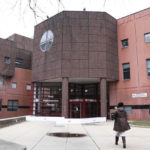
The defendants are being held at D.C.’s Correctional Treatment Facility, which is part of the D.C. Jail complex, while they await trial. (The adjacent facility, the Central Detention Facility, is what’s most commonly referred to as the “D.C. Jail.”) They represent a small percentage of the approximately 1,400 people being held there: The exact number of them fluctuates, but has typically hovered around a few dozen, per NPR (The D.C. Department of Corrections did not respond to requests for a current count of Jan. 6 defendants in custody by publishing time).
DOC officials have said that the Jan. 6 defendants are held separately from the general population of the facility for their own protection. Additionally, the side of the jail complex where they’re being held is lower-security, newer, and generally regarded as being in better condition than the general population areas of the Central Detention Facility: A U.S. Marshals Service memo last year found that while people in CDF were being held in unsanitary, unacceptable living conditions, the CTF side of the complex was up to federal standards (though the defendants have claimed in recent court filings that CTF’s higher rating was boosted by a “frantic” last-minute cleaning effort DOC officials initiated as the marshals were inspecting CDF).
But the defendants maintain they’re being treated inhumanely at the jail.
The list of grievances from the Jan. 6 detainees include complaints similar to those that D.C. residents who have spent time at the D.C. Jail have spoken about for years: inadequate and/or inedible food, long delays in accessing mail, nonfunctional plumbing, inadequate medical care, and harassment and assaults by corrections officers. In the letter, they wrote that DOC staff laughed when one resident requested to be placed on suicide watch. They said they were denied outdoor recreation, drinking water, and food. And they reported “being physically assaulted, maced, and cell raided by guards for no reason.”
But their grievances also include some related to their political beliefs that are more difficult to corroborate. For example, the January 6 defendants claim that they’re receiving “critical race theory propaganda,” “re-education propaganda,” and “racially biased information” on the tablets provided by the jail. DOC did not respond to a request for comment on these allegations; DOC’s tablet program, which they expanded during the pandemic, is designed for educational purposes, giving residents of the jail access to programs like Khan Academy, college courses, and vocational training.
“We hereby request to spend our precious and limited days, should the government continue to insist on holding us captive unconstitutionally as pre-trial detainees, to be transferred and reside at Guantanamo Bay,” which they described as “a detention facility that actually provides nutritional meals, routine sunlight exposure, [and] top notch medical care.” (The 40 people imprisoned at Guantanamo Bay are being held in conditions that human rights groups have decried — and some of them have been detained for nearly 20 years without a trial.)
Complaints from Jan. 6 defendants prompted increased scrutiny of the jail last year. Just five days after a federal judge found DOC leadership in contempt of court for failing to properly respond to inquiries about the medical treatment of a Jan. 6 defendant, the U.S. Marshals Service conducted a surprise inspection of the jail. They found “systemic failures” at the Central Detention Facility, including toilets clogged with large amounts of human sewage and abuse by corrections officers — and in response, they said they would be moving 400 people in their custody out of the jail and to federal prisons. (They ended up moving 200 residents).
Amid this scrutiny of the jail conditions last fall, mostly Black residents and local advocates pointed out that they had complained for years about unacceptable conditions in the facility. They noted how striking it was that a surprise inspection from the U.S. Marshals Service came only after white January 6 defendants complained about their conditions of confinement in the D.C. Jail. Meanwhile, they said, the federal and local D.C. government had largely ignored decades of complaints from Black D.C. residents about how they were being treated at D.C.’s correctional facilities. Nearly 90% of the D.C. jail’s population is Black.
In the months since the inspection and fallout, D.C. residents in the jail say conditions have not improved. Seven people have died in DOC custody this year. Loved ones of two Black men who died in the D.C. Jail this year — Treyvon Littles and Giovanni Love — told DCist/WAMU that they feel DOC did not do enough to keep their loved ones alive.
The January 6 defendants, in many ways, are better off than the average D.C. resident in the jail. They’re being held in the more hospitable side of the complex. And they’ve received thousands of dollars in donations— Washingtonian reported that one defendant had over $100,000 in his commissary account at the start of the year — though they’re reportedly fighting over access to the money. But in their letter, they also said that conditions at the jail have not improved since the Marshals Service inspection and memo.
“Nothing is being corrected within the forsaken concrete walls of the District of Columbia Jail,” they wrote .”Its woeful captives are all but slowly murdered in every way except for their very soul being ripped from their famished chests on behalf of this mercilessly sinister institution.”