 Jordan Pascale
In 2004, Metro came to the North of Massachusetts Ave neighborhood — it was WMATA’s first infill station built between existing stations. And just a decade later, the station was already outpacing ridership estimates set for 2030.
In the years since the station came to NoMa, the neighborhood has transformed from a warehouse district into a rapidly developing mixed-use, live, work, and play area with 5,500 new residents and workers in the area. And for the past 10 years or so, the area’s business improvement district has been pushing for a third entrance to its Metro station to match the growth and development east of the station near Union Market
Now, they’ve secured the funds to make it happen. The D.C. Council budgeted $5 million for design this year and $45 million for construction with completion by 2028, according to budget documents.
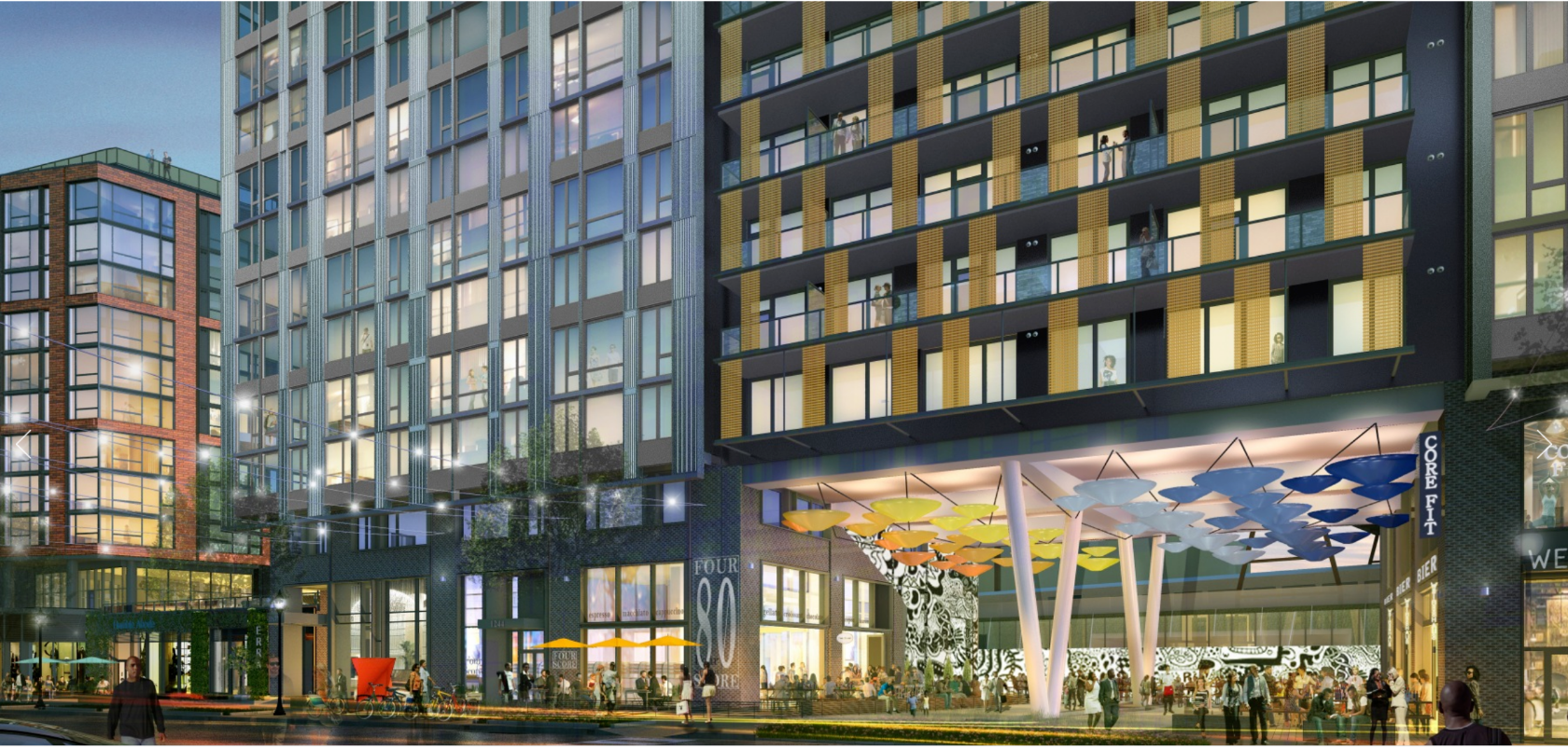
Maura Brophy president of the NoMa Business Improvement District said developers Trammell Crow have almost completed construction on a long, two-and-a-half block mixed-use building, but they kept an opening for the new proposed plaza and entrance on the east side at 3rd and N streets NE.
“It is a big deal that they did this because it was more expensive for them to do this,” Brophy said. “They gave up density to do this.
“But they believed so strongly in the importance of this connection that they protected the ability for it to be built.”
Brophy said Metro changed the neighborhood when it opened 18 years ago, but it was “difficult to anticipate what this neighborhood would actually become when that station was built.”
“Now we know much more because we’ve seen the way the development has trended… we understand the need for the station to evolve and adapt to what (the area) has become.”
While the pandemic has tanked Metrorail ridership to just 45% of pre-pandemic levels, officials see second and third entrances to stations as a generational investment that will pay off over time. Metro expects ridership to rebound to 75% of pre-pandemic ridership by 2025.
While a new entrance doesn’t necessarily add more train service, it does make the current service more accessible to certain areas.
Metro Board Chair Paul Smedberg lives near the King Street-Old Town station, which got a new entrance in 2006. He said it changed how he used Metro since it is so much easier to get into the station now.
“It’s opened it up for a whole section of the residential neighborhoods back there, even though they were still close,” Smedberg said. “It’s just so much more convenient for them. They don’t have to cross busy streets with their children.”
The idea is that entrances create new, easier, and sometimes even safer ways to get into a station. They can cut down on walking time, cut down on crowding in corridors, help avoid dangerous, busy streets, and even drive some development. It also provides other ways to get in and out of a station in an emergency.
These projects take time though. Usually, it’s local governments or business improvement districts that see the need and make a request. Local governments must find the money for the new entrance and the process of planning, design, and construction can take a decade or more.
And NoMa isn’t alone. As the D.C. region has grown at double the national rate in the past decade, growth around Metro stations is booming, especially in Virginia and the District.
Zoom in to see the detailed map of proposed locations for new entrance areas.
Here’s a breakdown of the new entrance projects in the works.
NoMa-Gallaudet
Where: West side of 3rd Street at N Street NE
When: Potentially opening in 2028
How much: $50 million
Why: NoMa’s Metro has two entrances already, one on the north side by the Alcohol, Tobacco, and Firearms building and another on the south near REI and the Metropolitan Branch Trail ramp. But with the neighborhood growing so rapidly to the east, a new entrance would cut down on walk times to popular areas like Union Market by almost five minutes. It also would make it so pedestrians don’t have to walk the busy and dangerous Florida Avenue and use the narrow sidewalks under the bridge.
“The conditions on Florida Avenue are greatly constrained in terms of space,” Brophy said. “It’s not a safe trip, especially for someone who is in a wheelchair or someone who is mobility impaired.”
The new entrance already has a spot cut out of a building, just waiting for the tunnel to be built. It’ll go under the Amtrak and commuter train tracks and back up. It will also act as a cut-through to the other side of the neighborhood, Brophy said.

Crystal City
Where: Northwest corner of 18th and Crystal Drive
When: 2025
How much: $100+ million
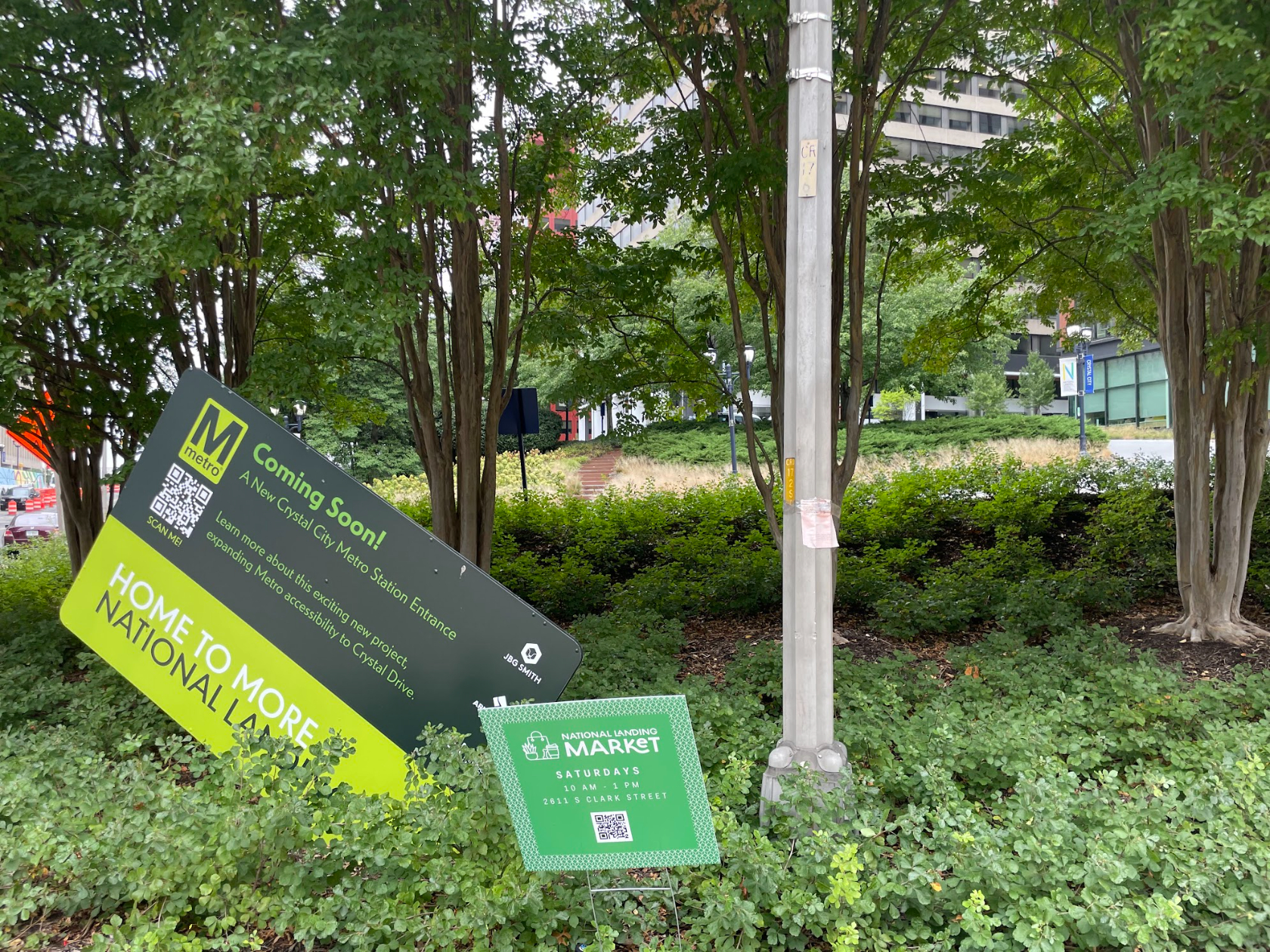
Why: Crystal City’s Metro is tied into an underground mall and has one entrance at 18th and Bell Street. A second entrance has been in the works for more than a decade and will be a block down the street. It will provide easier access between Metro and the VRE commuter rail station, trails, and new offices, businesses, and residences along Crystal Drive. The county estimates that 56% of riders would use the new entrance.
The neighborhood, rebranding as National Landing, is undergoing a dramatic change as Amazon moves its second headquarters into the area. Developer JBG Smith is building the new entrance as a public-private partnership with the city. It has a different design than most of Metro’s entrances with a glass canopy. The original plan was to have much of the project underground, but now the fare gates and some other infrastructure will be above ground.
“The entrance has a very open, airy internal design that provides a lot of space and light to passengers. It really is welcoming them to Crystal City,” said Robin McElhenny, transit capital program manager with Arlington County. “The exterior structure really has some interesting folds and angles to it and echoes the aquatic center design also in Crystal City.”

Potomac Yard
Where: Potomac Ave at Glebe Road
When: 2023 (It was supposed to open this year but was delayed).
How much: $50 million
Why: The station is getting a second entrance after a long back and forth over whether to build one. Residents were upset when a promised entrance was quietly cut due to budget constraints. But after Amazon said it would come to the area for its second headquarters, the state stepped in to fund $50 million for the project. Had the second entrance not been built, the residents in the southern area of the station would’ve had to walk another five to six-minute walk to get to the other entrance.
Ballston
Where: Fairfax Drive and Vermont Street
When: 2027
How much: $140 million
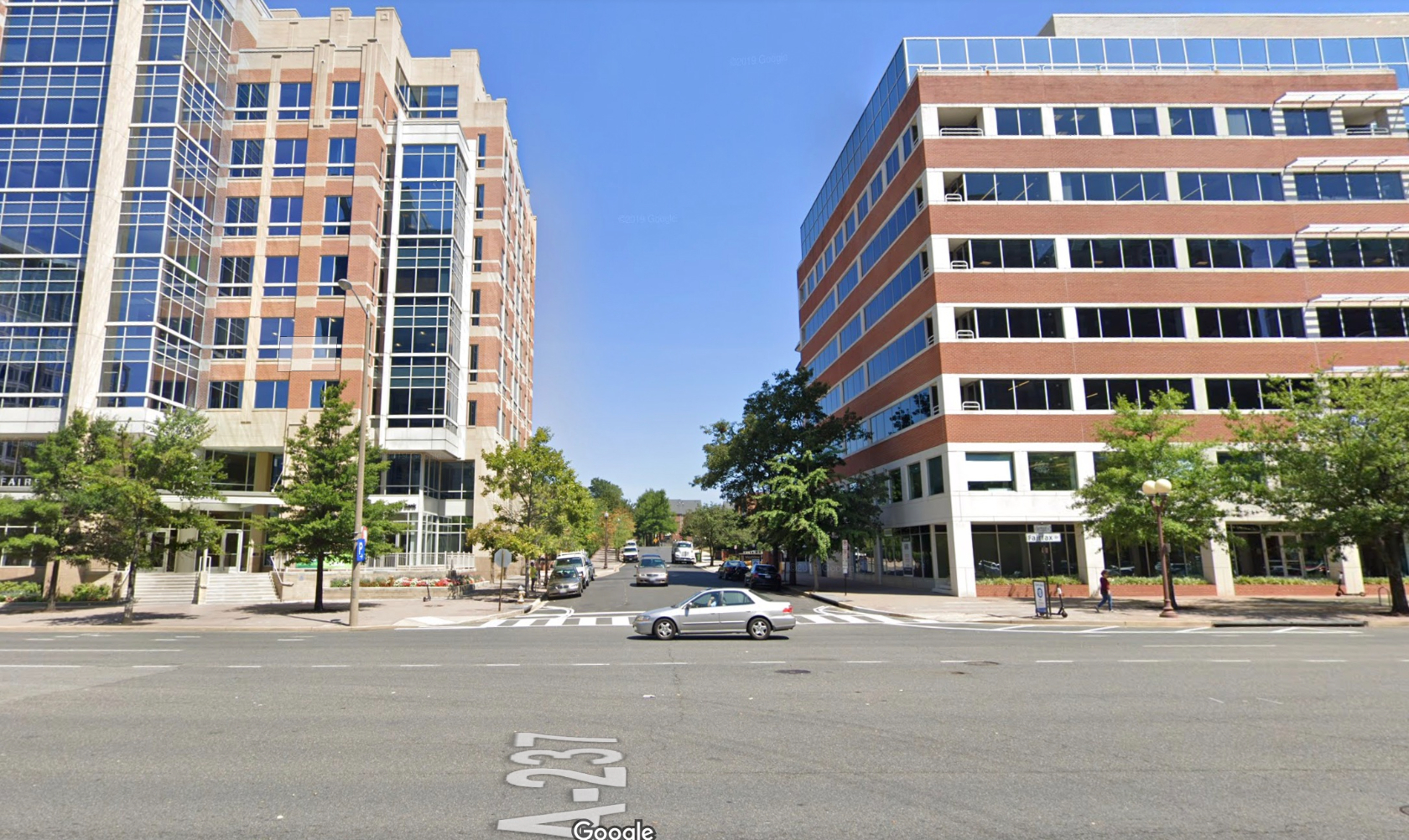
Why: The Ballston station is set to get an entry on the west side of the station, about a quarter-mile away from the main entrance. It would include escalators or stairs and two elevators, providing better access to the Glebe Road area and growing development in the western part of Ballston. The entrance would connect to a new underground passage and mezzanine.
McLean
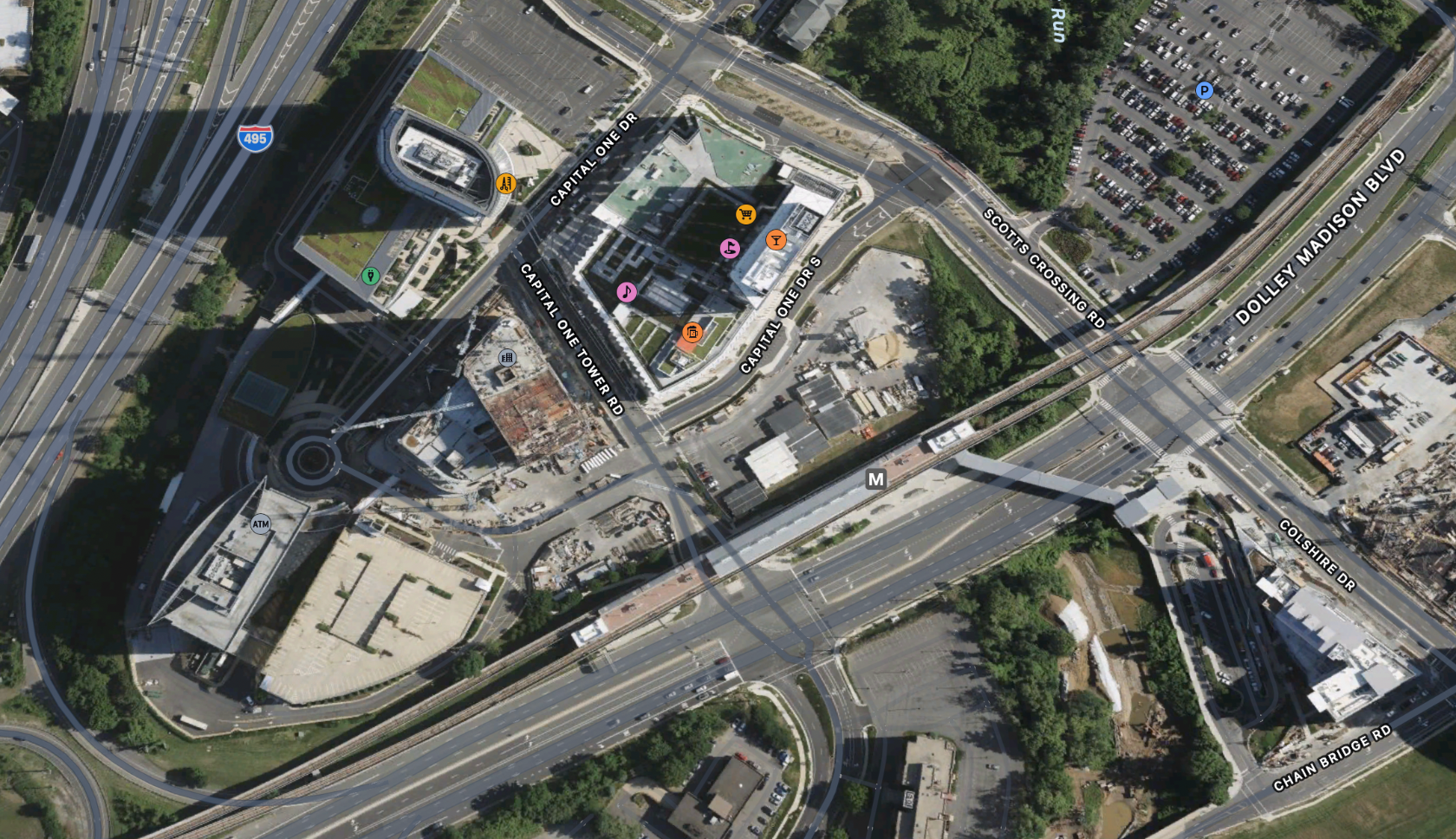
Where: The north side of the McLean station between Capital One Tower Road and Scotts Crossing Road
When: 2023
How much: $880,000
Why: McLean opened in 2014 with the rest of the Silver Line, but the main entrance isn’t oriented toward one of the main activity hubs, the Capital One headquarters, and surrounding development. Instead, the two entrances are on the ground level facing Dolly Madison Boulevard and another bridge that crosses south over the busy Dolly Madison Boulevard.
This will be the easiest retrofit of any additional entrance. Part of a wall will be removed on the north side, some glass will be added and riders will use the current infrastructure to get up to the platform. Planners say to 2,000 prospective residents will be moving into the redeveloping area north of the current station and the project will create “a shorter, more convenient walk to the Metro and increase its visibility.”
North Bethesda (formerly White Flint)
Where: Northern end of the platform
When: 2026 construction
How much: $35 million
Why: A northern entrance and potential tunnel under Rockville Pike would reduce walk times and an underpass would be a safer route than crossing the seven-lane Pike.
Others in the pipeline
Forrest Glen: A new tunnel underneath Georgia Avenue would provide a safer passage to the station. It could be under construction by 2025.
Purple Line connections: Bethesda, Silver Spring, College Park, and New Carrollton will be connected to the Purple Line that is set to open in 2026. Some, like Bethesda, will get new entrances.
Farragut North-West connection: A long-planned tunnel connection between the Red Line’s Farragut North and the Blue, Orange, and Silver line’s Farragut West is still in the planning stages and has no funding approved yet.
Rosslyn: One of the deepest stations in the system, got a new entrance in 2013, but it could get another new “entrance” in a sense in the future.
This one is more up in the air, but it’s part of a long-term study to address crowding in the Rosslyn Tunnel under the Potomac. One proposal would create a second train tunnel and essentially build a connected “Rosslyn II” station that could serve just the Blue Line, alleviating congestion on the current tunnel. This study is still underway and Metro has not yet decided which approach it will take if any. It’s also unclear where the station would go or how much it would cost.
Building A New Entrance Is More Complicated Than Meets The Eye
Building and integrating a new station entrance into existing infrastructure is not an easy task.
New entrances may include creating stairs and escalators and elevators, fare machines and fare gates, and a station manager kiosk.
And it’s working in tight spaces. Robin McElhenny, transit capital program manager with Arlington County, describes it as threading a needle.
“You’re building a lot of the infrastructure outside of the station, but whenever you have to connect into the station, you’re going to have a lot of constraints,” she said. “You’re often coming through service rooms with equipment that needs to be relocated.
“These spaces weren’t built with the vision that a new entrance would move through that space.”
If you have to go through the “vault” the concrete honeycombed ceiling that houses the main part of the station, you have to do it carefully to not harm the overall integrity.
McElhenny also said planning usually falls to jurisdictions as Metro “has a whole big region, a whole host of projects that they have to be really focused on.”
“It really becomes more of a jurisdictional initiative, working very closely with WMATA,” she said. “They will operate and own this facility at the end of the day.”
This story was updated with more Maryland entrances.