Women across America are significantly less likely to experience homelessness than men, a disparity that is particularly high in D.C., where rates of homelessness are roughly three times higher among men than women, according to data from the Homelessness Research Institute.
Being outnumbered by their male counterparts means unhoused women face particular challenges, including disproportionately experiencing sexual assault and struggling to access services that cater to their specific needs, such as housing and health care. Women’s shelters in the District often run out of beds and lack adequate security, leaving women vulnerable to attacks and the many other perils of sleeping outdoors.
As part of our annual series on homelessness, WAMU/DCist interviewed four women about the hurdles of staying safe while unhoused in the District. They recounted experiences with sexual assault, unsanitary shelters, disability, and stereotypes while sharing their thoughts on how the city could improve the lives of unhoused people.
The interviews were lightly edited for length and clarity.
Jeannie, 61, survivor
“I get flashbacks sometimes, but I just shake them off.”
For years, Jeannie lived in and around the Adams Morgan plaza, a familiar hangout for people experiencing homelessness in the neighborhood. It was like a safe space for her—she knew everyone there. Then, in April, she was brutally assaulted in a nearby alley by an unhoused man she had long considered a close friend. DCist/WAMU is only identifying Jeannie by her first name for her protection. After the attack, authorities helped her move into a studio apartment. Today, she’s still recovering, but says she’s grateful to at least have a roof over her head.
How are you getting along these days?
I had to go to a safe house because somebody attacked me out here. He fractured my jaw and they had to put a plate in it. I was in the hospital for two weeks. I knew this guy forever and I thought he was my friend, but he got infatuated with me. So he waited for me and followed me. I’d just left a ceremony for a guy who froze to death. And then I was walking past the alley and he grabbed the back of my jacket and knocked me on my butt, started sliding me down an alley, pulling my pants down and punching me. I was hollering: “Help! Help! Help!” It was like a nightmare. You know, when you’re in a nightmare and you’re running, but you’re not going anywhere? I was thinking nobody heard me, but some lady heard me and she videotaped. So she gave the video to the police, and they picked him up the next morning.
Do you feel safer now that you have your own apartment?
Yeah. I get flashbacks sometimes, but I just shake them off. I just gotta get used to having a home. I don’t know, I think I got anxiety because of the situation and a little bit of depression. But I’m fighting the depression off. I don’t think about it, I just stay busy. I might have a little bit of post-traumatic stress. You don’t just recover like that. Because ever since the attack, nothing has been the same. I don’t like to be in the dark, well, on the street. I don’t trust too many people right now.
Have you ever stayed at a shelter?
No, they’re dangerous. You’re safer out here by yourself. They steal whatever you got and I hear they slice people’s throats and do drugs. I just hear they’re dangerous. People say, “I would be dead if I went to a shelter.”
Tell me about your life before you started experiencing homelessness?
I went to barber school. And when I was 20, I applied for a job at the Sheraton Carlton hotel at 16th and K Street to work for Milton Pitts — the president’s barber. I got that job and worked there for 15 years. Then my boss died, so I went to work across the street at the Capital Hilton for Pietro Hair Salon. I worked six days a week. I’d make a lot of money.
The reason why I ended up out here is because of domestic violence. I left my apartment to move in with somebody and, next thing you know, the domestic violence started. They start off nice and then they turn. The reason I moved to this city was to get away from that man because he said he’d never come into the District. He would drink too much and then he’d come after me. I had just bought a new car and he put his fist in the window and cracked it. It was too much drama.
What are you looking forward to these days? What keeps you going?
I used to play sports all the time. I like plants. I don’t know, I’m rediscovering myself now that I have a place. It’s beautiful. It’s absolutely gorgeous. It’s a studio. Has a balcony. It’s perfect with big giant windows. The balcony door opens.
Tracy Oginni, Dupont Circle native
“There’s no such thing as sleep, unless it’s daytime.”
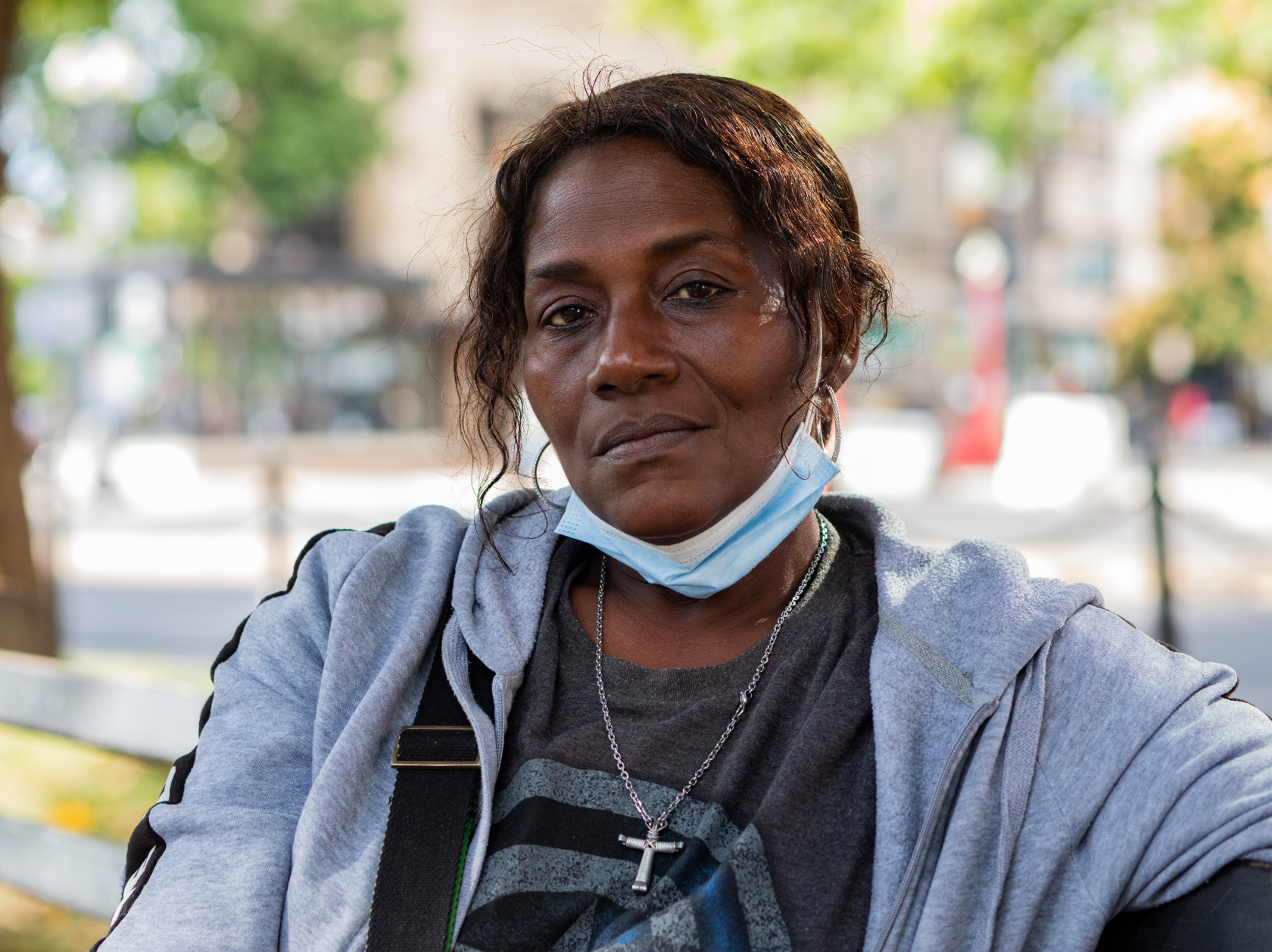
Being homeless is nothing new for Tracy Oginni — she’s been on the street for roughly 25 years now. These days, she spends a lot of time in Dupont Circle. She grew up just a few blocks away on 17th Street so that’s where she feels safe — for the most part, anyway. Until recently, she would spend the night at a women’s shelter on New York Avenue. But after catching a drug-resistant bacterial infection there — also known as a superbug — she started avoiding shelters altogether, opting to sleep outdoors instead. When it comes to safety, she says unhoused women in the District have it particularly hard. One of her biggest struggles: finding a safe place to get some shut-eye.
How did you end up without a home?
I broke my back, lost my job, lost my husband, and long story short is everybody went their own way and I ended up here. Then, prices went up and I couldn’t get back in the groove. That was, like, 1999. I remember driving my car on New Year’s Eve, riding past the Dupont CVS. That’s the last I remember of having kind of a good life, you know. Then—I don’t know, just—shit happens.
What are your thoughts on shelters?
It’s filthy. I mean, the shelter is government funded, so why don’t you clean it like your house? I caught MRSA at a women’s shelter off of New York Avenue. That’s a rare disease. They closed the shelter down because the owner said he wanted his property back. So now I’m back out here. It was nice, it was clean until they stopped screening people for disease or making them go to the clinic to make sure they’re okay. We were sitting on cots, but it was a place to go that was safe for women. There’s a lot more homeless men in D.C. than there are women. So we run into the problem of finding a safe place to go. So we’d rather just get some carts and get some cardboard and make a pallet. Just don’t sleep hard.
What do you worry about most when it comes to your safety?
The psych patients. Everyone else is normal and just trying to slide but there’s a lot of mental illness out here that’s not being handled. You can’t sleep. There’s no such thing as sleep, unless it’s daytime. And then the police will make you move at night. So that’s been a big issue.
So what does it take for you to get some shut-eye?
If a friend is in the park, I’ll say ‘look out for me while I’m taking my nap.’ You’re in the military, basically. A buddy system — that’s the only way. If you’re gonna go pee, somebody has to watch your stuff. It’s not easy.
Do police make you feel safer?
When they’re here they make you feel safe but lately they have not been around. The park police have not been coming through like they usually do. Everybody’s using COVID as an excuse not to do their jobs. That’s what I’m finding lately in our government, and the police too. They used to come three times a day at least. Because there are women that are sleeping out here among the men. And rape and all that stuff is an issue for them.
What could the city do better?
Right now, everyone’s using COVID as an excuse not to do their job. The housing voucher people, I called them the day before yesterday — no call back.
Tawana McKenzie, 61, former security officer
“It’s like a calm here, before I go to the storm.”
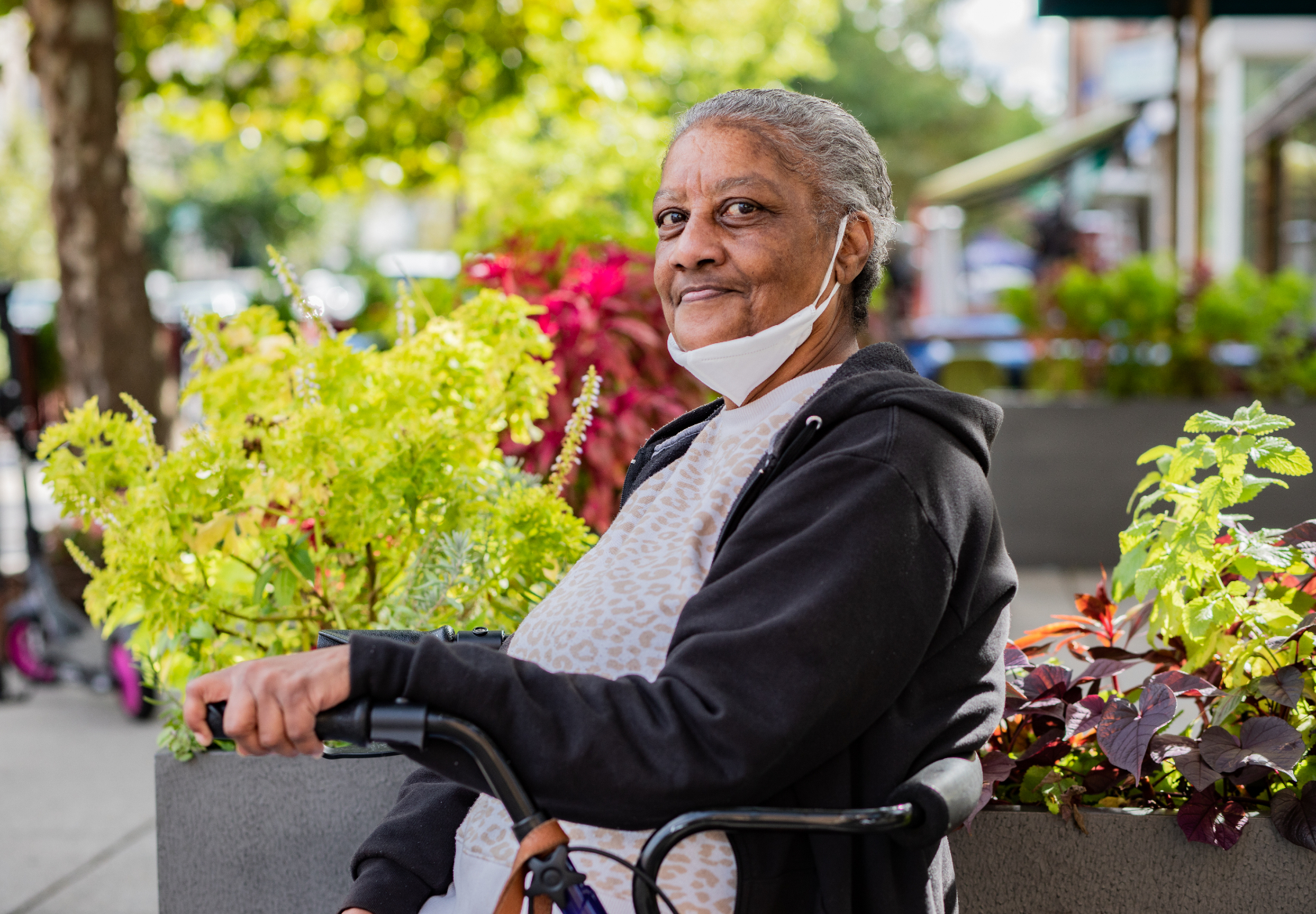
Every day, Tawana McKenzie crisscrosses the District by bus in a wheelchair, riding from a women’s shelter in Southeast to Kalorama Park, where she feels safe hanging out and panhandling. For decades, she worked as a security agent at venues like the Old Washington Convention Center. But after injuring her knee two years ago she was forced to stop working. With no money to pay rent, she gave up her apartment and moved into a shelter where she shares a room with 11 women. Tawana says many of those women suffer from mental illness, sometimes making her feel unsafe. That’s why she spends as little time as possible at the shelter and comes to Adams Morgan where other unhoused friends look out for her, and no one bothers her.
How did you end up in your current situation?
I was doing security and my knee went out on me. I’ve been waiting for disability but they think if you can walk you can still get around, so you’re pretty much not disabled — so it’s just a waiting game. Once you get into a shelter you have to deal with all kinds of things; that’s why I come out here and sit. If I can make a little money, that’s a plus. But to sit in that shelter, and see all these different women and all those different situations… A lot of them are not mentally stable, and you have to deal with that. So that’s why I come out and just sit and chill, and then I go back. I feel safe here. It’s like a calm, before I go to the storm.
How are you getting along at the shelter?
It’s better than being out on the street. You share a space with like 11 other women but they try to keep it clean and stuff. They don’t cook at the shelter, they bring in meals, so you don’t know what you’re eating or how long it’s been sitting out. But I just pray to my God and I know he will come through. It’s hard to get along with women. Everybody has a different problem, a different situation, health problems, you know. They all just put us in one place. They don’t screen you [for mental illness] or nothing like that.
What could the city do to better help you?
Hire more people to address disability. Don’t keep telling people: “we have a backlog, we have a backlog.” Damn, I’m 60 years old. Are you waiting for me to die? Then you won’t have to worry about the backlog with me anymore.
Should people worry about their safety around unhoused people?
We’re trying to survive ourselves. Why should I care about what you do? And why would I try to hurt you? Maybe some with mental problems are dangerous but that’s because they aren’t getting the help they need. That person sleeping on the ground probably isn’t even thinking about you. They’re trying to catch their breath before they get hurt. We have to worry about our safety because we don’t know what’s going to happen.
Dana Silva, 51, volunteer
“Your adrenaline is always on. It’s being exhausted all the time because it’s fight or flight out here.”
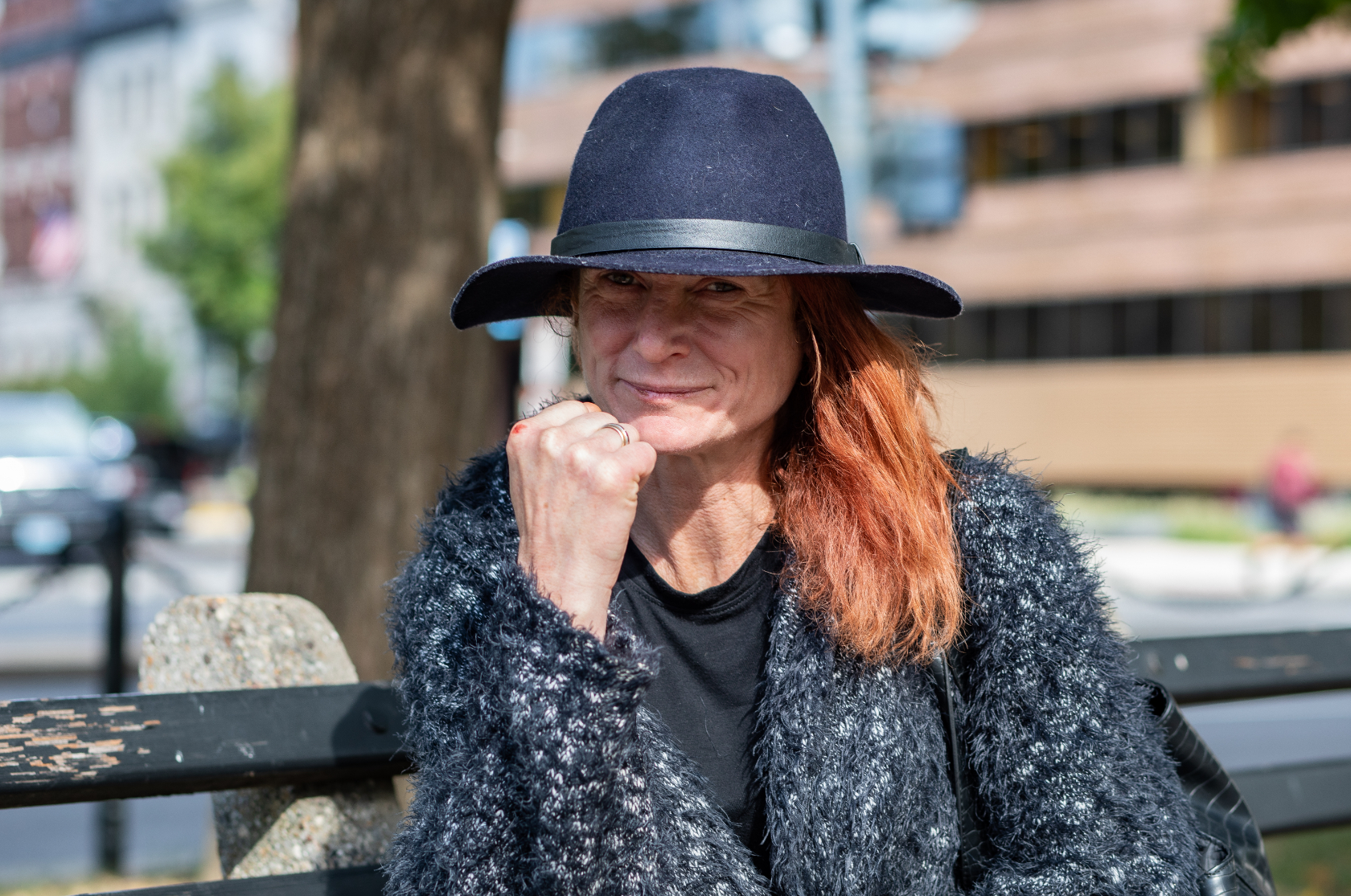
Dana Silva lived on and off the street for more than two decades before finally moving into a subsidized apartment last year in Capitol Hill. She still vividly recalls the challenges of staying safe as an unhoused woman, and the perpetual state of fear and fatigue she grappled with daily. Today, she’s using her deep knowledge of life on the street to help other unhoused people as a volunteer for various local nonprofits.
What’s it like trying to stay safe when you’re experiencing homelessness?
You’ve got to always be aware. Your adrenaline is always on. It’s being exhausted all the time because it’s fight or flight out here. You’ve got to be smart. You go in lighted areas where there are a lot of people because if you’re secluded there’s more of a chance that you make yourself a victim. Get to know some people, even if it’s a post office lady or someone at the drugstore. I really don’t know how to say it — just blend in. And don’t make yourself look susceptible.
You mentioned being exhausted all the time. Doesn’t that take a toll?
Society looks at homeless people like we’re the weirdo or we’re crazy because, for instance, you’ll see an older lady in a prom dress, pushing a cart down the street and she’s talking to herself. This lady probably hasn’t slept in a bed, she probably hasn’t brushed her teeth. And you know what, after a couple of days of sleep deprivation, you too would be speaking to yourself. It’s not healthy. Sleep will make you heal.
Is it harder to stay safe as a woman out here?
You have to have a buddy out here. I really believe in the buddy system. And being a female out here, you know, we’re a little bit more susceptible to crime because we really can’t take care of ourselves and protect ourselves like a man does. As far as encampments go, living in small areas with a lot of people, you’re bound to have a lot of different personalities that don’t really mix.
So would you live in an encampment?
I would never go to an encampment. I don’t feel as if there’s any security there. As far as the sanitation there, it’s just completely horrible. It got to the point where it was raining a couple years ago and there was just mud everywhere and sewage.
What about shelters?
I’ve tried shelters before, but there’s a lot of violence, there’s a lot of stealing. And unfortunately, there are a lot of bugs there. But you know what, some of the shelters are wonderful. They work for some people and not for others. But I highly recommend anywhere with a roof, a door to close, and with heat and water.
Do police make you feel safer?
There’s two types of police out here. We have officers and then we have police. Officers are your neighborhood guys that have seen you grow up here in the area. They know you, they’ve known your dad, your uncles, and those are the guys that check on you and buy you a cup of coffee in the morning, make sure that you’re okay. Now the newer guys that are younger, that come here from different areas, I don’t think they’re as seasoned for D.C. as we’d like them to be. And they maybe have a quota to fill and it looks like the guy drinking alcohol that’s homeless is an easy bag.
What are some harmful stereotypes about people experiencing homelessness?
To society, we look very odd and strange because we’re not paying rent or property taxes or electricity. So we’re looked down on, like we don’t want to work. So there’s a stigma that goes along with it. We’ve lost a lot of camaraderie here in Chocolate City.
This article is part of our 2022 contribution to the Homeless Crisis Reporting Project, in collaboration with Street Sense Media and other local newsrooms. The collective works will be published throughout the week at HomelessCrisis.press.