 Jordan Pascale
Metro may not be able to open its Silver Line extension serving Dulles Airport before Thanksgiving as planned after the Washington Metrorail Safety Commission rejected the transit agency’s latest request to return more 7000-series trains to service on Monday.
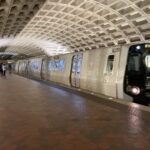
The safety commission — Metro’s oversight body — said Metro’s plan to bring the newer trains back into service is not backed up by safety data, according to a letter WMSC Deputy CEO Sharmila Samarasinghe sent to Metro. Most of them have been out of service for nearly a year, after faulty wheels on one of them caused a derailment outside the Rosslyn Metro station in October 2021.
In order to meet the service demand the Silver Line will bring, Metro needs eight more trains. But the transit agency is asking for approval to run all 93 of the newer trains on all lines of the system, while manually inspecting wheels every seven days. At a media briefing Tuesday, Metro officials said they have full confidence in the safety of the 7000-series trains and are questioning the WMSC’s directives, which they call contradictory.
The Washington Metropolitan Area Transit Authority says it needs to hear from the Safety Commission by the end of this week if it’s going to get the Silver Line extension open by the busy travel season. Metro completed two weeks of simulated service on the Silver Line earlier this month and is expecting safety certification from WMSC at the end of the week.
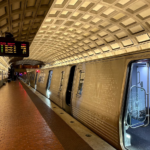
Metro is dealing with a whirlwind of converging issues: a long-delayed, but now-ready Silver Line to Dulles Airport and beyond, a growing returning ridership that is creating crowding issues on some lines, and a year-long train shortage after the derailment.
Metro General Manager Randy Clarke says they can’t meet the region’s needs at the moment.
“It’s simple math,” he said in a statement. “As we seek crowding solutions, support increasing ridership, and work to extend service, the equation of doing more with less no longer works, and we must ramp up the 7K trains which have operated safely without us putting a train in service that didn’t meet our industry-leading safety requirements.”
After the announcement Wednesday, Virginia politicians started weighing in, saying the two agencies need to get along and communicate better.
“It’s taken decades to realize the dream of Metro service to Dulles and now travelers along the corridor can see tracks, gleaming new stations, and test trains moving along the route,” Sens. Tim Kaine and Mark Warner said in a statement. “All that remains is for WMATA and the Safety Commission to get their acts together and remember that they are not in existence to wage turf battles but to serve the transportation needs of area residents.
“We are making it clear to both agencies: it’s time to get this done.”
In a phone interview, Sen. Warner says he and the Virginia delegation plan to get the WMSC and Metro in the room to get “better clarity on a path forward.”
“I’m not assessing blame at this point between the Safety Commission and Metro. I need to hear their sides,” Warner said. “But the notion that you could have these issues not resolved when the patience of the public has worn thin… when we’ve got to get the 7000 cars back into operation, not just in terms of Dulles, but in terms of trying to get ridership across the region backup… This is bitterly disappointing. And for somebody that stood by Metro year in and year out, it’s extra disappointing.”
Differing opinions on data
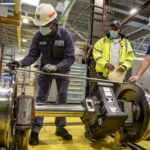
Metro’s justification for its weekly inspection plan is as follows: It is already approved to run the 7000-series cars for training and employee-only trains on all lines with weekly inspections. But passenger trains are held to a higher standard and must be inspected every four days. Metro officials argue that if weekly inspections are safe enough for employees, they should be safe enough for passengers.
Chief Safety Officer Theresa Impastato said Metro has given the WMSC data and analysis after safely running the 7000 trains for 2.7 million miles with no major incidents in recent months. The issue is how often Metro inspects its train wheels.
“We simply ask for clear guidance on what is required to satisfy them as to the integrity of our process,” she said in a statement.
Metro officials also say they need to run 7000-trains on all lines to open the Silver Line. Currently, the trains have only been running on the Red, Green, and Yellow lines due to curves on the other lines. But the agency says weekly safety inspections are sufficient to run trains on all lines and cite the fact that Metro had the approval to run trains inspected every seven days and on all lines. (That approval was later revoked after the WMSC discovered Metro ran some trains with out-of-compliance wheels.
The safety commission says it still doesn’t see sufficient data to back up a return plan that includes inspections every seven days.
Currently, Metro has the approval to run 20 of the 7000-series trains with inspections every four days, but Metro says restrictions put on them by the WMSC mean they can only run 16. The WMSC argued previously that Metro isn’t running at its full potential and that they should get to 20 before getting a chance to run more.
But Metro officials cite data analysis from 2021 found that inspecting the trains every 10 days would catch any wheel movement and say that’s why inspections every seven days would still catch any problems. In years past, Metro inspected the wheels every 90 days.
“If we did not feel this was safe, we would not be pushing this forward,” said Brian Dwyer, Metro’s new chief operating officer.
Metro says it doesn’t have enough staff to inspect all 93 cars every four days but does expect to have enough people to do inspections of the 7000 trains every seven days once they reach the inflection point of more of the new trains on the tracks than old trains, Impastato says. When that happens they could redirect workers to inspections instead of trying to keep aging trains in shape.
Metro says it would be willing to replace the wheelsets on the affected trains if it knew it would fix the problem.
“If we had a root cause and the root cause was an axle, we swap all the axles,” Clarke said. “If it was restraining rail and some tolerance on the restraining rail, I’d have that line shut down and I’d rip that rail out of there or readjust it immediately. There is nobody that’s an expert that can tell us to do this and things change. So absent that, we have data, that data shows that we’re doing everything safely.”
Silver Line needs
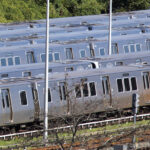
If Metro does get approval to return all 93 of the 7000 trains to the tracks, a major service increase would not happen right away. Some trains are stored in train yards that are inaccessible because of ongoing construction and some have sat for more than a year and would need to be inspected.
Metro is currently running 77 trains a day but would need at least another eight trains to keep current service levels across the system and reopen the currently-closed six stations on the Blue and Yellow Line in Virginia.
Metro and other local bus agencies say they need three weeks to coordinate bus route changes, fix signage, and update their schedule data to feed real-time bus arrival apps before the new section of the Silver Line could open.
Clarke said Dulles Airport officials told Metro they need to open ahead of the busy Thanksgiving travel week. The general manager says the public deserves to know whether the Silver Line will open for the holiday season.
“We’re just trying to say transparently, ‘we can’t open for you,'” Clarke said.
Relationship strains
This safety commission ruling and WMATA’s response to it is just the latest round of finger-pointing between the agency and its oversight body.
Metro board members have publicly aired frustrations with the safety commission during meetings, alluding that the Safety Commission is too myopically focused on the 7000-series trains wheel issue and not other safety issues like crowding. Other Metro officials have said they don’t have a clear path to return the trains to service, though the WMSC refuted that sentiment in a statement last week.
Metro officials have also said they are frustrated that they don’t have a third party to appeal a WMSC decision.
This week, Samarasinghe, the WMSC deputy CEO, expressed her concerns that “Metrorail may not be interested in carrying out its safety responsibilities,” according to a letter she sent to Dwyer, the COO, on Monday.
“The WMSC is deeply concerned about Metrorail senior leadership’s incorrect statements that a failure to follow procedures in place to control known hazards such as wheel migration does not lead to unsafe conditions,” Samarasinghe wrote. “… If controls in place to ensure the safety of passengers and workers are ignored, then those controls do not provide the intended level of safety for Metrorail passengers and employees.”
Clarke said that statement was disconcerting.
“We take our job real damn serious,” Clarke said. “I take the service every single day, my wife’s on the service every day. We have the responsibility to carry the riding public and our staff.”
Meanwhile, some riders have pointed out that cars and roads, which were responsible for 300 deaths in the region in the last year, would never get the same scrutiny as the derailment that resulted in zero injuries. Metro hasn’t had a death on the system in more than seven years. It’s a comparison Clarke has also touted publicly.
“We’re forcing more people to unsafe transportation options,” Clarke said of keeping the 7000-series off the rails. “So all of this is kind of in the vein of a holistic system safety.”
This story was updated with statements from Virginia politicians.