Margaret Barthel
 Jacob Fenston
Democrats eked out victories in Northern Virginia, holding on to two key congressional seats in elections that came down to the wire. In Virginia’s 7th District, widely regarded as a toss-up heading into Election Day, incumbent Democrat Abigail Spanberger won by about 4-points over Trump-endorsed Prince William County supervisor Yesli Vega, with most precincts reporting as of early Wednesday morning.
“Tonight, we must recommit ourselves to the cause of our country, to the communities we live in, and to our neighbors, whether they align with us politically or not,” Spanberger told supporters in a victory speech.
Vega conceded around midday on Wednesday and struck a similarly collegial note.
“I want to congratulate the Congresswoman on a hard-fought win,” Vega said in a message to supporters on Twitter. “As Supervisor, I look forward to working with Abigail in the future.”
“We live in the greatest country in the world, and I pray for a better and brighter future for us all,” she added.
The 7th District, which includes parts of Prince William County, the Fredericksburg area, Spotsylvania, Stafford, King George, Caroline, Orange, and Culpeper counties, was widely considered a toss-up as well as a bellwether for national performance overall.
Democrats also held on in the neighboring 10th District, centered in Loudoun County, where incumbent Jennifer Wexton defeated challenger Hung Cao, a former Navy captain, by nearly 6 points with nearly all precincts fully reported. The race was widely considered competitive but with a blue tilt.
In a statement declaring victory, Wexton referenced the challenges ahead, including the ongoing pandemic recovery, inflation, and “an increasingly divisive political climate.”
“We have a fight ahead of us, and it’s a fight we must win. From attacks on our fundamental freedoms to undermining our very democracy, there is real fear about the direction of our country,” the statement said. “But seeing the passion and determination of Virginians of all backgrounds and walks of life come out during this campaign to fight for the values they believe in – the values that make this country great – I’m more confident than ever that our brightest days are ahead.”
Cao put out a statement thanking supporters on Wednesday afternoon. “The U.S. gave me a home, a flag to stand under, and an opportunity,” he said. “I’ve been committed to returning the favor ever since.”
These races were extremely costly. In the 7th District alone, Democrats spent $14.5 million on political ads, ahead of Republicans at $11.9 million. Interest groups on both sides of the political aisle spent more than $24 million combined.
In Arlington, Alexandria, and Fairfax Counties — deep-blue strongholds in the inner suburbs of Northern Virginia — incumbent Democrats Don Beyer in the 8th District and Gerry Connolly in the 11th District easily coasted to victory.
Republicans, however, took back the 2nd District in Virginia Beach. There, State Sen. Jen Kiggans unseated incumbent Elaine Luria, a Navy veteran and the only member of the January 6th Committee in a highly competitive district.
Spanberger, Wexton, and Luria all originally won election in 2018, flipping previously red seats during a record-breaking, blue-wave midterm election that was widely interpreted as a referendum on then-President Donald Trump.
In Arlington, Democrat Matt de Ferranti won another term on the County Board in a race that some believed to be a referendum on the board’s likely move to zone significant swaths of the county to multi-family apartment buildings instead of single-family homes.
And in Loudoun County, an epicenter of Republican talking points on the school culture wars, the preliminary results of two school board races appeared to be wins for major party-backed candidates over independents who argued they would be better able to bridge community divides. In the Leesburg District, a Democratic-backed candidate appeared poised to triumph; in the Broad Run District, the Republican candidate led the Democratic one by about 100 votes as of early Wednesday morning.
Turnout in the midterms in Virginia was high, especially considering there were no significant statewide races on the ballot. Despite statewide registration snafus in October and some tech issues at polling places in other parts of the commonwealth, voting appeared to go smoothly in Northern Virginia despite some recent changes to election laws. It was the first year where same-day, onsite voter registration was allowed at polling stations, and it was the first midterm election with no-excuse absentee voting.
A record 6 million Virginians were registered to vote in this election. Ahead of Election Day, 943,158 people voted either through in-person early voting or mail-in ballots, compared to just 344,594 in the 2018 midterms.
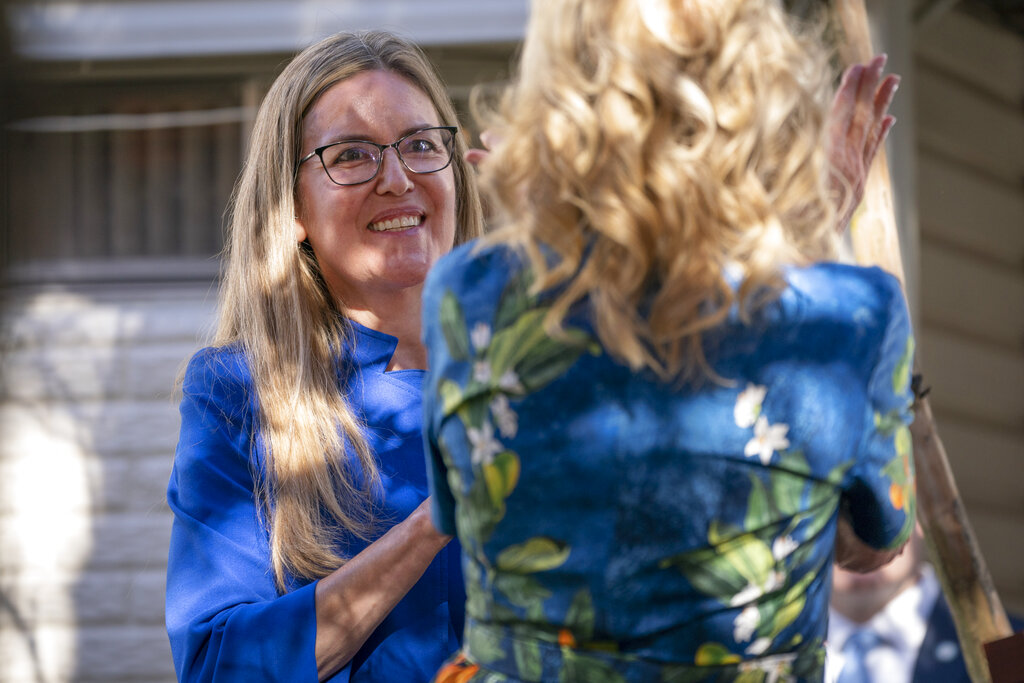
Democrats hold on to Northern Virginia exurbs
The contests in the 7th and 10th congressional districts were hard-fought, with candidates trading barbs over abortion access, inflation and the economy, school culture-wars issues, and the health of democracy.
Wexton and Spanberger made defending abortion a centerpiece of their platforms. Wexton’s first attack ad against Cao featured a fictionalized story of a woman who dies of pregnancy complications because she is unable to receive prompt medical care due to abortion restrictions.
Cao and Vega, for their part, attempted to downplay or deflect questions about abortion access (polls generally show that a majority of Virginians are supportive of access to the procedure), but both consistently identify as “pro-life.” Neither clearly stated during the campaign what specific restrictions to the procedure they supported, though some reports indicate that Vega offered support for a ban beginning at conception on a survey from the National Pro-Life Alliance. On his campaign website, Cao didn’t take a specific position, but did ask the question, “how is it that bacteria on Mars is considered life, but a viable fetus is not?”
Threats to abortion access — including a possible attempt to pass nationwide restrictions in the next congressional session — galvanized Democrats in Northern Virginia.
“Everything really brought me out,” said Laura Tyler, who cast a ballot for Spanberger in Woodbridge last week while wearing a Ruth Bader Ginsberg t-shirt. “But most importantly, I think abortion rights.”
But abortion also energized some Republican voters in Northern Virginia — even following the fall of Roe. Ashley Miller, who voted and handed out Republican sample ballots on Election Day in Prince William County, said she was eager to support Hung Cao because he supports restricting abortion.
“I am definitely pro-life, 110%,” Miller told WAMU/DCist, noting that she is a physician’s assistant. “You have to have empathy. You have to take it situation by situation. But I think you also have to go to the core issue. It is not so much about a woman’s right to choose but how she got pregnant in the first place.”
Another key issue for Spanberger and Wexton were concerns over extremism and division in politics. Both sought to portray themselves as bipartisan moderates — and paint their opponents as part of the Trump wing of the Republican party.
Spanberger picked up an endorsement from Republican Rep. Liz Cheney, a vocal critic of fellow Republicans who adhere to Trump’s false claims about the 2020 election, in the final days of the race. She also ran ads featuring endorsements from Virginia Republicans concerned about the direction of the party nationally.
Vega has questioned the results of the 2020 election and suggested that rioters who breached the Capitol on January 6th were exercising their first amendment rights, and she received Trump’s endorsement in the week before Election Day. Cao, who was endorsed by Trump loyalist Mike Pompeo, has also not said definitively whether the 2020 election was free and fair, preferring to deflect the question in public appearances.
“I just think that we need to get rid of a lot of the extremists on both sides of the aisle and try to get more moderates into the arena,” said Andrew Bodyck, who voted early in Loudoun County. “You know, more people talking to each other versus screaming at each other.”
That rationale, Bodyck said, prompted him to vote for Wexton.
Meanwhile, Republicans’ closing arguments focused on inflation, crime, culture-wars issues like critical race theory and transgender students in schools, and their promise to be a check on President Joe Biden.
“You all want more of your hard-earned money in your pockets, yes? You want an education system that teaches our children, not one that indoctrinates them. You want safety and security in your communities,” Vega asked a crowd at an Election Day eve rally in Prince William County.
Economic anxiety was also a significant concern for voters on Election Day.
“I would like to see change in the economy,” said Dhirza Garcia, who voted in Woodbridge, though she did not share for which party. “Basically [the] economy — to see maybe prices drop down again on gas, and our stock maybe can go high again.”
But Spanberger successfully pushed back on the GOP narrative blaming Democrats for the state of the economy, rolling out an endorsement from the U.S. Chamber of Commerce and talking up recent Democratic legislative wins that will lower the cost of prescription drugs for seniors and curb health care premiums for low-income people.
Asked what she’ll do to help ease skyrocketing costs at the polls on Election Day, Spanberger cited a host of ongoing legislative projects aimed at easing supply chain problems, truck driver shortages, addressing the impacts of consolidation in the meatpacking industry on increasing grocery store prices, and fixing issues in the refinery industry.
“Inflation wasn’t caused by a singular thing…there’s also a war ongoing in Ukraine where Russia, a top energy producer, also a top grain producer,” Spanberger said. “The impact across the supply chain is significant. But what we can do here at home — there still continues to be work to be done.”
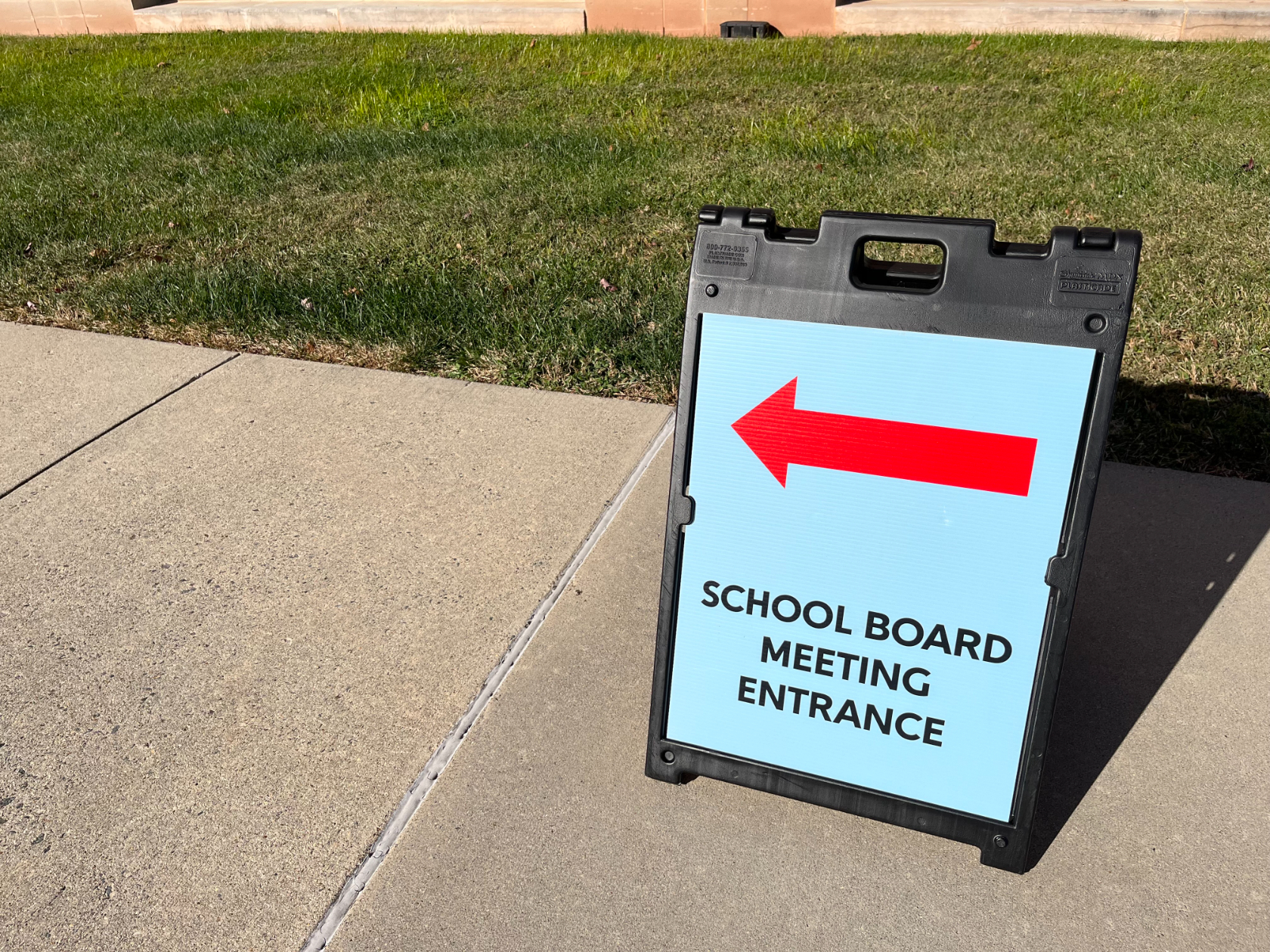
A culture-wars contest in Loudoun County
In Loudoun County, there were elections for two new school board members to fill open seats. In one race, the conservative candidate endorsed by the Republican Party was in the lead as of midnight, while in the other race a candidate running on a progressive platform won with a comfortable margin.
The Loudoun school board has become ground-zero for culture wars in Virginia, with school board members receiving death threats and one meeting about transgender rights ending in chaos, with one person arrested. One of the current vacancies was created by the departure of one school board member after a recall effort and harassment campaign.
In Broad Run District, conservative Tiffany Polifko was ahead of Nicholas Gothard by a razor-thin margin of less than one percentage point, 35.22% to 34.50%, with 15 out of 16 precincts reporting as of midnight. Andrew Hoyler, who was appointed to the seat as an interim board member a year ago, trailed with 29.39% of the vote.
Gothard, a 22-year-old LCPS grad, did not concede as of late Tuesday night. “With a tight margin and still more votes to count, I’m looking forward to having every vote counted and every voice heard,” he wrote on Twitter at 10:32 pm.
Polifko has two children in Loudoun County Public Schools and has a background in special education. She’s a member of the group Parents Against Critical Theory, which has fought racial equity and transgender rights efforts in the county. She has also made numerous appearances on Steve Bannon’s show, The War Room.
In Leesburg District, progressive Erika Ogedegbe, who was endorsed by the Loudoun County Democratic Committee, won with 40.30% of the vote, with 12 of 13 precincts reporting, according to unofficial results. Michael Rivera, backed by the county Republican Party, trailed with 31.40%, while LCPS teacher Lauren Shernoff garnered 27.93%. Ogedegbe is a parent of three LCPS students and works as a higher education administrator at American University. (Note: American University holds WAMU’s license.) She ran on a platform of protecting equity at schools and investing in individualized supports for students.
Democrats win in deep-blue Arlington
In Arlington, incumbent Matt de Ferranti (D) has won a second term on the county board, beating two independent challengers, Adam Theo and Audrey Clement. A win by the Democratic candidate isn’t a surprise in a county where Biden beat Trump by more than 60 percentage points in 2020. However, the intensity of the race was unusual.
De Ferranti won 60.54% percent of votes, according to unofficial results, with 55 out of 57 precincts reporting. Clement received 28.35% and Theo got 9.81%.
The election for county board comes at a time when Arlington residents are deeply divided over a zoning proposal by the board to allow small multi-unit buildings to be constructed in areas of the county that are currently zoned for single-family homes. Known as the “missing middle,” these buildings could have as many as eight units and provide more affordable options in a county where single family houses sell for an average of more than $1.25 million.
The missing middle proposal was not on the ballot but many voters, and the candidates themselves, saw the board race as a referendum on the plan. Theo is a strong supporter of the plan, calling it a “moral imperative.” He also ran for county board in 2021 and co-founded the pro-housing group YIMBYs of Northern Virginia (short for “yes in my backyard” — the opposite of NIMBY).
Clement is a perennial candidate in Arlington — this was her 13th appearance on the ballot since 2011. Previously, she made headlines for lying about her age, telling reporters she was 20 years younger than public records indicate. This year, she positioned herself as the anti-missing middle candidate – with “STOP ‘Missing Middle’” printed at the top of her yard signs. Before the election, she predicted a “groundswell of opposition” to the missing middle proposal would raise her chances. She called it an “insidious form of upzoning” and a “scam” that would do nothing to make housing more affordable.
De Ferranti positioned himself in the middle of the two others, supporting the missing middle plan but arguing that the number of units should be capped at no more than six per lot, with only duplexes and triplexes allowed on many lots. Eightplexes, he said, should not be allowed, as “the cost is not worth the benefit.”
De Ferranti far outraised the other two candidates combined, bringing in $187,000 compared with Clement’s $27,000 and Theo’s $20,000.
Clement did win in four precincts in North Arlington, home to some of the wealthiest, whitest, and most suburban neighborhoods in the county.
In the race for an open seat on the Arlington School Board, Bethany Sutton defeated James “Vell” Rives. Sutton, who was endorsed by the Arlington County Democratic Committee in the non-partisan race, currently works as a leadership consultant and has a background in higher education. Sutton is the parent of two Arlington Public Schools students, an 11th grader at HB Woodlawn and an 8th grader at Thomas Jefferson, and ran as a progressive candidate.
Rives ran a campaign that emphasized school safety — in particular, vowing to bring police officers back into public schools, after the school board voted last year to remove them.
This story has been updated with statements from Yesli Vega and Hung Cao.