Héctor Alejandro Arzate
Puedes leer este artículo en español aquí.
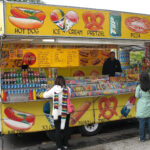
Kahssay Gebrebrhan has been selling hot dogs in the District on Indiana Avenue NW for more than 30 years. Gebrebrhan says that for many of them, he’s experienced harassment from both law enforcement and representatives from the Department of Consumer and Regulatory Affairs who continuously demand to see his license and threaten him with violations despite being a regular vendor.
“The regulation treats us with no respect. The law are [discriminating] against even vendors who have license,” said Gebrebrhan, who was born in Ethiopia and migrated to the District from Eritrea.
Earlier this week, the D.C. Council voted unanimously to overhaul the District’s century-old criminal code – which would include decriminalizing street vending without a license. While the 450-page bill still needs to make its way to Mayor Bowser, as well as undergo a 60-day Congressional review (if she doesn’t veto it), the new code won’t take effect until October of 2025.
For those local street vendors and advocates who have been pushing for the decriminalization of street vending without a license for years, that’s not soon enough. On Wednesday, dozens of public witnesses testified before D.C. Council Chairman Phil Mendelson and the Committee of the Whole in an effort to pass Bill 24-49, the Street Vending Decriminalization Amendment Act of 2021, and Bill 24-50, the Sidewalk Vending Zones Amendment Act of 2021 before the end of the year. In attendance at the hearing was Ward 1 Councilmember Brianne K. Nadeau, who helped introduce the two bills last year.
“Many who have recently come to this country, often under duress, have said the prevalence of sidewalk vending reminds them positively of the places they came from and makes them feel welcome,” said Nadeau during the hearing. “I know that one of the difficulties with licensing, police enforcement is the threat most significantly felt by vendors to their well-being and support systems, especially the fear of impacts to immigration status.”
Under the Street Vending Decriminalization Amendment Act of 2021, vendors would no longer face criminal penalties for vending without a license. The Sidewalk Vending Zones Amendment Act of 2021 would empower the Mayor’s office to establish sidewalk vending zones. It would also allow the Mayor to waive unpaid infractions for unlicensed sidewalk vendors who either obtain a vending zone license or register with a vending zone manager.
In 2020, Gebrebhran allowed his license to expire because he didn’t think it was safe to sell during the pandemic. He says he now owes more than $3,000 for failing to pay quarterly sales taxes during that time. As a result, he’s not able to renew his vending license because he can’t get a Clean Hands Certificate first, something that’s required of applicants to show that they don’t owe more than $100 in fees, fines or taxes to the District.
“There is no money left to pay our bills,” said Gebrebrhan. “I have always tried to follow the law. Still, the police harass me and treat me with violence and violation.”
This week’s hearing came just days after the release of a report that was published by the non-profit Beloved Community Incubator, which analyzed street vending arrest data from the D.C. Sentencing Commission. According to the report, more than 95% of the vendors arrested between January 1 of 2018 and September 30 of 2022 identified as Black, Indigenous, or People of Color.
As the principal author of the report and a director for the Beloved Community Incubator, Geoff Gilbert says the disproportionate impact on people of color as a result of enforcement is all the more reason to change the laws sooner than 2025.
“Punishing for noncompliance has not been doing anything to promote compliance,” said Gilbert. “So [one] choice that the council can make is to continue for vending without a license to remain a crime, even though you’ve already legislated that it won’t be a crime by October 2025. If you make that choice, you’re basically saying that it’s okay for vendors of color to continue to be arrested. They’re the only people who are being impacted by that remaining law.”
Meanwhile, John Payne, an organizer with the immigrant advocacy group Sanctuary DMV, says the current criminalization for vending without a license can have life changing impacts on the city’s immigrant communities.
“Many vendors know that being targeted by police carries the threat of deportation, even though the city has passed laws cutting local police ties to ICE,” said Payne. “By decriminalizing street vending, we continue to move beyond that outdated and racist approach and move towards a city where all our residents are free from fear and want.”
But Shirley Kwan-Hui, the interim director of the Department of Licensing and Consumer Protection (which replaced the Department of Consumer and Regulatory Affairs in September), says although the agency is determined to find the best path forward, there’s more to consider – including how to enforce violations when it comes to public safety, food handling, and even managing vending zones for the roughly 55 sidewalk vendors and 81 food trucks in the District.
“We want to make sure that we have effective enforcement too,” said Kwan-Hui. “You have my commitment to make sure that we can work together to find better solutions on this.”
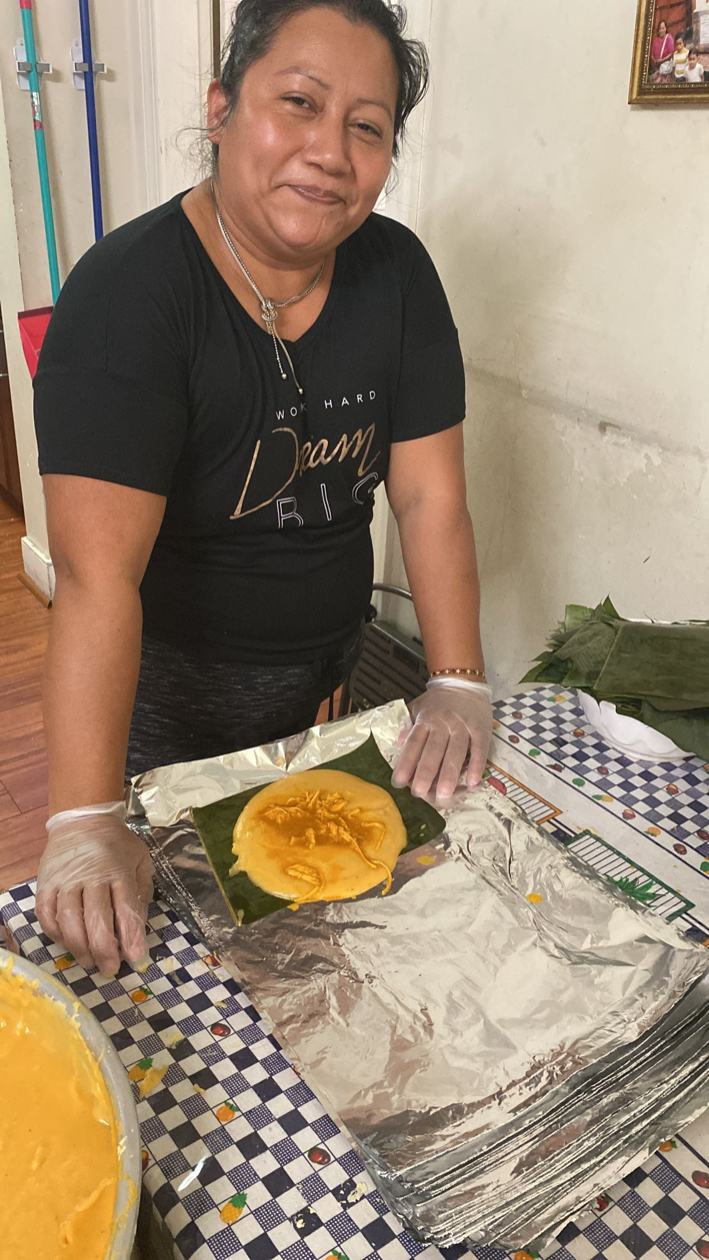
German Trinidad and his wife, Magnolia Alvarez Velásquez, co-operate their business of selling tamales in Mount Pleasant. For her, it’s something of an honor to be able to share their food with others every day.
“I grew up like that, selling tamales,” said Alvarez Velásquez. “And I also feel happy working with the hope that they are enjoying healthy food.”
Like other immigrants, Trinidad says he relies on street vending and non-traditional work to make ends meet. He hopes the Council will move quickly to support the street vendors with the two bills.
“Our problem is that we’re immigrants in this nation and we cannot have a better job than to be the street vendor,” said Trinidad, who’s from El Salvador and spoke through an interpreter. “But we wish you and all your legislation will be able to help us to get ahead so that we don’t become stagnant, so that we don’t become penalized for selling on the street. That’s the only thing we want.”