Héctor Alejandro Arzate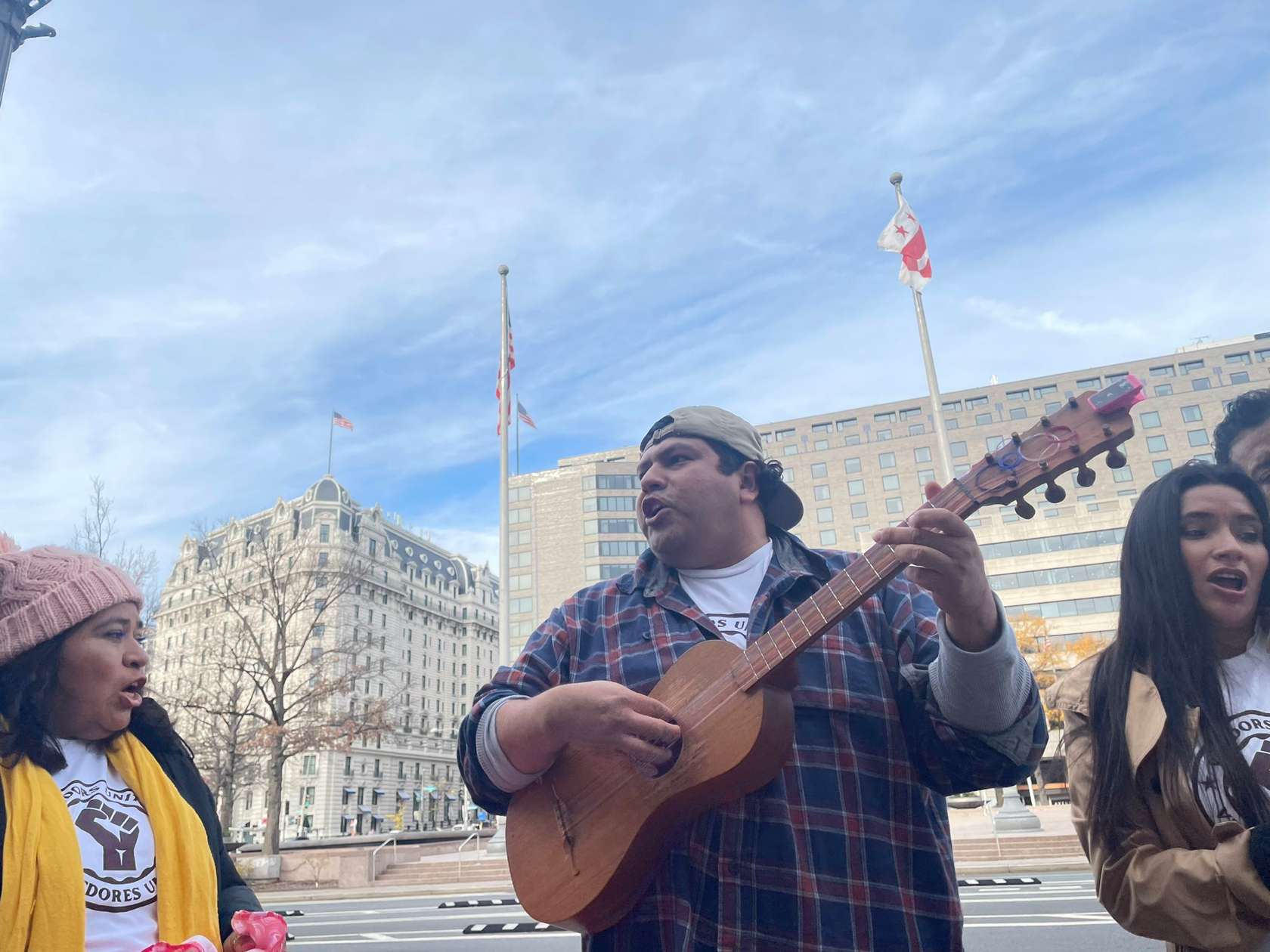
Puedes leer este artículo en español aquí.
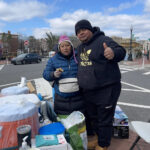
Reyna Sosa has been street vending in the heart of Columbia Heights for about a decade. Almost every day, she sells antojitos – snacks in the form of pieces of mango and watermelon, taquitos, yuca with chicharron, and many flavors of the warm cornmeal drink, atole. She’s become a regular along the sidewalk at 14th and Irving Street NW, where other vendors sell their goods to pedestrians.
During her time as a street vendor, Sosa says she’s been able to build her own business and also provide for her six children when it comes to their medical and dental needs. However, she is unlicensed, and says it’s been difficult to navigate the District’s current street vending laws and enforcement.
“When we first started selling, the police mistreated and harassed us,” says Sosa, who was born in Mexico and has lived in D.C. for more than 20 years. “At every moment, every instance, we need to run with our carts.”
Although a recent change to D.C.’s criminal code will decriminalize street vending without a license in 2025, it is currently a criminal offense that can subject people to fines and arrest. In previous years, Sosa says she’s received $300 fines and even had her goods confiscated, which can sometimes amount to an additional $200 in lost revenue.
“We’re not criminals just because we sell on the street,” says Sosa. “We are simply people who are trying to survive.”
Still, for people like Sosa, the process to apply for a license can be difficult and confusing. She says she’s tried applying before, and described it as a frustrating back-and-forth with D.C. agencies to provide the proper documents but to no avail.
“I think on their part, there’s been a lot of obstacles. Because we show the best disposition to do everything we can to obtain a license,” says Sosa.
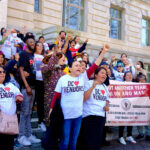
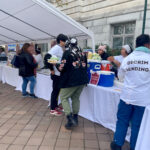
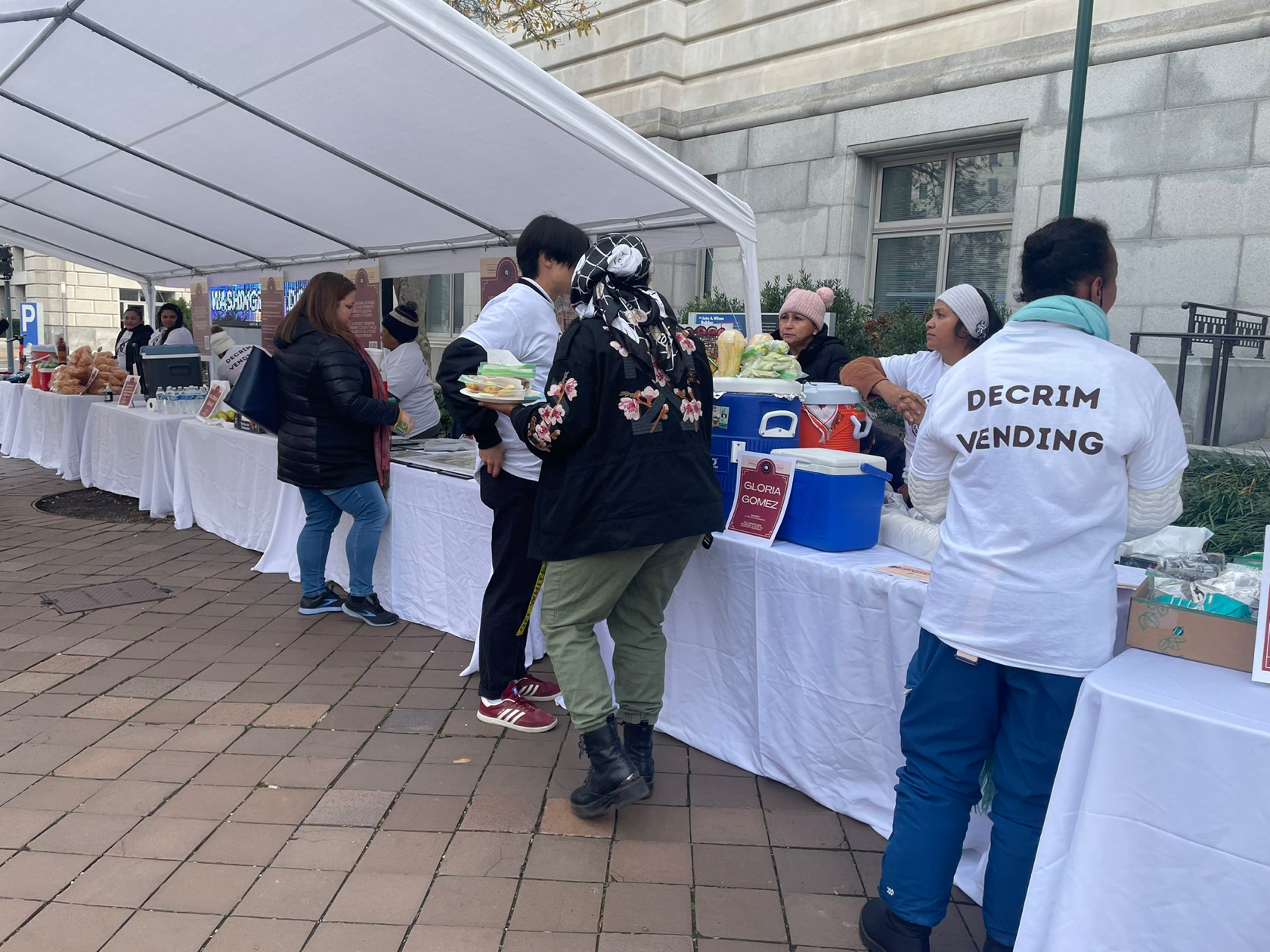
On Tuesday, Sosa joined more than a dozen street vendors and their advocates in a staged “pop-up” vending zone in front of the Wilson building, where the D.C. Council Chairman Phil Mendelson’s office is located.
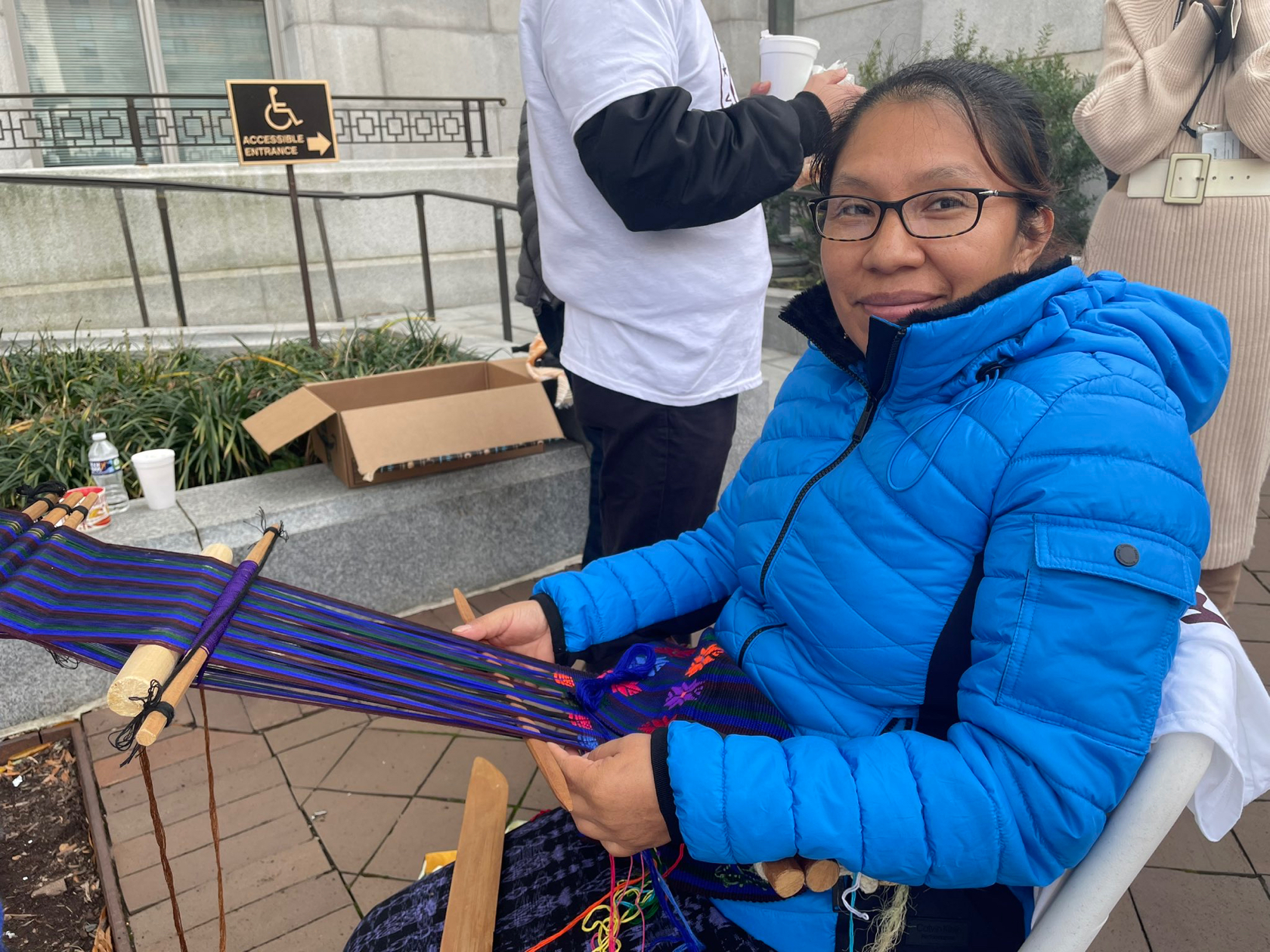
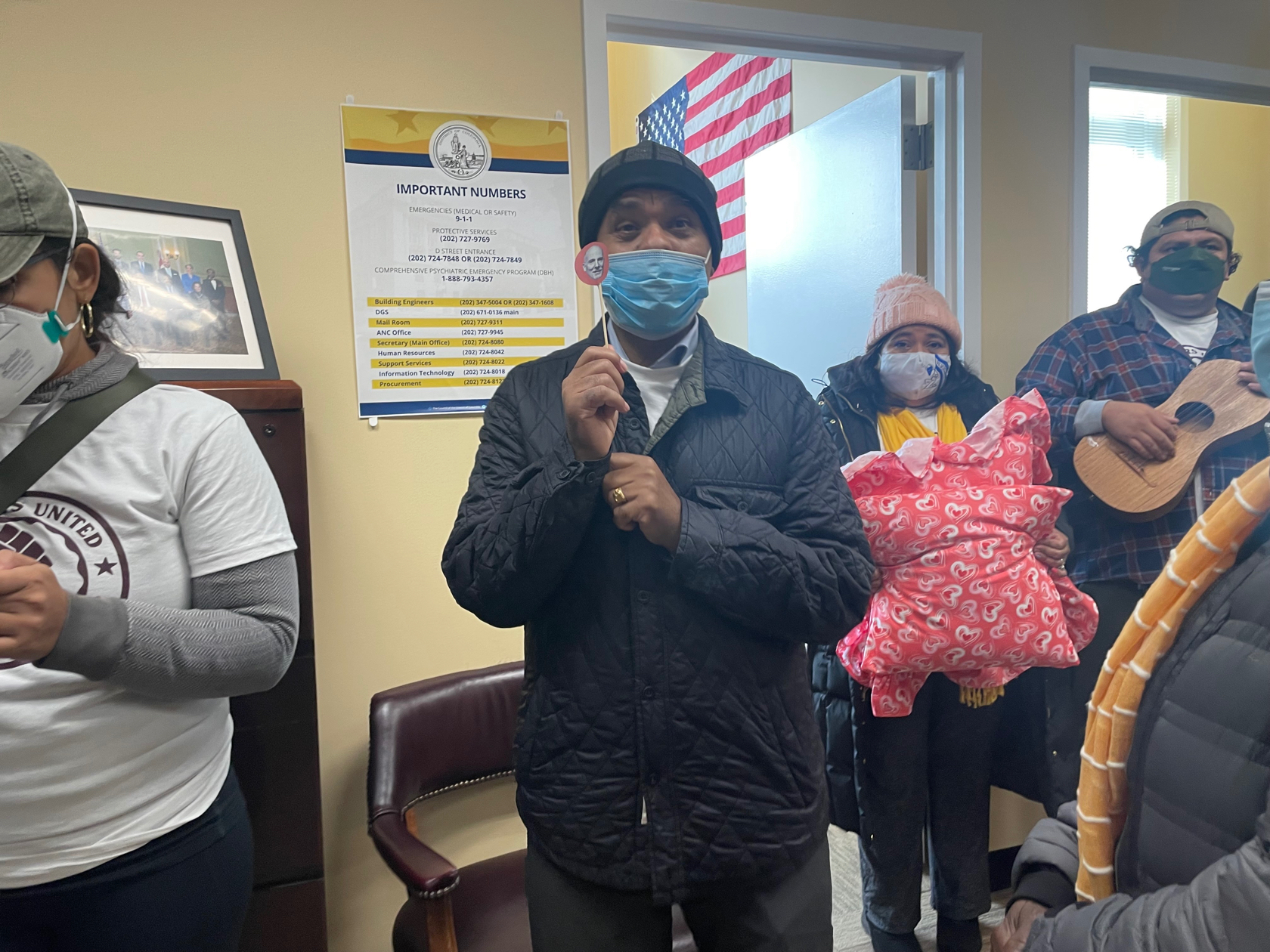
Organizers set up a tent and tables on the sidewalk of Pennsylvania Avenue NW. Along with Sosa’s antojitos, vendors sold winter hats, jewelry, weaved goods, and fresh coconuts. Members of the musical group Son La Lucha also performed music, including the “Street Vendor Song”, which was dedicated to Mendelson. No one was cited or received fines, according to organizers.
Earlier this month, Mendelson held a public hearing on two bills that would decriminalize street vending before 2025 and restructure vending zones, respectively. Without any follow-up dates for D.C. Council to take a vote on bills 24-49 and 24-50, however, vendors are asking the Chairman to act now.
“Every year for us has gotten more difficult,” says Sosa. “That’s why we’re saying, ‘Not another year.’”
Geoff Gilbert, a director for the non-profit Beloved Community Incubator, says it’s crucial for the two bills to receive a hearing date on Dec. 6 if there’s going to be any chance of passing them before the new year.
“The window is about anywhere between today and another week,” says Gilbert. “The council can act in that window. There’s nothing stopping them from acting.”
Councilman Mendelson was no able to be be immediately reached for comment.
Earlier this month, the B.C.I. published a report that analyzed street vending arrest data from the D.C. Sentencing Commission. The report found that more than 95% of all vendors arrested between January 1 of 2018 and September 30 of 2022 identified as Black, Indigenous, or People of Color. According to Gibert, those vendors can’t afford to wait until the spring.
“If they choose to not act, then we’re going to be left with the status quo, which is very violent and racist towards vendors,” continues Gilbert.
For Alfredo Castro, a local musician, the end-of-year passage of the two bills would mean that street vendors could focus on earning a living rather than fear of arrest or fines.
“I’m an immigrant. I’m a community member. And I think it’s fair for workers to want to work in peace,” said Castro, who wrote and performed a song directed at Mendelson to support the bills.
Among those in support of the street vendors and the two bills was Maxine Davis, who purchased food and atole from the pop-up. Davis is the organizing director with the American Civil Liberties Union of the D.C. Like others, she says the onus is largely on the Chairman, who heard testimony from dozens of witnesses at the last hearing.
“We are waiting for Councilmember Phil Mendelson to actually do something with the bill now,” says Davis.
Advocates and legislators have made numerous attempts to pass street vendor decriminalization bills in the past. While some progress has been made this time around, the two bills have yet to receive a follow up date for a committee vote. Without that, it’s unlikely that the legislation can be passed by the D.C. Council in this legislative session.