Jacob Fenston
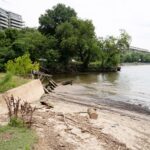
Right now it’s not great weather for taking a dip in the Potomac… plus it’s illegal. But someday in the not-too-distant future, going for a swim in the District’s rivers could be a real option on a hot summer day.
In the latest step toward making swimming in the city possible, the U.S. Army Corps of Engineers will conduct a feasibility study, identifying areas on the Potomac and Anacostia rivers where it’s clean enough and safe enough to swim.
Congress authorized the swimming study as part of the 2022 Water Resources Defense Act, at the behest of D.C. Delegate Eleanor Holmes Norton.
“We’ve consistently found there’s a lot of places in the Potomac River where it’s safe for human contact, you know, 70%, 80%, 90% of the time,” says Potomac Riverkeeper Dean Naujoks.
The environmental organization launched a campaign earlier this year, urging the District to lift the 50 year-old ban on swimming, which has been in place due to pollution.
The rivers have gotten a lot cleaner in recent years, according to water quality monitoring conducted by Potomac Riverkeeper and other nonprofits, in partnership with the District Department of Energy and Environment. Testing from the past three years showed five locations passed water quality standards more than 80% of the time during the warmer months.
“People are going in the water. We just would love it to be a little bit more formal, identifying places where people can swim,” says Naujoks.
District officials have said they do intend to lift the swim ban, and support creating official swimming areas. In an interview in September, DOEE Director Tommy Wells would not commit to a date when the swim ban would be lifted. But he said the District is considering ways to allow swimming where and when it’s safe.
“I expect that it will become more that swimming is encouraged and allowed, except on certain major rain events, floods or storms. And so we’re on our way to that,” Wells said.
The water resources bill also provides for studying flooding in the Federal Triangle area downtown, and studying the options for creating a second source of drinking water for the region, besides the Potomac.
The provisions “address issues D.C. has long confronted,” Norton said in a statement, and “will help protect the drinking water and other infrastructure of the nation’s capital from serious vulnerabilities.”
The legislation awaits president Biden’s signature.