Margaret Barthel
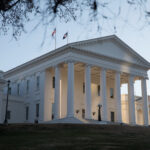
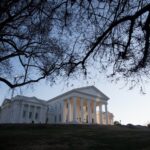
The Virginia General Assembly convenes in Richmond on Wednesday for what’s sure to be an action-packed legislative session, which is expected to last until the end of February.
As a particularly political season in Richmond revs up, leaders in Northern Virginia are thinking through what they need from the General Assembly — and what they can realistically expect to come out of the short session.
There are already a lot of big issues on the table for lawmakers to debate, including the future of abortion rights in the commonwealth, school choice proposals, Virginia’s participation in the Regional Greenhouse Gas Initiative, shoring up mental health care services, and housing affordability, among others.
Some of those areas of focus match what Northern Virginia’s elected leaders — nearly all of them Democrats — hope to see. But others put them in conflict with Gov. Glenn Youngkin and the Republican-led House of Delegates.
“I do see some opportunity, which I’m excited about, but there are plenty more things that concern me because if we go in the wrong direction, with the legislature either paying attention to things that are not priorities or meddling in things that are working well,” said Arlington County Board Chair Christian Dorsey.
Dorsey said he was encouraged by Republican interest in fixing mental health issues, worker shortages, and an anemic housing supply, but concerned about potential Republican attempts to roll back abortion rights, early voting, and climate priorities.
There will likely be as much politicking as policymaking. 2023 is a big election year in Virginia, with all 140 seats in the General Assembly — 100 in the House of Delegates and 40 in the Senate — up for a vote in November. Plus, Virginia redistricting has further tangled the political map, drawing a number of incumbents into the same district and setting up possible painful primary match-ups in June.
All that complicates the political calculus for the short legislative session. (Odd-year sessions in Virginia are about half as long as even-year sessions.)
Control of the General Assembly is narrowly split. Republicans control the House of Delegates, and Democrats command a tight majority in the state senate, which some in the party have referred to as a “blue wall” keeping Republicans in check. That wall got another brick on Tuesday, with Democrat Aaron Rouse appearing to flip a state senate seat in Virginia Beach, originally left open by new Congresswoman Jen Kiggans’ departure for Washington. The victory further bolsters Democrats’ ability to fight off abortion restrictions, which one member of their caucus, Sen. Joe Morrissey, has previously entertained.
Also on Tuesday, nonprofit leader and educator Holly Seibold won her special election for House District 35, which includes parts of Fairfax County. Seibold, a Democrat, replaces another Democrat, former Del. Mark Keam, so her victory doesn’t change the balance of power in Richmond.
Skip among topics: Abortion – Taxes and the budget – Workforce vacancies – Mental health – Housing
Abortion
Abortion rights are set to be the biggest political football of the session, though the divided legislature means that major changes to Virginia law are unlikely.
The Supreme Court’s decision overturning the federal right to an abortion and putting the issue in the hands of states changed the political landscape across the country — and, Democrats believe, gave the party a significant boost nationwide in the midterms, including in the hotly contested Virginia 7th District.
In Virginia, abortion is currently legal through the second trimester of pregnancy, or until the 26th week of pregnancy. In the third trimester, the procedure may be performed under certain circumstances to protect the physical or mental health of the pregnant person. Bordering states, including West Virginia, Tennessee, and Kentucky, have enacted near complete bans on the procedure, making Virginia a “safe haven” state among many of its neighbors.
Polling consistently shows that a majority of Virginians are supportive of at least some access to abortion. In December 2022, a Roanoke College poll found that 42% of Virginia poll respondents felt abortion should be legal in all circumstances, and 45% said it should be legal in some circumstances. Only 11% of survey respondents supported a total ban on abortion.
The issue is expected to remain at the center of the political storm in the General Assembly this year. Virginia Gov. Glenn Youngkin, an abortion rights opponent who played those views down on the campaign trail, is pushing for a 15-week ban on the procedure with narrow exceptions for cases of rape, incest, or where the life of the pregnant person is in danger. His budget proposal includes $50,000 toward establishing the hoped-for ban. That amount, state Sen. Scott Surovell said, is also the amount of money generally required by the state to offset costs in the state prison system of incarcerating people convicted of a new criminal violation.
“If you pass a statute that creates any new penal consequences that result in any people having to spend more time in jail on a felony, you’re required to put at least $50,000 in the budget to help cover those costs,” Surovell said.
The draft bill would make it a Class 4 felony for a physician to perform an abortion on a pregnant person who is more than 15 weeks along, unless the doctor determines that carrying the pregnancy would “substantially and irreversibly impair one or more of such woman’s major bodily functions,” or result in the patient’s death. A Class 4 felony carries a penalty of two to ten years in prison and a possible fine of up to $100,000.
Virginia currently pays for abortions for Medicaid-eligible people in a handful of specific cases: when the patient’s life is at risk, in cases of reported rape or incest, and in instances where the fetus has a “gross and totally incapacitating physical deformity” or a “gross and totally incapacitating mental deficiency.” Youngkin’s budget proposal would end the latter exception, taking away state funding for low-income Virginians to end the handful of pregnancies — 21 in 2021 — that would otherwise result in stillbirth or a baby unable to survive. Last year, Youngkin’s proposed budget included the same language, which was ultimately removed during legislative negotiations.
Other Republican legislators have introduced abortion-related proposals, including a bill that would begin the right to life at conception, a bill that would prevent the state from funding entities or facilities that provide abortion, and a proposal to require that state curriculum guidelines for family life education classes include a video of an ultrasound of an unborn fetus. Another bill would allow a pregnant person to count as two people for the purposes of HOV toll lanes, provided that pregnancy is certified with the state Department of Transportation.
Senate Democrats have pledged to fight those and other abortion restrictions throughout the session. Many also support a constitutional amendment that would enshrine a right to abortion in the Virginia constitution, which would require a referendum putting the issue to Virginia voters.
The road to a referendum, however, will likely run through the November election, not the current legislative session, Favola says.
“If we’re able to hold on to our majority in the Senate and if we’re able to take back the majority in the House of Delegates, that would give us at least the first leg of being able to pass legislation that would put a referendum question for the voters,” she said.
Some Democrats are also proposing abortion-related legislation. Surovell and Favola are both looking to keep personal health data stored in menstrual health apps private. Surovell also wants to prevent companies from selling location data that can be used to prove someone traveled to an abortion clinic. And with regard to states that criminalize abortion, Surovell said he expects to introduce legislation to prevent the extradition of Virginians for conduct in another state that’s legal in Virginia.
Surovell also speculated the political calculus for Republicans on abortion will be complicated by the looming elections in November, and general public support for abortion rights.
“There’s a lot of people that have exposure in the general election,” he noted. “I think there are some Republicans that you might see might not be as doctrinaire on issues like women’s reproductive health care rights as they usually are.”
Politically charged as the issue is — and as closely divided as the General Assembly is — many in Richmond think major changes to Virginia law on abortion are unlikely. That includes Republican Speaker of the House Todd Gilbert, who told reporters on Monday that he doubted “anything of substance” related to abortion would pass the legislature.
Taxes and the budget
One of the biggest jobs of every legislative session is hammering out the state budget — or, this year, amending the biennial budget lawmakers passed last year.
Youngkin got the conversation started in December, rolling out a budget proposal that includes another $1 billion in tax cuts (after nearly $4 billion was slashed last year), plus additional money for education, mental health services, and economic development. The proposal comes amid economic uncertainty and fears of a recession — and Youngkin has said the tax cuts and other spending in the budget are premised on the state living up to current revenue projections in June.
The state has a significant surplus. Youngkin told lawmakers last month that his administration now projects $3.6 billion in unexpected revenues for the first two years of his governorship, and the commonwealth has another $3.6 billion in reserves. He said he believes state revenues will remain strong even in the event of an economic decline.
“This will allow us to make our investments to not only minimize the impact of the recession, but importantly allow us to accelerate out of it,” he said.
The biggest proposed cut would be to the state’s top individual tax rate, lowering it from 5.75% to 5.5%. That includes taxable income above $17,000 and affects most Virginians; it would cost the state $333 million over two years. Another change would again raise the state’s standard income tax deduction, over and above the near-doubling of it last year. Combined with tax cuts put in place last year, Youngkin’s office estimates the total effect will save a typical Virginia family about $800 per year.
Other provisions in the plan would cut the corporate tax rate from 6% to 5%, costing $362 million over two years. That’s part of a larger plan — including a major two-year, $450 million investment in what are known as “project-ready sites,” which would put state resources into identifying and preparing possible areas for industrial or business development when it materializes.
Senate Democrats called the proposal “a good starting point,” but criticized the added tax cuts in the face of a possible recession, and cited the state’s “unmet needs” that could use the additional funding.
“Most members of my caucus find the governor’s concept that corporations should pay a lower tax rate than regular Virginians to be offensive,” said Surovell, who put K-12 education funding and support for Virginia’s college and university students at the top of his list of priorities he’d fund with the money.
Another unfilled gap in state spending is transportation — a critical area of investment for Northern Virginia, Surovell pointed out. The repeal of the state’s portion of the grocery tax eliminated a $700 million stream of transportation funding.
“It’s a huge hole that a lot of us feel like we ought to try to fill instead of just ignoring it,” he said. “And the governor has yet to propose any way to backfill that.”
Del. Suhas Subramanyam, who represents parts of Loudoun and Prince William counties, is also concerned about transportation support, including fully funding the Northern Virginia Transportation Authority’s budget and examining tolling structures on the Dulles Greenway, among other things. State money for the Northern Virginia Transportation Authority (NVTA), Metro, and transportation in general is a priority included in the legislative programs put forward by Northern Virginia officials in Fairfax County, Arlington County, and Loudoun County.
Subramanyam said he’s not strictly opposed to tax cuts, provided that needs are adequately funded. He also acknowledged that constituents have raised concerns with him about the high costs of living in an inflationary period. He plans to introduce legislation aimed at making the utility rate-making process more fair for consumers, a topic several other lawmakers are also considering.
“We as Virginians, we overpay on utility bills because utility companies like Dominion end up gaming the system and doing all sorts of accounting tricks to make us pay for things unnecessarily,” he said.
Democrats in Northern Virginia — an area which has landed some of the state’s most high-profile new corporate arrivals in the past several years — argue that investments in education, workforce development, transportation and infrastructure are some of the prime reasons companies choose to locate offices and other facilities in Virginia.
“If all companies cared about was taxes, they’d all move to Wyoming,” said Subramanyam. “But they don’t. They care about other things. They care about infrastructure. They care about our location…close to D.C. and the federal government. They care about infrastructure. They even care about some of the social issues that might scare them away, like the bills that have been passed in North Carolina and Georgia when it comes to how we treat LGBTQ people or our voting rights.”
Dorsey, the Arlington County Board Chair, agrees.
“When we think about why a business is going to choose to be in a place, it’s really the investment in making the communities work well that is the primary driver,” he said. “If you diminish the ability to do that by starving the area of resources, yeah, you can make a balance sheet look [good] for a quarter or two. But that’s not the that’s not the time horizon that businesses are looking at.”
Workforce vacancies
Last year’s local and state budgets aimed to support workers, including raises for public school teachers and first responders. With inflation still high, resignations continuing and many workers still exhausted from pandemic strains, many lawmakers say workforce issues are still very much top of mind heading into the legislative session. Surovell said he sees “record high” vacancy rates in teaching jobs, and a whopping 17% vacancy rate in state employee jobs.
Following raises and bonuses last year for teachers, Youngkin has proposed an additional round of $5,000 bonuses for teachers, but these would be based on merit as determined by local schools and the state Department of Education. State employees would be eligible for $1,500 bonuses, and more would go to high performers. The budget also includes $30 million to help recruit 2,000 new law enforcement officers, another profession experiencing high vacancy rates in Northern Virginia and elsewhere. $175 million will go to helping recruit, retain, and advance the careers of first responders, nurses, and teachers.
“I look forward to working with the Governor and his administration to reach our shared goals of more jobs, more opportunity, better education, safer communities, smarter government, and tax relief for overburdened families,” said House Speaker Todd Gilbert (R-Mt. Jackson) in a statement after the budget plan announcement. “We can and will get this done for all Virginians.”
Surovell is concerned that the budget proposal doesn’t go far enough on workforce issues, particularly for teachers.
“Our teachers did get a 5% pay increase last year and they’re supposed to get another 5% this year,” he said. “But in a 10% inflationary environment, that doesn’t really give you a pay increase.”
Surovell is also pushing a bill he introduced last year, which would require grocery store and health care workers to receive sick leave.
Short of additional state support for raises, Favola and Subramanyam are also looking at ways to reduce burdensome licensing rules in high-need professions. Both want to get rid of restrictions that prevent people with certain criminal convictions from serving as peer drug recovery specialists, for example.
In Northern Virginia, Dorsey says the competition for hiring teachers, first responders, and public employees is particularly fierce — and he’s not convinced that state lawmakers can do much to change that reality.
“This is a unique labor market where people have the ability to have lots of choice, and I don’t decry that. It does mean that the public sector is going to be relatively more disadvantaged than others because we can’t make those decisions as quickly as the private sector to adjust pay and benefits to really be an employer of choice,” he said. “So we have some general malaise that’s just really a function of the labor market.”
Mental health
Another possible area of bipartisan agreement is in shoring up Virginia’s mental health system, which has been struggling under the strain of a wider mental health crisis. Northern Virginia leaders — along with colleagues across the state — have consistently expressed concerns about the state of mental health care in the commonwealth.
Dorsey, in Arlington, sees mental health staffing as one of the few areas where the state can make inroads into staffing vacancy problems. He is concerned that the state and localities are in competition for trained mental health workers, and wants to see the state help localities boost pay.
“As the state thinks about adjusting pay to bring in workers for state facilities, we also need to see that commensurate increase in pay that’s provided for localities who are responsible for hiring those local personnel,” he said.
The Arlington legislative program recommends that the state set aside $166 million in quarterly recruitment and retention bonuses for local community service board staff, “in proportion to what was provided to Virginia’s state psychiatric facilities.”
In December, Youngkin highlighted a $230 million proposal that would fund community-based mental health services, including community service boards and crisis receiving centers. The proposal, part of his budget plan, sets aside money for 30 new mobile crisis units, offers investments to expand school-based mental health services, creates opioid abatement initiatives, and adds funding to help hospitals find non-emergency room options for people in crisis, among other things.
Favola sees aspects of the administration’s plan as a key part of Virginia’s movement away from funding psychiatric hospitals and towards funding community-based mental health services. She also has separate legislation on the issue, a bipartisan proposal to create an opioid and substance use disorder fund to help state prisons and jails establish treatment programs and medical detox programs for incarcerated people.
Surovell says he’s glad to see the administration’s emphasis on the mental health system, but doesn’t believe the proposal goes far enough, expressing some concerns over low pay and vacancy rates in mental health positions in the state.
“You can only spend money so fast,” he said. “It takes time to build up the capacity necessary to spend money. But in the longer term, we probably need to invest probably at least double that.”
He added, “This pandemic did something to people, and we’re not past it at all.”
Housing
In December, Youngkin launched “Make Virginia Home,” a set of guidelines designed to increase Virginia’s supply of housing, a need administration officials said is needed to meet the state’s economic development ambitions.
“During our efforts to attract and retain businesses to Virginia, the availability of workforce housing for their future employees was consistently raised by employers,” said Secretary of Commerce of Trade Caren Merrick, in a press release announcing the plan. “It’s clear there is a strong connection between economic growth and needs for attainable housing options.”
The bulleted list includes language suggesting the state could provide funding to localities to incentivize policies that encourage housing construction, and suggests that the state should examine possible zoning reforms. One of the more specific portions of the plan aims to streamline permitting and zoning processes — including by adding deadlines for localities to make decisions on land use proposals and by streamlining environmental review and wetland impact mitigation work. The plan also suggests Virginia should translate its building regulations into Spanish.
In Northern Virginia, where housing costs are high and supply is limited, building more housing — particularly affordable units — has long been a challenge. Officials said they were pleased to see Youngkin take an interest in the issue, but said they needed more detail.
“What’s really necessary right now is further elaboration on what those principles mean,” Dorsey said. “There are ways in which each of the seven or eight bullets that he’s outlined thus far, how those could be developed in ways that are helpful and ways that are not.”
Dorsey and others pushed back on other parts of the plan, particularly those related to speeding up local land-use decision making. In a formal letter to Youngkin, which broadly expresses support for the administration’s outline of the plan, Alexandria Mayor Justin Wilson said he was concerned that previous attempts to strip local authority have already damaged housing production by causing localities to “tighten the reins to maintain control of local processes.”
“We would instead suggest more comprehensive reform to expand local capabilities to manage the externalities of development,” Wilson wrote.
Dorsey agreed with those concerns, adding that localities grapple with dramatically different challenges with housing construction. He also noted that additional contributions to the Virginia Housing Trust Fund, which helps finance affordable housing projects, were missing from Youngkin’s list, and he said he would like to see state lawmakers expand localities’ ability to require developer contributions to housing development in exchange for density.
“If you’re asking me, ‘What are the two things that we need in Northern Virginia?’ — more of an ability to pursue inclusionary zoning strategies, and then also the availability of more funds and a competitive trust fund for us to get projects off the ground,” he said.
This story has been updated with the correct name of the Northern Virginia Transportation Authority.