Héctor Alejandro Arzate
D.C. Council Chairman Phil Mendelson and Ward 1 Councilmember Brianne K. Nadeau have co-introduced the Street Vendor Advancement Amendment Act of 2023. The bill is a combination of two prior bills that would decriminalize street vending, reduce fees, and reform the overall process by establishing vending zones.
“Council Chairman Mendelson and I are proud to work with the vendedores to support their livelihood,” said Nadeau during a press conference on Tuesday. “Our legislation will make it easier to get a license and less expensive to do so. It will organize vending spaces to improve vendor, customer, and community experience. And it will waive the unpaid licensing related civil citations for vendors who properly obtain the necessary licenses.”
Nadeau, a longtime advocate for street vendors, introduced the two bills last year. Despite a campaign to push for Mendelson’s support before the end of the legislative session, the two bills failed to move forward. Now, with Mendelson’s backing the new, unified bill could advance quickly to a council vote.
“Our plan is to try to move forward with the bill before the budget comes down,” Mendelson told DCist/WAMU. “We’re going to work toward marking the bill up and taking it to the Council for a vote.”
Per D.C. Council rules, there must be a hearing for each bill that is introduced before it can be adopted. However, a bill can meet that requirement if there was a hearing for it during the prior council period. On November 16, Mendelson and the Committee of the Whole held a public hearing with dozens of witnesses largely in support of street vending. As a result of the previous hearing, the new street vending legislation can move forward without an additional hearing.
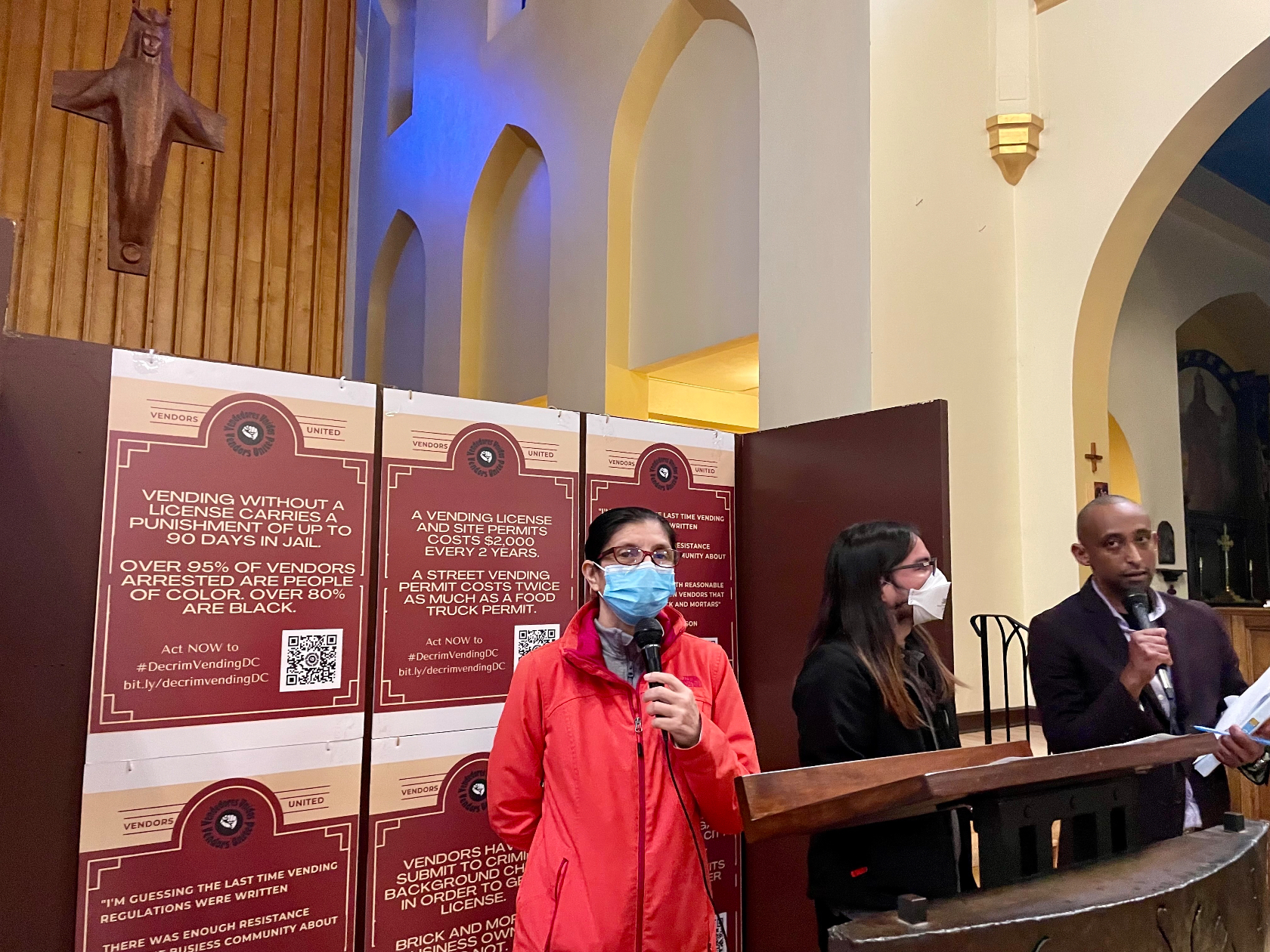
Eloisa Diaz says the bill and its potential make her feel secure that she can continue selling food without facing penalties. Diaz is a vendor who sells soup, fruit, and atole de elote in D.C.
“I’m happy that [the council members] are working positively to help support [vendors] with the license,” says Diaz. “I’m not afraid anymore.”
According to Nadeau, the priority with the legislation is to minimize incidents like the 2019 interaction between MPD and a D.C. teenager – who was pushed to the ground after being confronted for allegedly selling goods without a license.
“Street vending should not be a police matter. If a business owner with a store has an expired license, the police don’t come and threaten them. Why should police be involved in disputes over licenses or where vendors set up their carts?” said Nadeau.
Arely Andrade is a single mother who began selling face masks and clothing at the start of the pandemic. She also says the legislation would make it easier for her to support her family instead of worrying about interactions with law enforcement.
“For me, it’s good because the police won’t bother us and we won’t have to pay fines for vending in the street,” says Andrade.
While some street vendors say they’ve faced issues with renewing their licenses because of back-fees, the new bill contains an amnesty program for fines issued by the Department of Licensing and Consumer Protection and the Department of Consumer and Regulatory Affairs. According to Blaine Stum, a legislative policy advisor for Mendelson, the bill also includes a repeal of the minimum sales tax provisions.
“We’re hoping that those two things, along with the reduction in fees for licenses and permits, will enable you to get a license much easier and you won’t have to pay a ridiculous amount of money to be able to become licensed,” said Stum.
If the bill passes, D.C. will become the third major city – along with New York and Los Angeles – to overhaul its street vendor licensing regulations.