Morgan Baskin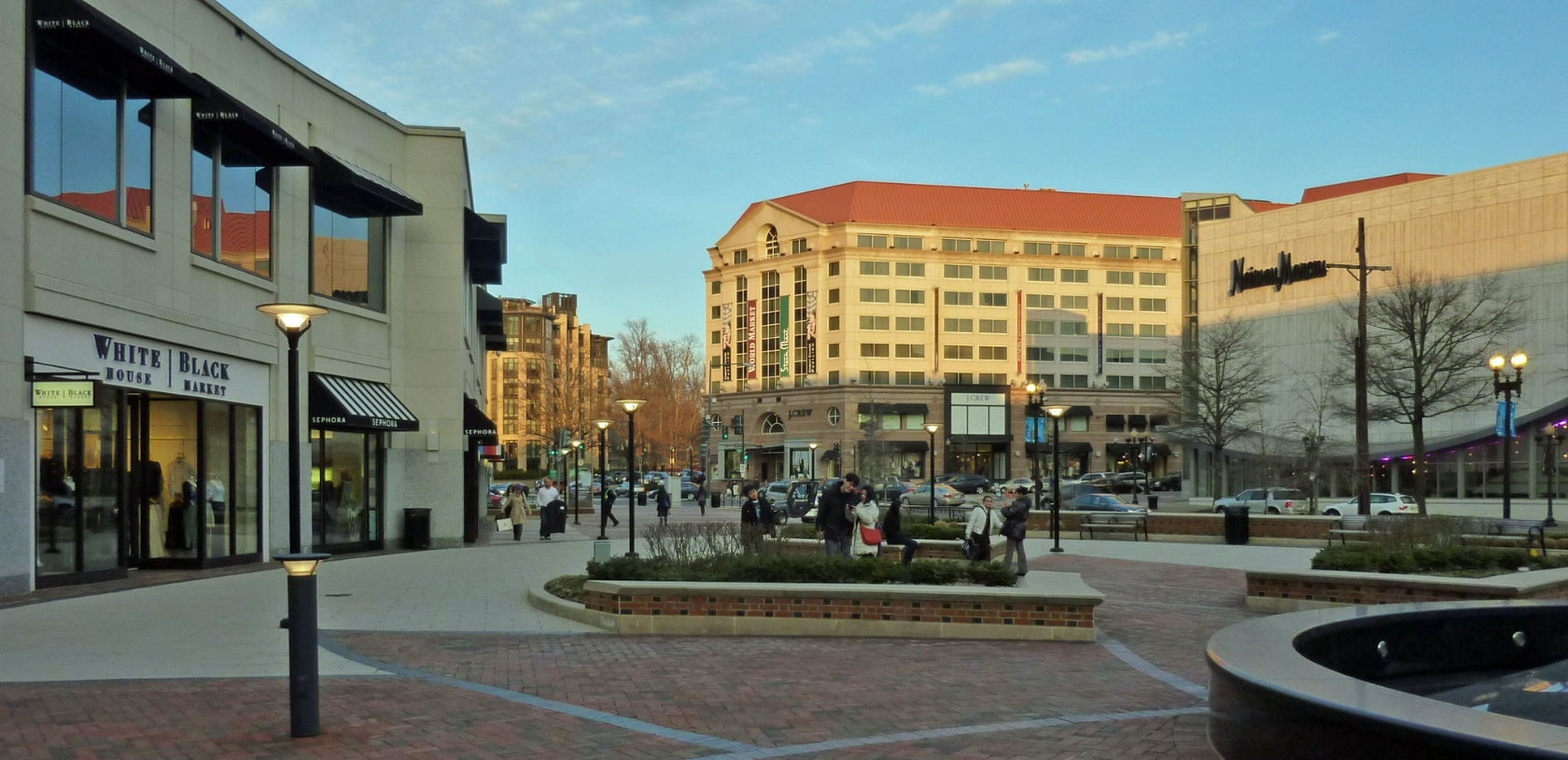
Ward 3 Councilmember Matt Frumin introduced a bill Thursday to create a new Business Improvement District in Friendship Heights, the Northwest neighborhood abutting Maryland with a bustling commercial corridor along Wisconsin Ave. The legislation follows years of planning, led in part by Frumin’s predecessor Mary Cheh, to revitalize the neighborhood, and comes as Montgomery County District 1 Councilmember Andrew Friedson plans to advance similar legislation that would create Montgomery County’s fourth Urban District adjacent to Friendship Heights.
If Frumin’s effort survives its application process — a lengthy 11-step endeavor that requires authorization from Mayor Muriel Bowser, a public hearing, and buy-in from the wannabe BID’s commercial property owners — the Friendship Heights BID would be the 12th district of its kind in D.C., joining those in such neighborhoods as Adams Morgan, Anacostia, Georgetown, and Dupont Circle.
In a statement to DCist/WAMU, Frumin called the BID “vital to expanding economic opportunity for businesses and ensuring a robust recovery for this important commercial district. Friendship Heights is undergoing transformational change, and I look forward to partnering with the BID to support local business along the Wisconsin Avenue Corridor.”
BIDs have wide-ranging responsibilities to the businesses and civic associations within their borders, with operations running from trash cleanup and beautification projects to workforce development. In 2019, for example, the Downtown BID partnered with the D.C. government to open a daytime services center for the unhoused. A Thursday press release from the Friendship Heights Alliance, a nonprofit created in 2021 to strengthen business partnerships in the neighborhood, noted that of the 3,000+ place management organizations in cities across North America, only a small handful are cross-jurisdictional, like the one Frumin and Friedson are proposing. The group argues that such an arrangement is critical to create equitable development in the area, regardless of which side of the D.C. border it happens to fall on.
While Friendship Heights offers an array of retail and dining that ranges from Saks Fifth Avenue to pizza joints, businesses are still rebounding from the reach of the pandemic, when many had to reduce hours or close for long stretches of time. In a survey of Friendship Heights businesses and community members conducted by the Alliance shortly after it formed, the group reported that it routinely heard complaints about the neighborhood’s inhospitable social environments and a dearth of gathering places for consumers to enjoy.
“We heard widespread concern about inward-looking retail environments, hard edges, the impact of Wisconsin Avenue on walkability, a sense of stagnation, and a lack of diversity across age, race, and ethnicity. The stakeholders we engaged talked about the lack of social gathering places or venues for local culture and connectivity,” the Alliance’s business plan for the proposed BID, published in Dec. 2022, said of its survey. “Many talked about how, for too long, Friendship Heights has been more a collection of buildings than a place to enjoy. People expressed a desire for more care and focus on the quality of public space and on creating a sense of neighborhood identity.”
As outlined in the Alliance’s business plan, Frumin’s bill creates a new tax scheme to fund the BID, with commercial buildings seeing a 16.5-cent tax per square foot, and hotels and residential units seeing a $120 tax per unit or room. The DC BID tax would be paid twice per year to the Office of Tax and Revenue, like property tax bills, and transferred to the Friendship Heights Alliance twice per year. The Alliance wrote that its board intends to keep the tax rates fixed for the BID’s first five years.