Dee Dwyer
 Aja Drain
Love is a choice in all its forms: self-love, familial love, platonic love, and of course, romantic love. We can choose to love despite anything that faces us. Love is a protector.
“When you stick with a person through thick and thin, ups or downs; that’s love,” Ward 8 Resident Joseph Patrick says of his life with his partner of 23 years, Elvera Patrick. “You don’t spell it L-O-V-E, you spell it [with] devotion [and] caring.”
But Black love adds another intersection to that.
“Black love is the ability to love yourself out loud unapologetically,” Ward 8 resident Alejaibara Badu says. “I had to learn love and Blackness, being an eighties baby – being dark in my melanin form. I was born in the South, so everybody wasn’t happy about Blackness. Being a man and being Black also meant that I had to learn how to make myself safe.”
Black love comes out of necessity in a world that doesn’t always love us back. The scarcity of love can take different forms too. Lack of physical and financial investment in Black communities, open discrimination towards Black people, and even internalized hatred we’re socialized to believe. Black love fills what hatred takes away, and allows our community to appreciate each other.
“Every time I see a Black woman with natural hair, I compliment her; I go out of my way to compliment her,” Kymone Freeman, co-founder of the Black Luv festival, says. “Not in a ‘pull-up on her’ manner, but just giving her love because she’s probably been exposed to the Westernized ideology of what beauty’s supposed to be.”
So we have to choose to love ourselves, to love each other, and fight to protect ourselves and our community. And it’s not a given. Black love is something that is learned and practiced.
“You’ve got to show love and be open to love before you can give it out and talk to other people about love,” Patrick says. “You’ve got to have felt it yourself, and then you’ll know what to give out to a person.”
So what does Black love look like in Wards 7 and 8? We spoke with residents about romantic love, self-love, and the love they provide and need for their community.
Responses have been lightly edited for length and clarity.
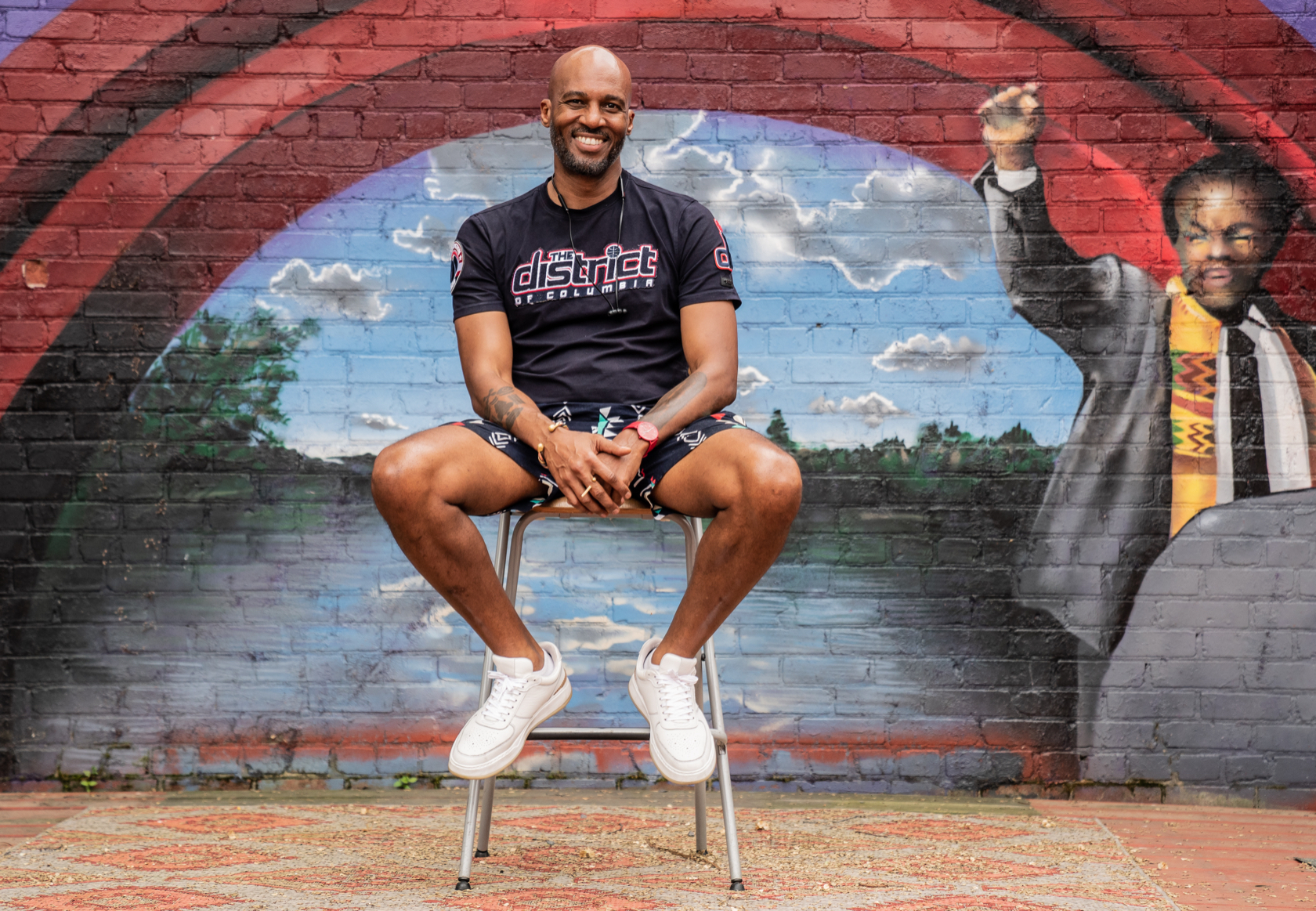
Kymone Freeman – co-founder, WeActRadio & founder, Black Luv Festival
Black love, man…that term of endearment has changed my life, saved my life. It started for me, the term came into my lexicon, October 16, 1995 at the Million Man March, where I hugged more men than I hugged in my entire life before or since.
Imagine being like a hard rock and you come out there with your boys and you’re taunting the police. We were smoking weed in front of the police and drinking in front of the police daring them to do something because we know it ain’t happening that day, right? And there’s this brother who came up to us and he said, brothers we’re not (N word) today, just for the day we’re not (N word).
That just threw me for a mind trip because I had never ever entertained thought that I was not a (N word). I just assumed I was because everybody said I was. My environment had already determined that for me. That day, he gave me the realization that I had a choice – I could choose be a (N word) or not – I never signed up for this shit. And then so we got into the theme of the day, you know, we put the drinks away, put the weed away, and really started paying attention to what’s really going on. When I say I hugged more men in my life, that was therapeutic, and then we were charged to go back to our community and do something. So, I walked around like, what am I going to do?
I said I’m going to do a Black love festival in Washington, D.C. Tupac had been assassinated, Biggie got assassinated. I was a witness to a homicide when my cousin was stabbed to death. I was like, the party’s over. It ain’t fun anymore, I’m not a (N word).
On the anniversary of Tupac’s assassination, September 13th, 1997, I did a Black love festival at Fort Dupont Amphitheater. Fast Forward, 25 years later, we just did the anniversary back at Fort DuPont Amphitheater, and it was the biggest event we ever done. Thousands of people were there, 10,000 people were there. We had the biggest artists. We had a Jumbotron out there. You know, we honored our elders, everybody had a good time.
Black love is everything. It is Afrofuturism. It is Sankofa, looking back. It is the underpinnings Kujichagulia, self-determination. It is our saving grace. It is our resurrection, if we embrace it, it will solve all our problems if we just realize that we need to practice it in some shape form and matter every single day.
If I see a Black woman with natural hair, I’ll go out of my way to compliment her. Not in a pull up on her type of manner, but just giving her love. Because I know that she’s probably has been exposed to the westernized ideology of what beauty is supposed to be, she might not have heard that before. And so that’s Black love. So I think Black love is the biggest threat to the institution of white supremacy, and we need to embrace the program.
How often do you see Black love in Wards 7 and 8?
You know, it’s funny, because the answer that you would expect is ‘Not often, you know this is bleak, and we’re in a high crime area, there’s a lot of violence.’ Since I’ve been here, I know of four people who’ve been murdered on this block. Martin Luther King said “Only in the darkness can you see the stars”. So having said that, when I see random acts of kindness or random acts of Black love, it stands out. It makes my day. I remember when we got robbed and I still to this day think it was the police, a bus driver pulls up in front of WeAct Radio, gets out, and comes to my door to give me 20 dollars. He tells me, ‘I heard what happened, hope you don’t close up shop, keep going.’ Like, oh my God, it blew my mind. It blew my mind.
There’s a picture, a mugshot of Martin Luther King Jr., signed by Harry Belafonte by the way, that sits in the window. Around that time, I came by the studio, and someone had kissed his picture on the glass. It’s red lipstick, bold on MLK’s cheek. It’s random letters in the mail, you know, Haki Madhubuti – Third World Press out of Chicago, sending me books and love, those are like Flintstone vitamins.
Black love is like that cup of Gatorade, that cup of alkaline water when you are running a marathon at different checkpoints just to keep you going. Black love sustains us – it’s the little things, it ain’t the grants, it ain’t sponsorship, it ain’t that. It’s the people that who have limited resources who try to share theirs with you. And I see that all the time. I see that all the time.
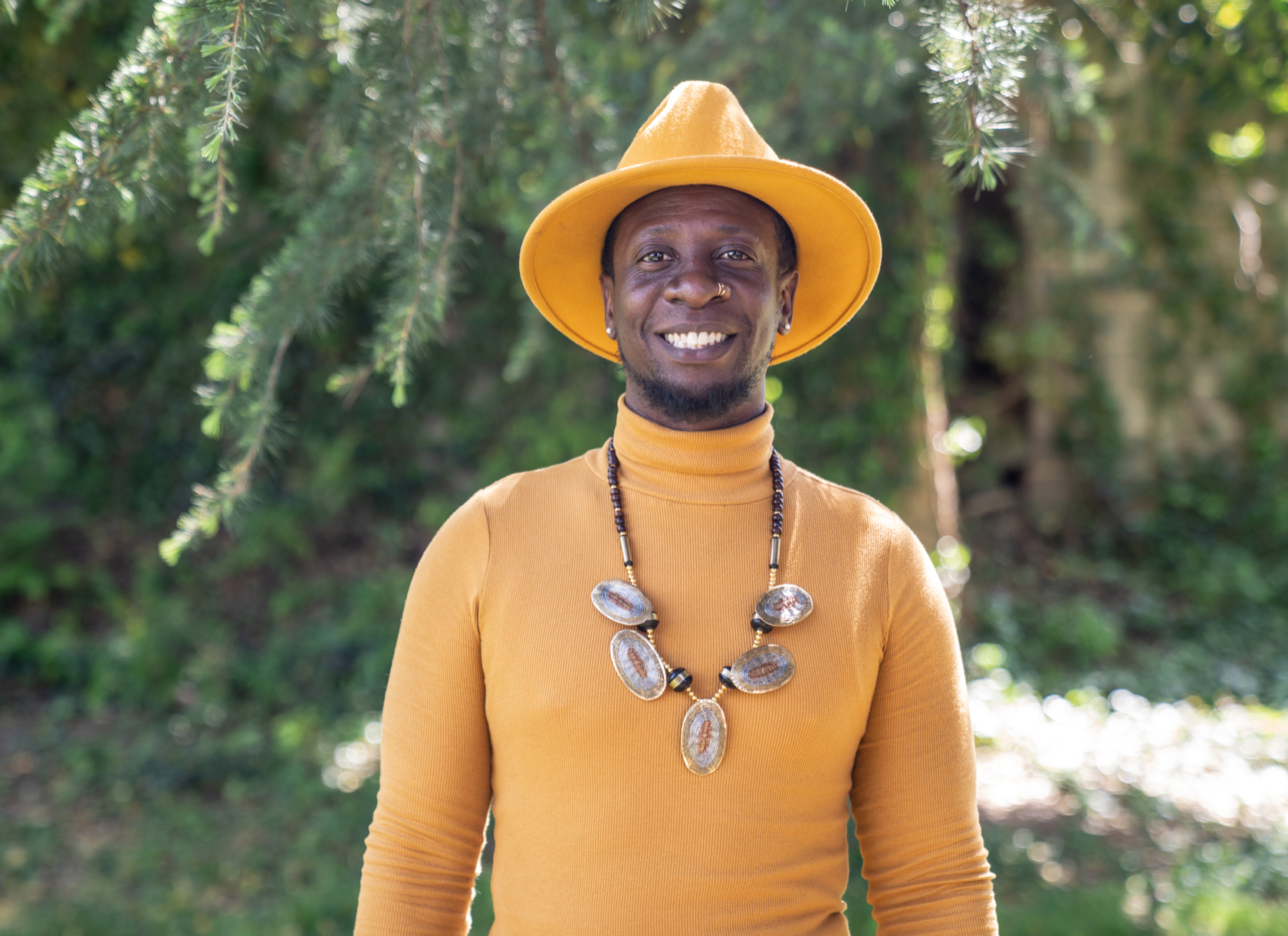
Alejaibara Badu – Master Life Coach
Black love is the ability to love yourself out loud, unapologetically and everything that is Black. Black love is not being afraid of your scars, your wounds. Black love is appreciating your sweetness because it comes from your Black nectar. Black love is loving the wideness of your nose. The fact that any time your soul is happy, your booty shakes. Embracing every aspect of what makes you. A Black love is not being ashamed of Blackness. You can’t be in love with yourself and be Black and be ashamed of another Black person because it’s not of Black love.
Black love is easy. Black love is rich. Black love takes time to drink water and rest. Black love is a dance – like ‘I can’t stop’ movement. Black love is just showing up unapologetically as yourself, not being afraid of being yourself and being an advocate for yourself wherever you are. Black love is not silent. Black love is very much out loud.
Love is something that I had to learn. Love is not something that was taught. Love was something that I always felt to be true. I had to learn love and Blackness, being an eighties, baby – being dark in my melanin form. I was born in the South, so everybody wasn’t happy about Blackness. Being a man and being Black also meant that I had to learn how to make myself safe.
It took the birth of my daughter Madison – when she was born, I was able to return back to love and love so deeply that I knew it was important to show up as an advocate for love.
I have a home in Africa. I’m building a retreat center in Africa on the land in Osun State right by the river called The Village of Love A love is Sweet. All of that love that I’m creating there, to bring folks to heal in Africa, while also looking around and seeing people still change the color of their skin because they don’t understand the importance of Black love.
Black love is believing in regeneration because it can be a heartbreak and a transformation at the same time. I have to constantly be in a space of reincarnation. The beat has to be a muscle. The beat has to be a dance, the beat has to be strength and not a beat down. To be unapologetically Black and in love, out loud, man… some folks are gonna look at you, baby. Some folks are going to move when you say something when you show up in a certain way, some folks are going to be so envious that you’re able to do it out loud that they’re going to end up being jealous instead of being Black and proud.
I see Black Love in Wards 7 and 8, it’s impossible to not to see it. Black people are in Wards 7 at 8. If you don’t be afraid of those that gather, you come close to those that gather, You will see how to take care of each other. I could be insecure in my head, in my mind, and go for a walk outside and come back empowered because the folks around me gave me love and wards 7 and 8. It’s here, love is here. If you can’t see the love here, then it’s because you’re in fear and fear is an opposition of love.
Black love needs to be continued to be chanted in Wards 7 and 8. Folks take us for granted because they’re confused on what Black love is. So more resources need to be devoted towards 7 and 8 and not resources given to organizations that’s been in existence pimping in Wards 7 and 8. I feel like it’s time to fund rest for Black people so they can learn to be still and heal. I feel like the outside needs to come in to love Wards 7 and 8 because Wards 7 and 8 is loving themselves because all they have is themselves. So, when is Wards 7 and 8 going to get some Black love in return?

Elvera and Joseph Patrick – Ward 8 residents, together 23 years.
What is Black Love in your words?
Joseph: Companionship, having someone there always for you, no matter what happens, you know, they’re going to be there doing little things for them just to make them happy. Doing anything that got to do with their family or friends or whatever it is. That’s my love for her just making sure she’s happy. That’s the love I have for my wife. You know, other people see it differently, probably.
We’ve been together 23 years. We’ve argued, but I don’t call it arguing because they only last an hour, you blink your eye – you won’t even know it happened. Nobody’s going to be perfect as far as love goes, it’s what you feel for your partner. I don’t feel it’s got to be giving all the time and showing her expensive things – just to be there for her when she needs you. That’s the love I know.
Elvera: For me, Black love is finding that right one. Sticking by him through thick and thin, no matter what.
How has your experience been when it comes to love?
Joseph: My experience has been like living in heaven since I met her. I can’t see no other love in my life. I can’t see nobody outdoing her as far as my well-being is. You know, for these 23 years, I’ve never really wanted for anything. I never really wish for anything. It was just always coming because she showed me that. And that’s what I think love should be about.
Why is Black love important within our communities these days?
Elvera: Showing Black love in our communities these days is so important because it all starts within the home. Me being a mother of four, three daughters and one son, 16 grandchildren and six great-grandchildren – when they see the love that me and Joseph have, they love it. And them being around us and seeing how we act towards one another is so important to our children today. One day they’re going to be adults, seeing what we have gone through and showing them a lot of love, they will know how to reach out and love their significant other.
Joseph: I also think that the younger generation going through what they’re going through now, what you see, they’re doing these wild things. The different disrespectful things is because they never had love shown to them in their family when they’re coming up. Even when they were babies, they never had the love bestowed on them, so how can they give it out? This is a problem with our younger generation. I feel that the parents that’s bringing the younger kids up, they need to show them more love and really show them love. So, do you see it’s not just buy[ing] them things, but talk[ing] to them, do[ing] things with them – in that way the love, they’ll know what love is. They’ll think before they go out there and disrespect people’s property, disrespect people.
How did you both meet and fall in love?
Joseph: I met her over from a neighbor, a friend of mine. I was working with them, doing house repairs and stuff like that. We were over there playing dominoes. She and her cousin happened to come over and introduced themselves, saying that they needed a ramp built for her father that was having health problems. We started going to Home Depot, I can remember we were holding hands the first day, you know, (laughs) that was kind of strange. I guess we were both looking for love or somebody to be there for you. We just gelled instantly. It’s just one of those beautiful things and we never separated. I came here to see her one night, and I just never left. We went on and we got married, we’ve been here in this house 23 years with the love.
Elvera: Yes, well, that’s when it started.
Joseph: It brings you back to high school days, I’ll never forget that.
Elvera: I had invited him over to the house and told him, I said, You ain’t going nowhere! (Laughs)
How has this 23-year journey been for you both?
Joseph: It’s been educational, knowing what you can accomplish with nothing. You’ve got to have a purpose. We’ve had ups and downs with the family, kids and grandkids, they’re having problems. You’ve got to learn to stick in there and don’t say, ‘Oh, I can’t deal with this.’ That’s what love is, when you stick with the person through thick and thin, ups or downs, that’s love. I took care of her daddy, her momma, that’s how much I loved her, until they passed. She was making me feel that love, so I wanted to give it back.
How has your love influenced others around you?
Elvera: We have gone out together dressed in matching attire. Every time we step out, it brings a lot of love, and it makes us feel joyful.
Joseph: It rewards… they’re seeing and complimenting you so you must be doing something right or they wouldn’t say nothing at all!
What advice would you give people who are looking for love, especially in our communities?
Joseph: Let it come from the heart. Do something instinctively. Don’t go looking for it. Don’t go showing all this money, nice cars, and all that. Everybody wants a nice car. But when you’re the main thing it’s going to be, ‘Is it true?’ Do you really feel this or you’re just doing that to get that person? Or are you willing to go out your way for that person and to share things with that person? Everything else will take care of itself. You don’t go looking for the prettiest or the finest or the one making all the money or stuff like that. Just be yourself and love will find you. You ain’t to find love. Love will find you, believe me. You won’t even know it’s happening! That’s the real true love. When you meet somebody, next thing you know you’re doing all these crazy things. Well, that’s love to me.
Elvera: I 100% agree, Dear.
Is there anything else that you would like to leave us with when it comes to Black love in Wards 7 and 8?
Joseph: The grass ain’t always greener on the other side of that fence. Believe that once you get it, don’t think something else is going to be better because they’re not going to have what you are leaving. They might have something else, but they won’t have what you like there. So don’t look for things that it’s not for you, if it doesn’t naturally fall on you, leave it alone.
Elvera: Treat him like a king. Always be respectful. Even when they are feeling down, you know, still, you got to continue to uplift.
Joseph: A man has to respect his woman. All that comes out to love, one big red heart.
I’m glad I could throw some things on this young generation. That’s the biggest problem we have right now. The love for each other, not just man and woman but love for people. It’s not here, back in the old days, you could feel it walking down the street, talking, speaking to your neighbors, these guns take away love. How are you going to have love and you got a gun?
Elvera: Back in the day, it truly was a village. When was the last time if you ran out of sugar, you could go next door? Can you go and get a man for a cup of sugar… they’ll look at you like you crazy. But that was the love. If you see a child out there, I will take them in and say, ‘Sit here for your mom.’ With all everything that’s going on, people are scared.
Joseph: They’re doing things to these children. Terrible, I’m appalled every time I look at the news it’s something else that’s not showing love.
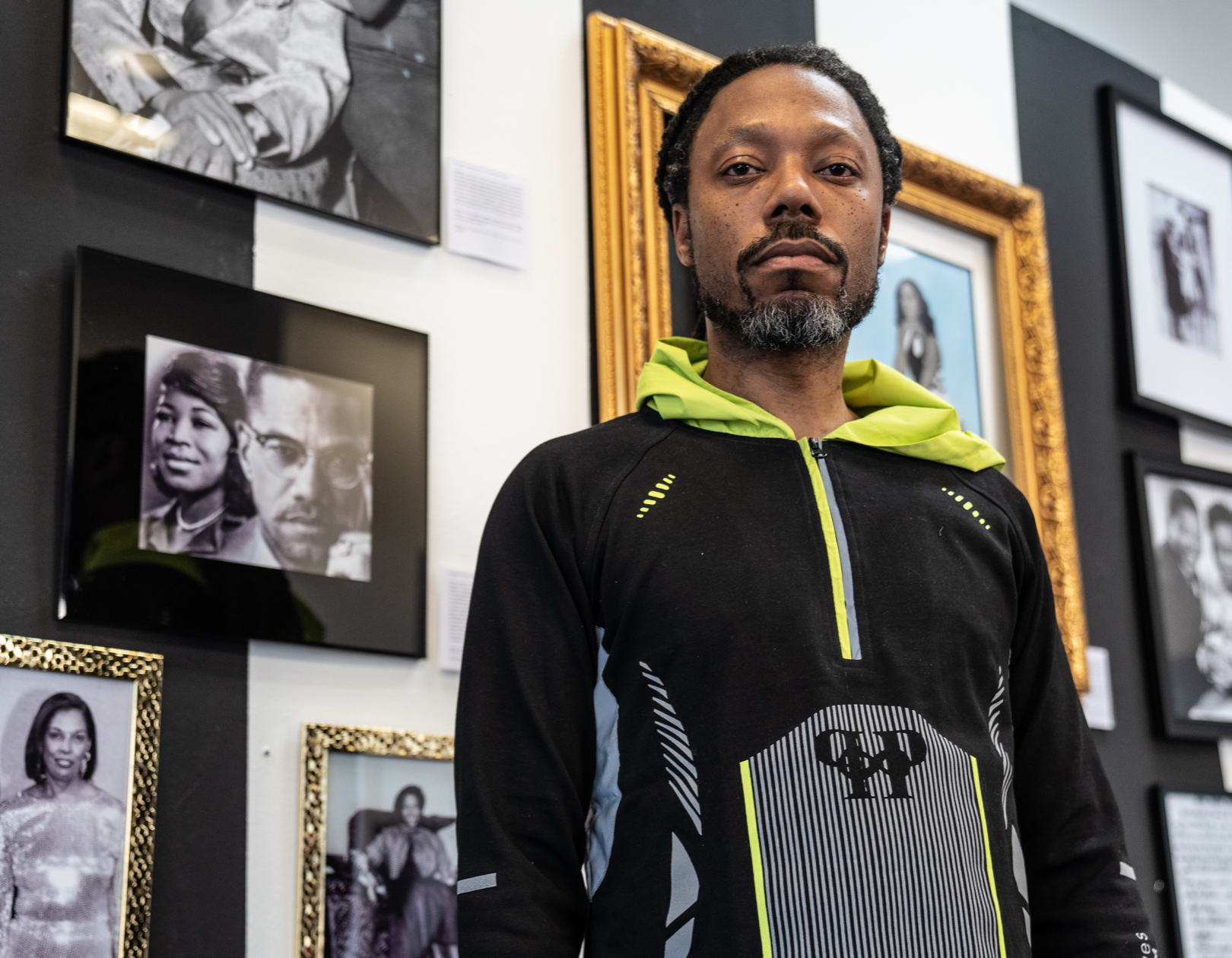
Raji Rankins – Executive Director of Sewing Opportunity Never Ending (SONE)
I look at Black love like strength and power, as a simple explanation. As I go deep into what I see Black love as, I would have to say that successful Black love brings about a certain type of infinite power that develops creation – creation that has the ability for abundance, and that is healthy Black love. Now, because we have an inverse of that, I always recognize that Black love that does not have that healthiness can have the inverse effect and could have a catastrophic explosion. In both of it you see greatness because we see greatness in destruction.
I have had a humbling experience with Black love. I am a relationship person. I’ve really been in relationships pretty much all my life. I recognize in each one of those scenarios, there’s a certain part of yourself that you have to be open to share to with another person. And a lot of times that comes with struggle, something that person is struggling with. That ability to sacrifice yourself for that struggle is humbling. It teaches you love, It teaches you to sacrifice, it teaches you maturity.
Why do you feel as though Black love is important, especially within our communities?
Black excellence is upon us, it’s almost in the air, you can kind of like smell it sometimes when you’re in the different cities and at the different types of events and networking. You can tell when Black excellence is around the corner. I believe that Black love is important almost as how art is important in this time of revitalization. It will help to keep our culture intact, our way of living intact, understanding of self-intact.
Do you see a lot of Black love and wards 7 and 8?
I do not smell it like how I smell Black excellence. That’s a clear distinction. However, I do see it very prevalent in its early infant stages… a beautiful Black love. You see it repeatedly. It always surprises us when it’s over. But if you notice, the surprise comes with the fact that you thought, ‘Oh, I thought ya’ll was [going to last] because you really had a true connection early on.’ I see lots of young Black love. I see lots of new, fresh love. Old, young, middle-aged, I see it.
Do I see it as sustainable, no. It’s always present in our neighborhood. I’ve been engaging with 16- and 17-year old’s in our summer fashion program that we’ve had in partnership with UDC for ten years. I’ve watched these young people as they’ve developed over time, communicated, and shown a level of love in dysfunction. I’ve recognized during over COVID the last two years, that we as a community have embraced depression and anxiety to a place where there are times where our partners are going to just rely on saying ‘It’s you that’s why I’m feeling like this.’ Being able to accept that you may be experiencing a trauma, you might be experiencing anxiety, a hormonal imbalance, takes some of the “It’s You” off the table.
What does it take to have a successful marriage?
Hard work and dedication, every day it’s work. That’s, that’s the key.
I would just say expect the hardest work that you will ever do in your life. Just expect the hardest work that you’ll ever do in your life, because they’ve always told us one thing – something that you don’t work hard for and work really hard for is not as precious as what it would be. So if at the end of the day, if you want your Black love to be the most precious thing, then ultimately expect for it to be some of the hardest work that you will ever do.
How do you feel your marriage inspires those around you?
I feel like my love ultimately empowers. The way that I give love, mainly the way that I refrain from hate. Most people around me recognize that I’m not a person who won’t share the spotlight, that won’t be a giver, because for me, ultimately power is in numbers. You know how you roll as a team, how you shine as a team. That’s what really brings power.