Colleen Grablick
After Maryland voters overwhelmingly approved the legalization of marijuana in last November’s election, possession of small amounts of adult-use recreational marijuana will be fully legalized starting on Saturday, July 1.
State lawmakers, who spent the spring racing against a tight deadline, have also succeeded in creating a regulatory framework for buying and selling recreational weed, becoming the first jurisdiction to do so in the region. (Virginia and D.C. have legalized possession, but lawmakers have not set up a market.)
Because marijuana law can be highly confusing — especially with all of the jurisdictional differences between D.C., Virginia, and Maryland — here’s what to know ahead of Saturday.
How much cannabis can I possess?
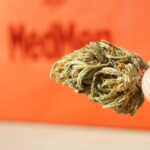
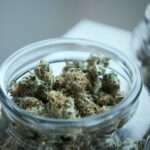
Any adult 21 and over can possess up to 1.5 ounces of cannabis, up to 12 grams of concentrated cannabis, or cannabis products containing up to 750 milligrams of delta-9-THC. Adults 21 and over can also have up to two cannabis plants, which must be grown out of public view. (Medical cannabis patients may possess four plants, up from the current two.)
Possessing more than what’s listed above will be punishable by civil or criminal penalties. For example, possessing more than 1.5 ounces but less than 2.5 ounces will be punishable by up to a $250 fine, while possessing over 2.5 ounces will be considered a criminal misdemeanor.
Can I smoke in public?
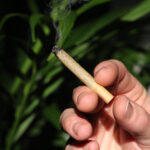
No. According to Maryland law, smoking cannabis in a public place (think street, sidewalk, park, public transit) is considered a civil offense, punishable by up to a $50 fine for first time offenders. (It’s also illegal for a driver to smoke while driving.)
Smoking in your home, a friend’s home, a neighbor’s garage, or another private space is fine, although renters may be subject to restrictions from their landlord or property manager.
The General Assembly’s bill setting up the legal recreational market also allows for the creation of 15 designated-use cafes — a growing trend in the U.S., although it’s long been a thing abroad. It’s a place where people can smoke socially, outside of their homes but avoid any penalties for public smoking. Currently, only one such cafe exists in the state — Ceylon House in Montgomery County — but it’s restricted to medical marijuana patients.
Where can I buy it?
Starting on Saturday, almost 100 dispensaries will be open for recreational sales across the state. (You can see a map from the Baltimore Sun here; expect long lines.) These dispensaries are all medical cannabis retailers that have converted their licenses for adult-use cannabis sales — an expedient solution made in the Cannabis Reform Act, a bill passed in this spring’s General Assembly session, as they worked quickly to establish a market by the time recreational cannabis became legal on July 1.
When lawmakers decided to put the question of legal weed to voters on the 2022 ballot, much remained unknown about how the market would work — or if the General Assembly would be able to pass a bill creating that market before legalization. Lawmakers wanted to avoid a “grey market,” like in D.C., where possession of cannabis is legal but the sale and taxation of it are not regulated, giving way to the gifting industry. They also wanted to avoid the failures of the medical cannabis rollout — a years-long process that, when the industry finally opened in 2017, completely excluded Black-owned businesses, despite Black residents making up nearly one-third of the population.
What if I want a license to sell marijuana?
In September, the Maryland Cannabis Administration (formerly the Maryland Medical Cannabis Commission) will open a 30-day application window specifically for “social equity applicants” to obtain a license. Under the General Assembly’s Cannabis Reform Act, this designation will be given to applicants who have lived in an area that has been disproportionately impacted by the criminalization of cannabis. These new licenses will be issued by Jan. 1.
According to an American Civil Liberties Union study that analyzed marijuana charges from 2010 to 2018, Black Maryland residents were 2.1 times more likely to be arrested for marijuana possession than white residents, despite national statistics suggesting that people of all races use marijuana at similar rates. In Prince George’s County, Black residents were 2.4 times more likely to be arrested on charges related to marijuana possession, and in Montgomery County, 3.2 times.
While state legislators attempted to rectify the inequities of the medical cannabis industry debut with a 2018 law that required the Maryland Medical Cannabis Commission to issue nine growing licenses and 13 processing licenses taking race into account, the medical industry today — which starting Saturday will also be the recreational industry — still remains largely owned by white retailers.
What if I don’t live in Maryland, but want to buy cannabis there?
Out-of-state residents can purchase cannabis in Maryland with any government-issued ID. However, under federal law, it is still illegal to transport cannabis across state lines.
Have lawmakers expunged cannabis-related convictions or arrests?
The legalization legislation passed in the 2022 referendum allows for, as of Jan. 1, 2023, anyone incarcerated for cannabis possession to petition for resentencing. If someone is not serving another sentence or has a consecutive sentence, they will be released from incarceration. Cases in which possession of cannabis was the only charge are automatically expunged.
How will sales be taxed, and what will the state do with that money?
Sales of cannabis will be taxed at 9%, and 35% of that revenue will be put into a community reinvestment fund, which will funnel dollars into communities most impacted by the war on drugs. A Cannabis Public Health Fund, a Cannabis Business Assistance Fund, and each county will receive 5% of revenues. Medical cannabis sales will be excluded from this sales tax.
Remind me, what are the cannabis possession and sale laws in D.C. and Virginia?
In D.C., adults 21 and over can possess two ounces or less of marijuana, and grow up to six marijuana plants at their residence. However, due to a congressional rider on D.C.’s budget, the District has been unable to tax or regulate recreational cannabis sales, hence the existence of the city’s gifting vendors, or retailers that sell something like a digital print that includes a “gift” of marijuana. Last year, the D.C. Council passed a bill that offers gifting vendors a chance to apply for a medical marijuana license, among other expansions to the city’s medical marijuana program.
In Virginia, adults 21 and over may possess no more than one ounce of cannabis, and grow up to four plants per household. The sale of recreational cannabis is not yet regulated in Virginia, as state lawmakers failed to pass legislation regulating the industry in the last General Assembly session.