Matt Blitz
On Wednesday, the House Oversight Committee passed legislation that would extend the city’s lease long-term and allow the District to redevelop the RFK Stadium site–and potentially lure the Commanders back to the District. The next step is a vote in the full House of Representatives.
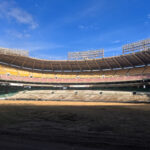
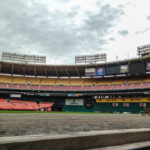
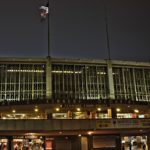
Local officials have long wanted more control of the roughly 190-acre site just east of the river near the Stadium-Armory Metro. But city officials say that even if D.C. gets long-term control of the federally owned land, there remains a years-long path before anything new is built on the site of the crumbling old stadium.
The bipartisan RFK Memorial Stadium Campus Revitalization Act was first introduced by co-sponsors Rep. James Comer (R- Kentucky) and Rep. Eleanor Holmes Norton (D – Washington, D.C.) in July. The legislation provides for a 99-year lease with fewer restrictions on how the site can be redeveloped.
Discussion during a subcommittee hearing on the bill on Tuesday and a markup session Wednesday showed wide bipartisan support for the legislation.
While the bill would not allow D.C. to buy the land outright as some city officials initially hoped, it includes two crucial provisions that hand over more authority and could potentially be the first step in bringing the Commanders back to the District.
The bill would extend D.C.’s lease with the federal government for another 99 years at no cost to the city. It would also allow the lease to be extended at a later date. The current lease expires in 2038.
The legislation also changes the terms of the lease to allow commercial and residential development on the site. The current lease restricts the use of the land to “stadium purposes,” which primarily includes recreational facilities, open spaces, and parking.
In essence, the bill would allow the District to build a new football stadium along with restaurants, retail, and housing, a mixed-use development approach many cities now take when planning new stadiums. The old stadium was built without such amenities, and is surrounded by a vast parking lot.
The House Natural Resources subcommittee held a hearing on the bill Tuesday. The Acting director of D.C.’s Department of General Services Delano Hunter testified that allowing D.C. more control over the land is necessary for transforming the site.
“Despite the District’s investments in fields and nearby trails, most of the 190-acre campus sits empty, day in and day out,” Hunter said. “Instead of connecting our community or serving as a grand entryway to the east side of our monumental core, it is mostly a desolate sea of asphalt. We can do better.”
He noted potential amenities for the site, including an Olympic-sized swimming pool, a gymnastics training facility, an indoor track, a boxing facility, a health and fitness club, retail, restaurants, housing and professional sports.
At no point did Hunter mention specifically the possibility of the Washington Commanders playing in a new stadium built on the site, but it’s a key consideration for District officials.
On Wednesday, the House Oversight Committee debated before voting on the bill. D.C. Mayor Muriel Bowser was in attendance.
A proposed amendment from Rep. Scott Perry (R-Pennsylvania) restricting the use of public funds for a new stadium sparked animated discussion.
Those opposed to the amendment, including Rep. Norton and Rep. Gerry Connolly (D-Virginia), argued that it’s not within Congress’ purview to dictate how the District spends its money, essentially an extension of the debate over D.C.’s home rule.
Bowser agreed with that stance, sending a letter to the subcommittee urging a “no” vote on the amendment, calling it a “clear attack on Home Rule.”
“An amendment offered by Rep. Perry (PA-04) to put restrictions on the District’s ability to invest local dollars in the revitalization of the RFK campus infringes on D.C.’s already limited self-governance,” Bowser wrote in the letter, which was provided to DCist/WAMU.
Bowser has been a strong proponent of bringing the Commanders back to the District, and supports a new stadium for the team.
Ultimately, the amendment failed. In a surprise vote, Rep. Jamie Raskin (D-Maryland) voted yes on Perry’s amendment; Maryland is vying to keep the Commanders, leading some to suggest it could give his home state an advantage. (Raskin denied that was the reason behind his vote.)
The timeline for when the bill could go up for a full House vote is unclear. But even if the bill were to pass both the House and the Senate, there remains a long road until anything is built on the RFK Stadium site, according to D.C. officials.
That includes the possibility of a new football stadium for the Washington Commanders.
“I think that for folks that think a new stadium would be coming under construction next year, this is a years-long glide path that we’re on,” Ward 6 Councilmember Charles Allen told WAMU/DCist. (RFK Stadium was once in Ward 6, before redistricting shifted it to Ward 7.)
Not all D.C. councilmembers support a new stadium, but all have said they’re in favor of legislation giving District long-term control of the site and more freedom to redevelop it.
On Wednesday, Ward 7 Councilmember and former mayor Vincent Gray released a statement on the vote.
“Ultimately, more details need to come into focus, including the team’s preference and, of course, the Council and mayor reaching an agreement on what is best for the District. We are one more step along in a process that is equally exciting and uncertain, but with each step an emerging picture becomes clearer.”
Allen says he supports the legislation because it gives the District and its residents more control over what happens with land within its borders.
“What [the bill] does is it puts the future of the RFK site into the District’s hands rather than federal hands,” Allen says. “So, allowing D.C. elected officials, D.C. residents to help determine what the future of that site looks like, that’s something we should all get behind.”
D.C. Council Chairman Phil Mendelson tells DCist/WAMU that he also supports the bill, particularly since the District would not have to pay to lease the land. He notes the District has desired more authority over the land for years.
“This is different than a year ago… when the Mayor was seeking that the District government would pay for the land [with] money which we don’t have,” Mendelson says. “But what the congressional legislation proposes is a 99-year lease to the city, which for purposes of investment and financing is the same as having title to the land. It makes it easier with a long-term lease like that to get financing.”
While turning the site over to the District and allowing for its redevelopment appears to have broad support, what happens after that will likely spark fierce debate among city officials. Key questions include whether there will be a new stadium–and who will pay for it.
Mendelson is not opposed to building a new football stadium outright, as long as District taxpayers don’t have to foot the bill.
“I do not support the city funding [or] contributing to the cost of a stadium,” he says. “I think that it is pretty much everybody on the council’s view, and it is my view as well, that we should see housing with some limited commercial development at that site.”
Not everyone agrees a new football stadium should be a top priority for the site. Charles Allen has repeatedly said he believes there are much better uses for the land.
“If we dedicate that much land and that much money to building a domed NFL stadium and all the parking lots that come with it for a dozen days a year, that’s a really massive missed opportunity and is not what our city really needs,” he says.
Allen says the land should be used instead for more affordable housing, park land, and better economic drivers than a football stadium only used a handful of times a year.
Ward 1 Councilmember Brianne Nadeau also believes a stadium is not the best use of the land, while At-Large Councilmember Kenyan McDuffie supports the Commanders coming back to the District.
Mayor Bowser has said the team should pay for a new stadium, with the city responsible for preparing the site.
The divide between the Mayor and some within the D.C. Council on the question of building a new stadium could prevent any development project at RFK from happening quickly.
Mendelson says he believes there’s broad support on the council for more housing and commercial development on the RFK Stadium site, but a new home for the Washington Commanders is a different game altogether.
“If we are talking about a stadium, there are some hurdles.”
As far as the next steps, Mendelson said that he does not believe the mayor would need the council’s approval to enter into a lease with the federal government. The mayor’s office has yet to confirm this. However, a sublease or development proposal would need to be brought to the council for approval before anything is built, including a stadium. And that could be a while.
“I don’t expect that to happen this year. In fact, I think given the track record for how the deputy mayor of development works, I don’t expect that even next year,” Mendelson says.
Of course, this is all predicated on the fact that the new team ownership wants to move the team back to the site where it had decades-long success. Both Virginia and Maryland are vying for the team, with the governors of both states showing up at Commanders’ training camp over the summer.
So far, team owners have given no public indication of where they are leaning.
“We are looking. We are very excited to be welcomed by all three jurisdictions,” majority owner Josh Harris said earlier this month. “We are going to engage quickly because we appreciate that the sooner we get started, the sooner the team will have a new home.”
When asked about this week’s congressional proceedings, a spokesperson said the team had no comment.