Héctor Alejandro Arzate
This story was republished by El Tiempo Latino. Puedes leer este artículo en español aquí.
When she was a kid, Bea Gallardo-Lacourt says she used to look up at the endless night sky in her home country of Chile. In some parts the altitude and dry air makes the atmosphere so clear that you can see countless stars. Gallardo-Lacourt says it’s so ideal that half of the world’s major telescopes and astronomical infrastructure are there.
So in a way, studying space is part of her heritage.
“Initially, I wanted to be an astronomer. But it seems so far away – everything that was observed – that I wanted to study something that will have more impact in society. And to me, space physics meets exactly that,” she says.
These days, Gallardo-Lacourt might have a cubicle and a desk in her office but unlike most people, her work is literally out of this world. She’s a researcher at NASA’s Goddard Space Flight Center in Greenbelt, Md. There, she studies phenomena like the Aurora Borealis – also known as the Northern Lights in our hemisphere.
It’s no surprise that the question she’s asked most frequently is when and where to see the aurora (she recommends going to Alaska in February or March, by the way). But Gallardo-Lacourt knows a lot more than the best place to see those dancing green lights on display. Her research focuses on the interactions between the Earth’s magnetic field and solar wind, called space weather.
“That’s really, really important for every aspect of life. I cannot even imagine something that will not be impacted now if we don’t understand what is going on around Earth,” says Gallardo-Lacourt.
While she does keep an eye out for things like geomagnetic storms (which can also impact spacecraft, satellites, and cause power outages down on Earth) Gallardo-Lacourt says it’s both the beauty of space and its impact here that inspires her. For generations, she says, the aurora has played a part in some Native cultures – and it is similar in what is now present-day Latin American countries.
“The sky was the same for them, right? It will tell you when to put the grain in the ground. And it’s to me – that connection with nature – that makes us a culture that is even more interesting. We are not only looking at each other, we are also looking at what is around us.”
“I think Chile is just one example. Latin America is beautiful. The amount of nature and the contact with nature that the cultures have is very unique,” she continues.
Gallardo-Lacourt is far from the only Latina doing the work at Goddard, which is one of NASA’s largest complexes – measuring at about 1,200 acres and housing 10,000 workers on any given day. It’s where much of the communication and testing gets done for technology like the James Webb Space Telescope and the upcoming Nancy Grace Roman Space telescope.
It’s also where some NASA scientists are studying the effects of climate change on the biology of the Earth’s oceans, which might seem unlikely given the agency’s iconic reputation for all things space. But if you ask Dr. Carlos E. Del Castillo, he’ll tell you that the opposite is true – and he definitely knows a thing or two about water.
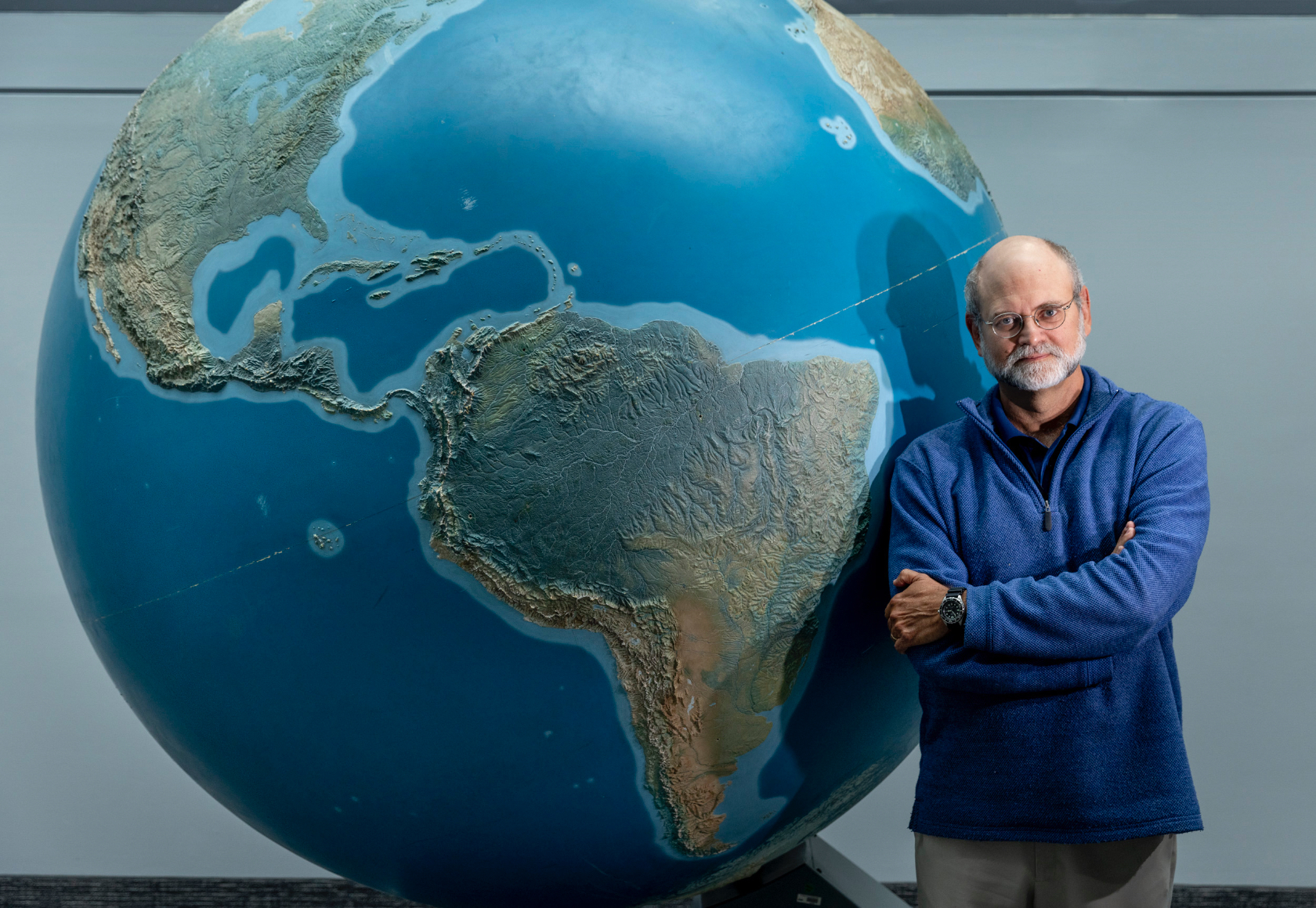
Born in Puerto Rico, Del Castillo says he learned how to walk on the beach and even had a small sailing boat before he had a car. His “favorite” great uncle was a merchant marine captain and his first date with the woman who he would later marry was to rescue a boat that he had left in the mangroves to save from a hurricane.
He’s an avid fisherman who keeps a diver’s watch to tell time and if you walk into his office, you’ll find his walls filled with pictures of his daughter sailing boats or himself holding what he calls a “big ugly catfish” that he caught in the Mississippi River before promptly releasing it. And of course, his computer’s screensaver is blue with water.
“I also like science. So you combine the scientific interest with my love of the ocean, then it was inevitable I think. What choice did I have?” jokes Del Castillo. “So I became an oceanographer.”
The chief of the Ocean Ecology Laboratory, he says the Earth is a lot like a big organism. In the same way that humans have skin, lungs, and a heart, he says our planet has the atmosphere, cryosphere, and solid land, which all interact with each other.
“To really see how the planet works, we have to look at the whole thing at the same time. And the best place to do that is from the very advantageous perspective of space,” says Del Castillo.
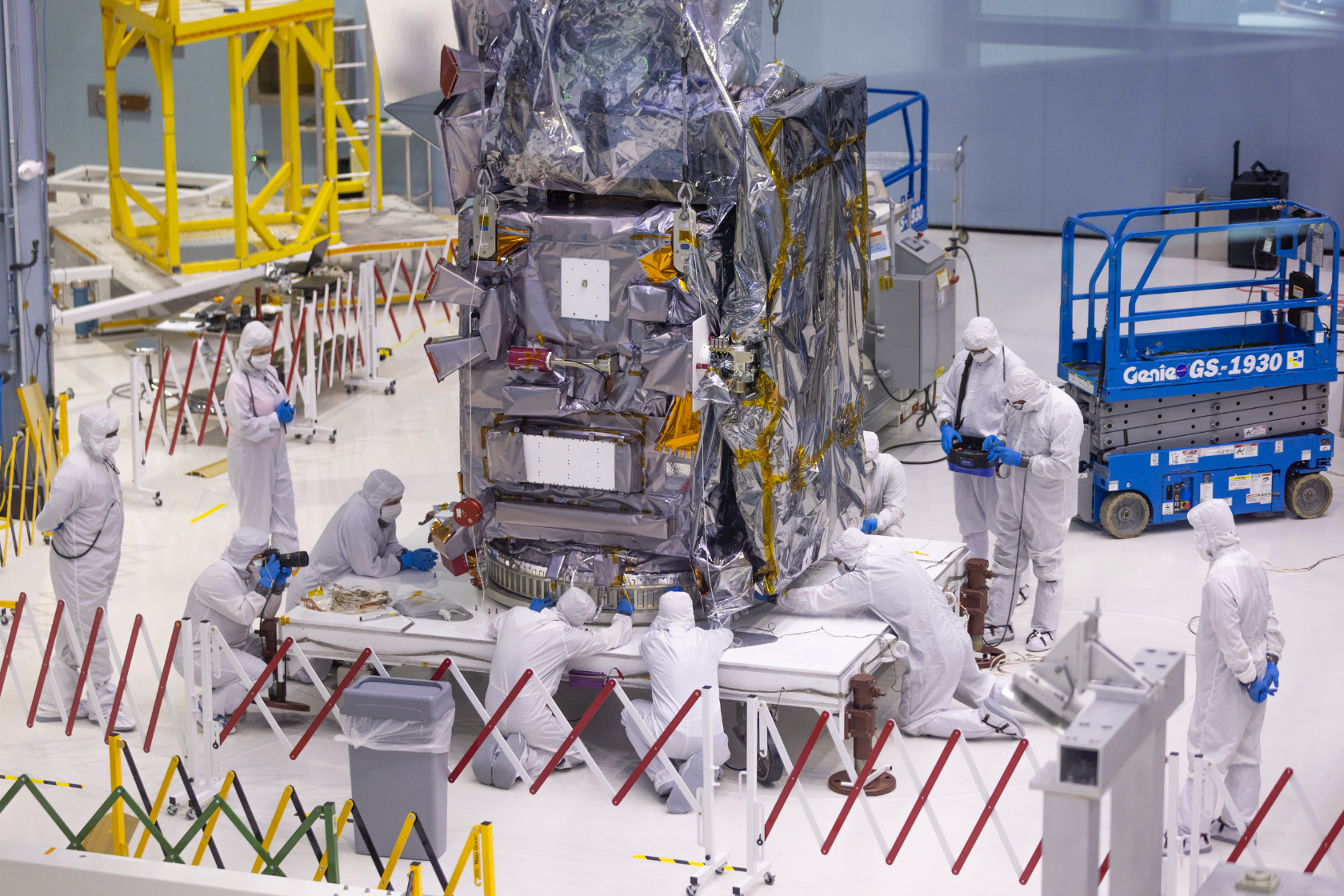
While Del Castillo and others have been using satellites to look at the color of the ocean for decades, a new satellite will soon be launching that will be able to see the full rainbow spectrum. It’s called the Plankton, Aerosol, Cloud, ocean Ecosystem (PACE) satellite and NASA plans to send it up in May of 2024. Using the measurements taken from the global ocean color, the satellite will provide extended data on clouds and aerosols. That data, says Del Castillo, can help scientists better understand the effects of climate change.
“So that’s one example of the things that we want to explore. And we will be able to explore much better with the PACE mission. And as it usually happens, we get way, way more from our satellites than what we expected originally,” he continues.
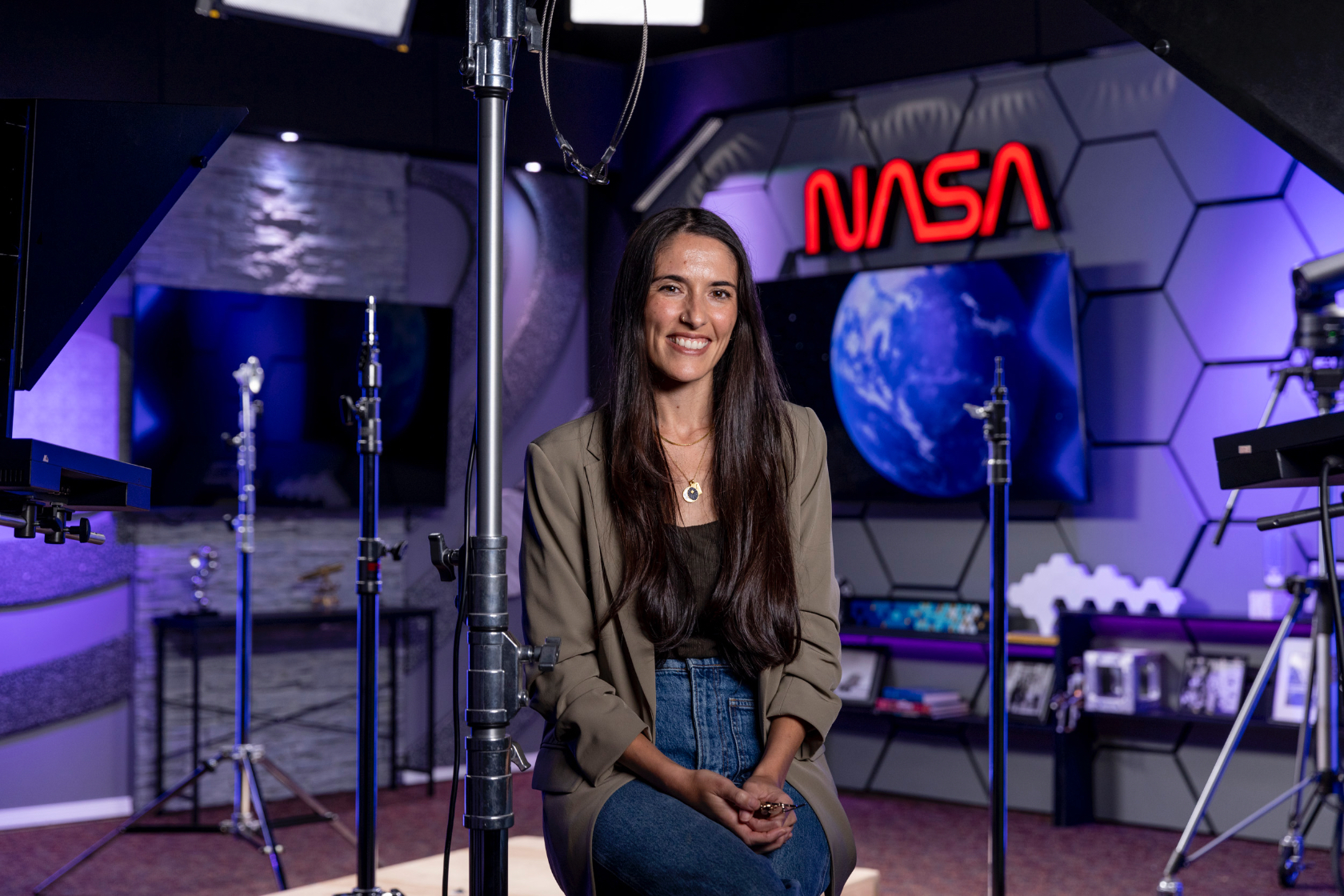
Del Castillo says it’s a privilege to be able to do the work he does at NASA, which he calls the premier research and development agency on the planet. And he’s glad to not just represent his heritage from Puerto Rico but to also do his part in making the world a better place for his daughter and future generations.
“I’m very proud of representing my folks – my fellow Borincanos,” says Del Castillo.
Noelia González, a senior science writer at NASA and the editor for its Spanish website, Ciencia, says that kind of representation is worth sharing with the world. She produces and hosts NASA’s first Spanish podcast, Universo curioso de la NASA, which recently began a five-episode season that focuses on some of the agency’s major missions.
“What I love the most is talking to these people,” says González. “These scientists and engineers that have an accent that I recognize.”
As someone who was born in Uruguay, González says it’s important to highlight that many Latinos are making crucial contributions to the agency’s work as scientists, engineers, astronauts, and much more.
One story that she’s particularly proud to share is that of Frank Rubio, an astronaut who just broke the record for spending 371 days on the International Space Station. González interviewed Rubio, who has roots from El Salvador, before he returned to Earth on Sept. 27. She says she got to speak with him in Spanish and that it was exciting learning about his experiences in space.
“I still can’t believe that that happened,” she says.
While you won’t find the popular astronaut program of Johnson Space Center in Houston, there are countless happenings at Goddard that keep NASA running.
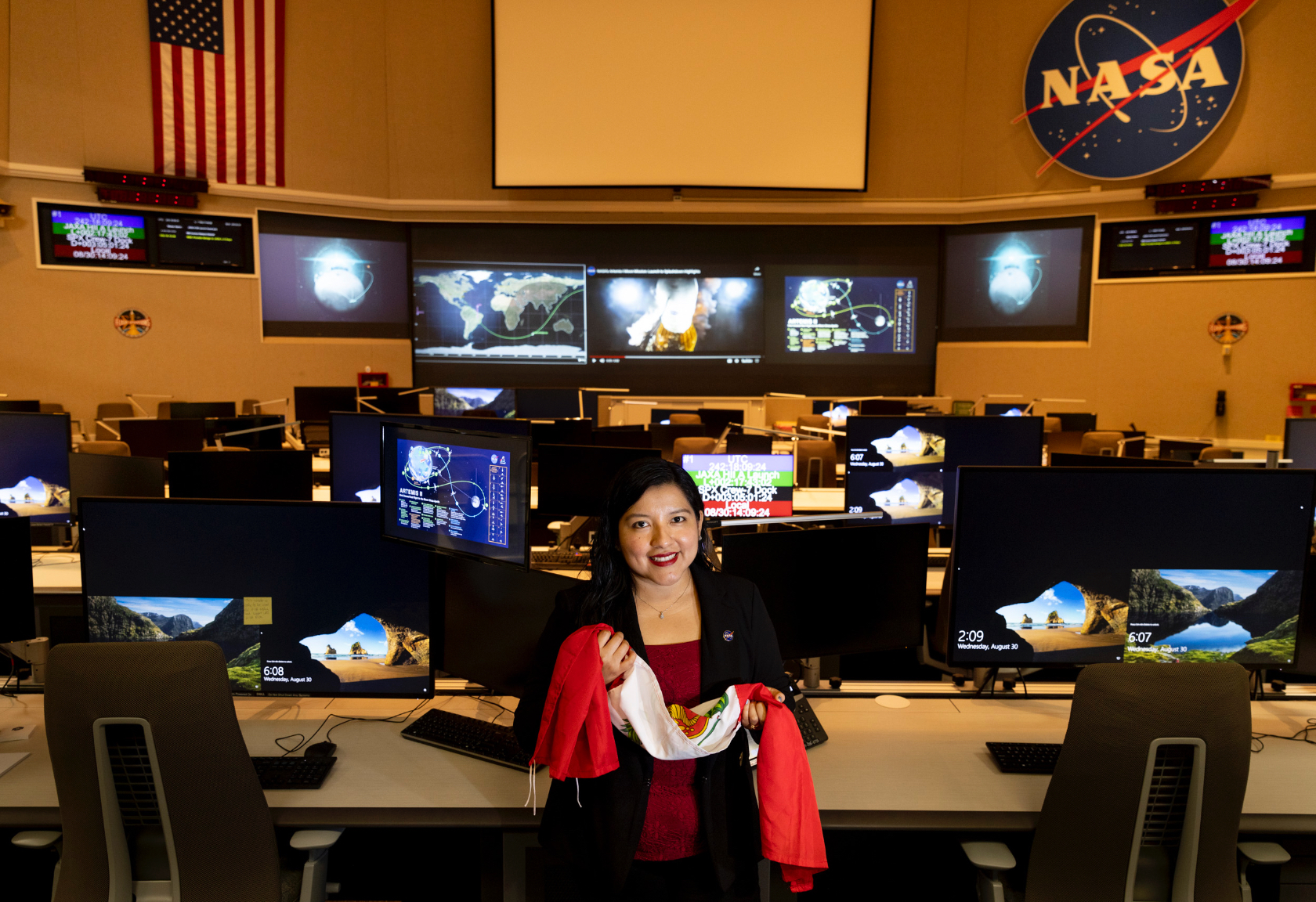
“There is a very famous quote that we have here. ‘The astronaut’s heartbeat goes through NASA’s Goddard first,’” says Rosa Avalos-Warren, who manages human space flight for NASA’s new program to the Moon: Artemis.
Last year, she was on console to provide communication and navigation services for teams across the country during the first mission – a test flight into lunar orbit before returning to Earth. And Avalos-Warren says that’s only the beginning.
“Artemis II will also lead the path for Artemis III, which is a mission that will take the first woman and the first person of color to the Moon,” she says.
That’s a big deal for Avalos-Warren, who was born in Peru and always had an interest in math and science. When she was younger, she watched the tragedy of the space shuttle Columbia and the loss of its seven astronauts in 2003. It changed her trajectory and she went on to become the first in her family to receive a college degree.
“That inspired me to work for NASA and to prevent a mishap [of] a similar magnitude from happening in the future,” says Avalos-Warren.
Like many of her colleagues, she says it’s an honor to work at NASA. Outside of missions, Avalos-Warren dedicates some of her time to giving presentations about her work to younger Latinos from all over the world. And she says that hopefully, the future generations can be inspired to make the next giant leap.
“If I made it this far, my expectation is for them to go farther,” she says.