Elliot C. Williams


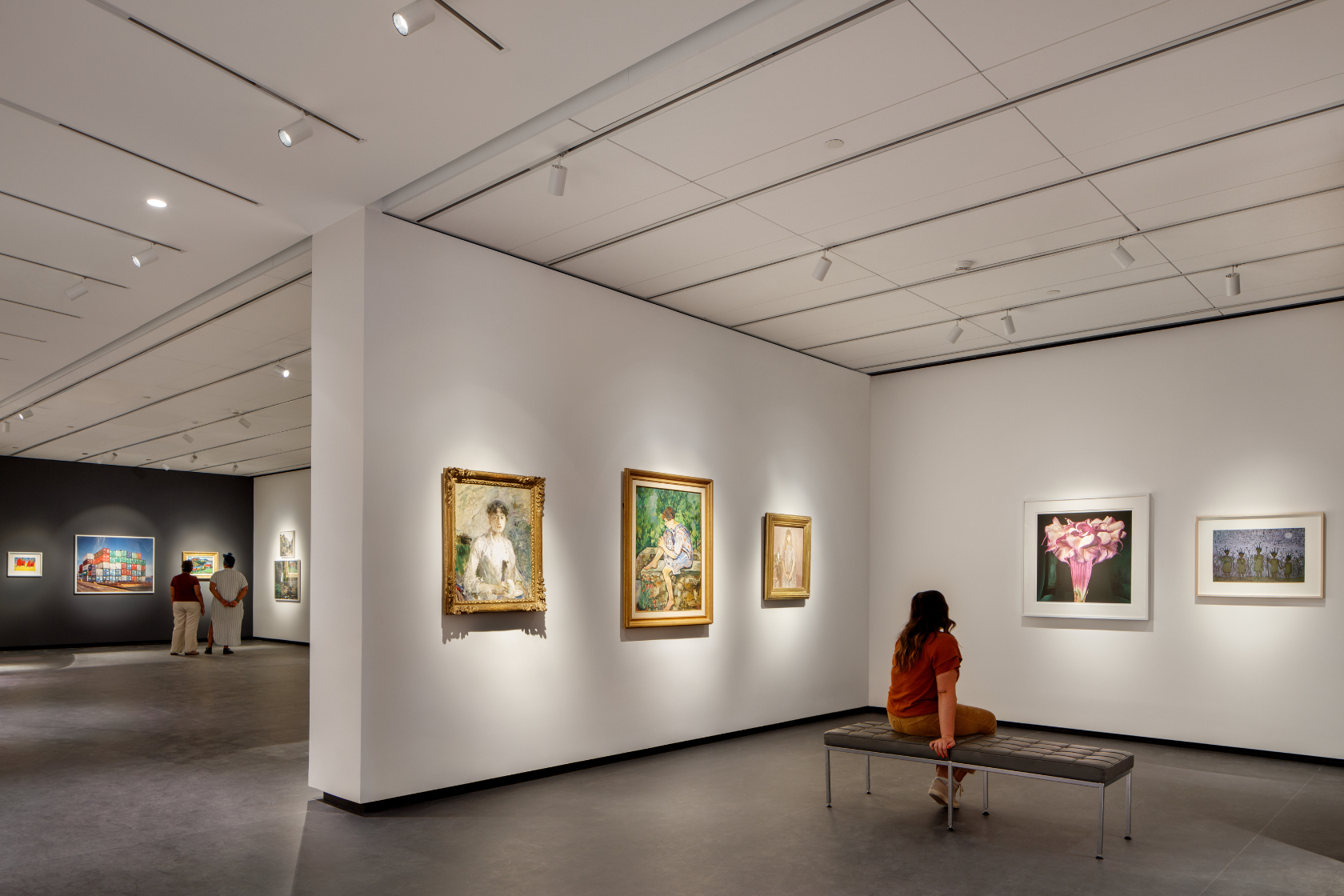



When the National Museum of Women in the Arts reopens after a two-year closure on Saturday, Oct. 21, it will do so with a weekend full of programming and an inaugural exhibit featuring 13 contemporary artists whose work takes up lots of space — and that’s the point.
The renovation the museum has undergone has resulted in 15% more gallery space, which is underscored by the hallmark exhibition, “The Sky’s the Limit,” located in 6,500 square feet on the second floor. The spacious gallery allows for a more seamless transition between themed sections and minimizes congestion. The project, designed by Baltimore-based architectural firm Sandra Vicchio & Associates, allows for large pieces to be hung from the ceiling, such as Beatriz Milhazes’ stainless steel and aluminum sculpture, Marola, which weighs a whopping 450 pounds.
“[Artworks] hang from the ceiling, they come out from the wall … Mostly they take up space, a lot of space,” senior curator Ginny Treanor tells DCist/WAMU. “So, it’s really about celebrating women and non-binary artists who are working big, working in massive scale, and really making their presence known.”
This focus is apparent the minute guests walk into the museum: The entrance is furnished with Joana Vasconcelos’ blood-red chandelier made of glass, wool, and sequins, which is making its public debut.
In fact, roughly 40% of the works are on display for the first time ever, including 70 pieces from the museum’s 6,000-piece collection that spans the past five centuries — such as a 1937 self-portrait by Frida Kahlo that adorns a wall in the updated mezzanine.
It’s all part of the museum’s founding mission to champion women in the arts.
“We are called to a dual purpose: to exhibit works by women artists and to advocate in the larger field,” says the museum’s director, Susan Fisher Sterling. “I like to say we are both a museum and a megaphone.”
Yet the institution exists in a time much different from its 1987 opening in a former Masonic temple building on New York Avenue. Its late founder, Washington socialite and art collector Wilhelmina Holladay, was a boundary pusher, but far from a revolutionary, as The New York Times recently pointed out. “Usually she gave us full reign to do what we wanted to do — until she saw the show,” Judy L. Larson, the museum’s director from 2002 to 2007, told the Times. “Then it would be like, how did this happen?”
Holladay’s daughter-in-law, Winton S. Holladay, is now carrying the mantle as the museum’s board chair. At a media preview Tuesday, she disavowed the notion that a museum dedicated to women artists is no longer needed.
“Despite lip service that everything is changing, gender inequity in the arts continues, making our advocacy more relevant than ever,” she says. “We are moving forward with a bold vision and big plans.”
The museum’s leaders say they will place an increased emphasis on diversity — in all its meanings — in their programs and exhibits going forward.
“While the discourse has progressed since the museum was founded, gender and intersectional racial inequality remain pervasive in the art world,” says Fisher Sterling. “This disparity is represented in gallery representation, in museum collections, in exhibitions, and in the art market.”
The nearly 40-year-old museum will aim to remedy these social ills through its curation and use of the renewed space.

Also among those plans are additional funds for the project: NMWA surpassed its initial $67.5 million fundraising goal and has already brought in $69 million to cover the construction and programming costs. The museum leaders now aim to raise a bit more and hit $70 million in total for the capital campaign, they said Tuesday.
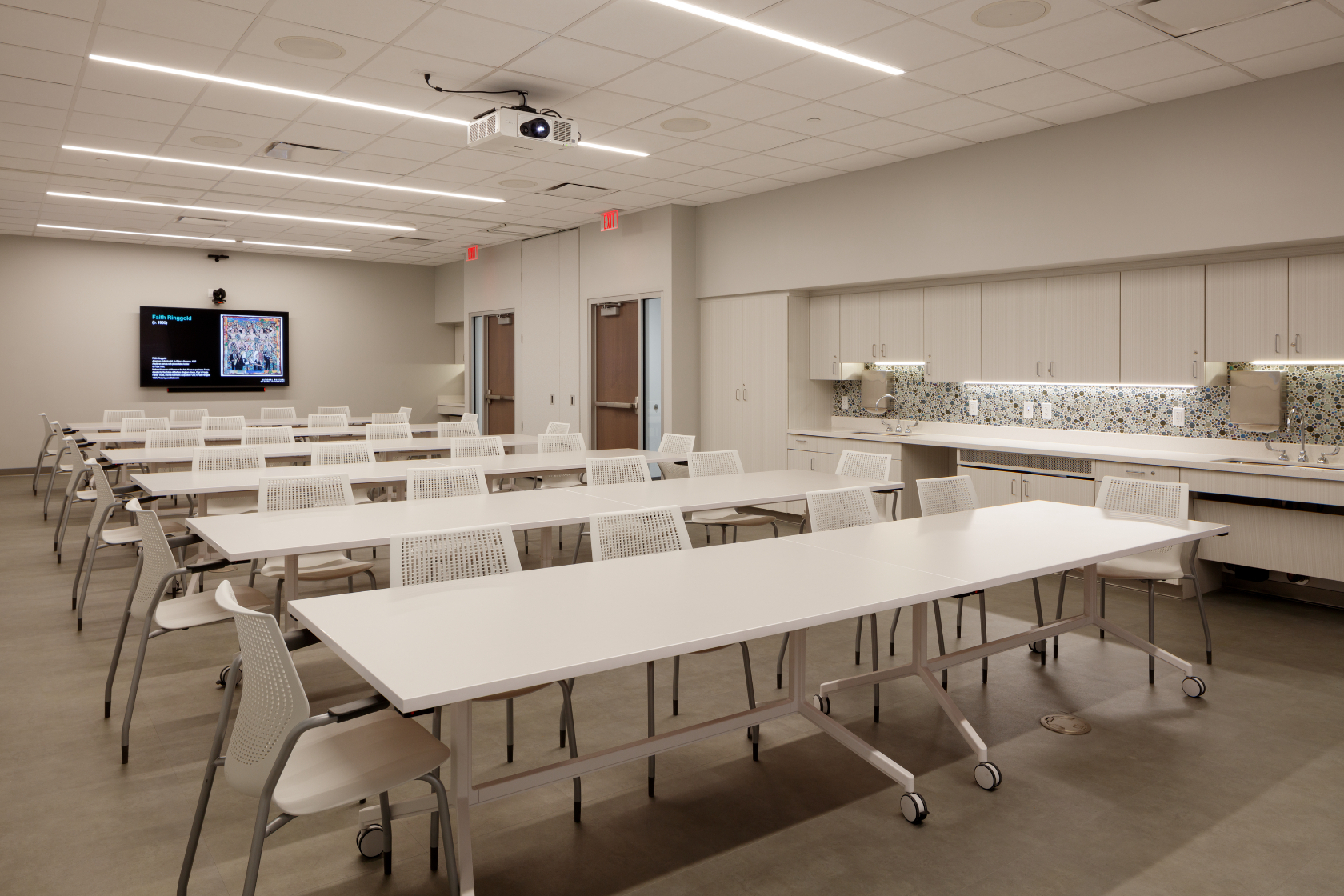
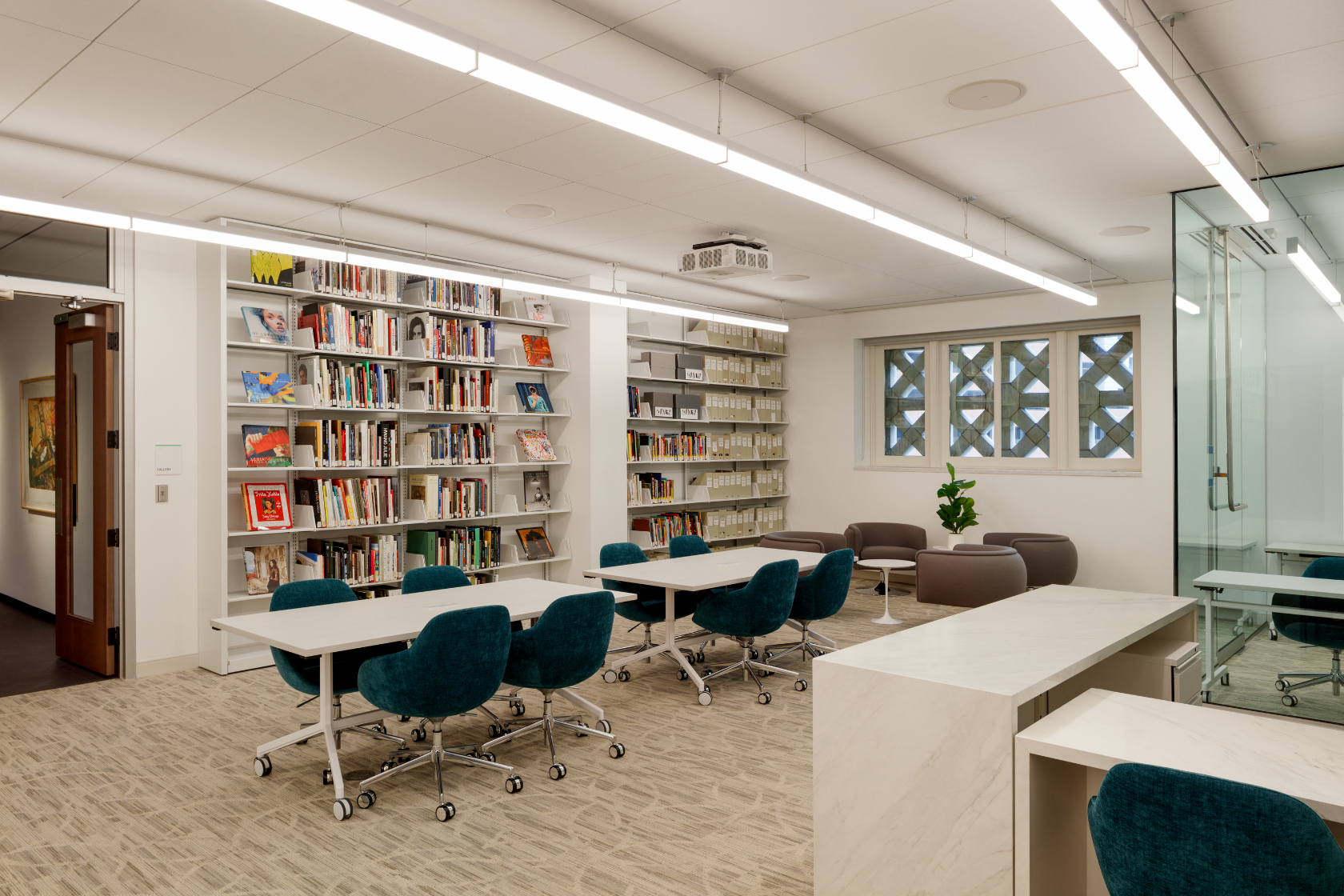
Beyond the renovations to the building’s roof and moulding, increased accessibility, and a renovated 182-seat performance hall, the museum has added what it’s calling a Learning Commons. The new area features a research library to house NMWA’s 11,000-book collection, and an art studio for public learning programs, school trips, and more.
The museum will offer free admission to guests on opening weekend; and while the free passes are all booked, there will be limited walk-up admission starting at noon. (Though, from experience, free museum days at NMWA can be packed — locals may want to wait it out for a less chaotic weekend.)
The Oct. 21-22 program includes button-making in the studio, photo booths, typewriter poetry, cocktails and mocktails tastings, temporary tattoos, and — get this — a permanent tattoo station by D.C. artist Bibi Abelle, who will, for $150, will create flash tattoos inspired by the museum’s collection.
In addition to the featured “Sky’s the Limit” exhibit, the NMWA is also presenting temporary exhibits focused on the art of two women. One showcases works by trailblazing Chinese-born American artist Hung Liu, and the other presents 25 prints by 17th-century French engraver Antoinette Bouzonnet-Stella. The museum also tapped nine book artists, some based in the D.C. area, to create works inspired by NMWA’s mission for “Holding Space,” located outside the research library on the fourth floor. And on the first floor, the museum will screen “In Focus,” a series of three-minute films profiling artists who’ve contributed to the museum’s greater collection.
“The Sky’s the Limit” exhibition is on view Oct. 21-Feb. 25, 2024. The National Museum of Women in the Arts is located at 1250 New York Ave. NW; Admission is $16 for adults, $13 for D.C. residents and visitors ages 70 and over, and FREE for visitors 21 and under and for those with disabilities. Admission is FREE the first Sunday and second Wednesday of each month.