 Jenny Gathright
This story was completed with support from SpotlightDC.
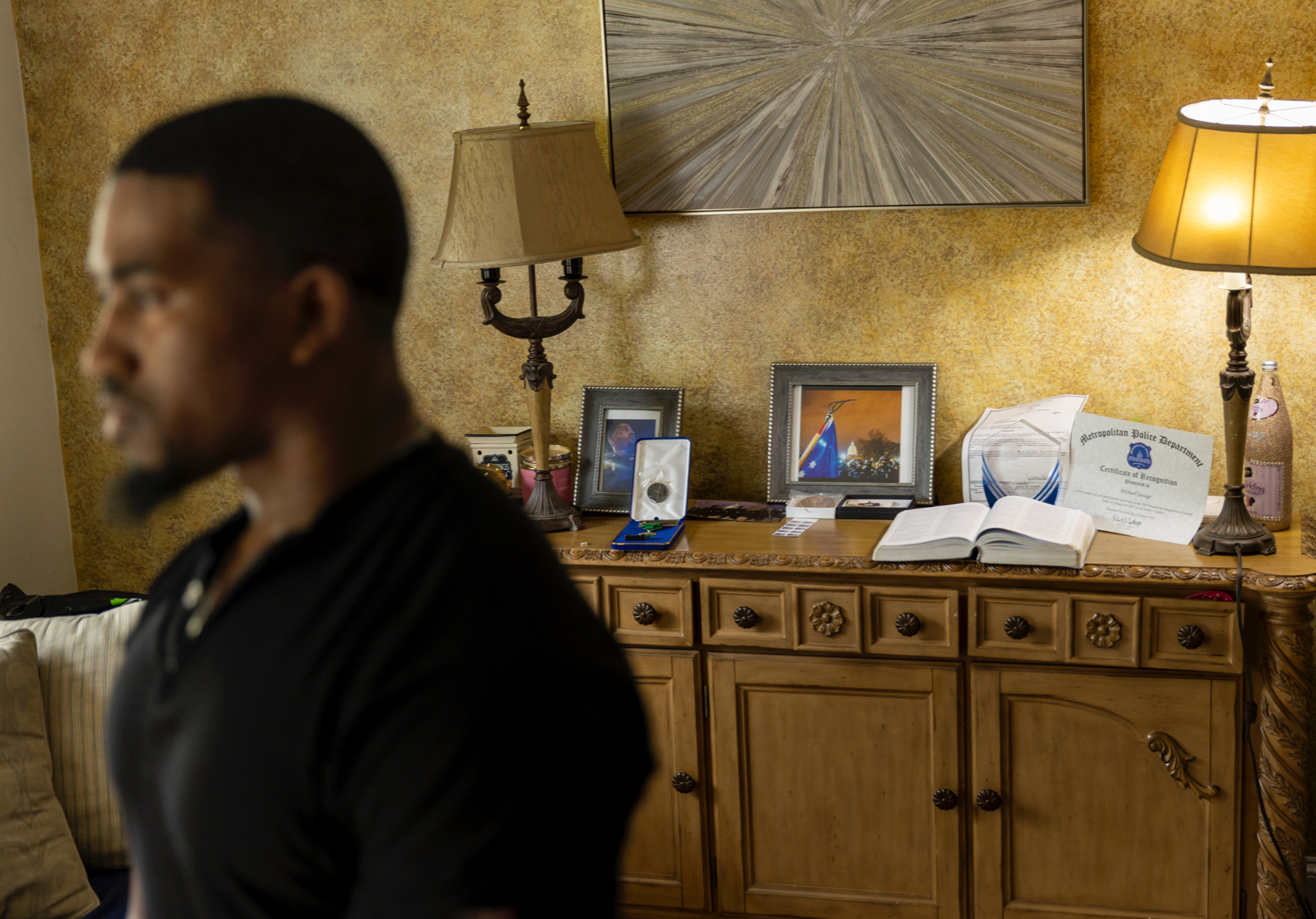
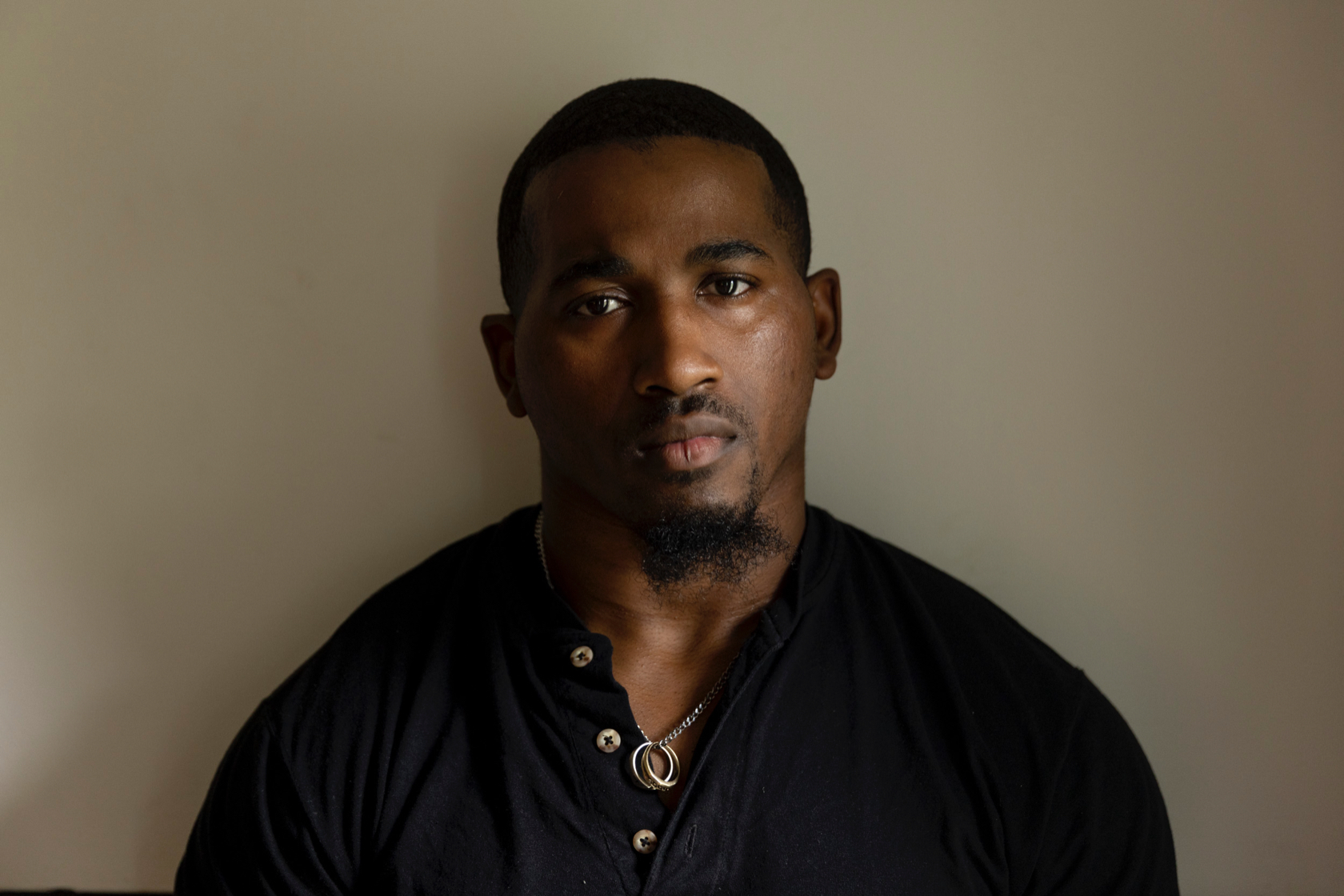
When you walk into Mike Savage’s house in Waldorf, Maryland, one of the first things you see is a table full of medals, awards, and photos — a shrine to his career as a police officer.
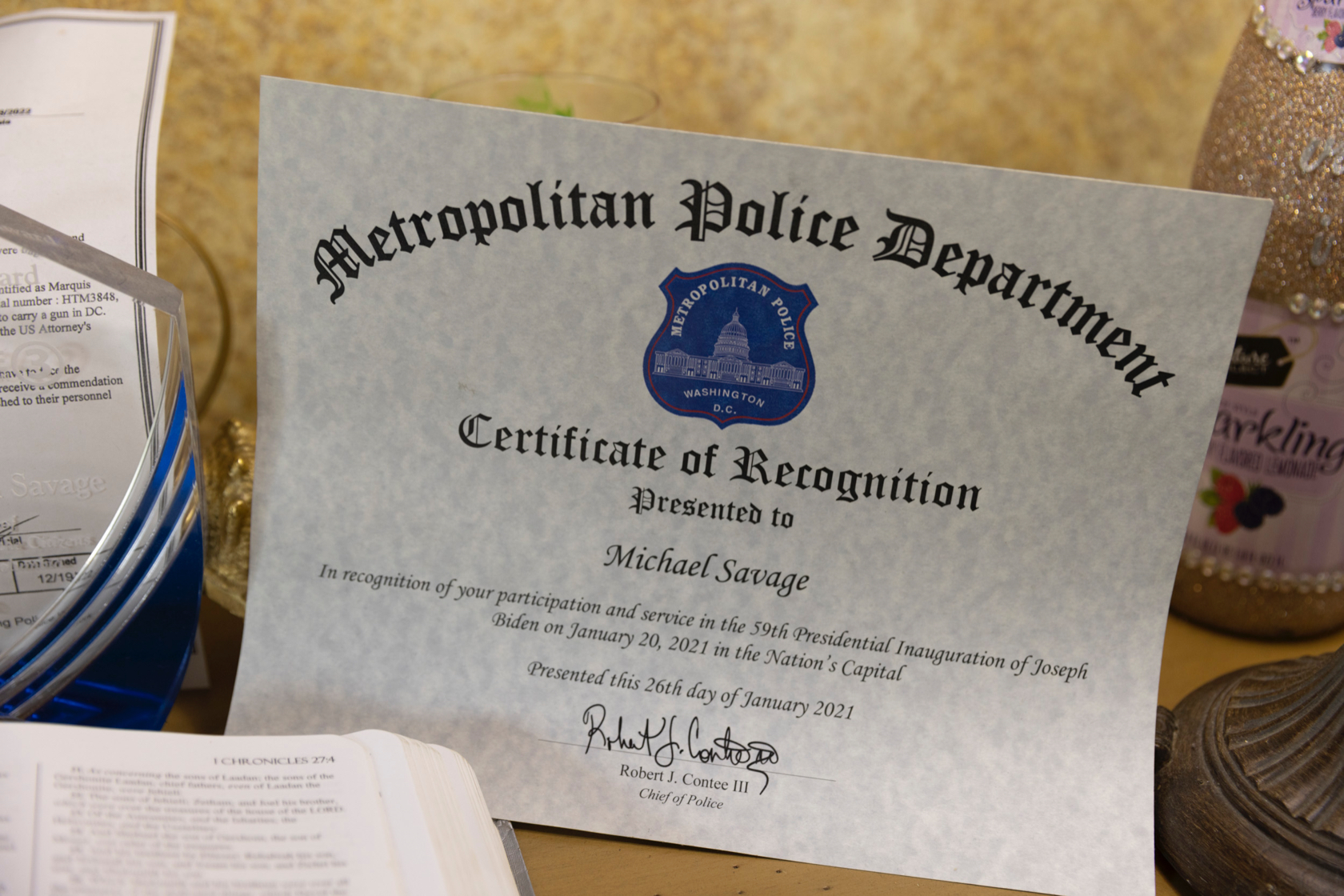
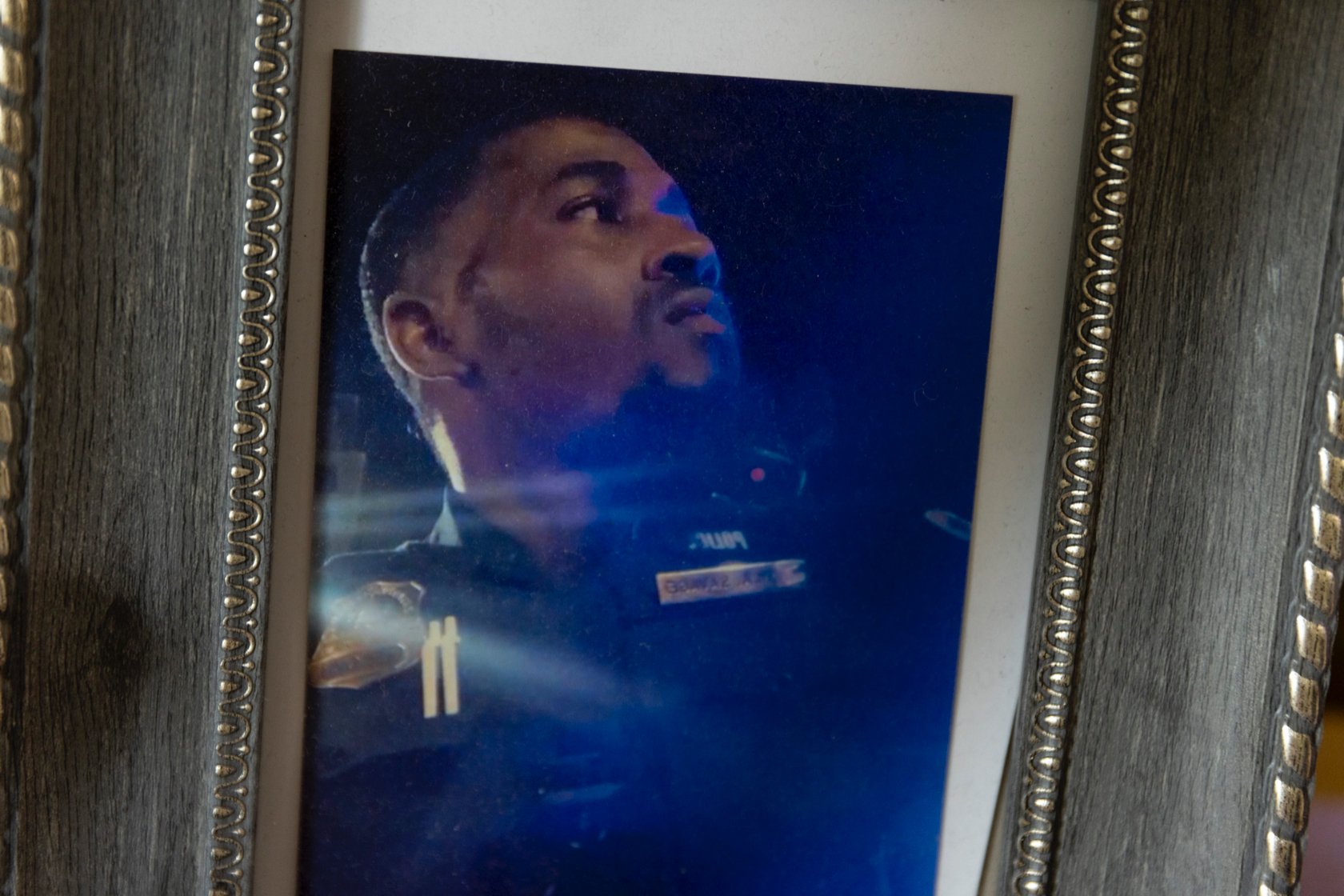
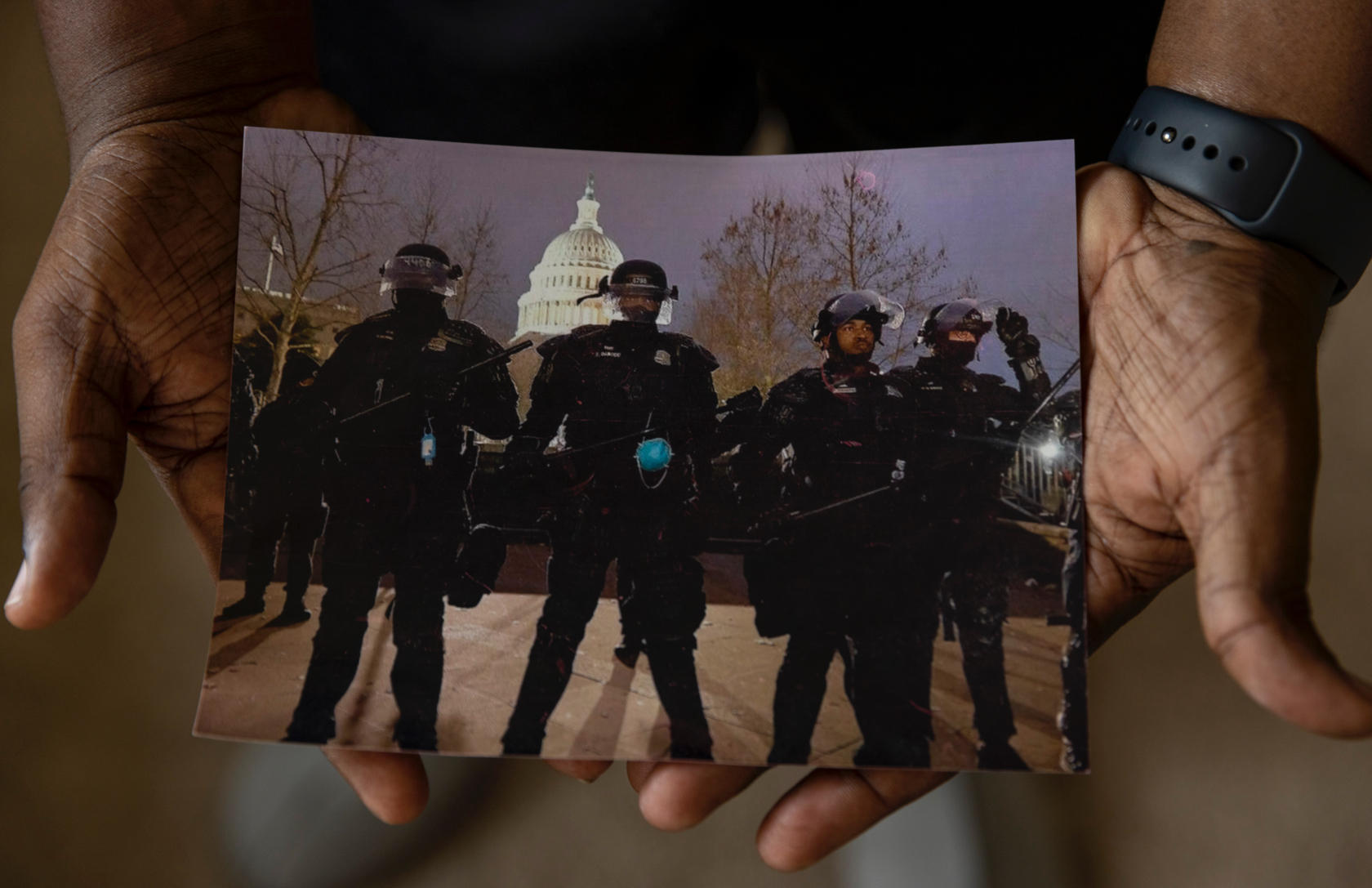
Next to a Bible sits a challenge coin he received from the Metropolitan Police Department for responding to the U.S. Capitol during the January 6 insurrection, framed photos from that day resting nearby. There’s a plaque he received for rescuing a man who tried to jump out of a window, and another commendation from the department for safely arresting someone with an illegal gun in a bar.
“I put these up for myself as a reminder, to kind of give myself the boost that I wasn’t getting from the department,” Savage told DCist/WAMU one afternoon over the summer.
The shrine once served an important purpose for Savage — sustaining his spirits at a time when he said going into work made him feel like “the sky was falling” every day. But ultimately, the collection of medals and awards was not enough to keep Savage in his job. In April, the 29-year-old resigned from MPD after just five years on the force.
Savage joined hundreds of others at MPD in deciding it was time to move on: The department has seen a net loss of about 500 officers since fiscal year 2020, and it has lost more officers than it could recruit each year since 2018.
At the same time, homicides in the city have surged to levels not seen since the ‘90s, assaults have increased, and other categories of crime like carjacking and auto theft have risen too.
This uptick in crime has spurred questions over whether the steady loss of police officers is partially to blame (though the number of officers has not historically correlated with District crime levels).
It’s also set the stage for a political fight between the police union and D.C. lawmakers — a fraught debate that officers like Savage say fails to capture why officers are truly leaving their jobs.
“If you ask me, all the people I know that left, they all left for the same reasons — for their mental state,” Savage said. “To protect themselves for their family … so that you don’t come home one day so disgruntled, so beat down, so beat up that you’re unrecognizable.”


Departments across the country are struggling to recruit and retain officers in the aftermath of increased calls for police accountability in the wake of the murder of George Floyd. Labor experts also say first-responder and frontline jobs have become generally less attractive since the start of the COVID-19 pandemic.
But local police union officials have linked MPD’s retention problem to unique D.C. political dynamics. In testimony before Congress in March, D.C. police union chair Greggory Pemberton said recent police reform bills passed by the D.C. Council, as well as “anti-police” attitudes among local lawmakers, were directly responsible for the department’s attrition problem.
“Without delving into the granular details of how terrible these bills are, or how blatantly awful the rhetoric used by the council was, I can assure the members of this Committee that the direct result was a mass exodus of police officers from the department,” Pemberton said.
(In an interview with DCist/WAMU, Pemberton stood behind his public statements, and added that the council’s reforms don’t just create a hostile political environment — some, like changes to the disciplinary process, exacerbate distrust between officers and managers at MPD).
Mayor Muriel Bowser, too, has suggested that recent police reform policies are pushing cops out of the department.
“We have to have a policy environment that allows us to recruit and retain officers and not lose our officers to surrounding jurisdictions because our policy environment makes them scared to do their job,” Bowser said Monday at a press conference announcing new public safety legislation that would roll back some recent reforms.
For its part, MPD contends that the department is losing officers for a number of reasons, including an ongoing retirement bubble. Department spokesperson Paris Lewbel also said city policies need to “ensure police officers can carry out their duties and responsibilities.”
But Savage’s experience — and that of more than a dozen other current and former officers who spoke with DCist/WAMU for this story – departs from the prevailing public narrative about attrition at MPD in recent years. While several officers said police reform legislation and increased scrutiny on law enforcement pushed them away from the department, many ultimately left because they said they were profoundly overworked and felt disrespected by MPD managers.
Savage said he felt “mentally and emotionally burned out” when he worked for MPD — but not from the actual work of policing the District. Instead, he said, his burnout was the result of a work environment that treated him like a workhorse and failed to respect his physical and emotional limits. He described working an unreasonable amount of mandatory overtime (including on one occasion being forced to work nearly a full day straight), and facing what he believed was sexual harassment and other verbal abuse from supervisors.
Other former officers said MPD can be an unbearable workplace, citing constant overwork and mismanagement of forced overtime, among other problems.
In response to questions about these officers’ accounts, Lewbel said MPD is “engaged in many streams of work to improve the agency.” The department has started compensating officers for abrupt schedule changes, as stipulated in its newest labor contract, and hopes to minimize these schedule changes by recruiting more officers, he said. MPD is in the middle of a large recruiting push, even offering a $25,000 signing bonus.
Lewbel added the department was unaware of the specific claims of mistreatment officers shared for this story, and declined to comment further on those claims.
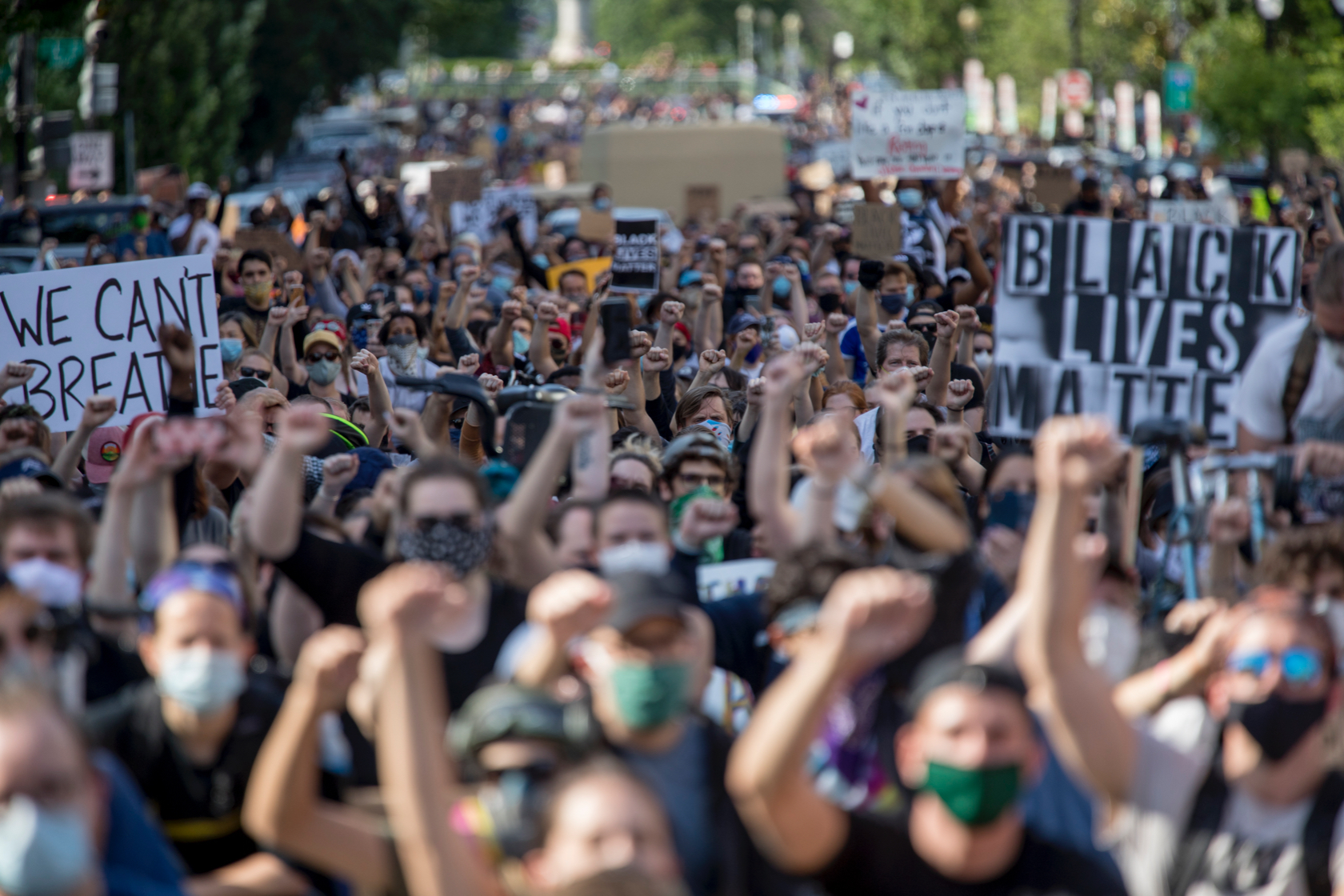
During the spring and summer of 2020, outrage over the murder of George Floyd led to nationwide unrest — and near-nightly protests in the District. Residents pressured D.C. lawmakers to curb what they saw as rampant and unchecked police power, and the D.C. Council responded by passing a slate of temporary police reforms (which they later made permanent).
Among other provisions, the new laws required the department to release body camera footage quickly in the aftermath of police shootings, prohibited the use of tear gas to disperse protesters, and outlawed neck restraints.
These changes, though moderate in the eyes of local activists, nonetheless struck at officers’ morale, several told DCist/WAMU.
“You were just seeing so much [negativity] toward law enforcement, so much negative toward MPD, so much negative toward being a police officer in general that it just wasn’t fun to be a police officer anymore,” said Scott Earhardt, a former officer with MPD’s special events division who retired last year.
But this period of police reform coincided with a surge in mandatory overtime — one that both current and former officers said also played a significant role in the spate of officer departures.
Officers were put to work for mandatory 12-hour shifts for an influx of large events from 2020-2022, including a sustained summer of protests against police violence, a number of far-right gatherings that culminated in the Jan. 6 insurrection, and the infamous trucker convoy.
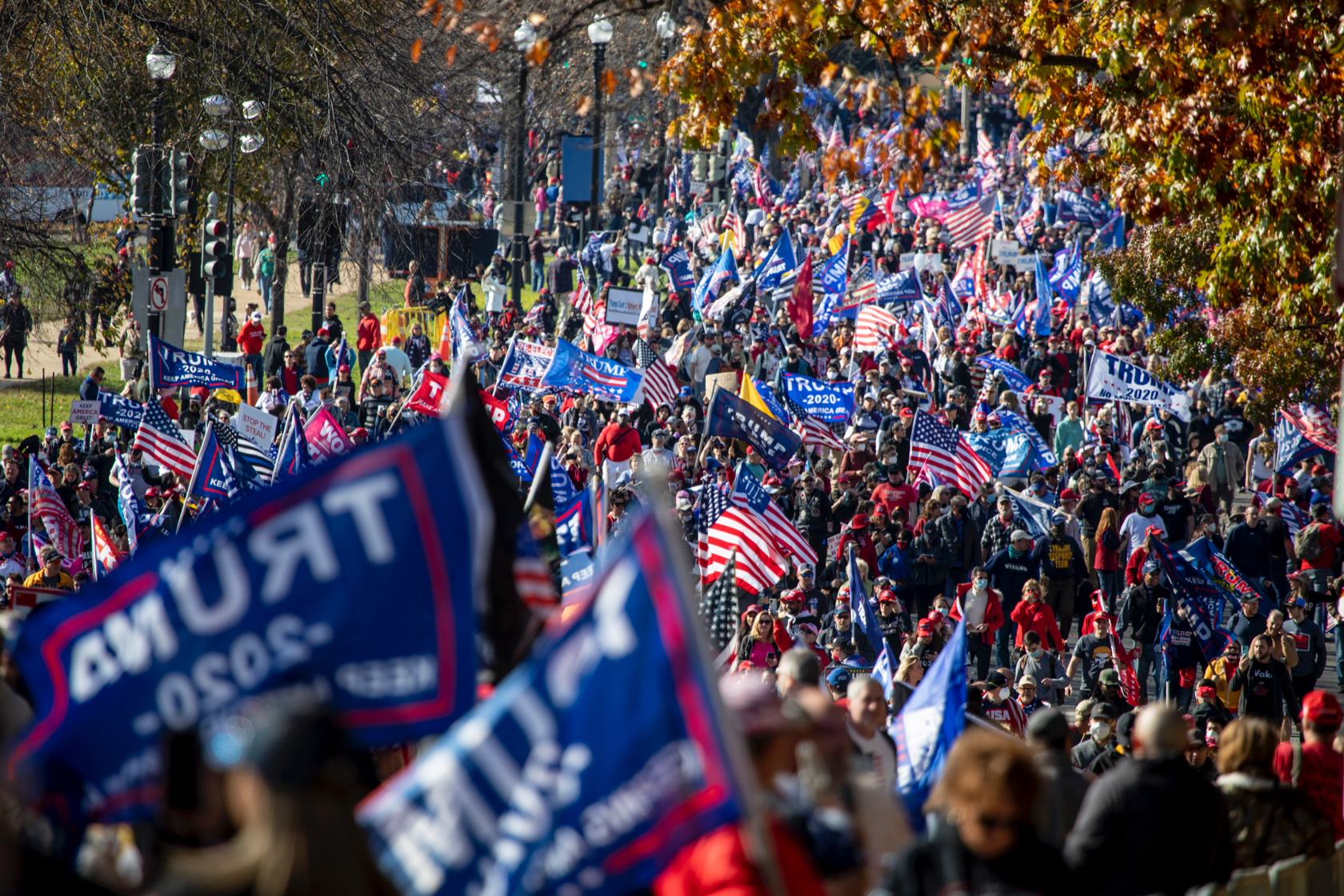
Former officers said these mandatory overtime shifts weren’t limited to the biggest events. They felt the department had become too eager to take their days off, even for smaller protests that didn’t amount to much.
“Demonstrations that back in 2015, 2016, a half a dozen police officers could handle … they wanted to show force, so they would have, you know, all the department pulled over or [an entire division] held over,” Earhardt said.
Earhardt himself began feeling burnt out and unappreciated. Multiple times during the summer of 2020, he said, managers forgot to relieve him from duty at the end of his long shifts, leaving him waiting in an office for hours.
“It made you feel like, ‘Oh, yeah, I'm really important,’” Earhardt quipped sarcastically. “I'm really ‘essential personnel’ if you forgot about me.”
In the end, increased public scrutiny of police and the consistent overwork “all played a role equally” in his decision to leave.
Lewbel, the MPD spokesperson, acknowledged that the department has overstaffed events in some cases — in part because it doesn’t ever want to be caught unprepared.
“On occasion, this may mean that we have additional staff than may be required for a particular deployment. In those cases, officers are given a secondary assignment, like supporting patrol operations,” said Lewbel, who added that the department is not aware of managers forgetting to relieve officers from shifts.
For some officers, the approach to policing the collection of truckers dubbed the “People’s Convoy” — which disrupted traffic on I-395 for weeks in February and March of last year in protest of pandemic-related restrictions — was one of the most egregious examples of this practice. Some of the protesters threatened to enter the city and wreak havoc, so the police department put officers on 12-hour shifts, many of them sitting in cars or vans to block off entrances to the city. In total, MPD amassed $11 million in overtime costs during the weeks of the convoy, according to payroll data from the city’s chief financial officer.
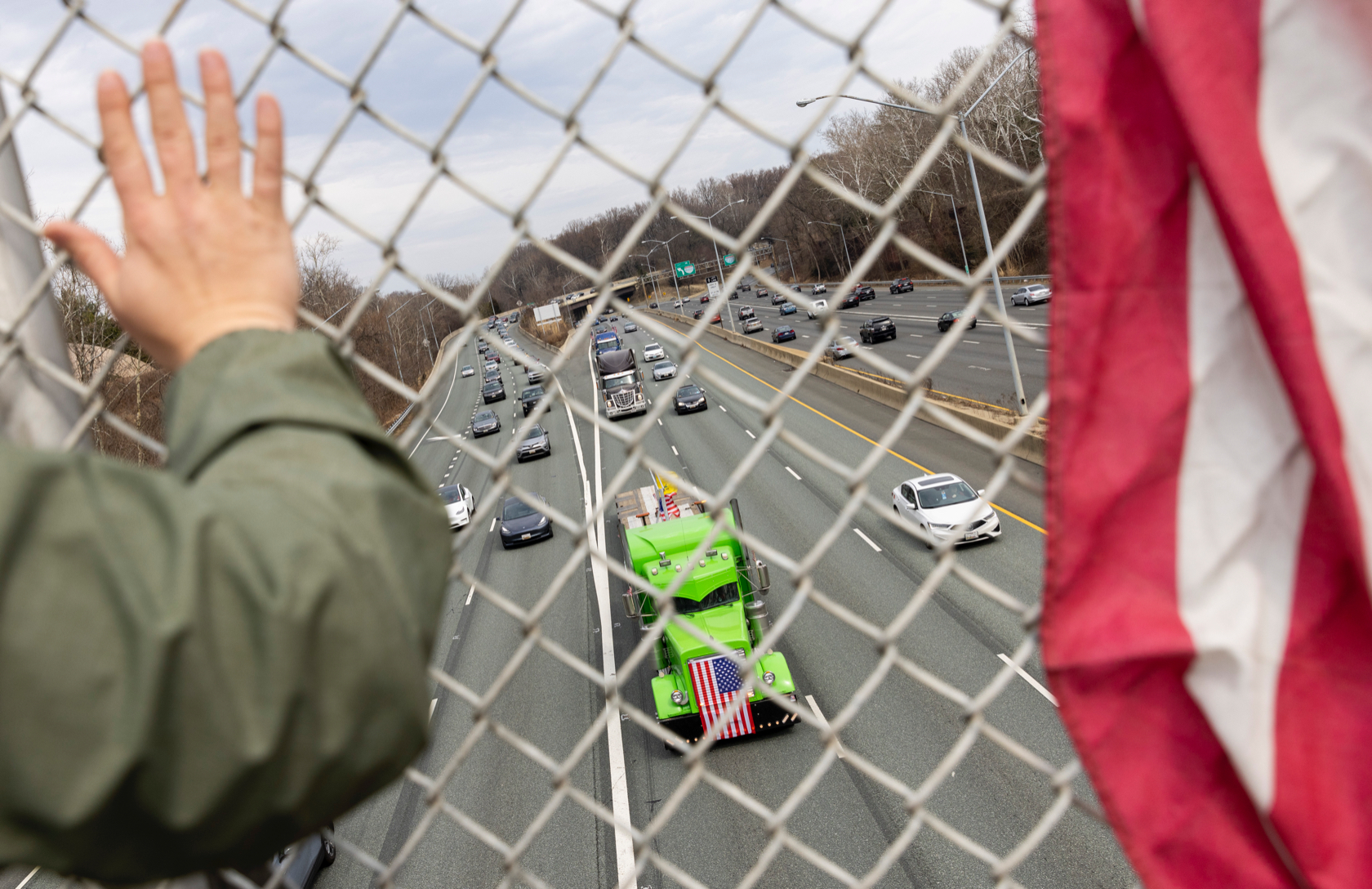
Some former employees and managers defended the staffing decisions, arguing that management often has more information than the rank-and-file about potential threats to the city.
Lewbel said that MPD’s “consistent preparation” and “fluid response” was part of the reason D.C. didn’t experience the same level of disruption from the convoy as places like Ottawa, Canada did from similar protests.
But some officers believed it was a waste of time.
“I always called it van jail,” said an early career officer who recently left the MPD to join a suburban police department. DCist/WAMU is not using his name because his current employer has not authorized him to speak to the media. “It makes you just feel kind of like some tiny cog in a broken machine that’s not working.”
The trucker convoy details weren’t limited to patrol officers. The department also siphoned detectives from their jobs, several former MPD employees told DCist/WAMU, forcing them to spend weeks on 12- to 16- hour shifts blocking freeway exits as the case files for unsolved thefts, robberies, and assaults languished on their desks.
MPD confirmed this, noting that “public safety is a balance, and we must occasionally shift resources to match the current prioritization.”
Chanel Dickerson, a former assistant chief with MPD, said the overtime was often unavoidable. She adds, however, that sitting in a van for as long as 12 hours is “really tough. We could have done a better job, maybe even rotating people out from those assignments.”

These types of mandatory overtime events have slowed this year, Lewbel said. Pemberton, with the police union, said officers are still routinely being asked to work overtime on patrol shifts because of staffing shortages — but he has noticed of late that the department has been more judicious about scheduling people on their days off.
But for many officers who left before this year, the damage was already done. They came to believe the constant overtime reflected a larger disregard for their time and well-being.
“The department doesn’t care about you and your family. It’s all mission-focused, mission-focused only,” said Larry, a former officer who retired in 2020; he declined to have his last name published because he works for the federal government and does not have permission to speak to the media.
Ucrania Paniagua-Santana, a detective who retired from MPD in June, said she and her husband decided it was unsustainable for her to stay with MPD and also be there for her twins, who are entering middle school.
“At any moment, [supervisors] could just tell you you have to stay [at work],” she said. “And I just didn't have people to care for my kids.” (Lewbel, with MPD, said the department recently got a grant to study how it can provide child care for employees.)
In one extreme case, Savage said his police district’s supervisors forced him to work nearly a full day straight. He was called in to work in the daytime before his normal midnight shift, and eventually managers let him go home as he hit 21 hours, he said.
The department’s General Orders specify what’s called the “18-hour rule,” which says no officer can work more than 18 hours in a 24-hour period, though supervisors can waive the rule during extenuating circumstances. Savage said he confronted his lieutenants and asked them if he could leave after 18 hours, but they said no.
“You obviously don't care about my life,” Savage said he thought. “If I crash a cruiser at work [and] God forbid I pass away … you want to do the full works when they bring out the bagpipes and all this other stuff [at my funeral]. Are you going to say that Officer Savage did good and he was a good officer, but you didn't let Officer Savage get any rest?”
Research has confirmed that scheduling issues are contributing to disillusionment with MPD — and exacerbating the department’s struggle to retain officers. A report on MPD's workplace culture authored by the nonprofit Police Executive Research Forum (and commissioned by MPD itself) surveyed officers at the department and found that “two of the greatest contributors to low morale are canceling employees’ days off and requiring them to repeatedly work overtime, often without prior notice.”
MPD leadership has attempted to address concerns about officer wellness in the last several years.
The department launched a new employee well-being unit in 2021, and at a D.C. Council roundtable earlier this month, MPD’s new acting chief Pamela Smith said she wanted to further employee wellness efforts. She also acknowledged that officers at MPD were being “stretched beyond capacity,” and said she was focused on how to retain more officers and “make MPD a better place for our employees to work and thrive.” Smith also specifically brought up the Police Executive Research Forum report that highlighted workplace issues at MPD — and said that its recommendations “align with [her] priorities.”

Smith, who was also the department’s first chief equity officer, said she planned to address allegations of discrimination and sexism that have burst into public view as a dozen Black women sued the department over discrimination.
The lawsuits allege that MPD leadership has created a toxic, racist, and sexist environment — and that its Internal Affairs Division and Equal Employment Office have condoned the behavior and silenced those who speak out about mistreatment.
MPD declined to comment on the pending litigation, but the city’s lawyers are fighting the lawsuits, arguing that the claims the women make in both cases do not amount to a hostile work environment.
But Dickerson, the former assistant chief, believes these pervasive issues are driving officers out of the department — and she said solving MPD’s attrition problem requires the department to address deep and ongoing wounds caused by decades of discrimination, favoritism, and retaliation.
The Police Executive Research Forum’s analysis of sexism in the department, including sexism directed at Black women specifically, was also stark.
“Women [officers] spoke of receiving unfair treatment, including expectations of performing more tasks than men or, as reported by some, being regarded as ‘the angry Black woman’ when simply raising issues,” the report said. “This purported type of culture — and the negative publicity from the lawsuits aimed at dismantling it — creates poor morale.”
Savage, too, described what he believed to be experiences of harassment at work. During one shift, he said he complained about the heat at the Third District offices and asked a sergeant whether it was possible to turn up the air conditioning.
“And she was like ‘Well, with all those muscles that you got, why don't you just take all your clothes off?’ And I did not like that,” he said. “It was just thrown out there like, too easily … [and] there was no backlash for it.” (Lewbel, with MPD, said “such matters would be prohibited and are against departmental policy.”)

For Dickerson and Savage, MPD’s attrition problem is also evidence of a generational shift.
Dickerson said she thinks this newer generation of officers is less inclined to endure a poor work environment for decades in exchange for the promise of a generous pension. The result, she said, is that departments like MPD have to look inward — and work harder to earn their officers’ loyalty.
“When I came up, it was almost like, ‘You just do what we tell you to do and you don't have a voice,’ and so you just go along,” Dickerson said. “But the new officers who are joining? They watch the culture of an agency.”
“It’s not the generation of 20 years ago,” Savage said. “They make it a requirement now that you have at least a certain amount of college credits. Most of us have one or two degrees and different certifications and skills. So if you’re not treating us right, what are we going to do? We’re going to find somewhere else.”
Since leaving MPD in April, Savage — a former NCAA Division I football player who nearly went pro after college — has started a personal training and life coaching business. He’s helped his clients get off blood pressure medication, lose weight, and improve their overall health, he said.
“It’s been just as rewarding as helping people — like saving lives and protecting people,” Savage said. “But even more so because I don’t have to be harassed by anybody to do it.”
This story was edited by DCist Managing Editor Natalie Delgadillo. Charts were created by Aarushi Sahejpal, data editor at the Investigative Reporting Workshop at American University, with additional design credit to Cleo Saliano Pool.