Morgan Baskin
 Margaret Barthel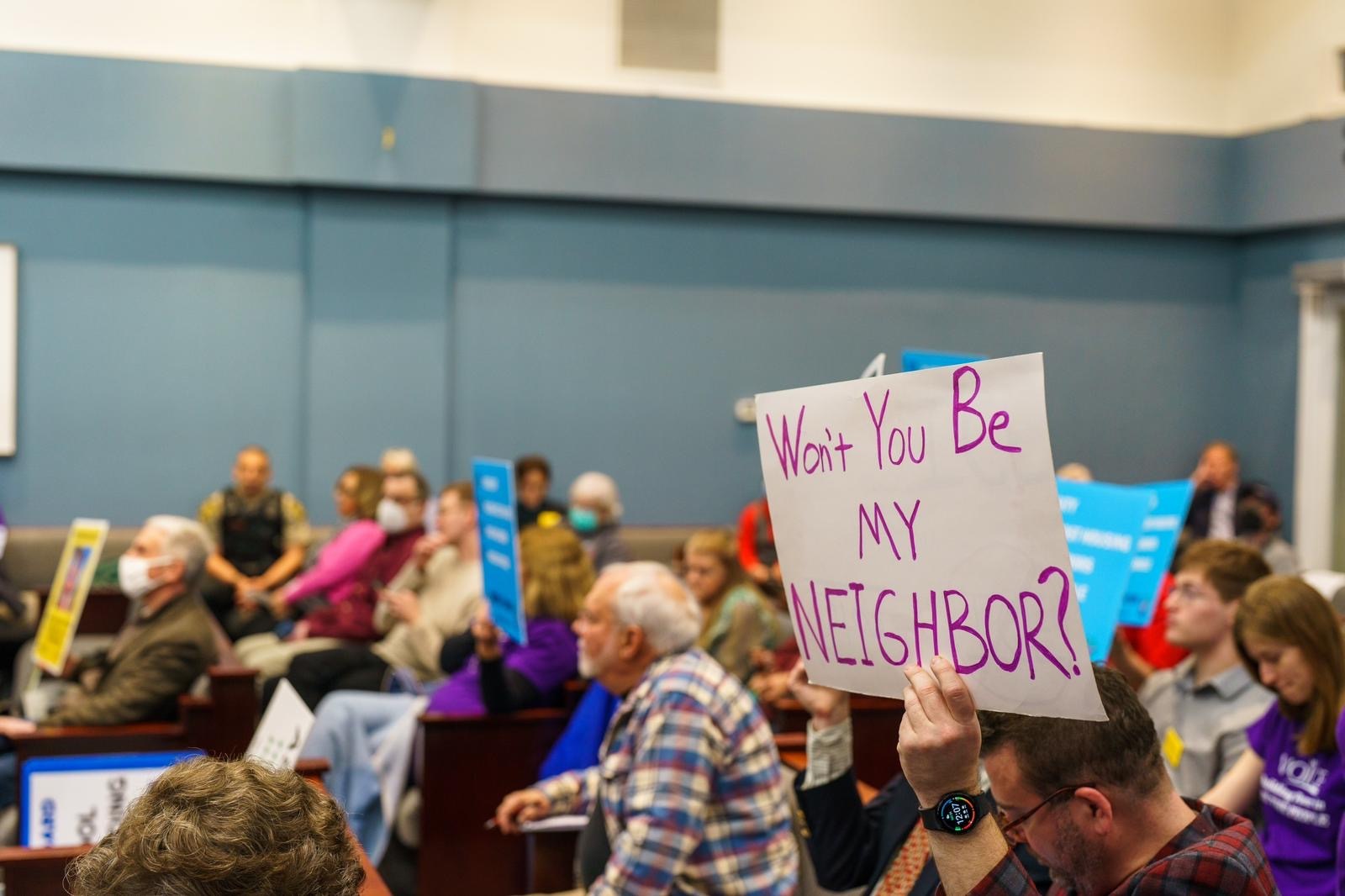
The Alexandria City Council unanimously voted to eliminate single-family-only zoning early Wednesday morning, part of a wider package of zoning proposals dubbed “Zoning For Housing” aimed at expanding the city’s housing supply.
The suite of edits to the city’s zoning code makes Alexandria the second Northern Virginia locality — after neighboring Arlington — to eliminate single-family-only zoning.
Alexandria will now allow four-unit buildings on lots currently zoned for only single-family dwellings, which represent one third of the city’s land. Though controversial among some residents, the decision to eliminate single-family-only zoning will likely not change much of the city’s existing infrastructure: An estimate by the city’s planning office projects that only 66 of 9,000 single-family lots will convert into denser dwellings.
For now, new multi-unit buildings will be required to sit within the existing footprint for single-family dwellings. In the future, the city might research how changing height and bulk requirements could incentivize more multi-unit buildings in residential areas.
“The question we’re facing is whether we’re willing to commit effort and resources to make the city more inclusive… or if we’ll continue down a path of exclusivity, where only those with the most are able to remain,” councilmember R. Kirk McPike said in an impassioned speech nearing midnight on Tuesday.
“Our friends and family have experienced the impact of the housing crisis in very personal ways. For people on the front lines, this isn’t about density or parking. It’s about whether their family will still be able to stay in their home. Whether there’s money left over in their bank account for food and clothes, or heat in winter after they pay their rent,” McPike said at the end of the roughly six-hour meeting.
Councilmember John Chapman, noting that as a child he lived in public housing, expressed reservations about letting housing development progress at its own pace. “I’ve never been a fan of letting the market be the market, because the market has destroyed my generation,” Chapman said. “The market hasn’t been kind to the working class here.”
Unlike Arlington’s “missing middle” policy, which focused exclusively on altering the county’s zoning code to open up single-family neighborhoods to duplexes, townhomes, and small apartment buildings, Zoning for Housing includes multiple other zoning changes meant to expand housing in Alexandria. The City Council also approved provisions of the plan that will scale back parking requirements for homes within a half mile of transit, removed rules governing the number of dwellings per acre or average unit size in larger apartment buildings, and simplified design requirements for townhouses.
The Council also affirmed its support for encouraging transit-oriented development along Duke Street and near Metro stations, incentivizing affordable housing as part of office-to-residential conversions, and expanding the city’s Residential Multi-Family Zone, a designation that allows developers to add density provided that a third of the units created are affordable for households making 40% of area median income or less (in Alexandria, that’s about $60,000 for a family of four).
Taken as a whole, city staff estimate the Zoning For Housing changes could result in more than 2,800 new units in the next decade, a modest but significant increase. Of those, the vast majority — roughly 1,800 units — are expected to come from Residential Multi-Family projects. City staff estimates that ending single-family zoning will produce just 175 new units on 66 parcels in the same time frame.
The vote came after months of fierce community debate over the proposal, which towards the end devolved into calls for spanking public officials and an overtly racist comment about Black Alexandrians.
“I got an email about [being part of] an ‘unholy alliance’,” councilmember Canek Aguirre said on Tuesday, referring to allegations by some residents opposed to zoning reform that the council secretly met with neighborhood groups to push a particular agenda. “I don’t think any of us are having meetings with Satan or Satan’s disciples.”
Vice Mayor Amy Jackson moved on Tuesday evening to decouple the vote on ending single-family-only zoning from the rest of the package’s proposed zoning reforms and delay a vote on it. She argued that the council didn’t adequately seek input from older residents or those who speak languages other than English, suggesting that the council should seek more community input before putting the measure to a vote.
That motion ultimately failed.
Proponents of the Zoning for Housing policy argued the edits are a modest but significant step towards chipping away at the city’s housing shortage, which they believe will help flatten skyrocketing housing prices. They also praised the city’s focus on documenting the history of racial segregation in Alexandria, and how single-family zoning tended to price out low-income families and families of color from neighborhoods.
Some advocacy groups like the YIMBYs of Northern Virginia had hoped the plans would go further by allowing for garden-style apartment buildings and townhouses — both familiar historic aspects of Alexandria’s landscape — anywhere in the city.
Opponents, meanwhile, said the changes would destroy Alexandria’s historic character, stress city infrastructure with new residents, and contribute to gentrification and displacement. The Coalition for a Livable Alexandria, among other advocacy groups, criticized the city for pushing through the changes without adequate time for review.
Those arguments are likely to continue, even after the vote on Tuesday. City staff have already recommended future study for a number of further zoning changes, setting up a potential “phase II” for Zoning for Housing.