Amanda Michelle Gomez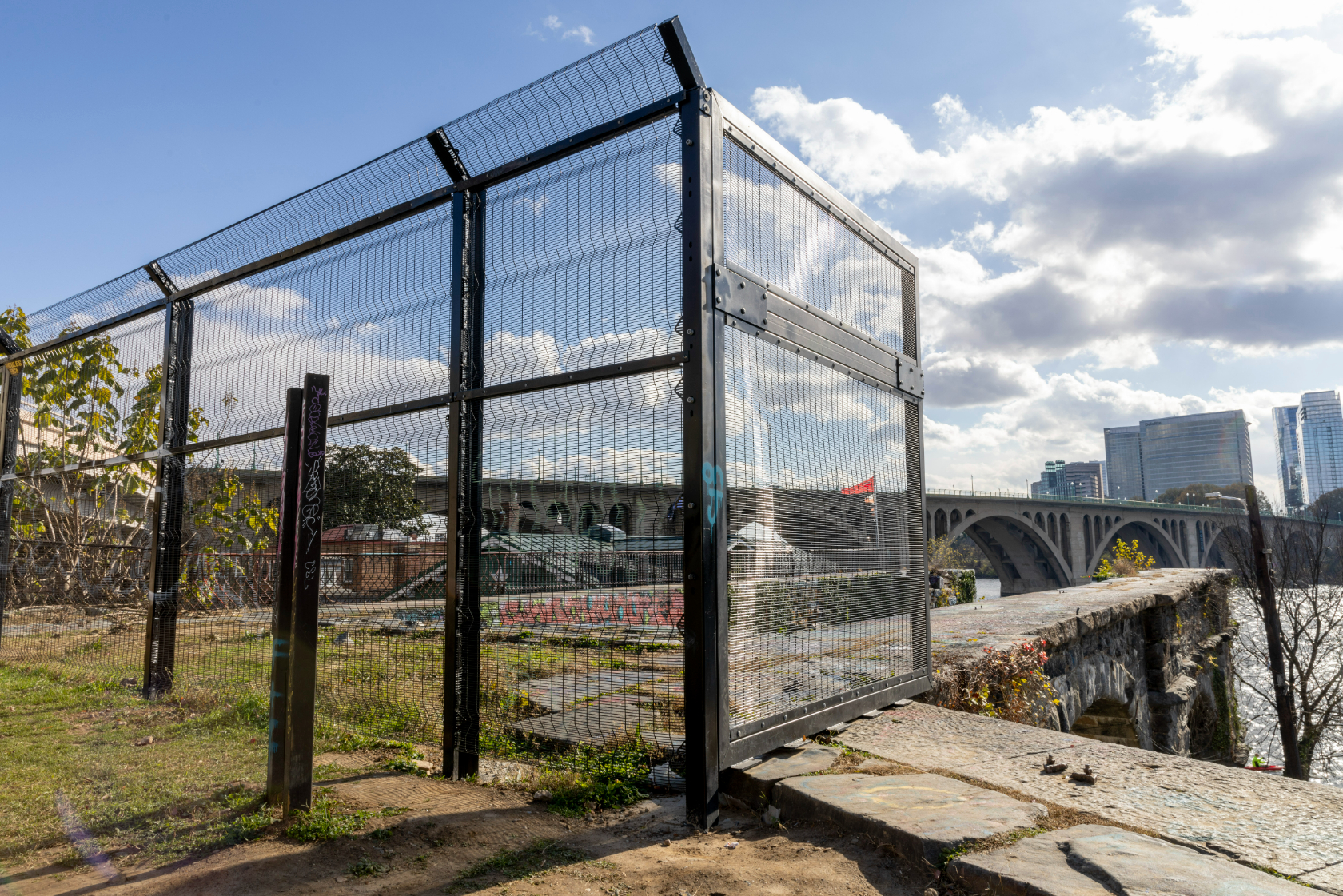
A popular outdoor spot in Georgetown for locals to hang out and take in the view of the Potomac River is now fenced off. The new fence at the man-made stone cliffs near the Key Bridge peeved some residents who see it as a killjoy and yet another sign of gentrification.
But the National Park Service, which oversees the area as it’s part of the Chesapeake & Ohio Canal, says people shouldn’t be hanging out there as it’s been closed to the public for over a decade due to safety concerns. The new fence, installed earlier this month, replaces a vandalized chain-link fence and is intended to protect people from falling into the river and drowning, says NPS spokesperson Christiana Hanson.
The “graffiti cliffs,” as they’re colloquially known, are actually remains of the Potomac Aqueduct, a 19th century canal structure that enabled boats to bring goods such as coal from Georgetown to Alexandria, according to NPS. In 1933, the bulk of the aqueduct was demolished, with the rubble used to create seawalls to protect Anacostia Park, and now only bridge abutments at both ports remain.
The bridge remains on the D.C. side have attracted many people, locals and tourists alike, over the years. The parallel stone outcroppings offer wide views of the Potomac River and Key Bridge. The graffiti art on the granite blocks gives it an edge. People often take smoke breaks there or have even celebrated birthdays. It’s become so popular that it has its own Yelp page (four stars) and pin on Google Maps (which refers to the area as a park).
“Literally the only free thing to do in Georgetown,” one commenter tells DCist/WAMU on Instagram. Says another: “I hate the new fence!! Takes a historic hang out spot and makes it feel like a prison.”
Word of the new fence spread on social media last week after someone posted a video from graffiti cliffs on TikTok. “If you know where this is, it’s now on lock down,” they say, gesturing to the cliffs. “Please stop moving to D.C. and changing shit.” The video went viral, with over 100,000 views on TikTok and 1,000 likes on Twitter. Many commenters said they were disappointed to see their sentimental place closed off to the public.
https://twitter.com/fowlazule/status/1729689197231927391?s=46
https://twitter.com/arlingtonaf/status/1729567285365387663?s=46
NPS has attempted to prohibit visitors from entering the area using chain-link fencing and “No Trespassing” signs since the early 2010s, but that wasn’t effective, says Hanson. So they opted to put up a more secure, non-scalable fence.
“The aqueduct platform can present a serious fall risk and the waters of the Potomac River are an ever-changing environment that can be difficult to swim in should someone fall in,” Hanson says via email. “When visitors see fenced-off areas in the park, the fences are there to protect both visitors and the historic features of the canal.”
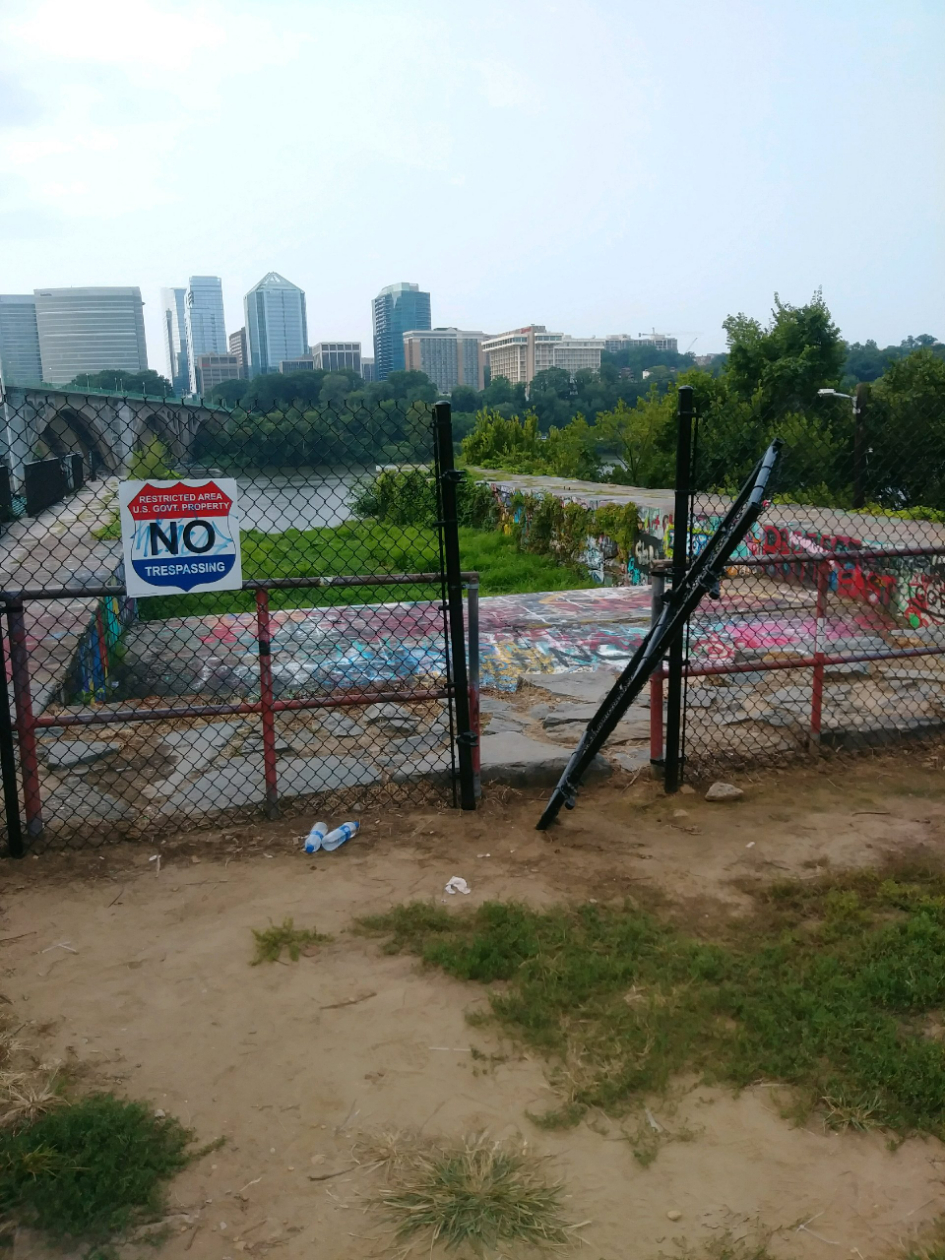
Hanson says NPS is trying to prevent any more incidents from occurring as C&O Canal Park sees 5 million visitors a year. In 2017, two people were killed after jumping into the river from the cliffs. While most social media comments decried the new fence, a few agreed with the decision to add a fence, calling the cliffs dangerous. A few commenters also complained about the broken glass at the Capital Crescent Trail, which they suspect came from people who were hanging out at graffiti cliffs.
This isn’t the first disagreement between locals and federal officials over a fence. Federal authorities fenced off Lafayette Square near the White House after racial justice protest in 2020. And recall the fence around Capitol Hill following the Jan. 6 insurrection, which police at one point wanted to make permanent — though it was ultimately taken down.