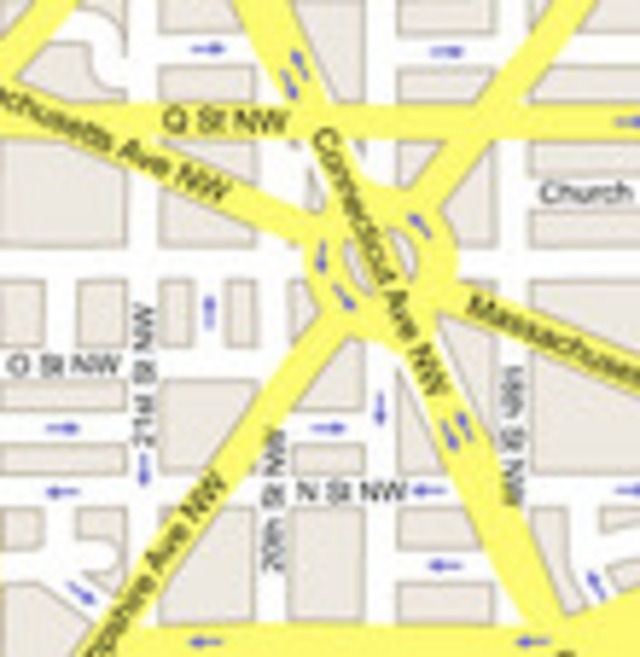
 If you’re anything like us, you’ve been using Google Maps for a little while now. Since launching their mapping service earlier in the summer, Google’s simple, intuitive, and efficient means of finding your away around town (and beyond) has been giving MapQuest a run for their money as the web’s preferred mapping website. Google keeps refining the website, recently adding a hybrid-view mode to their map service, allowing one to view road overlays on the satellite imagery.
Microsoft, not content to let Google reign as king of computer cartographers, has released a similar mapping tool called MSN Virtual Earth. Virtual Earth borrows/steals Google’s click-and-drag, tile-based interface, but actually does innovate a bit with scrollwheel support for easy zooming in and out. We really dig that, and hope Google follows suit. Google and Microsoft will now hopefully trade blows by one-upping each other with service improvements.
However, the real innovation comes from independent programmers creating services of their own with the Google Maps API, released publicly last month. Developers are now using the Google Maps interface and map data to power web applications that do far more than help you navigate the labyrinthine residential roads of Bethesda.