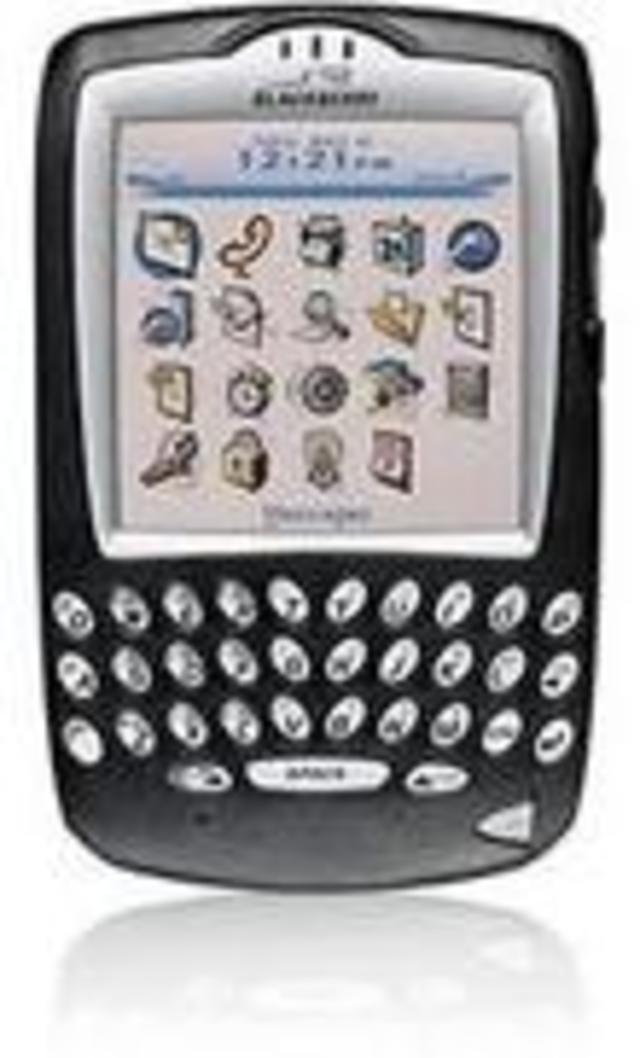
 In news that is sure to have Washingtonians clutching their BlackBerrys just a little tighter, the Supreme Court is refusing to grant a rehearing to BlackBerry’s Research in Motion (RIM) Ltd. regarding an on-going patent-infringment case. Cutting through the legalese, these simply means that BlackBerry users might be facing dark days down the road.
Canada-based RIM has been embroiled in a legal battle with NTP Inc., a McLean-based patent-holding company that has the licenses for the technology that BlackBerry uses. As noted in the Post, this all started back in 2002, when RIM was found to have violated several of NTP’s patents. In November 2005, RIM was ready to pay NTP $450 million, but the move was ruled invalid by U.S. District Judge James R. Spencer. At that time, Judge Spencer was quoted on wired.com as saying that he’d spent enough of his “time and life involved with NTP and RIM.” Folks addicted to their BlackBerrys — playfully called “CrackBerrys” — might beg to differ.
All this makes the court-ordered shut down of the four million BlackBerries in the United States just a little more of a possibility. CNN reports that a NTP-requested injunction might come as early as February 1. As quoted in Washington Technology, “If the 4th Circuit imposes an injunction against BlackBerry usage, federal, state and local government users would be exempt, although parties on both sides on the ease and feasibility of such an effort.”
So, BlackBerrys only for the government’s worker bees? This most certainly has inside-the-Beltway lobbyist and media types sweating bullets. On January 20, Washington Technology did a fine write-up on how such an injunction might play out.
For those who aren’t grandfathered into keeping their BlackBerry courtesy of government employment, RIM states that it’s working on developing technology that would not violate the patent. Additionally, the Post reports that RIM has asked the U.S. Patent and Trademark Office to “review NTP’s patents with the hopes that those will all be declared invalid.” In the chance that such doesn’t happen, perhaps it really is time for BlackBerry loyalists to start seeking an alternate form of e-mail communication.