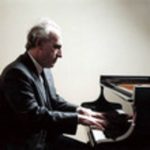
 Maurizio Pollini’s recital at Strathmore last night was one of a limited number of appearances he is making in the United States this year, after Boston, Carnegie Hall, and Chicago. Thank you again, Washington Performing Arts Society! If you love the piano and its greatest repertory — by the twin masters of the 19th century, Fryderyk Chopin and Franz Liszt (the good and evil twin, respectively?) — you may not think that Pollini is necessarily the best interpreter of this music (“all intellect and no soul” is the most common criticism). You likely still admire Pollini and leapt at the chance to hear him play live. If you missed it, that is why DCist is here.
Pollini devoted the first half of his program to Chopin, particularly four of the nocturnes from his new CD, released last month. For the most part, the nocturnes are moments of quiet melancholy, and they do not correspond all that well to Pollini’s optimal strengths. He played them with consummate grace, capturing the flights of fancy in the right hand of the F minor nocturne (op. 55, no. 1), delineating the soprano and alto voices (even when one is wildly trilling, something that is terribly difficult) in the E-flat major nocturne (op. 55, no. 2). As you would expect, he mastered the technical demands of the C minor nocturne (op. 48, no. 1), rendering the soaring melody over a complicated, pulsating chord accompaniment. Still, I had the sense of Pollini holding back a little at times, imposing restraint upon himself, and it may have throttled the performance slightly.
He certainly was more able to cut loose on the other two Chopin selections, bigger and more virtuosic. Pollini seems to react well to the pumping of adrenaline, the spontaneous challenge of something new, which is perhaps why he is sometimes more engaged and immediate during his lengthy encores than during the announced program. In fact, he played the G minor ballade (op. 23) as an encore during his last recital in Washington, and here it was again in the middle of the first half, somewhat deflated by comparison, although still extraordinary playing.