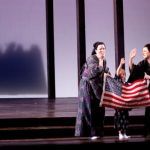
 The opening night of Washington National Opera’s final production of the fall, Giacomo Puccini’s Madama Butterfly, offers yet another opportunity to wonder why in the world this opera remains so popular with American audiences. Most opera fans, myself included, love this opera because the music, especially for the title character, is some of the most memorable that Puccini penned. However, the libretto by Giuseppe Giacosa and Luigi Illica tells a story that should inspire disgust. If we look at this tale from an early 21st-century perspective, an American naval officer, B. F. Pinkerton, takes a brief leave from his ship for a pedophile’s vacation of sexual tourism in Nagasaki, “marrying” a Japanese teenager. He then abandons her, only to return three years later with his American wife, to take the poor girl’s young son back to the United States with them.
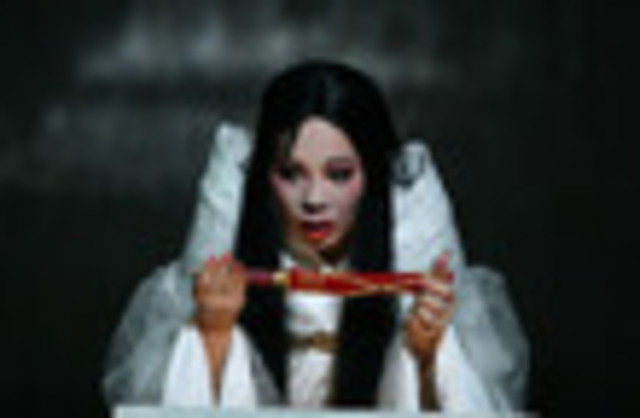
Having already been forced by poverty into the life of a geisha, Cio-Cio San (or Madama Butterfly) waits in pitiful faith for her husband to return and, unable to bear her grief, kills herself with the same ceremonial blade her father used to commit seppuku. Just when you thought you could not feel worse about how people in foreign countries perceive the United States, Puccini has his ugly Americans sing “America Forever,” accompanied by the strains of the Star-Spangled Banner. You would think that Pinkerton would be more careful about pissing off a Japanese teenage girl, but you have to remember that this is before The Grudge was made, so he couldn’t know. Also, having servants who dance around with daggers and carry off children (dancers Krzysztof Baliński, Michał Ciećka, and Tomasz Nerkowski as bare-armed beefcake in samurai skirts) should have been a sign.