Martin Austermuhle
 You’d think that the a city just recovering from one bout of stadium shellshock would approach building a whole other new stadium carefully. Not the District. They’re looking to build two more.
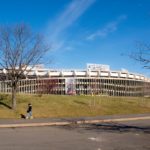
Today Marc Fisher updates us on two stadium projects we reported on long ago, neither of which seemed destined for completion given the legislative conniptions the D.C. Council had to go through just to get the new stadium for the Washington Nationals off the ground. But now both D.C. United and the Washington Redskins are pining for their own new digs, and Mayor Adrian Fenty and key councilmembers seem receptive to the idea. This time, though, the city isn’t going to build the teams their stadiums — it’s going to ask that the team owners fund the construction in exchange for the development rights to the surrounding lands. In short, D.C. United would pick up millions of dollars of waterfront land at Poplar Point while the Redskins would inherit similarly well-located lands at the current RFK site. Fisher, himself one of the biggest boosters for the Nats’ new stadium, is cool to the idea, having written today in an online chat:
Nay to the idea that owners of sports teams should automatically be given valuable city land for them to develop so that they can make even more massive profits than they will by building new stadiums. The model to hew to is the Abe Pollin one, where the Wizards owner built the MCI Center with his own bucks (and support from the District for infrastructure), and didn’t get any big land giveaway in return.
Call us the perpetual pessimists, but D.C. United, the Redskins, and the city’s pols should slow it down just a touch. While having both these stadiums built free of charge seems like a grand idea, the council and the residents in the neighborhoods surrounding both Poplar Point and RFK should assess what their lands are worth to them, what would otherwise be done with them, and if giving them away in exchange for a stadium is sound public policy. More than that, the council needs to ask itself if something approaching the Pollin model is feasible — can they structure a deal in which they avoid having to pay for the stadiums while still retaining some semblance of control of the surrounding development?
These debates are obviously in their nascent stages, but need to be approached like the big decisions that they are. The District proved with the Nats that negotiating isn’t its strong suit, so it should try and avoid the same mistakes with D.C. United and the Redskins.
What’s your take?
Picture snapped by MissChatter