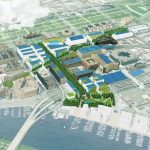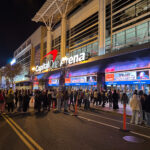
 If Alexandria officials are to be believed there has already been some impressive upside to their recruitment of the Patent and Trademark Office from the canyons of Crystal City to Carlyle, a neighborhood west of Old Town and north of the Capital Beltway. “We are now the intellectual capital of the world,” says Stephanie Landrum, acting executive director of Alexandria’s economic development office, according to the Washington Post. In addition to the over 7,000 employees of the PTO, the area has seen an influx of law firms and legal service professionals in the two years since the office opened. And yet, as Thursday’s Post story attests, PTO’s relocation has failed to meet the city’s high expectations. What was supposed to be a complete transformation of the occasionally dismal stretch of land known as the Eisenhower Valley, has instead been merely the Crystal Citification, if you will, of the area around the Patent Office.
It’s somewhat hard to believe that Alexandria officials expected anything else to result. While the PTO’s former home in Crystal City was surrounded by office buildings, full of office workers earning good salaries and spending eight or more hours a day in that small area, the retail environment and overall atmosphere of the concrete canyon was and remains decidedly grim. A number of sit-down and fast food restaurants make their home there, along with handful of business service firms and, within walking distance, a couple of bars. Yet no one would describe the cityscape as vibrant, and no one would suggest that Crystal City was anything but a ghost town after five in the evening.
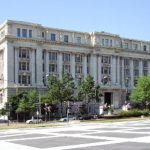
One needn’t leave the metro area to find countless other examples of this phenomenon. L’Enfant Plaza, certainly, is a classic example of dense office construction failing to invigorate a neighborhood. Rosslyn, too, displayed these symptoms, until recently. Around NoMa, as it seems we’re meant to call the neighborhood surrounding the Florida Avenue Metro station, a handful of large offices have failed, so far, to support anything more than a smattering of fast food joints. Or consider the placement of the Reeves Center at 14th and U by Marion Barry (whose name now adorns the facade). While the claim has been (and continues to be) made that the location of the building there sparked development in the U Street corridor, it’s difficult to see the hulking office as anything other than a dead spot in an otherwise vibrant area. This is the normal way of things. Office workers work, buy a meal or two and maybe an after work drink, and then they leave, returning to wherever it is that they live and taking with them the bulk of their income.
Just look at our downtown.
According to figures from the 2000 Census, about 8,000 people make their home in the areas just north of the National Mall, including downtown, Penn Quarter, and NoMa. Recent growth in the eastern half of these neighborhoods has no doubt pushed that number up, but it remains the case that almost no one, other than the President of the United States, makes his home among the office blocks of downtown and the Golden Triangle. And it shows. Despite being the single densest employment center in the metropolitan area, holding more Greater Washingtonians at any one time than any other place in the region, the streetscape is strikingly–sometimes shockingly–bleak. Starbucks and sandwich shops are abundant. Restaurants and watering holes are infrequent. Diverse retail options are absent. Pedestrians after dark? Dream on.