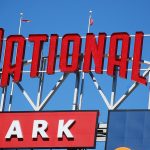
 Fans had plenty of great things to say about the Nationals season opener at RFK last week: the hats, the weather, the midday beer-drinking. They also had some gripes. In addition to the unfortunate loss, one key complaint was, naturally, traffic. The Post noted that, “In the stands, Nationals fans complained. About parking-lot traffic, snack booths and long lines for just about everything, including hot dogs and ATMs.” When the Nats move into their new, modern stadium next season, getting a hot dog or a some cash might get easier, but don’t count on the same for transportation. As the Examiner reported last week, “Limited highway access, clogged neighborhood streets, ongoing construction and an uncertain number of parking spaces await Washington Nationals fans who drive to the new 41,000-seat Southeast ballpark when it opens next April.”
This city’s response? “We have a three-pronged message — take Metro, take Metro, take Metro,” the D.C. Department of Transportation told the Examiner. City officials anticipate that, on a weeknight, 52 percent — almost 19,000 fans — will take Metro to games. (Officials also estimate that 13,600 people will drive to games in 4,700 cars, 3,400 will walk or bike, 750 will come in chartered buses, and 400 in cabs.) As a result, the capacity of the Navy Yard Metro Station is currently being tripled to the tune of $20 million in order to accommodate fans that will crowd the subway before and after each home game.
Planning around such estimates is risky business for the city, and leaves little margin for error. What if substantially more people decide to take Metro? The Navy Yard upgrades will bump the station’s capacity up to 15,000 riders, but Metro estimates that ridership for previous weekday home games has reached up to 35,000. Further, with Metro congestion increasing across the board, can the trains handle all the extra riders? The Green Line carries fewer rush hour passengers than the Orange Line, but it also has fewer 6- and 8- car trains.
On the other hand, perhaps a lot less people will take Metro, choosing to drive instead. Even though current access to Metro’s game day Express Service is only a few blocks away, the Post reports that, “…this being traffic-obsessed Washington, several [fans] said they’d miss the easy access by car.” In a map of anticipated parking near the stadium, a Southeast blogger shows that it’s possible that only 3,850 spaces will be available for weekday games. That will leave at least 850 cars to search for on-street parking or a distant open lot — not an exciting prospect on the narrow streets of the neighborhood.
There’s one final footnote to all this: the transportation predictions above assume that nearly 3,300 ticket holders don’t even show up to the game! Is D.C. setting itself up for a swing and a miss?
Photo by justindc