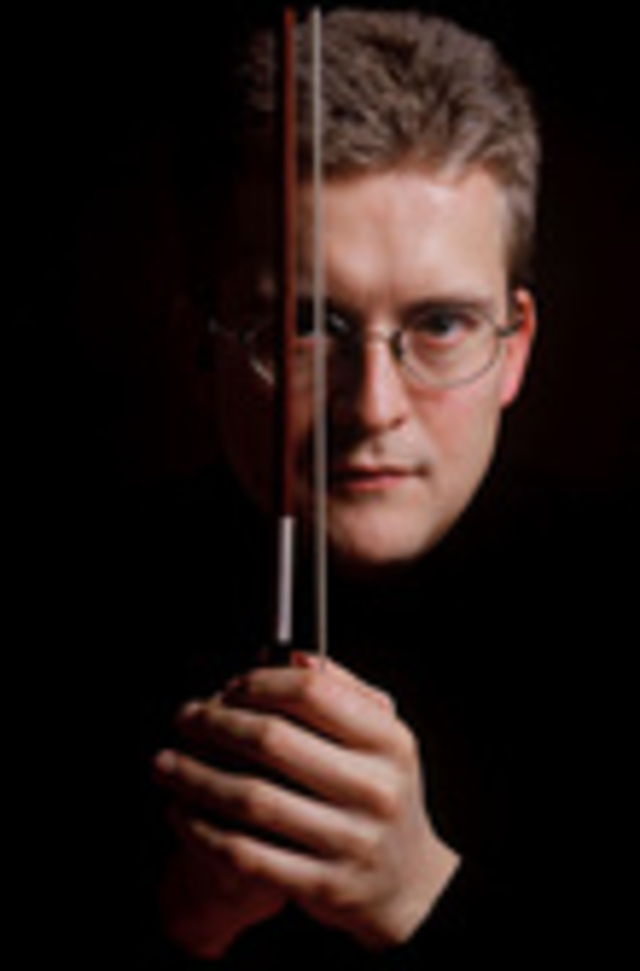
 Czech conductor Jiří Bĕlohlávek led this weekend’s National Symphony Orchestra concerts at the Kennedy Center. This heralds the opening of a Czech mini-season in Washington, with a program of symphonic music from his homeland. Next month, Bĕlohlávek will conduct the much-anticipated production of Janáček’s Jenůfa at Washington National Opera. On Friday night the three short programmatic works under Bĕlohlávek’s baton were welcome obscurities. A Mozart concerto and a perennial favorite, Smetana’s tone poem Moldau, provided something familiar for the less adventurous listener.
It was good to hear two rare symphonic pieces, both of which were played by the NSO for the first time in this series of concerts. Smetana’s Richard III is modeled on the symphonic poems of Franz Liszt, who was an early supporter of Smetana’s career. Shakespeare’s antihero is announced in the opening measures, accented by lopsided chords in the low brass and the halting steps of the woodwinds. This was followed by a sinister melody, brooding under the surface in the celli. In a fine performance shaped with expertise by Bĕlohlávek, we heard the theme, developed in a way similar to the Lisztian technique, in a triumphant coronation section that marches to the crashes of cymbals and golden triangle accents. Suddenly halted by a dissonant brass chord, the melody was then beset by an enemy theme, leading us through Richard’s conflicts to his inevitable death in a big, dark-toned conclusion.
Even more welcome, again in a first performance by the NSO, was Janáček’s quasi-violin concerto, The Wandering of a Little Soul. The guest soloist was German violinist Christian Tetzlaff, who has recorded this abortive concerto. The composer recycled some of its music in his opera From the House of the Dead, but two later composers rescued the original sketches from obscurity and made a reconstructed version. Tetzlaff played this piece with an electric tone, responding to the palette of strange colors right from the start, when he has a duet with the bony timpani. Later his searing E string clashed and wove itself around a piccolo line, and there were many combinations that struck the ear as new, including the sound of chains rattled on a table. Much of the solo line is cast in a folk-inspired parlando, a recitative style that Janáček used to great effect in his operas. He reportedly carried a notebook around in his pocket for notating examples of the melody of Czech speech. When someone would say something that struck him as musical (“Good day” or whatever), he would notate it, text and melody, in his notebook, to be used as he crafted the sung speech of his operatic characters.
Photo of Christian Tetzlaff by Alexandra Vosding