 Frida Kahlo: Public Image, Private Life. A Selection of Photographs and Letters, on view at The National Museum of Women in the Arts, reveals Frida’s public passion for life and her private suffering. The life and times of Frida Kahlo is a complicated story of love, tragedy, and unwavering beauty. The exhibition celebrates her 100th birthday.
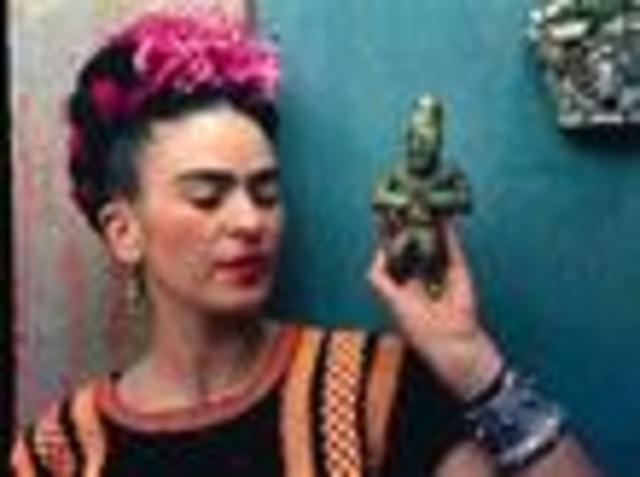
The photographs in Frida Kahlo: Public Image, Private Life chronicle the artist’s quintessentially Mexican beauty. Starting as young as 18, most of them demonstrate the public enchantress that she was – striking, ageless, self-assured. Her hair is always parted down the middle, or intricately knotted and adorned with flowers or dyed fabric, creating a sea of illustrious black. Her ears weighted with earrings heavy and silver, her fingers embellished with rings that engulf her whole hand. She wears a brazen expression that is soft and motherly, yet somehow boasts her actively communist political views. She often looks like a movie star or a model in Mexican Vogue on an elaborate set arranged to feature this season’s Mexican-inspired designs. In fact, Frida was known to spend hours getting into costume in the morning, donning her favorite traditional Mexican rebozo, dresses, headpieces, jewelry, and gowns, especially when photographers were scheduled to make a visit. She kept her house – the famed La Casa Azul – similarly kept, painted with luxurious colors and decorated with indigenous Mexican artifacts. Even when she traveled, Frida brought her most priced objects with her.
So important were the objects she adored to the public’s consumption of her celebrity, both then and now, that the only glimpse we have of her truly personal life is found in those very objects. Handwritten letters from the States to her family back in Coyoacán, express her wild distaste for the treatment of Mexicans on the American side of the MexiCali border. She writes, “all the gringos are ugly,” “the movie stars are worthless,” and “Mexicans are working like mules,” always lovingly signing her letters “Frieducha.” Makes one wonder how she would have felt about the current border situation, brought on by a “gringo” who shares her birthday. But she was not always complaining. In one letter home, she describes her indisputable popularity among her husband’s flock of groupies – all the women dropped their jaws at the sight of her jade necklaces, and all the male painters wanted her to pose for them.