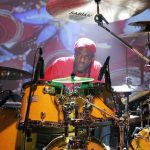
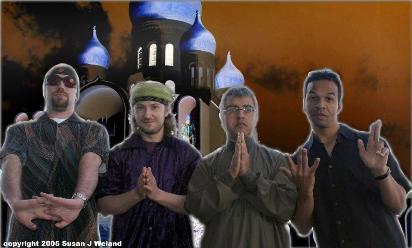
 A band name like Garaj Mahal triggers certain expectations when one first hears it. It could be an adventurous group, fusing punk, rock, blues, or jazz, with an exotic variety of world rhythms. This expectation only grows after learning that the group includes a Pakistani/Chilean guitarist and a German/Liberian bassist. That is what we expected just before last night’s early set at Blues Alley, but that is not exactly what the band delivered. Instead of contemporary music infused with global elements, the energetic five-song set showcased eighty minutes of classic uptempo jazz-rock fusion that time warped the audience back to the electric jazz of the 1970s.
Fusion is generally considered “musician’s music” and places considerable technical demands on those who wish to play it. In the 70s, a new breed of jazz musician began to emerge. These players were at home playing straight ahead jazz, but they had also grown up on the rock music of the 60s. Thus, a new movement started that combined the improvisational and harmonic elements of jazz with the aggressiveness and driving rhythms rock. Bands such as Tony William’s Lifetime, John McLaughlin’s Mahavishnu Orchestra, Weather Report, and Chick Corea’s Return to Forever were at the vanguard of one of the most innovative and fertile periods in the history of jazz. The music was not without critics as these musicians were sometimes guilty of sacrificing pure emotional content for technical and compositional sophistication. The musicians of Garaj Mahal, however, obviously grew up studying and loving this music. Make no mistake, the musicians on stage last night could play and they were not afraid of demonstrating their instrumental prowess.
Image taken from Garaj Mahal’s web site